
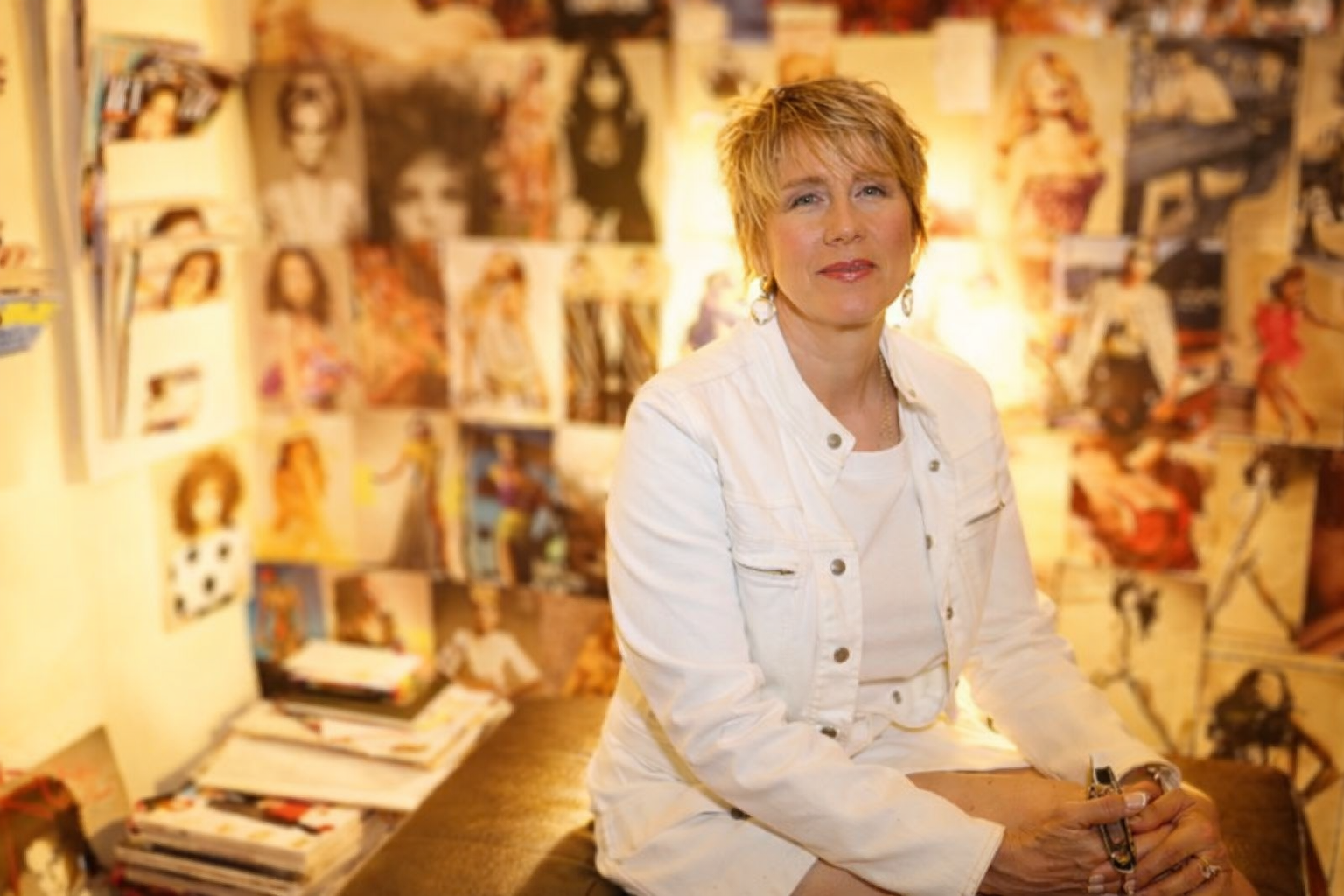
Exclusive Feature Interview
Dallas Ziggler: The OG Whacker Who Was There When History Was Made
From the disco ballrooms of 1970s California to Diana Ross's TV special, Rick James's Super Freak video, and the global whacking stage — Dallas Ziggler has lived a career that reads like a dance history textbook.
By Dance Mogul Magazine
Some dancers perform. Some dancers teach. And then there are those rare few who were present at the exact moments when dance culture shifted — who felt the tremor before the world even knew an earthquake had happened. Dallas Ziggler, known professionally as Dallas (the W honoring her maiden name, Winkler), is one of those people. At 54 years old and proud of every single year, this Southern California dance legend carried classical ballet training into the streets, stood in the recording studio as Michael Jackson unveiled his iconic glove, choreographed and starred in Rick James's Super Freak video, and has spent decades fighting to ensure that whacking — a dance form born in the queer community — gets its rightful place on the global stage.
Dance Mogul Magazine sat down with Dallas for a conversation about her extraordinary journey — the history she witnessed, the barriers she broke, and the mission she is still on today.
The Interview
Dance Mogul Magazine
Can you start off by introducing yourself?
Dallas Ziggler
My name is Dallas Ziggler, and my professional name — my go-by — is Dallas. The W stands for Winkler, which was my maiden name. I've been dancing my whole life. My whole life. And I'm 54 and very proud of it. I basically consider that I was born to dance.
"I basically consider that I was born to dance."
— Dallas Ziggler
Dance Mogul Magazine
What has been some of your inspirations through your journey in dance?
Dallas Ziggler
I saw the movie West Side Story when I was about five, six, seven — and when I saw that movie, it just opened up a whole other world for me. In terms of how I saw what dance could be as self-expression, the medium, how powerful it represented a story, and what it could be in terms of people sharing their lives. I wanted to be a part of that intensely. I really wanted to be a part of that.
Dance Mogul Magazine
Growing up during your time — were parents the same back then saying dance is just a hobby, you need to get a real job?
Dallas Ziggler
That's funny you should say that because I was thinking about that recently. I'm a single mom with two kids and wanting to be an extraordinary provider. And looking to just getting a day job — and thinking about when I grew up, and my mom said, "Well, yeah you're a great dancer, but to fall back on, why don't you get some other work." Yes, that definitely was the case.
Dance Mogul Magazine
Who are some of the amazing dancers that people of American culture might not know about?
Dallas Ziggler
People like Baryshnikov and — definitely inspired me because of the time that I grew up. They were very much in the forefront and I aspired to the level of excellence that they had — their impeccability and the integrity of what they did. That was just astounding. There was nobody like them. And for instance, Gregory Hines. Even these people that were in the forefront inspired me because they were in the limelight and they just maintained an extraordinary set of standards and quality.
Dance Mogul Magazine
Tell us about your journey into street dance culture.
Dallas Ziggler
I was a trained dancer — took ballet and tap from very, very young, three, four, five years old. Got into jazz dance, which back then was very different than jazz now. I was about 15, 16, 17 and I would go to Disneyland with my girlfriend after watching Soul Train, which was strictly at that time all Black. We happened to cross some other street dancers that would go to Disneyland. At that time a person could just get into Disneyland without paying the whole amount, so we would just go and dance on a Friday night. We hooked up with some people there — and I was like, wow, this is really cool.
I got into some discos — I was underage — and this was now 1975 to 1977. One thing led to another and I ended up entering the California State Dance Championship for singles, females, and couples — and won. So my trained dance ended up translating into street dance and merging the two. Then I auditioned for a company called Dancing Machine that traveled the world. I first went to Tel Aviv — Israel — and then Australia. It just merged. I was just in the right place at the right time and my desire was there.
I had a reverse discrimination issue — as you can see I'm wearing all white — I was a white girl in this Black culture, in this Black street dance, and I really had to make my way in and make my place there. And I was very successful at it.
"I was just living life and we had no idea what we were doing — what we were creating. These explosions of creativity were just firing like, whoa, look what we're doing."
— Dallas Ziggler
Dance Mogul Magazine
A lot of the dancers on the West Coast I've been interviewing are sounding the same — mixing trained dancing with street. Do you think the industry saw what you were doing and that's why in the '80s they started putting it in the videos?
Dallas Ziggler
Absolutely. I had the distinct privilege of being invited into Michael Peters's working company. Michael Peters of Beat It fame — and Michael really caught on to that. When he saw all of us trained dancers and then he saw the street, he started merging it and then choreographing things like Beat It, putting the street dancers in it — Popin' Pete, Taco — all these people. Seeing the value of the two together, absolutely. I think Michael Peters was one of the first ones, from my impression.
Dance Mogul Magazine
Tell us more about your time working with Michael Jackson.
Dallas Ziggler
I had the privilege of working with him on Diana Ross's special. I was the assistant to David Winters, who was the choreographer — David Winters
from West Side Story. What we did there is we took the Joffrey Ballet, all their ballet distinctions, and we combined it with locking and put a special together that Diana did. And that's when Michael premiered with his glove.
I was there at the beginning — at the drawing boards — when we were doing the storyboards for everything. And when Michael showed up with the costume people, he came out with flood pants and the glove, and we're like, "His pants are too short." And Rhett was the costume guy, and he goes, "Well, he wants them like that." And we go, "Really?" — "Yeah." I mean, that's when he was just a star. He wasn't a superstar yet. But Diana was a superstar.
Being there on the forefront of all of these historical moments gave me a unique perspective of seeing how things can be created literally out of nothing — and all of a sudden it's there. Because a person has an intention, has a vision, has a direction, and a goal. And then it's before your very eyes and you can't even explain how it got there.
"That's when Michael premiered with his glove. And we're like, 'His pants are too short.' And the costume guy goes, 'He wants them like that.'"
— Dallas Ziggler, on the Diana Ross special that introduced the world to Michael Jackson's iconic look
Dance Mogul Magazine
What would you say your three biggest accomplishments are?
Dallas Ziggler
Oh wow — that's a biggie. I'm going to say Super Freak, just because it's really notable. I choreographed and was in the original Rick James Super Freak video — and I'm the blonde in the purple outfit. I also cast that video. There was another white girl with dark hair — Kim McKillip — a Black girl named Vena, and then Cheryl Song, who's from the original Soul Train and she's Asian. I'm going to say that's one thing just because it was a seminal event and it was very early on in video history. Within the first couple years of videos, people barely knew what they were.
Secondly, I would have to say my reputation — which preceded me in a lot of different places — because of what I accomplished as a whole. My body of work. What I would constantly show up as. Being consistent as an OG whacker, being innovative, having that combination of trained and street together. A really solid ten years of being that strong presence.
And thirdly, what I've created in the last several years. Being at the Whack Fest and at Street Star earlier this year — where I judged and I was the only female among 22 other male judges and teachers.
"I judged at Street Star — and I was the only female among 22 other male judges and teachers."
— Dallas Ziggler
Dance Mogul Magazine
What are you currently doing to help push the culture forward?
Dallas Ziggler
When I saw how prevalent whacking was all around the world — and how powerfully it was showing up in amazing numbers of countries — I committed to have whacking as a dance form show up in the greater hip-hop community battles. Battles that usually are just restricted to locking, popping, house, top rock, new jack swing. I talked to a gentleman named Cross One — he and his partner do Freestyle Session — and now for the very first time, it's going to include whacking this Labor Day weekend here downtown at Club Nokia. I actually created that opportunity. And it showed up immediately. I'm going to be judging it and I'm just very excited.
Dance Mogul Magazine
What would you want your legacy to be? How would you like to be remembered?
Dallas Ziggler
That I authentically brought the conversation from the original intention of whacking — and where it came from, my peers, and the original gentlemen that created it — and I authentically brought that conversation forward. Transformed it into the art of self-expression and movement in a language that was intended for every generation, in any time. That it's accessible to all who are willing to learn the distinctions — to really understand what whacking can bring. The person, the dancer, the movement — hears the music, embodies it, and expresses it in their unique and personal way. To inspire those watching. To be touched and moved.
Dance Mogul Magazine
What advice would you have for young dancers — both male and female — who want to start whacking?
Dallas Ziggler
For the male — I would say first of all that they don't have to see it as gay versus straight. That's not the conversation. It's really getting in touch with who he is. I start with a mirror exercise — standing in front of the mirror and getting really present and powerfully related to oneself. That's where the conversation begins.
For the women — really get in touch with your feminine side. Because it began by the originators — Andrew, Lonnie, Tinker, and all these gentlemen that created this style — modeling the 1920s and beyond movie stars of the golden age. How dramatic that was. The look, the whole essence of that glory. For women to really get connected with their femininity — that to me is the most precious part of it.
"I authentically brought the conversation from the original intention of whacking forward — and transformed it into the art of self-expression accessible to all generations."
— Dallas Ziggler, on her legacy
🎬 Watch: Dallas Ziggler — Full Interview Part 1
🎬 Watch: Dallas Ziggler — Full Interview Part 2
The People, the Era & the Movements Dallas Witnessed
A closer look at the legends, the culture, and the cultural moments she name-checked — and why they matter.
Mikhail Baryshnikov — The Standard of Excellence
Mikhail Baryshnikov is widely considered one of the greatest ballet dancers of the 20th century. Born in Latvia in 1948 and trained in the Soviet Union, he defected to the West in 1974 — a headline-making move that brought ballet to mainstream American consciousness. His technical precision, athleticism, and artistry set a global benchmark for what dance excellence could look like. For a generation of young dancers like Dallas growing up in the mid-1970s, watching Baryshnikov meant understanding that impeccability was not optional — it was the floor, not the ceiling. His presence on the American dance scene coincided directly with the years Dallas was forging her own identity as a trained dancer moving into the street world.
Gregory Hines — The Bridge Between Tap, Jazz & Mainstream America
Gregory Hines was a force of nature — a tap dancer who modernized the art form with jazz sensibility, raw soul, and improvisational genius. From his Broadway work in Eubie! (1978) and Sophisticated Ladies (1981) to his film appearances in The Cotton Club (1984) and White Nights (1985), Hines brought tap dancing to audiences who had never seen anything like it. He was magnetic, disciplined, and deeply rooted in Black cultural tradition while being accessible to mainstream America. Dallas citing Hines alongside Baryshnikov reveals the breadth of her artistic vision — she was drawing from the highest levels of both classical European and Black American dance traditions simultaneously.
Michael Peters — The Architect Who Merged Two Worlds On Camera
Michael Peters is one of the most significant and underrecognized choreographers in American music history. Trained by the legendary Lester Wilson — a choreographer a full generation ahead of Peters who shaped the style of major artists across the 1960s and 70s — Peters became the architect of the music video aesthetic that defined the early 1980s. He co-choreographed Michael Jackson's Beat It and Thriller, two of the most-viewed, most-studied pieces of visual choreography ever created. Peters saw what Dallas and her generation were doing organically — merging trained technique with street vernacular — and he scaled it for global television. The reason his name isn't as widely known as his work? As Dallas observed, the early 1980s were a chaotic rush of competing credits, and Peters's contributions got tangled in questions like who really taught Michael Jackson the moonwalk. History deserves to be clearer: Michael Peters was a pioneer.
Dance Mogul Spotlight
Lester Wilson, the choreographer who trained Michael Peters, was himself a giant of the era — responsible for shaping the concert, film, and television choreography of artists throughout the 1960s and 70s. This lineage — Wilson → Peters → the merge of street and stage — is one of the great unwritten chapters of American dance history.
The Diana Ross Special — The Night Michael Jackson's Glove Appeared
Before Michael Jackson became the undisputed King of Pop, there was a Diana Ross television special that brought together some of the most ambitious creative forces in dance and entertainment. Choreographer David Winters — who had deep roots in classical Broadway work including West Side Story — assembled a production that fused the precision of the Joffrey Ballet with the raw energy of street locking. Dallas Ziggler was Winter's assistant, helping shape the production from the ground up. And on that set, Michael Jackson showed up wearing flood pants, one rhinestone glove, and a vision that would soon take over the world. Dallas was there when the costume team first questioned the look. She was in the room when history was quietly being made. The glove, now one of the most iconic symbols in entertainment history, made its debut in that space — and Dallas was standing right there.
Rick James's Super Freak — One of the First Music Videos Ever Made
Rick James released Super Freak in 1981, at the very dawn of the music video era. MTV had only launched that year. The concept of a choreographed visual performance filmed to accompany a song was brand new territory — and Dallas Ziggler was both choreographer and cast member. She assembled a diverse group of women that reflected the multicultural reality of the Los Angeles dance scene: Kim McKillip (white dancer with dark hair), Vena (Black dancer), and Cheryl Song (Asian dancer and Soul Train original). Dallas herself, blonde in the iconic purple outfit, anchored the visual. The video is a cultural artifact now — a record of what early music video culture looked like when the people making it were still figuring out what a music video even was.
Soul Train & the Disco Era — Where the Merge Began
Soul Train, which premiered nationally in 1971 under creator and host Don Cornelius, became the most important weekly stage in American Black music and dance culture. It was the first nationally syndicated program dedicated to Black music, and its dancers set the visual language for street dance, funk, and soul expression that would influence everything from music videos to hip-hop. Dallas grew up watching it and modeling what she saw — then taking that energy into Disneyland parking lots, California dance competitions, and eventually music video sets. The California State Dance Championship she won in the mid-70s was part of a larger ecosystem of competitive dance that predated TV shows, YouTube, and social media. Winning there, in that era, meant something real.
The Origins of Whacking — Andrew, Lonnie, Tinker & the Queer Ballroom Scene
Whacking — sometimes spelled "waacking" — emerged from the LGBTQ+ underground club scene of Los Angeles in the early 1970s. Pioneers including Andrew, Lonnie, and Tinker developed the style as a form of self-expression rooted in the dramatic gestures of golden age Hollywood movie stars — the glamour, the femininity, the theatrical sweep of 1920s and 1930s cinema translated into physical movement. It was danced in clubs, in communities that were often marginalized, and it carried within it a defiant beauty. Dallas Ziggler, as a trained female dancer who entered this world with respect and authenticity, became one of the few women — and one of the very few non-Black, non-queer participants — to earn a lasting reputation and legacy within it. Her mission today is not to redefine whacking, but to honor its origins while ensuring it reaches the global audiences it deserves.
Did You Know?
For Dallas's exhibition piece at Street Star — a global street dance competition — she chose Chaka Khan's "I'm Every Woman" and ended her performance by bringing all the competing female whackers on stage with her. One dance. One gesture. A statement about belonging that resonated worldwide.
Dallas Ziggler's story is not just one person's biography. It is a lens through which we can see the entire history of American popular dance — from ballet studios to disco floors, from the early music video era to the global whacking movement. She was present, she was contributing, and she was shaping it at every turn.
At 54, Dallas Douu is not reflecting on a career that's over. She is still in the room. She is still on the stage. She is still creating the opportunities that didn't exist — and making sure the next generation of dancers, especially young women, understand that there is a place for them, too. Exactly as they are.
Explore More on Dance Mogul Magazine
→ Explore the evolution of hip-hop dance styles and street culture
→ Discover how innovation is shaping the future of dance
→ Learn how dancers are building financial stability and lasting careers
© Dance Mogul Magazine LLC | dancemogul.com | Inspiring Self-Empowerment