
Joe Malone: From Variety Television to Michael Jackson — A Dancer's Oral History of American Entertainment
A firsthand account of how street dance and contemporary dance merged to reshape the entertainment industry
By Dance Mogul Magazine
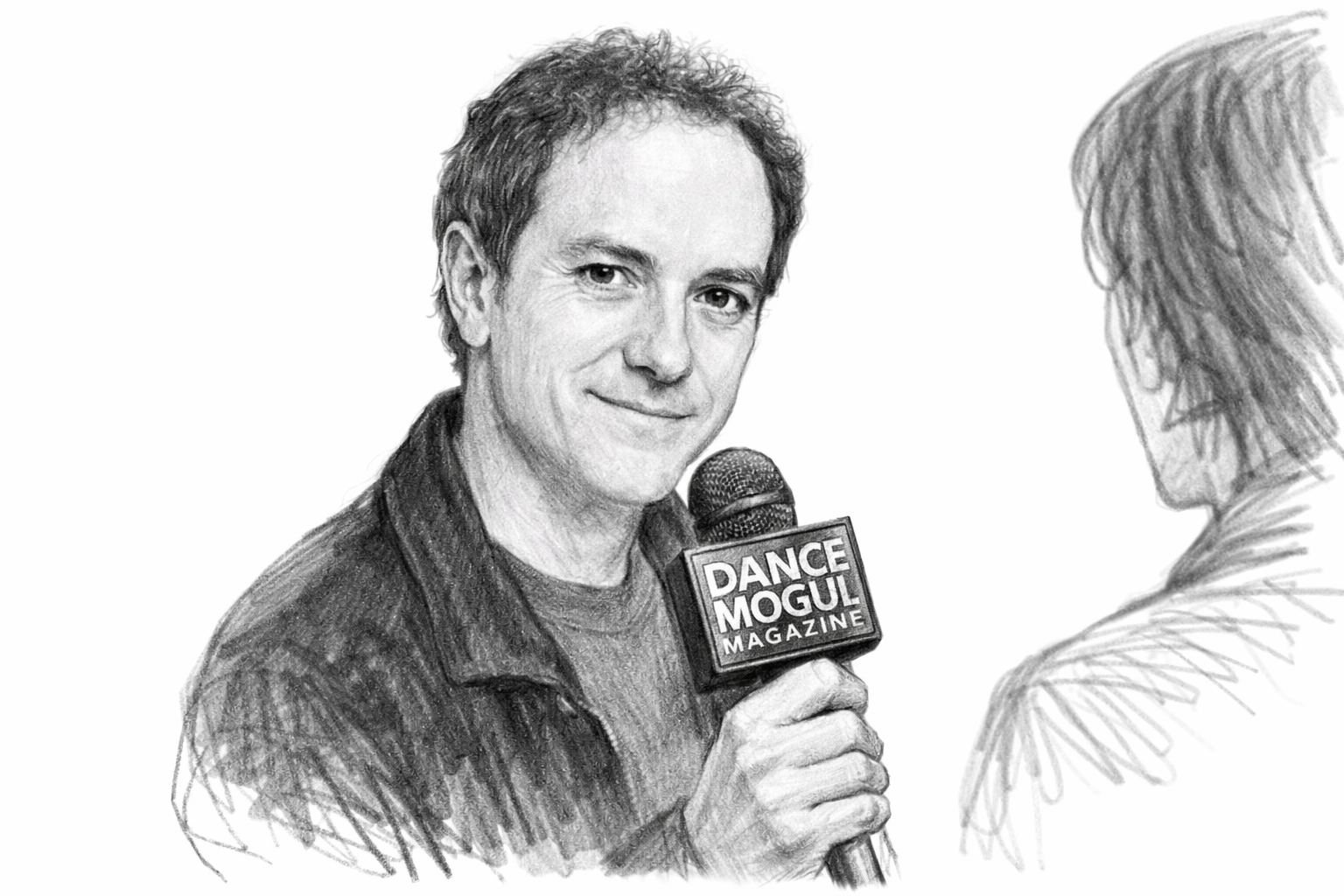
Joe Malone — Veteran dancer, choreographer, and arts educator | Photo: Dance Mogul Magazine
Introduction
Dance history is rarely written down. It lives in the bodies of the people who performed it, in the stories passed between generations in rehearsal halls and backstage corridors. When those voices go silent, the history goes with them. That is why Dance Mogul Magazine exists — to capture these stories before they disappear, directly from the veterans who shaped the culture.
Joe Malone is one of those veterans. A professional dancer and choreographer whose career spans more than four decades, Malone worked alongside some of the most legendary names in entertainment — Michael Jackson, Diana Ross, Vincent Paterson, Michael Peters, Lester Wilson, and Paula Abdul, among many others. He was there when street dance and trained contemporary dance first began to merge on professional stages. He was in the room when Michael Jackson said the words that defined his artistic philosophy. And he witnessed firsthand how the fusion of these worlds created the modern entertainment landscape we know today.
In this exclusive interview, Joe Malone shares his oral history of American dance — from the vaudeville roots of jazz, to the disco era, to the groundbreaking music videos that changed everything. This is a story that belongs in the archives. For more on the choreographers who shaped Michael Jackson's legacy, explore our MJ Pillar Series: The Choreographers Behind Michael Jackson.
The Roots: From Vaudeville to West Side Story
Malone began dancing at age 20, later than most, and was deeply influenced by the movie musicals of the golden era — Fred Astaire, Gene Kelly, and especially West Side Story (1961). For his generation, that film was revolutionary. It presented male dancers as rough, physical, and dramatic — a far cry from the polished ballroom style people associated with dance at the time. Two rival gangs using dance as battle. That concept, Malone notes, would prove prophetic when street culture adopted the same framework decades later.
Malone traces the lineage of American dance back through vaudeville, where song-and-dance men like Bill "Bojangles" Robinson and the Nicholas Brothers formalized performance dance and created what was then called "eccentric dancing" — a term used for performers like Ray Bolger (the Scarecrow in The Wizard of Oz, 1939) and Buddy Ebsen. At the same time, classical ballet and modern dance companies existed in a separate world entirely. But underneath it all, Malone emphasizes, jazz dance was built on African tribal movement — steps borrowed from and inspired by African culture that became the foundation of what audiences now consider American dance.
The Mentors: Claude Thompson, Lester Wilson, and Michael Peters
Malone was fortunate to study and work with three pioneering figures who each shaped different corners of American dance.
Claude Thompson — Along with Alvin Ailey, Thompson was among the first Black men in America to perform solo concert dance in a formalized setting. In 1961, Thompson and Ailey performed alongside Carmen de Lavallade in a CBS television production of Gershwin's Porgy and Bess. Thompson spent years working in both Europe and the United States in television and stage. Malone studied with him directly. (Note: Claude Thompson has passed away. Carmen de Lavallade passed away on December 29, 2025, at age 94. Alvin Ailey passed away on December 1, 1989, at age 58.)
Lester Wilson (1942–1993) — A Juilliard-trained dancer who was performing on Broadway while still in high school, then heading uptown to dance in clubs afterward. Wilson became one of the most sought-after choreographers of the 1970s and 1980s. His most famous work was coaching John Travolta for the 1977 film Saturday Night Fever, which defined the disco era on screen. Wilson also choreographed for Diana Ross, Liza Minnelli, Gladys Knight, and many others. He choreographed the 1984 film Beat Street, the 1985 film The Last Dragon, and the 1992 film Sister Act. Wilson died of a heart attack on February 14, 1993, at age 50.
Saturday Night Fever (1977) — Choreography by Lester Wilson
Michael Peters (1948–1994) — The man Malone credits with inventing the storytelling music video. Peters choreographed Michael Jackson's "Billie Jean," "Beat It" (1983), and "Thriller" (1983) — the three videos that transformed music video from a promotional tool into a narrative art form. Peters was also a Tony Award winner for Dreamgirls (1982) and worked with Diana Ross, Pat Benatar, and Lionel Richie. He began his career in modern dance, working with Alvin Ailey, Talley Beatty, and Fred Benjamin throughout the 1960s and 1970s. Peters died on August 29, 1994, from an AIDS-related illness at age 46 — on Michael Jackson's birthday.
Michael Jackson — "Beat It" (1983) | Choreography by Michael Peters
The Diana Ross Era: Magic Screens and Studio 54
Malone's first encounter with Michael Jackson came during Diana Ross's concert at the Universal Amphitheatre in the late 1970s (circa 1977–1978), shortly after the completion of The Wiz. The show was directed and choreographed by David Winters and featured one of the most innovative stagecraft techniques Malone had ever seen — a "magic screen" made of overlapping elastic strips that appeared solid from a distance. Dancers walked down an infinity staircase on a projected film, and at the bottom of the movie stairs, they physically pulled through the screen and stepped live onto the stage. The illusion was stunning.
The show also represented a critical moment: David Winters brought together both trained dancers and street dancers on the same stage. Billy Goodson — a complete street dancer who later became a major choreographer in America, Italy, and France — was part of the cast alongside classically trained performers. The costume aesthetic reflected the androgynous style of the Studio 54 era: gauze shirts, sprayed-on pants, knee-high boots, and platform heels. Before the show, a helicopter flew over the amphitheater carrying a lightboard reading "Diana Loves You — She's Coming." The crowd screamed so loud the 80-piece orchestra was drowned out.
This was also one of the first major stage productions Malone recalls seeing street dance integrated alongside trained contemporary work — a blueprint for what would become standard in the decades to follow.
Working with Michael Jackson: "Beat It" and "Smooth Criminal"
Malone danced in the "Beat It" music video (1983), choreographed by Michael Peters, and later served as assistant choreographer on "Smooth Criminal," the centerpiece of the 1988 film Moonwalker, choreographed by Vincent Paterson.
Beat It: Unifying the Bloods and the Crips
The "Beat It" video was directly inspired by West Side Story — two rival gangs facing off, with dance as the battleground. But Jackson took the concept further than anyone expected. At a time when Los Angeles was gripped by violence between the Bloods and the Crips, Jackson hired actual members of both gangs to appear in the video. Then he split them: half of each gang was placed in one group, half in the other. If anyone was going to fight, they were out. Professional dancers were mixed into both sides.
"By the time they were done, everyone was rooting for their side. It was a demonstration of how, if a human being's heart is pure, and we're all the same — we just got something on our heads that got twisted, and we inherited this wrong thinking about each other."
— Joe Malone on the "Beat It" set
Smooth Criminal: "Money Is No Object"
For "Smooth Criminal," Jackson rented a sound stage and built the entire nightclub set — one continuous set, exactly as it appears in the film. The concept drew from the "Girl Hunt Ballet" sequence in The Band Wagon (1953), starring Fred Astaire and Cyd Charisse, used as a loose creative template. Vincent Paterson (born 1950), who had been one of the gang leaders in "Beat It" and the assistant choreographer on "Thriller," was the primary choreographer. Malone served as assistant choreographer.
During rehearsals, Jackson turned to Paterson and Malone and said something Malone had never heard before or since:
"Anything you can imagine, we'll try. Money is no object."
— Michael Jackson during "Smooth Criminal" rehearsals
The production was massive — roughly 50 dancers. The iconic anti-gravity lean, the coin flip (which Jackson apparently struggled with — "that was the hardest part for him," Malone laughs), and all the special effects were realized by a director who had worked on the flying sequences in Superman (1978) starring Christopher Reeve.
Michael Jackson — "Smooth Criminal" (1988) | Choreography by Vincent Paterson
One-on-One with Michael: The Work Ethic
Paterson sent Malone to rehearse alone with Jackson — just the two of them, working on the theme combination that appears throughout the piece (no more than eight counts of eight). Jackson learned the choreography with astonishing speed. But when Malone told him he looked fantastic and was done, Jackson's response revealed why he was who he was:
"Thank you very much. I really appreciate that. But I'm still thinking. Tomorrow, when the music comes on, I want my body just to respond with these steps."
— Michael Jackson to Joe Malone
Malone also noted that Jackson told him he practiced every Sunday — locking himself in his studio to work on movement for hours. He learned from watching and absorbing rather than formal training. His sister Janet, whom Malone also taught, possessed the same gift: she would watch a combination once, standing still, and then perform it flawlessly.
Make-A-Wish and Ladysmith Black Mambazo
Two moments from the "Smooth Criminal" set reveal the depth of Jackson's humanity. Make-A-Wish children visited the set regularly — young people in the final stages of terminal illness. Jackson would sit with each one, try on his hat with them, interact with genuine warmth. When Malone asked how he could handle the emotional weight, Jackson responded:
"When you look at them, you think about the time they have left. When I look at them, I think about the time we have together."
— Michael Jackson
The South African vocal group Ladysmith Black Mambazo — who had risen to international fame on Paul Simon's Graceland album (1986) — visited the set and performed a song they had written for Jackson. It was in their native Zulu dialect, about the moon and how Jackson embodied its light. Jackson stopped all rehearsal, gathered all 50 dancers, and sat everyone down to listen. Their performance later became "The Moon Is Walking," which closes the Moonwalker film (1988). Malone describes it as "a religious experience."
The Merge: How Street Dance and Contemporary Dance Became One
One of the most valuable aspects of Malone's testimony is his firsthand account of how street dance and contemporary dance merged into the hybrid form that dominates entertainment today. He watched it happen in real time.
Late 1970s — The Disco Era: Street dancers were kings. They whacked, posed, locked, and performed in clubs. Trained jazz dancers worked stage shows and television. The film Thank God It's Friday (1978 — Malone recalled it as 1977, but the film was released May 19, 1978) featured both street and trained dancers together in an early demonstration of this collision. The choreographer was Joanne DiVito, and the cast included Shabadoo and many of the leading club dancers of the era, alongside the Commodores and Donna Summer performing "Last Dance."
Early 1980s — Breaking and Popping: The game changed when popping and breaking emerged. These required entirely different skill sets that couldn't be faked. Choreographers began merging the styles — teaching trained dancers basic pops and asking street dancers to learn jazz vocabulary. The collaboration was challenging but productive. Malone recalls the humbling experience of trying to learn how to pop: "I gained an entire respect for how many hours and hours and hours that took."
Mid-1980s — Paula Abdul and Barry Lather: Choreographers like Paula Abdul (who choreographed the second season of The Tracey Ullman Show, 1987–1990, where Malone was a series regular) and Barry Lather (who created Janet Jackson's breakthrough choreography for "What Have You Done for Me Lately" and "Nasty") began codifying the fusion. The "prep" style of sharp, rhythmic isolations — boom, shift, hit — became a signature vocabulary.
Late 1980s–1990s — Full Integration: By this point, every major stage show, music video, and concert tour combined both traditions. Michael and Janet Jackson were the primary catalysts. Street dancers trained in jazz; jazz dancers studied hip-hop. A new generation of "super dancers" emerged — versatile performers who could move across every style.
2000s–Present — Cirque du Soleil and Beyond: Malone identifies Cirque du Soleil as the final twist that opened the door for artists like Mia Michaels (choreographer and judge on So You Think You Can Dance) to push dance into increasingly athletic and theatrical territory. Today, the influence of street dance is everywhere — from the Laker Girls to Broadway — embedded so deeply it's often invisible. As Malone puts it: "The groove is inspired from the street. The hits are inspired. The accents. The passion."
Variety Television, Union Struggles, and the Fight for Dancers' Worth
Malone came through the final era of variety television and has a rare perspective on how dancers were treated within the entertainment industry's labor structure. As a series regular on Barbara Mandrell and the Mandrell Sisters (1980–1982), he was paid $500 per week under AFTRA scale — while actors in equivalent series roles started at several thousand. When Barbara Mandrell learned the disparity, she personally gave the dancers a raise, declaring the pay scale "ridiculous."
The union landscape was complicated. AFTRA (American Federation of Television and Radio Artists) covered videotaped productions and had categories for specialty performers. SAG (Screen Actors Guild) covered filmed productions. Dancers who worked on film were often paid as extras through the Screen Extras Guild — even in major motion pictures where they were dancing at a professional level. The eventual merger of these unions (now SAG-AFTRA) was hard-won, with many actors initially resistant to sharing a union with dancers, radio announcers, and other performers.
Malone's career also included approximately 100 variety shows, multiple Academy Awards ceremonies, specials with Linda Carter, and four seasons as part of the ensemble on The Tracey Ullman Show (1987–1990) alongside Tracey Ullman, Sam McMurray, Dan Castellaneta, and Julie Kavner.
On Competition Shows and the Artist's Path
Malone offered a thoughtful perspective on dance competition shows. While respecting the artists who participate, he believes the format creates a misleading impression — that success can come through a single breakthrough moment rather than years of dedicated development. He draws a distinction between working for a period and building a career, between performing and truly expressing oneself as an artist.
He points to Soul Train and American Bandstand as earlier models that introduced dancers to audiences without pitting them against each other — giving performers like Shabadoo a voice and a platform that crossed cultural boundaries. The difference, in his view, is that those shows celebrated individual expression rather than comparative judgment.
Why He Teaches: The Performing Arts Center
Malone and his wife Nanci Hammond founded a performing arts center because they saw a gap. There were plenty of places to join a dance team, compete, and win trophies. But they didn't see enough spaces where a serious artist could develop with other serious artists under the guidance of professional dancers and choreographers — people who had built careers, not just résumés.
His philosophy is clear: nobody can teach you to dance. What a teacher can offer is information and opportunity. What a strong program can offer is structure — a container that holds you accountable to the confrontational nature of the art form. Because if you want to make an audience feel something, you have to be willing to feel it yourself first.
Joe Malone's Legacy — In His Own Words
"Rather than trying to become a great artist, I endeavored to try to become a great man and then let my art express that humanity. Human being first. Artist second. We're all human beings first, and then we find a way that is most natural to us to express that humanity."
— Joe Malone, reflecting on a conversation with Lester Wilson
Legends Mentioned: A Directory of Dance and Entertainment History
Joe Malone's interview is a masterclass in dance lineage. Below is a reference guide to the artists, choreographers, and cultural figures he named — many of whom have passed away, and whose contributions deserve to be remembered by future generations.
Michael Peters (1948–1994) ✝
Choreographer of "Beat It," "Thriller," and "Billie Jean." Tony Award winner for Dreamgirls. Credited with creating the storytelling music video format. Died of an AIDS-related illness at age 46.
Vincent Paterson (born 1950) — Living Legend
Choreographer and director of "Smooth Criminal," "The Way You Make Me Feel," "Black or White." Co-directed Michael Jackson's Bad World Tour. Choreographed Madonna's Blond Ambition Tour. Tony-nominated for Kiss of the Spiderwoman. Featured in the Smithsonian's "Masters of Movement."
Lester Wilson (1942–1993) ✝
Juilliard-trained choreographer of Saturday Night Fever (1977). Worked with Diana Ross, Liza Minnelli, Gladys Knight, Ann-Margret. Choreographed Beat Street, The Last Dragon, and Sister Act. Mentored by Bob Fosse and Josephine Baker. Died of a heart attack at age 50.
Michael Jackson (1958–2009) ✝
The King of Pop. His music videos revolutionized entertainment. His commitment to fusing street dance and theatrical choreography created the template for modern performance. His humanitarian work, including his devotion to Make-A-Wish children, was integral to who he was as a person.
Alvin Ailey (1931–1989) ✝
Founder of the Alvin Ailey American Dance Theater. Pioneer of modern dance who brought African American cultural experiences to the concert stage. His masterwork Revelations (1960) remains one of the most performed modern dance pieces in history.
Claude Thompson ✝
One of the first Black men to perform solo concert dance in a formalized American setting. Performed alongside Alvin Ailey and Carmen de Lavallade in the 1961 CBS production of Porgy and Bess. Worked extensively in Europe and American television.
Carmen de Lavallade (1931–2025) ✝
Legendary dancer, choreographer, and actress. Kennedy Center Honoree (2017). Collaborated with Alvin Ailey, Geoffrey Holder, and Agnes de Mille. Principal dancer at the Metropolitan Opera. Died December 29, 2025, at age 94.
Ladysmith Black Mambazo (founded 1960)
South African male choral group. Five-time Grammy winners. Rose to international fame on Paul Simon's Graceland (1986). Performed "The Moon Is Walking" in Michael Jackson's Moonwalker (1988). Cultural ambassadors of South Africa, endorsed by Nelson Mandela.
Bill "Bojangles" Robinson (1878–1949) ✝
Legendary tap dancer who was the highest-paid Black performer of his era. Famous for his stair dance and performances with Shirley Temple. A foundational figure in American dance.
The Nicholas Brothers — Fayard (1914–2006) ✝ & Harold (1921–2000) ✝
Acrobatic tap dance duo whose "Jumpin' Jive" sequence in Stormy Weather (1943) is considered one of the greatest dance sequences ever filmed. Fred Astaire called it the greatest movie musical number he had ever seen.
Paula Abdul (born 1962) — Living Legend
Choreographer who rose from the Laker Girls to become one of the most influential dance figures of the late 1980s. Choreographed The Tracey Ullman Show and broke through as a recording artist with "Straight Up" (1988). Helped define the fusion of pop choreography and street dance.
David Winters (1939–2019) ✝
Dancer in the original Broadway cast of West Side Story (1957). Became a prolific choreographer and director in television and film. Choreographed Diana Ross's innovative concerts in the late 1970s.
Donna Summer (1948–2012) ✝
The "Queen of Disco." Her performance of "Last Dance" in Thank God It's Friday (1978) won the Academy Award for Best Original Song. A defining voice of the disco era.
Monumental Moments: Key Takeaways from This Interview
1. Street Dance Elevated the Entire Entertainment Industry. Malone is unequivocal: the groove, the hits, the accents, the passion that define modern commercial dance all trace back to street culture. Without street dance, the entertainment industry as we know it would not exist.
2. Michael Jackson United Real Gang Members Through Art. The "Beat It" video wasn't just a creative project — it was an act of social intervention. Jackson split actual Bloods and Crips members across both groups, forcing collaboration and proving that art can bridge even the deepest divides.
3. The Storytelling Music Video Was Born from Broadway. Michael Peters brought theatrical narrative structure from Broadway to MTV. His choreography for "Beat It" and "Thriller" transformed the music video from a promotional clip into a cinematic art form.
4. Dancers Have Been Systematically Underpaid. Malone's account of union pay disparities — $500/week for dancers versus thousands for actors in the same show — reveals a structural inequity that has persisted for decades. The fight for dancers' fair compensation continues today.
5. Michael Jackson's Work Ethic Was Unmatched. Even after learning choreography faster than anyone, Jackson kept rehearsing until his body would respond without thinking. Every Sunday was his personal movement day. That level of commitment is what separated him from everyone else.
6. Art Requires Connection, Not Just Technique. In a world of increasing digital isolation, Malone reminds us that dance is kinetic catharsis — emotional experience through movement. The purpose of training isn't to learn steps; it's to develop the humanity that allows an artist to touch an audience's heart.
Editor's Note on Dates: Joe Malone recalled Thank God It's Friday as being released in 1977; the film was released on May 19, 1978. The Diana Ross concert at the Universal Amphitheatre was approximately 1977–1978 as Malone recalled. Lester Wilson's choreography credit for John Travolta was for Saturday Night Fever (1977), which Malone referenced with some uncertainty. All other dates and details have been verified through available historical records. Oral history is imperfect by nature — its value lies in the perspective and experience of the storyteller, and Joe Malone's perspective is irreplaceable.
Continue the story: Read our MJ Pillar Series — The Choreographers Behind Michael Jackson
Explore the evolution of movement at our Dance Styles Hub
Dance Mogul Magazine
"Inspiring Self-Empowerment Through Dance Culture"
Interviews like this are why Dance Mogul Magazine stands apart. We go directly to the veterans — the people who built the culture — to preserve their stories for future generations. Our YouTube channel, our website, and our social platforms exist as a living archive of dance history. This is what brand authority looks like: real voices, real history, real purpose.
© Dance Mogul Magazine LLC. All rights reserved.