
Health & Empowerment Series | Global Organic Meal Prep
Korean Organic Meal Prep: How Kimchi, Banchan, and Fermented Foods Build Extraordinary Health
Global Organic Meal Prep Series — Article 11 of 20
By Dance Mogul Magazine | Health & Empowerment Series | Global Organic Meal Prep
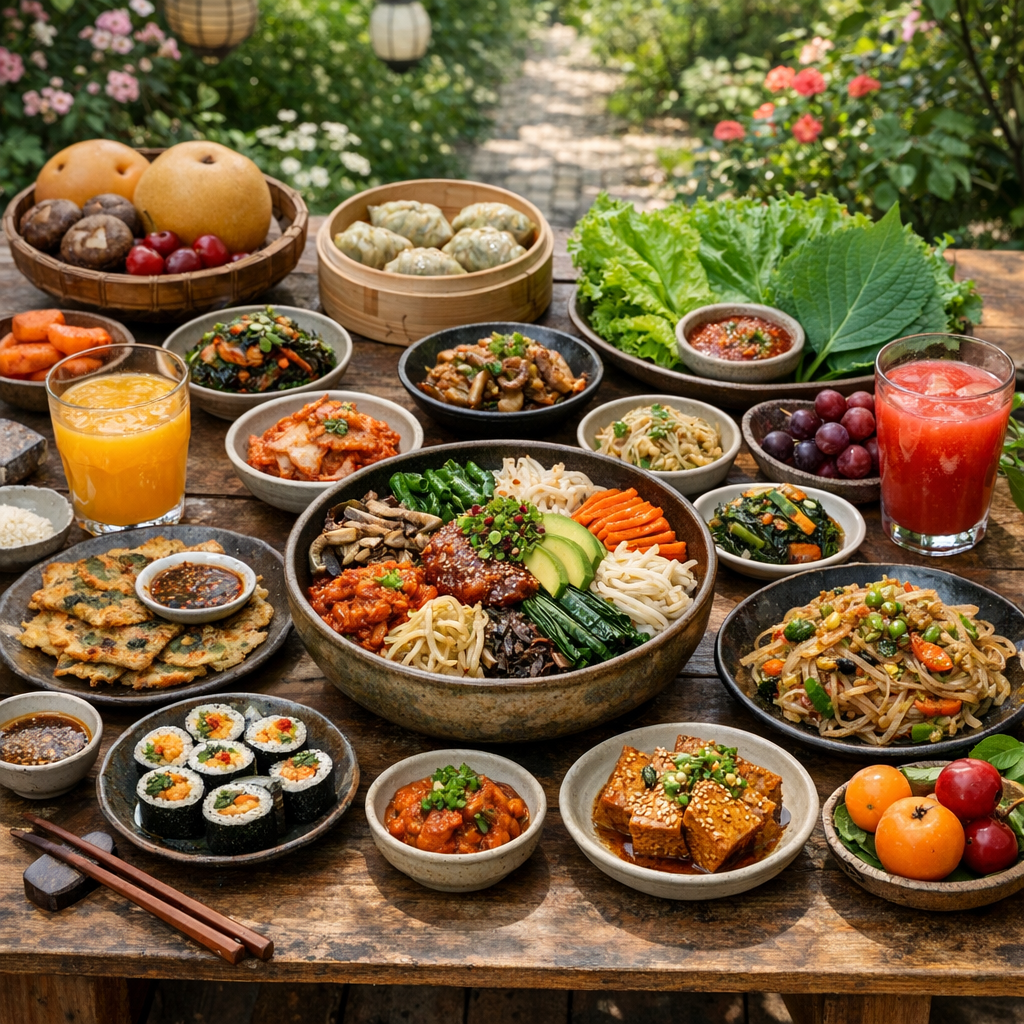
Why South Korea Belongs in the Global Organic Meal Prep Series
South Korea has undergone one of the most remarkable health transformations in modern history. In just two generations, life expectancy rose from under 55 years to over 83 years — one of the highest in the world. Korean women now have the longest projected life expectancy of any population on earth. While universal healthcare and economic development play roles, researchers consistently point to the Korean diet as a critical factor: fermented foods at every meal, an extraordinary diversity of vegetable side dishes (banchan), lean proteins, and a culinary tradition that treats food as the first line of medicine.
The Korean concept of yak-sik dong-won — “food and medicine are from the same root” — defines how Koreans approach every meal. Kimchi, the nation’s most iconic food, is not just a condiment — it is a probiotic, prebiotic, vitamin-rich, anti-inflammatory superfood consumed at breakfast, lunch, and dinner. For dancers and health-conscious people everywhere, South Korea offers one of the most scientifically validated dietary traditions on the planet.
The Korean Organic Meal Prep Healing Pantry
Kimchi: Korea’s signature fermented cabbage (and its hundreds of regional variations) is a probiotic powerhouse. Kimchi delivers lactobacillus bacteria that support gut health, vitamin C, beta-carotene, and capsaicin from chili flakes — a compound shown to boost metabolism, reduce inflammation, and support cardiovascular health. Studies published in the Journal of Medicinal Food link regular kimchi consumption to improved cholesterol profiles and reduced cancer risk.
Doenjang and Gochujang: Fermented soybean paste (doenjang) and fermented chili paste (gochujang) are foundational Korean condiments that deliver probiotics, amino acids, and bioactive compounds. Doenjang has been shown to have anticancer, antioxidant, and anti-obesity properties in multiple studies.
Banchan (Vegetable Side Dishes): A traditional Korean meal features 3–12 small side dishes alongside rice and soup. These typically include seasoned spinach, soybean sprouts, pickled radish, seaweed, braised tofu, and various namul (blanched and seasoned wild greens). This system guarantees extraordinary vegetable diversity at every meal.
Seaweed: Gim (roasted seaweed) and miyeok (wakame) are consumed daily. Seaweed provides iodine, calcium, iron, and fucoidans — compounds with anti-inflammatory, antiviral, and immune-modulating properties. Miyeok-guk (seaweed soup) is traditionally served to new mothers for its nutrient density.
Garlic and Ginger: Korean cooking uses garlic in extraordinary quantities — often 5–10 cloves per dish. Allicin, garlic’s active compound, has demonstrated antibacterial, antiviral, and cardiovascular-protective effects. Combined with ginger’s anti-inflammatory power, this duo forms the flavor backbone and the medicinal engine of Korean cuisine.
5-Day Korean Organic Meal Prep Plan
Day 1 — Seoul: Breakfast: rice, kimchi, seasoned spinach, and a fried egg. Lunch: bibimbap (mixed rice bowl) with sautéed vegetables, gochujang, and a soft egg. Dinner: doenjang-jjigae (fermented soybean stew) with tofu, zucchini, and rice.
Day 2 — Busan: Breakfast: miyeok-guk (seaweed soup) with rice and kimchi. Lunch: japchae (sweet potato glass noodles) with vegetables and grilled beef. Dinner: grilled mackerel with radish kimchi, steamed rice, and soybean sprout soup.
Day 3 — Jeonju: Breakfast: hobakjuk (pumpkin porridge) with rice cakes. Lunch: kongnamul-gukbap (soybean sprout rice soup) with kimchi and pickled radish. Dinner: bulgogi (marinated grilled beef) with lettuce wraps, perilla leaves, garlic, and ssamjang.
Day 4 — Jeju Island: Breakfast: black bean porridge with sesame and honey. Lunch: haemul-pajeon (seafood-scallion pancake) with dipping sauce and kimchi. Dinner: braised tofu with vegetables in a spicy gochugaru sauce, served with rice and banchan.
Day 5 — Gyeongju: Breakfast: nurungji (scorched rice tea) with a soft-boiled egg and kimchi. Lunch: kimbap (seaweed rice rolls) with pickled radish, spinach, carrot, and egg. Dinner: samgyetang (ginseng chicken soup) with jujubes, garlic, and glutinous rice.
Why Korean Organic Meal Prep Works for Dancers
Korea’s fermentation-heavy diet directly addresses the gut health that modern science now identifies as foundational to immune function, mood regulation, nutrient absorption, and inflammation management. Dancers who maintain a healthy gut microbiome recover faster, get sick less often, and experience more stable energy and mood throughout demanding training cycles. The banchan system guarantees that every meal delivers diverse vegetables — each prepared differently to maximize nutrient availability.
The Korean approach to protein is also dancer-friendly: lean beef, tofu, fish, and eggs are consumed in moderate portions, always accompanied by vegetables and fermented sides that aid digestion and absorption. Garlic and ginger provide continuous anti-inflammatory support, while seaweed delivers minerals essential for bone density, thyroid function, and muscle performance. Korea’s food-as-medicine philosophy is not theoretical — it is embedded in every meal, every day.
“Korea teaches that the healthiest body is built from the inside out — one fermented bite, one vegetable side dish, one intentional meal at a time.”
Practical Korean Organic Meal Prep Tips
Sunday Prep: Make or buy a jar of fresh kimchi (it keeps for weeks and improves with age). Cook a large batch of short-grain rice. Prepare 3–4 banchan: seasoned spinach, soybean sprouts, braised tofu, and pickled radish. Make a pot of doenjang-jjigae base. Pre-cut vegetables for bibimbap bowls.
Sourcing: Korean ingredients are widely available at Asian grocery stores. Essential staples: gochugaru (Korean chili flakes), gochujang, doenjang, sesame oil, roasted seaweed (gim), and rice vinegar. Quality kimchi is sold refrigerated at most grocery stores — or make your own with napa cabbage, gochugaru, garlic, ginger, fish sauce, and scallions.
Hydration: Barley tea (boricha) is Korea’s daily hydration staple — caffeine-free, mildly nutty, and served hot or cold. Corn tea (oksusu-cha) is another popular option. Soups are served at nearly every meal and double as hydration sources rich in minerals and electrolytes.
A Culture Worth Celebrating
South Korea’s food traditions represent one of humanity’s most sophisticated systems for using food as medicine. The practice of fermenting vegetables, soybeans, and chili into living, probiotic-rich foods predates modern microbiology by centuries. The banchan system ensures that no meal is nutritionally incomplete. And the Korean understanding that garlic, ginger, sesame, and seaweed are not just flavors but daily medicine reflects a wisdom that the rest of the world is only now beginning to appreciate. For the global dance community, Korea’s message is compelling: feed your gut, honor your vegetables, and trust that the food traditions of your ancestors hold the keys to your health.
Continue Exploring the Global Organic Meal Prep Series
Health & Empowerment Series • West African Organic Meal Prep • Spanish Organic Meal Prep • Italian Organic Meal Prep • Japanese Organic Meal Prep • Icelandic Organic Meal Prep • Why Dance Is Medicine • The Dancer’s Prescription • Workbooks & Guides • Japanese Organic Meal Prep