
Health & Empowerment Series | Fitness & Movement
Running for Dancers: Build Endurance, Mental Toughness, and Cardiovascular Power
From the long-distance traditions of East Africa to the open roads of every city on earth — how running builds the engine that keeps dancers moving when the choreography gets demanding.
By Dance Mogul Magazine | Health & Empowerment Series | Fitness Series — Article 7 of 10
Why Running for Dancers Matters
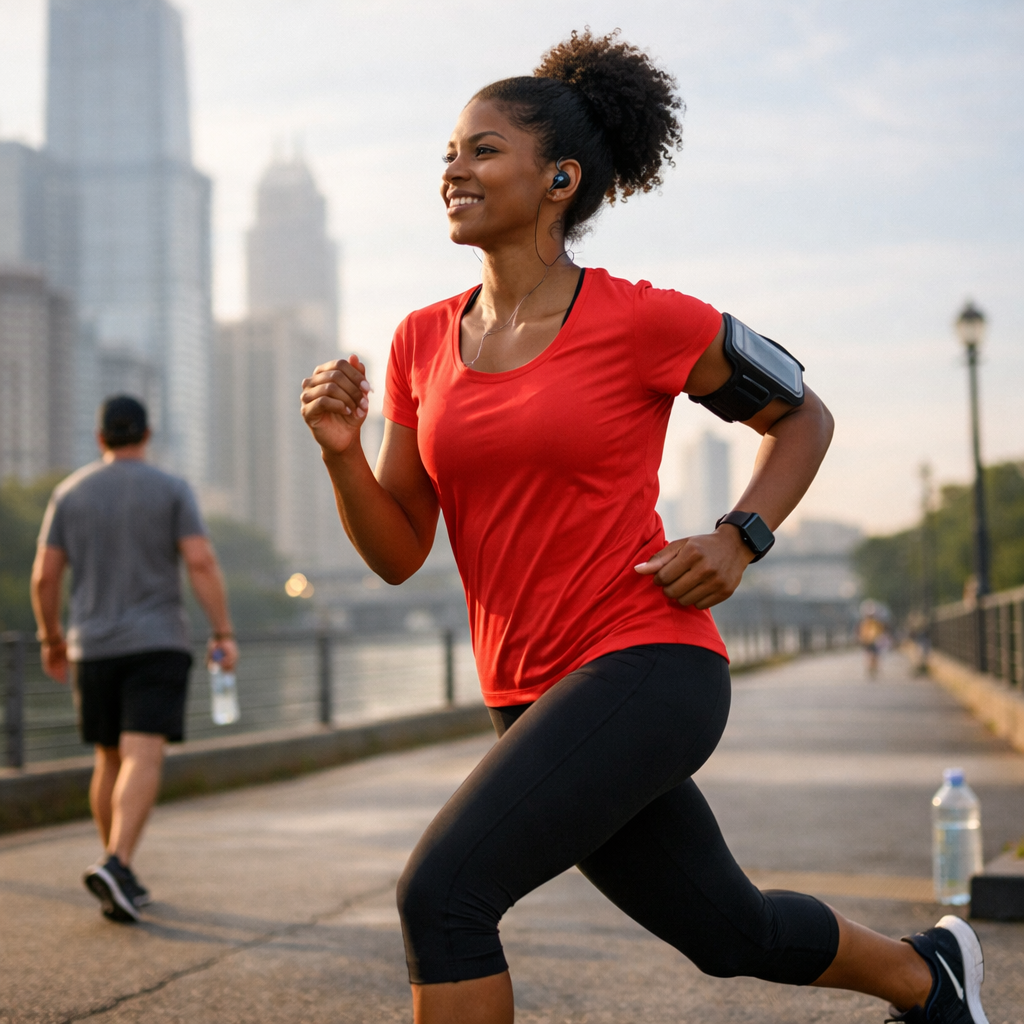
Running and dance share a fundamental truth: both are conversations between the body and the ground. In dance, that conversation is choreographed, styled, and set to music. In running, it is stripped to its essence — one foot, then the other, repeated thousands of times across distance and time. And it is precisely this simplicity that makes running one of the most powerful cross-training tools a dancer can use.
The relationship between running and dance has been debated in studios for years. Some teachers warn that running builds the wrong kind of muscle, tightens the hips, or detracts from the aesthetics of a dancer’s physique. But the science tells a different story. When programmed intelligently — with appropriate volume, intensity, and recovery — running builds cardiovascular endurance, mental resilience, bone density, and metabolic efficiency without compromising the flexibility or artistry that dance demands.
Running is also the most democratic form of exercise on the planet. It requires no membership, no equipment beyond a pair of shoes, and no special skill. It can be done on a track, a trail, a treadmill, or a city sidewalk. It is practiced in every country on earth, from the high-altitude training camps of Kenya and Ethiopia to the urban parks of Tokyo, London, and New York. The Kalenjin people of Kenya’s Rift Valley have produced more champion distance runners than any other community in history — a tradition built on daily running from childhood that has shaped not only athletic excellence but cultural identity.
The Healing Benefits of Running
Cardiovascular Endurance. Running is one of the most effective activities for improving VO2 max — the body’s maximum oxygen uptake capacity. A 2015 study in the Journal of the American College of Cardiology found that even modest amounts of running (five to ten minutes per day) were associated with significant reductions in cardiovascular mortality. For dancers, a higher VO2 max means more oxygen available to working muscles during long, demanding pieces.
Bone Density. Dance is a weight-bearing activity, but many styles emphasize lightness and cushioned landings that reduce impact forces. Running, by contrast, generates ground-reaction forces that stimulate bone remodeling and increase bone mineral density. A study in the Journal of Bone and Mineral Research demonstrated that runners had significantly higher bone density than non-runners, particularly in the spine and hips. For dancers, stronger bones mean greater resistance to stress fractures.
Mental Toughness. Running builds a specific kind of psychological resilience. When the body wants to stop and the mind must override that impulse, a form of mental training occurs that transfers directly to the demands of performance. Sports psychologists call this "distress tolerance" — the ability to function effectively under physical and emotional discomfort. Dancers who run regularly report feeling more confident in their ability to push through fatigue on stage.
Metabolic Efficiency. Regular running improves the body’s ability to use fat as fuel during moderate-intensity activity, sparing glycogen stores for high-intensity bursts. This is directly relevant to dance performance, where sustained moderate effort is punctuated by explosive sequences. A metabolically efficient dancer has more energy reserves available when the choreography demands peak power.
Stress Relief and Mood Enhancement. The "runner’s high" is not a myth. Research published in Cerebral Cortex confirmed that running triggers the release of endocannabinoids — the body’s natural mood-elevating compounds. For dancers managing the emotional pressures of auditions, touring, and performance, running offers a reliable, accessible reset for the mind.
A Weekly Running Plan for Dancers
This plan is designed for dancers who are new to running or returning after a break. It prioritizes joint safety, progressive volume, and integration with dance training. Three running sessions per week are sufficient to build meaningful cardiovascular gains.
Monday — Easy Aerobic Run (20-25 minutes). Run at a conversational pace — you should be able to speak full sentences without gasping. This builds the aerobic base that sustains all other training. If 20 minutes of continuous running feels too challenging, alternate between two minutes of running and one minute of walking until endurance builds.
Wednesday — Tempo Run (20 minutes). After a five-minute easy warm-up, run for 10 minutes at a "comfortably hard" pace — faster than easy but not sprinting. This pace, often called the lactate threshold, trains the body to sustain higher intensities without accumulating fatigue. Finish with a five-minute cool-down jog. This session builds the sustained-effort endurance that mirrors the demands of a full-length dance piece.
Friday — Interval Run (20 minutes). After a five-minute warm-up jog, perform six to eight repetitions of 30 seconds fast running followed by 90 seconds of easy jogging. The fast intervals should feel hard but controlled — about 85 to 90 percent of maximum effort. Cool down with a five-minute easy jog. This session builds anaerobic capacity and the ability to recover quickly between bursts of high-intensity movement.
Post-Run Recovery (Every Session). Follow every run with five minutes of gentle walking and five minutes of static stretching focused on the calves, hip flexors, hamstrings, and quadriceps. This prevents the tightness that can interfere with dance training and maintains the flexibility that dancers need.
Weekly Focus Summary
Monday: Easy aerobic run — Build the base
Wednesday: Tempo run — Sustained-effort endurance
Friday: Interval run — Anaerobic power and recovery
Post-Run: Walk and stretch after every session
Why Running Works for Dancers
Running fills a specific gap in dance training that no amount of class or rehearsal can address. It builds the sustained cardiovascular capacity that intermittent studio work does not develop. It strengthens bones in ways that cushioned dance surfaces cannot. And it builds a mental fortitude that comes only from choosing to continue when the body is tired and there is no audience watching.
The key is moderation and intelligence. Dancers who run two to three times per week at appropriate intensities, who stretch after every session, and who listen to their bodies when fatigue accumulates will find that running enhances their dance practice rather than competing with it. The goal is not to become a competitive runner. The goal is to build the cardiovascular engine that makes everything in the studio easier.
“Running teaches the body what the stage demands: the ability to sustain effort long after the mind has asked permission to stop.”
How to Get Started
Invest in a quality pair of running shoes that provide adequate support for your foot type. Visit a specialty running store for a gait analysis if possible — the right shoes reduce the risk of shin splints, plantar fasciitis, and knee pain. Start with the Monday easy-run format and add sessions gradually over two to four weeks. Never increase weekly running volume by more than 10 percent from one week to the next.
If outdoor running is not accessible or appealing, a treadmill offers the same cardiovascular benefits with the added advantage of controlled pacing and cushioned surfaces that reduce joint impact. Many dancers find that running with music or podcasts transforms the experience from a chore into a welcome mental break from the structured world of the studio.
A Practice Worth Celebrating
Running belongs to every culture and every era. The Tarahumara people of Mexico’s Copper Canyons run ultra-marathon distances in handmade sandals as a form of cultural expression. The Kalenjin runners of Kenya have rewritten the record books while training on dirt roads at altitude. Ethiopian runners carry a tradition of excellence that stretches back generations. And every morning, in every city on the planet, millions of ordinary people lace up their shoes and step out the door to run — not for trophies, but for health, clarity, and the simple joy of forward motion.
For dancers, running is not a departure from your art. It is an investment in the body that makes your art possible. Run with purpose. Run with joy. And return to the studio with a heart that is stronger, lungs that breathe deeper, and a mind that is ready for whatever the choreography demands.
Explore the full Health & Empowerment Series and discover how the world’s great movement and nutrition traditions can help you build a life of strength, creativity, and lasting wellness.
Disclaimer: This article is for educational purposes only and is not intended as fitness, medical, or nutritional advice. Always consult a qualified healthcare professional or certified fitness instructor before beginning any new exercise program.
Continue Exploring the Series
Health & Empowerment Series — Explore the full collection of articles on movement, nutrition, and self-empowerment.
Why Dance Is Medicine — The science behind how dance heals the body and mind.
The Dancer’s Prescription — A guide to moving, eating, and shining from the inside out.
The Food-Brain Connection — How nutrition shapes the way dancers think, feel, and perform.
Cardio Training for Dancers — Build endurance that matches the demands of the stage.
Walking for Dancers — The most underrated recovery tool in every culture on earth.
Dynamic Stretching for Dancers — Prepare muscles for explosive movement and prevent injury.
West African Organic Meal Prep — Ancient foods that heal the body and honor the culture.
Empowerment Workbooks & Guides — Tools for individuals, families, and young people ready to grow.
© 2026 Dance Mogul Magazine LLC | dancemogul.com | Inspiring Self-Empowerment Through Dance Culture