
Health & Empowerment Series | Fitness & Movement
Tai Chi for Dancers: Cultivate Balance, Protect Your Joints, and Move with Lasting Precision
Born in 12th-century China and refined across a thousand years of martial arts tradition — how the slow, intentional art of Tai Chi trains the body to be both powerful and precise.
By Dance Mogul Magazine | Health & Empowerment Series | Fitness Series — Article 10 of 10
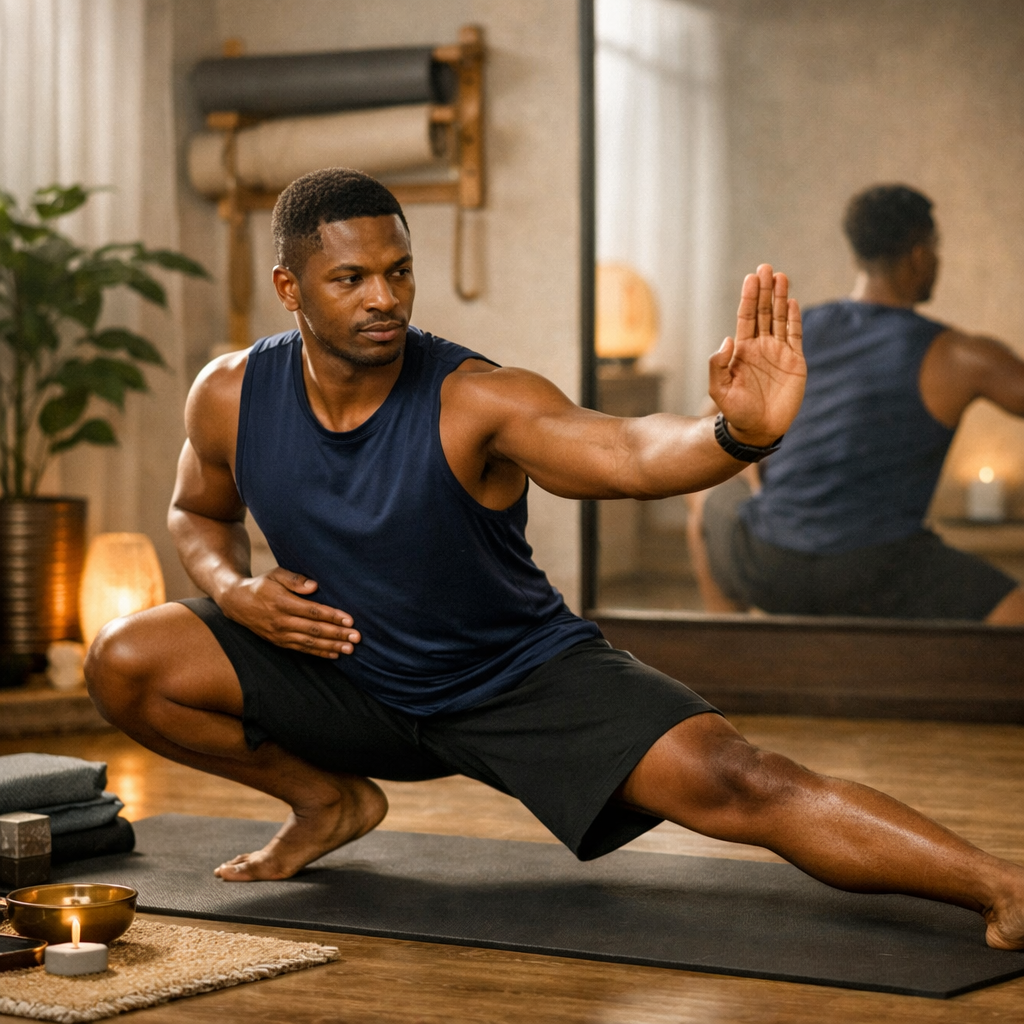
Why Tai Chi for Dancers Matters
In a world that celebrates speed, intensity, and visible effort, Tai Chi offers something radical: the proposition that the most powerful movement is the slowest one. That precision matters more than force. That the body’s deepest strength lies not in how much it can push outward but in how firmly it can remain centered. For dancers who spend their careers chasing faster turns, higher jumps, and more explosive combinations, Tai Chi presents a counterbalance that is not only refreshing but essential for long-term physical health and artistic growth.
Tai Chi (Taijiquan) emerged in China’s Chen Village around the 12th century as a martial art rooted in Taoist philosophy. Its core principle — that softness overcomes hardness, that yielding is a form of strength — was radical in the world of combat and remains radical in the world of dance. Over centuries, the practice evolved from a fighting system into a health cultivation practice that integrates slow, continuous movement with deep breathing, mental focus, and an acute awareness of the body’s position in space.
Today, Tai Chi is practiced by millions of people worldwide and has been the subject of hundreds of clinical studies. In 2020, UNESCO inscribed Tai Chi on the Representative List of the Intangible Cultural Heritage of Humanity, recognizing its profound contribution to human well-being and cultural expression. For dancers, Tai Chi offers a set of physical and mental benefits that no other single practice can match: improved balance, enhanced proprioception, protected joints, refined body awareness, and a deepened connection between intention and action.
The Healing Benefits of Tai Chi
Superior Balance Training. A comprehensive 2017 meta-analysis published in the Journal of the American Geriatrics Society concluded that Tai Chi significantly improves balance and reduces fall risk. While this research focused on older adults, the balance mechanisms it trains — proprioception, vestibular integration, and neuromuscular coordination — are precisely the same mechanisms that dancers rely on for turns, balances, and partnering. Tai Chi builds balance from the inside out, training the nervous system rather than just the muscles.
Joint Health and Protection. Tai Chi’s slow, low-impact movement patterns gently mobilize every major joint in the body through its full range of motion without compressive force. Research published in Annals of Internal Medicine demonstrated that Tai Chi was as effective as physical therapy for reducing pain and improving function in patients with knee osteoarthritis. For dancers managing joint wear from years of high-impact training, Tai Chi offers a way to maintain mobility while protecting vulnerable structures.
Proprioceptive Awareness. Proprioception — the body’s sense of its own position and movement in space — is one of the most critical and least discussed skills in dance. Tai Chi trains proprioception through slow, deliberate weight shifts, single-leg balances, and continuous spatial awareness. A 2015 study in Gait and Posture found that Tai Chi practitioners demonstrated significantly better proprioceptive accuracy than age-matched controls.
Mental Clarity and Focus. Tai Chi is often described as "moving meditation." The practice requires sustained, gentle attention to the body’s position, the quality of each movement, and the rhythm of the breath. Research published in the Journal of Alzheimer’s Disease found that Tai Chi improved cognitive function and brain volume in older adults. For dancers of all ages, the mental clarity cultivated by Tai Chi translates directly into sharper performance focus and improved choreographic retention.
Stress Reduction and Emotional Regulation. A 2019 systematic review in the Journal of Clinical Psychology concluded that Tai Chi produced significant reductions in depression, anxiety, and perceived stress. The combination of slow movement, deep breathing, and meditative focus activates the parasympathetic nervous system, creating a state of calm alertness that is ideal for both recovery and creative work.
A Weekly Tai Chi Plan for Dancers
This plan introduces Tai Chi progressively across the week. Each session is 20 to 30 minutes. No equipment is needed — just a flat, open space and comfortable clothing.
Monday — Foundation Work: Standing Meditation and Weight Shifts (20 minutes). Begin with five minutes of Zhan Zhuang (standing meditation) — standing with feet shoulder-width apart, knees slightly bent, arms relaxed at the sides, and attention directed to the body’s center of gravity. Then practice slow, deliberate weight shifts from left to right foot for 15 minutes. This seemingly simple practice trains the deep stabilizers and builds the awareness of center that underlies all Tai Chi movement.
Tuesday — Basic Form Practice (25 minutes). Learn or practice the opening sequence of a Yang-style or Chen-style Tai Chi form. Focus on smooth, continuous movement with no stops or jerks. Let the breath follow the movement naturally. The form teaches the body to transition between positions with control, efficiency, and grace — skills that transfer directly to dance.
Wednesday — Rest or Gentle Walking. Allow the body and mind to integrate the new movement patterns. If movement feels good, a gentle 20-minute walk is an ideal complement.
Thursday — Push Hands or Partner Sensitivity (25 minutes). If a training partner is available, practice Tui Shou (Push Hands) — a two-person exercise that develops sensitivity to a partner’s weight, timing, and intention. For dancers who perform partnering work, this practice is extraordinarily valuable. It trains the ability to sense and respond to another body’s movement in real time — the same skill that makes great partnering look effortless. If no partner is available, practice the form with eyes closed to deepen proprioceptive awareness.
Friday — Full Form with Breath Integration (30 minutes). Practice the longest Tai Chi sequence you have learned, integrating deep, coordinated breathing throughout. Move slowly, letting each transition take twice as long as feels comfortable. This practice cultivates the patience and precision that distinguish masterful movement from merely competent movement — in Tai Chi and in dance.
Weekly Focus Summary
Monday: Standing meditation and weight shifts — Foundation
Tuesday: Basic form practice — Continuous movement
Wednesday: Rest or gentle walk — Integration
Thursday: Push hands or solo practice — Sensitivity and proprioception
Friday: Full form with breath — Depth and precision
Why Tai Chi Works for Dancers
Tai Chi is both a complement and a counterbalance to the demands of dance. Where dance often requires speed, Tai Chi cultivates slowness. Where dance demands external expression, Tai Chi develops internal awareness. Where dance pushes the body to its physical limits, Tai Chi teaches the body to find power within its center. This balance is not just philosophically appealing — it is biomechanically essential. Dancers who practice Tai Chi develop stronger stabilizers, better proprioception, healthier joints, and a more refined sense of how movement originates from the body’s core.
The slow-movement training also builds a kind of body intelligence that fast movement cannot develop. When you move slowly, every compensation, every imbalance, every moment of lost awareness becomes visible. You cannot hide from your habits in Tai Chi. And the corrections you make at slow speed translate into cleaner, more efficient movement at performance speed.
“Tai Chi teaches the body what no rehearsal can: that the most powerful movement is the one performed with complete awareness, complete intention, and complete ease.”
How to Get Started
Begin with a beginner-level Yang-style Tai Chi class, either in person or through a reputable online instructor. Yang style is the most widely taught and the most accessible for newcomers. Look for instructors who emphasize principles over choreography — the goal is to understand how the body organizes itself, not to memorize sequences as quickly as possible.
If formal classes are not accessible, start with the Monday standing meditation practice. Five minutes of quiet standing with knees slightly bent, attention on the body’s center, and slow weight shifts between feet will introduce the fundamental principles of Tai Chi and begin to develop the balance and awareness that the practice cultivates.
A Practice Worth Celebrating
Tai Chi is a living cultural treasure — a practice that has been refined across more than eight centuries of Chinese martial arts, philosophy, and medicine. Its inscription as UNESCO Intangible Cultural Heritage in 2020 recognized what millions of practitioners already knew: that this slow, quiet, deeply intentional form of movement is one of humanity’s greatest gifts to the body and the mind.
For dancers, Tai Chi offers something rare: a practice that makes you better at your art not by pushing harder but by slowing down. It protects the joints that years of dancing wear. It sharpens the balance that every style demands. It calms the mind that performance pressure rattles. And it connects you to a lineage of movement practitioners who understood, long before modern science confirmed it, that the path to mastery runs through stillness.
Step into the form. Let the breath guide you. And discover what happens when a dancer learns to move not just with speed and technique but with the deep, centered stillness that Tai Chi has been cultivating for a thousand years.
Explore the full Health & Empowerment Series and discover how the world’s great movement and nutrition traditions can help you build a life of strength, creativity, and lasting wellness.
Disclaimer: This article is for educational purposes only and is not intended as fitness, medical, or nutritional advice. Always consult a qualified healthcare professional or certified fitness instructor before beginning any new exercise program.
Continue Exploring the Series
Health & Empowerment Series — Explore the full collection of articles on movement, nutrition, and self-empowerment.
Why Dance Is Medicine — The science behind how dance heals the body and mind.
The Dancer’s Prescription — A guide to moving, eating, and shining from the inside out.
The Food-Brain Connection — How nutrition shapes the way dancers think, feel, and perform.
Yoga for Dancers — Build flexibility, prevent injury, and sharpen your focus.
Meditation for Dancers — Train your mind to move with clarity and calm.
Walking for Dancers — The most underrated recovery tool in every culture on earth.
West African Organic Meal Prep — Ancient foods that heal the body and honor the culture.
Empowerment Workbooks & Guides — Tools for individuals, families, and young people ready to grow.
© 2026 Dance Mogul Magazine LLC | dancemogul.com | Inspiring Self-Empowerment Through Dance Culture