
Health & Empowerment Series | Fitness & Movement
Light Therapy for Dancers: Accelerate Recovery, Reduce Inflammation, and Heal at the Cellular Level
From ancient sun-healing traditions across Africa and India to modern photobiomodulation science — how specific wavelengths of light are changing the way dancers recover from the demands of their art.
By Dance Mogul Magazine | Health & Empowerment Series | Fitness Series — Article 8 of 10
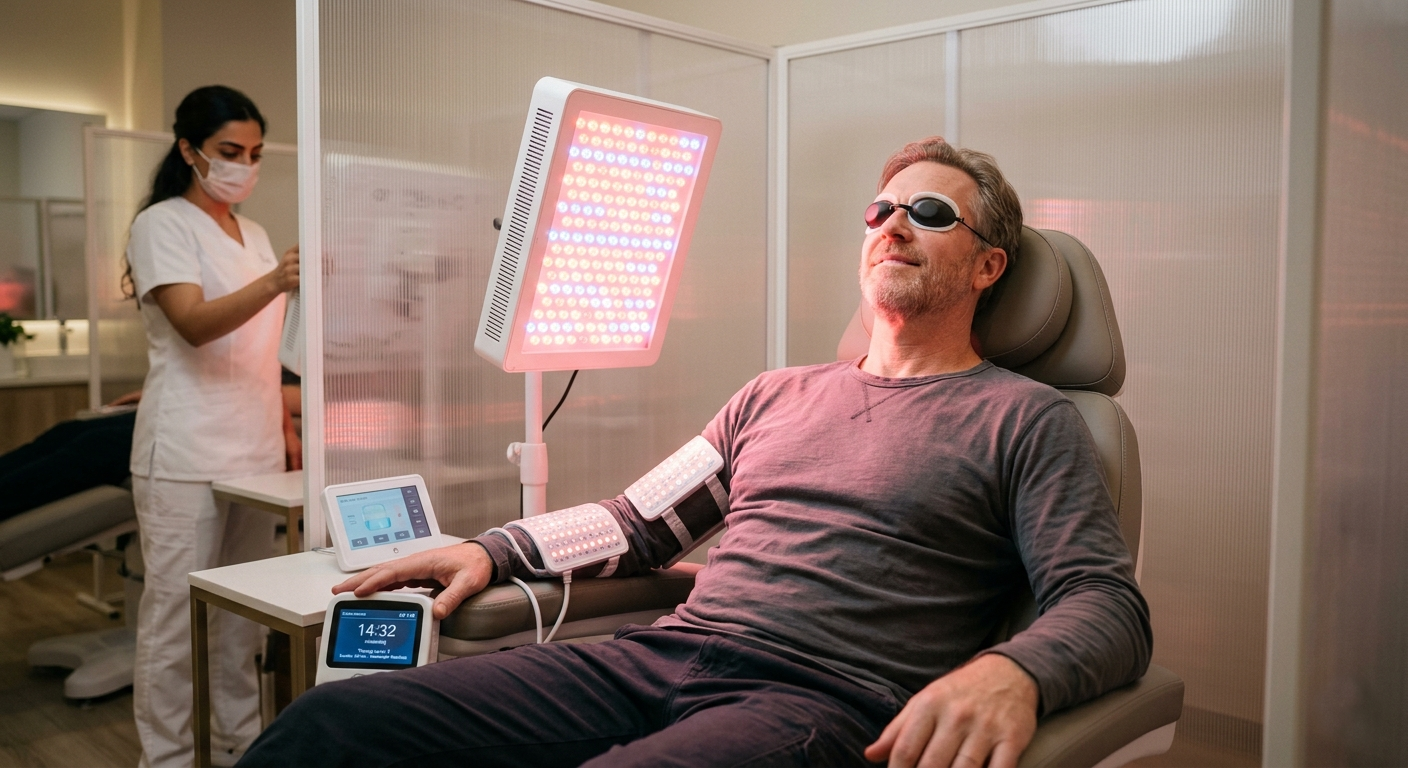
Why Light Therapy for Dancers Matters
Recovery is the most undervalued component of a dancer’s training. The hours spent in the studio build strength, technique, and artistry. But it is during recovery — when the body repairs damaged tissue, restores depleted energy, and adapts to the demands placed upon it — that the real transformation occurs. Without adequate recovery, training breaks the body down rather than building it up. And for dancers who perform multiple shows per week, travel between engagements, and maintain demanding rehearsal schedules, recovery time is often the first thing sacrificed.
Light therapy, also known as photobiomodulation (PBM), offers a scientifically validated approach to accelerating recovery without adding any physical stress to the body. It uses specific wavelengths of red and near-infrared light to penetrate the skin and stimulate cellular repair processes at the mitochondrial level. The treatment is painless, non-invasive, and requires no medication — just exposure to light at the right wavelength and intensity.
The therapeutic use of light is not a modern invention. Across Africa, sun exposure was historically used as a healing practice for skin conditions, mood regulation, and general vitality. In Ayurvedic medicine in India, sunlight therapy (Atapa Snana) has been practiced for thousands of years. Scandinavian cultures developed light therapy to address the mood and energy disruptions caused by long, dark winters. What modern science has done is isolate the specific wavelengths responsible for these benefits and deliver them with precision using LED and laser devices.
The Healing Benefits of Light Therapy
Accelerated Muscle Recovery. A 2012 meta-analysis published in The Lancet reviewed 22 randomized controlled trials and concluded that phototherapy (light therapy) significantly reduced muscle fatigue and enhanced muscle performance when applied before and after exercise. The mechanism involves increased ATP production in the mitochondria, the energy factories of every cell. More ATP means faster tissue repair and reduced recovery time between training sessions.
Reduced Inflammation. Chronic low-grade inflammation is a common consequence of repetitive physical training. Light therapy at wavelengths between 630 and 850 nanometers has been shown to modulate inflammatory markers, reducing swelling and pain without the side effects of anti-inflammatory medications. A 2017 study in the Journal of Photochemistry and Photobiology confirmed that PBM therapy reduced pro-inflammatory cytokines while increasing anti-inflammatory mediators.
Pain Relief. Research published in The Journal of Clinical Laser Medicine and Surgery demonstrated that light therapy significantly reduced pain in patients with musculoskeletal conditions. For dancers managing chronic pain from overuse injuries — tendinitis, joint inflammation, muscle strains — light therapy offers a non-pharmacological option for pain management that supports continued training.
Enhanced Collagen Production. Near-infrared light stimulates fibroblast activity and collagen synthesis. This is relevant for dancers because collagen is the primary structural protein in tendons, ligaments, and connective tissue — the structures most vulnerable to dance-related injury. Improved collagen production supports tissue integrity and resilience.
Improved Sleep Quality. Exposure to red light in the evening has been shown to support natural melatonin production, unlike the blue light emitted by screens. A study in the Journal of Athletic Training found that red light therapy improved sleep quality and endurance performance in athletes. For dancers whose irregular schedules often disrupt sleep patterns, this benefit alone can be transformative.
A Weekly Light Therapy Plan for Dancers
This plan integrates light therapy into a dancer’s recovery routine using an at-home red or near-infrared light device. Sessions are 10 to 20 minutes and can be done at home before bed or after training.
Monday — Post-Training Lower Body Session (15 minutes). After your most physically demanding training day, apply red or near-infrared light to the major muscle groups of the lower body: quadriceps, hamstrings, calves, and glutes. Hold the device 4 to 6 inches from the skin. This accelerates recovery from the micro-damage caused by jumps, landings, and sustained leg work.
Tuesday — Joint and Tendon Focus (10 minutes). Target areas of chronic or recurring discomfort: ankles, knees, hips, or shoulders. Light therapy is especially effective for tendon-related issues because the improved blood flow and collagen stimulation directly support tendon healing. Focus on one or two areas per session.
Wednesday — Full-Body Relaxation Session (20 minutes). Use a larger panel device or apply light sequentially to the back, shoulders, and legs. Combine with deep breathing or meditation for a recovery session that addresses both the physical and nervous system. This mid-week session prevents the accumulation of fatigue.
Thursday — Targeted Trouble Spots (10 minutes). Focus on any areas that are showing signs of overuse: stiffness, mild swelling, or reduced range of motion. Early intervention with light therapy can prevent minor issues from becoming significant injuries.
Friday — Pre-Sleep Recovery Session (15 minutes). Apply red light therapy 30 to 60 minutes before bed. The red wavelengths support melatonin production and signal the body to prepare for deep, restorative sleep. This session closes the training week by setting up the best possible conditions for overnight recovery.
Weekly Focus Summary
Monday: Post-training lower body — Muscle recovery
Tuesday: Joint and tendon focus — Targeted repair
Wednesday: Full-body relaxation — Systemic recovery
Thursday: Trouble spots — Injury prevention
Friday: Pre-sleep session — Sleep quality and overnight repair
Why Light Therapy Works for Dancers
Dancers place extraordinary demands on their bodies, and traditional recovery methods — rest, ice, compression — often fall short of what is needed to maintain peak performance across a full season. Light therapy works at the cellular level, addressing the root cause of fatigue and inflammation rather than just the symptoms. It supports the body’s own healing mechanisms, amplifying processes that are already occurring naturally.
Professional sports teams, Olympic training centers, and elite dance companies have increasingly adopted light therapy as part of their recovery protocols. The research base is substantial and growing, with hundreds of peer-reviewed studies supporting its efficacy for muscle recovery, pain reduction, and tissue repair.
“Light therapy does not replace rest. It makes rest more productive — turning the hours between training sessions into active repair time at the cellular level.”
How to Get Started
At-home red and near-infrared light therapy devices are available at a range of price points, from handheld units for targeted use to full-panel systems for whole-body treatment. Look for devices that deliver wavelengths in the 630 to 660 nanometer (red) and 810 to 850 nanometer (near-infrared) ranges — these are the wavelengths supported by the strongest research evidence. Reputable brands include Joovv, Mito Red Light, and Platinum LED.
Start with 10-minute sessions at the manufacturer’s recommended distance. Consistency is more important than duration — daily or every-other-day use produces better results than occasional long sessions. Light therapy is safe for most people, but those with active skin conditions or photosensitivity should consult a healthcare professional before starting.
A Practice Worth Celebrating
The healing power of light is one of humanity’s oldest observations. Cultures across Africa, India, the Middle East, and Scandinavia recognized that sunlight could heal wounds, lift spirits, and restore vitality. Modern science has taken that ancient observation and refined it into a precise, evidence-based therapy that can be delivered safely in the comfort of your home.
For dancers, light therapy represents the cutting edge of recovery science applied to the oldest performing art. It asks nothing of the body except to be still and receive. And in return, it offers faster healing, reduced pain, and the cellular energy to do what dancers do best: move, express, and inspire.
Explore the full Health & Empowerment Series and discover how the world’s great movement and nutrition traditions can help you build a life of strength, creativity, and lasting wellness.
Disclaimer: This article is for educational purposes only and is not intended as fitness, medical, or nutritional advice. Always consult a qualified healthcare professional or certified fitness instructor before beginning any new exercise program.
Continue Exploring the Series
Health & Empowerment Series — Explore the full collection of articles on movement, nutrition, and self-empowerment.
Why Dance Is Medicine — The science behind how dance heals the body and mind.
The Dancer’s Prescription — A guide to moving, eating, and shining from the inside out.
The Food-Brain Connection — How nutrition shapes the way dancers think, feel, and perform.
Yoga for Dancers — Build flexibility, prevent injury, and sharpen your focus.
Walking for Dancers — The most underrated recovery tool in every culture on earth.
Humming and Sound Healing for Dancers — Activate the vagus nerve through the power of vocal vibration.
West African Organic Meal Prep — Ancient foods that heal the body and honor the culture.
Empowerment Workbooks & Guides — Tools for individuals, families, and young people ready to grow.
© 2026 Dance Mogul Magazine LLC | dancemogul.com | Inspiring Self-Empowerment Through Dance Culture