
Health & Empowerment Series | Fitness & Movement
Walking for Dancers: The Most Underrated Recovery Tool in Every Culture on Earth
From East African walking traditions to Japanese forest bathing — why the simplest movement on the planet may be the most powerful thing a dancer can do on a rest day.
By Dance Mogul Magazine | Health & Empowerment Series | Fitness Series — Article 4 of 10
Why Walking for Dancers Matters
In a culture that celebrates high-intensity training, explosive choreography, and the relentless pursuit of physical perfection, walking seems almost too simple to mention. It requires no special clothing, no studio, no instructor, no equipment, and no subscription. It burns fewer calories than running, builds less visible muscle than weight training, and generates none of the Instagram-worthy moments that fill a dancer’s social feed. And yet, walking may be the single most important physical practice a dancer can add to their weekly routine.
The science is clear and growing. Walking reduces inflammation, supports cardiovascular health, improves mental clarity, stabilizes mood, accelerates recovery from intense training, and extends the functional lifespan of the body. It is the movement that human beings evolved to do more than any other — and the one that modern life, and modern dance training, has quietly pushed aside.
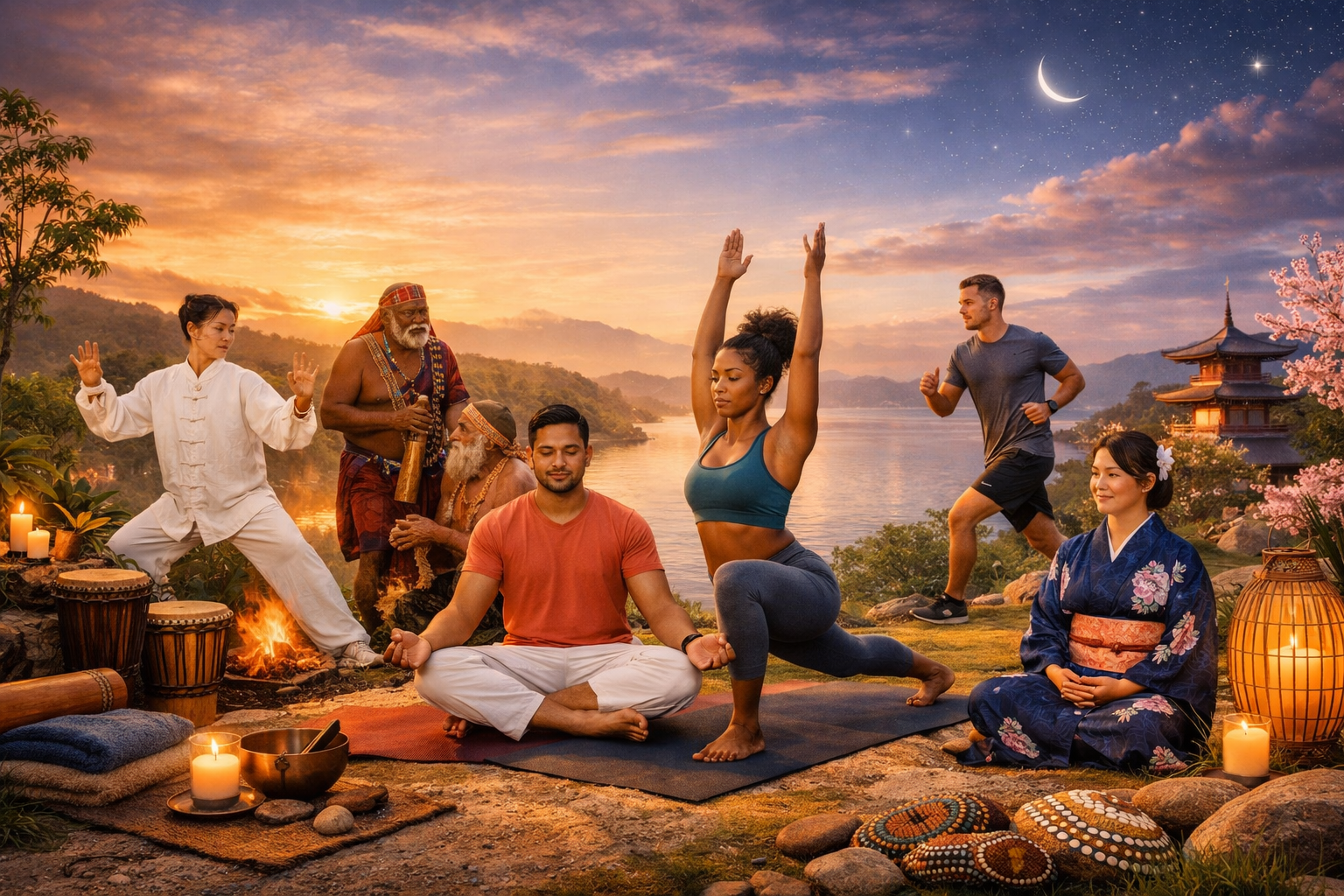
Walking is also one of the few physical practices that is truly universal. In East Africa, where the human species first stood upright and began to walk across the savannah, walking is still woven into daily life and long-distance tradition. In Japan, the practice of Shinrin-yoku — forest bathing — uses walking in nature as a formal health intervention. In Aboriginal Australian culture, the Walkabout is a rite of passage that connects walking to spiritual development. In European traditions, the pilgrimage — whether to Santiago de Compostela, Canterbury, or Rome — has used walking as a path to both physical and inner renewal for more than a thousand years.
For dancers, walking represents something radical: permission to move without performing. Permission to be in the body without demanding anything from it. And the research shows that this kind of gentle, sustained, low-intensity movement is not just restful — it is restorative in ways that rest alone cannot achieve.
The Healing Benefits of Walking
Active Recovery. A 2018 meta-analysis published in Sports Medicine concluded that low-intensity active recovery — including walking — enhances blood lactate clearance and reduces perceived muscle soreness more effectively than complete rest. For dancers recovering from intensive rehearsals or performance weeks, a 30-minute walk is more restorative than a day on the couch.
Cardiovascular Health. The American Heart Association recognizes brisk walking as a moderate-intensity aerobic activity that reduces the risk of heart disease, stroke, and high blood pressure. A study in Arteriosclerosis, Thrombosis, and Vascular Biology found that brisk walking reduced cardiovascular risk by the same percentage as running when energy expenditure was equivalent. For dancers, this means building heart health without adding impact stress to already-taxed joints.
Mental Clarity and Creativity. Stanford University researchers published a study in the Journal of Experimental Psychology demonstrating that walking increased creative output by an average of 60 percent compared to sitting. Walking, especially outdoors, clears mental fog, stimulates divergent thinking, and creates the conditions for artistic insight. Many choreographers throughout history have credited walking with unlocking their most important creative ideas.
Joint Health and Mobility. Walking lubricates the joints through gentle, repetitive motion that circulates synovial fluid — the body’s natural joint lubricant. Unlike running or jumping, walking delivers this benefit without compressive force, making it safe for dancers managing knee, hip, or ankle concerns. Regular walking has been shown to reduce symptoms of osteoarthritis and improve functional mobility.
Mood Regulation and Stress Reduction. A 2019 study in JAMA Psychiatry found that even modest amounts of physical activity, including walking, significantly reduced the risk of depression. Walking in natural environments amplifies this effect — research on Shinrin-yoku published in Environmental Health and Preventive Medicine demonstrated measurable reductions in cortisol, heart rate, and blood pressure after just 15 minutes of forest walking.
A Weekly Walking Plan for Dancers
This plan integrates walking into a dancer’s existing training schedule as a recovery and mental wellness tool. It is designed to complement — not replace — dance training and other fitness practices in this series.
Monday — Morning Activation Walk (20 minutes). Begin the week with a brisk 20-minute walk before class or rehearsal. This elevates heart rate gently, increases blood flow to the muscles, and primes the nervous system for the day. Walk at a pace that feels purposeful but conversational.
Tuesday — Post-Rehearsal Recovery Walk (25 minutes). After your most intensive rehearsal day, take a 25-minute walk at a moderate pace. Focus on deep breathing and letting the body unwind. This clears metabolic waste from the muscles and accelerates recovery for the next day.
Wednesday — Nature Walk or Urban Exploration (30-40 minutes). If possible, walk in a park, along a river, or through a tree-lined neighborhood. This is your creative and mental health walk. Leave headphones at home for at least the first 15 minutes and let your senses engage with the environment. Notice sounds, textures, light, and space. This is walking as a meditative practice.
Thursday — Interval Walking (20 minutes). Alternate between two minutes of brisk walking and one minute of easy walking. This gentle interval structure builds cardiovascular fitness without the joint impact of running. It also teaches the body to shift between effort levels — a skill that transfers directly to the dynamic pacing of dance performance.
Friday — Cool-Down Walk (15-20 minutes). End the training week with a slow, intentional walk. Let the pace drop to something meditative. Pay attention to how the body feels after a full week of work. This is a practice of gratitude for the body — an acknowledgment that movement does not always need to be hard to be meaningful.
Weekly Focus Summary
Monday: Morning activation — Prime the body
Tuesday: Post-rehearsal recovery — Clear and restore
Wednesday: Nature walk — Creative and mental health
Thursday: Interval walking — Gentle cardiovascular fitness
Friday: Cool-down walk — Gratitude and reflection
Why Walking Works for Dancers
Dancers tend to exist at two extremes: maximum effort or complete rest. Walking occupies the crucial middle ground — the zone of active recovery where the body repairs itself while still moving. It restores what high-intensity training depletes without adding the stress that prevents recovery. It clears the mind without the discipline demands of formal meditation. And it reconnects the dancer to the most primal form of human movement — the simple act of putting one foot in front of the other.
Walking also teaches something that dance culture sometimes forgets: that the body does not need to be pushed to its limit every day. Rest is not laziness. Recovery is not weakness. And the dancer who walks on their rest day will return to the studio stronger, clearer, and more creative than the one who either collapsed on the couch or pushed through another intense training session.
“Walking is the conversation the body has with the earth. Every culture on the planet has been listening to that conversation since the beginning of time.”
How to Get Started
Put on comfortable shoes and walk out your front door. That is the entire prescription. There is no minimum distance, no required pace, and no technique to master. The only guideline is consistency — aim for at least three walks per week of 20 minutes or more. If you live in an urban environment, seek out parks, waterfronts, or quiet streets with trees. If you live in a rural area, you are already surrounded by the best walking environment on earth.
For dancers with lower-body injuries, walking is one of the safest forms of movement during rehabilitation. Consult your healthcare provider for specific guidance, but in most cases, gentle walking is recommended as one of the first steps back to full activity.
A Practice Worth Celebrating
Walking is the first movement the human body mastered. Before running, before climbing, before dancing, there was walking. The Maasai of East Africa walk vast distances across the savannah. Japanese practitioners of Shinrin-yoku walk slowly through ancient forests as a form of medicine. Pilgrims in Spain walk hundreds of miles along the Camino de Santiago to heal their bodies and their spirits. And every dancer, in every studio in the world, begins their day by walking through the door.
This practice does not need to be complicated. It does not need to be extreme. It needs only to be consistent. Walk for your heart. Walk for your joints. Walk for your mind. Walk for the sheer, ancient privilege of a body that can carry you through the world on two feet. It is the most human thing you will ever do.
Explore the full Health & Empowerment Series and discover how the world’s great movement and nutrition traditions can help you build a life of strength, creativity, and lasting wellness.
Disclaimer: This article is for educational purposes only and is not intended as fitness, medical, or nutritional advice. Always consult a qualified healthcare professional or certified fitness instructor before beginning any new exercise program.
Continue Exploring the Series
Health & Empowerment Series — Explore the full collection of articles on movement, nutrition, and self-empowerment.
Why Dance Is Medicine — The science behind how dance heals the body and mind.
The Dancer’s Prescription — A guide to moving, eating, and shining from the inside out.
The Food-Brain Connection — How nutrition shapes the way dancers think, feel, and perform.
Yoga for Dancers — Build flexibility, prevent injury, and sharpen your focus.
Meditation for Dancers — Train your mind to move with clarity and calm.
Breathwork for Dancers — Strengthen your respiratory foundation for every movement.
West African Organic Meal Prep — Ancient foods that heal the body and honor the culture.
Empowerment Workbooks & Guides — Tools for individuals, families, and young people ready to grow.
© 2026 Dance Mogul Magazine LLC | dancemogul.com | Inspiring Self-Empowerment Through Dance Culture