
Health & Empowerment Series | Fitness & Movement
Dynamic Stretching for Dancers: Prepare Your Body, Prevent Injury, and Move Without Limits
From West African warm-up traditions to modern sports science — how active stretching before class transforms performance and protects the body dancers depend on most.
By Dance Mogul Magazine | Health & Empowerment Series | Fitness Series — Article 5 of 10
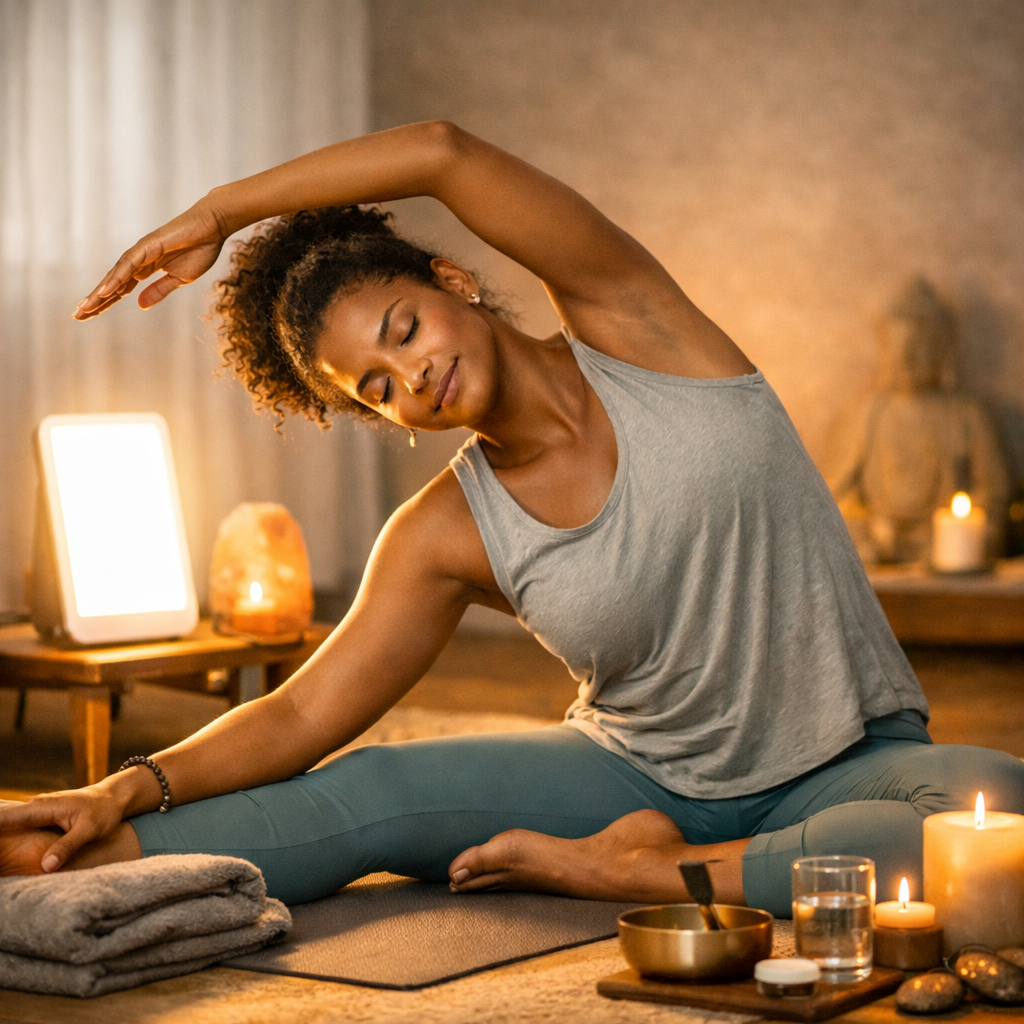
Why Dynamic Stretching for Dancers Matters
For decades, dancers were taught to begin every class the same way: sit on the floor, reach for the toes, hold the stretch, and hope the muscles would cooperate. Static stretching before movement was gospel in studios around the world. And for decades, the injury rates stayed stubbornly high.
Then the science caught up. Beginning in the early 2000s, a wave of research from sports medicine laboratories challenged the long-held belief that passive stretching before activity reduces injury risk. Study after study demonstrated the opposite: static stretching before explosive movement can actually decrease muscle force production, reduce power output, and impair the neuromuscular activation that dancers depend on for jumps, turns, and quick direction changes. The body that has been passively stretched into relaxation is not the body that is ready to perform.
Dynamic stretching offers a fundamentally different approach. Instead of holding positions passively, dynamic stretching moves the body through its full range of motion with active, controlled movements. Leg swings, arm circles, walking lunges, torso rotations, high knees, and lateral shuffles all fall into this category. These movements increase core temperature, elevate heart rate, improve blood flow to the muscles, activate the nervous system, and rehearse the movement patterns the body is about to perform — all without the force-reducing effects of static holds.
The practice is not new. Traditional warm-up routines in West African dance have always emphasized full-body rhythmic movement before the dancing begins — polyrhythmic footwork, hip circles, shoulder rolls, and spine waves that prepare the body through motion rather than stillness. Capoeira practitioners in Brazil warm up with the ginga, a flowing, dynamic base movement that integrates the entire kinetic chain. Martial arts traditions across Asia have used dynamic warm-ups for centuries. Modern sports science has simply given a name and a research base to what movement cultures worldwide already understood.
The Healing Benefits of Dynamic Stretching
Injury Prevention. A landmark 2014 systematic review published in the British Journal of Sports Medicine concluded that dynamic warm-up protocols significantly reduced the incidence of lower-extremity injuries in athletes. The mechanism is straightforward: dynamic stretching activates the muscles and tendons in the patterns they will use during activity, priming the neuromuscular system for the demands ahead. A warm, activated muscle is far more resistant to strain than a cold, passively lengthened one.
Improved Power and Explosiveness. Research published in the Journal of Strength and Conditioning Research demonstrated that dynamic warm-ups improved vertical jump height, sprint speed, and agility compared to static stretching or no warm-up. For dancers who need explosive power for jumps, rapid direction changes, and partnering lifts, this finding is critical.
Enhanced Neuromuscular Activation. Dynamic stretching sends a cascade of signals through the nervous system, waking up the motor units that control precise, coordinated movement. A 2016 study in Scandinavian Journal of Medicine and Science in Sports found that dynamic warm-ups improved proprioception and reaction time. For dancers, this translates into sharper timing, faster responses to musical cues, and more precise spatial awareness.
Increased Blood Flow and Muscle Temperature. As the body moves through dynamic stretches, heart rate rises, blood vessels dilate, and oxygen-rich blood floods the working muscles. Elevated muscle temperature improves the elasticity of connective tissue and increases the speed of nerve conduction. The result is a body that moves more fluidly, responds more quickly, and resists injury more effectively.
Mental Preparation. A dynamic warm-up is also a mental warm-up. The rhythmic, repetitive nature of the movements helps dancers transition from the distractions of daily life into the focused, present state that performance requires. By the time the music starts, the mind and the body are already engaged.
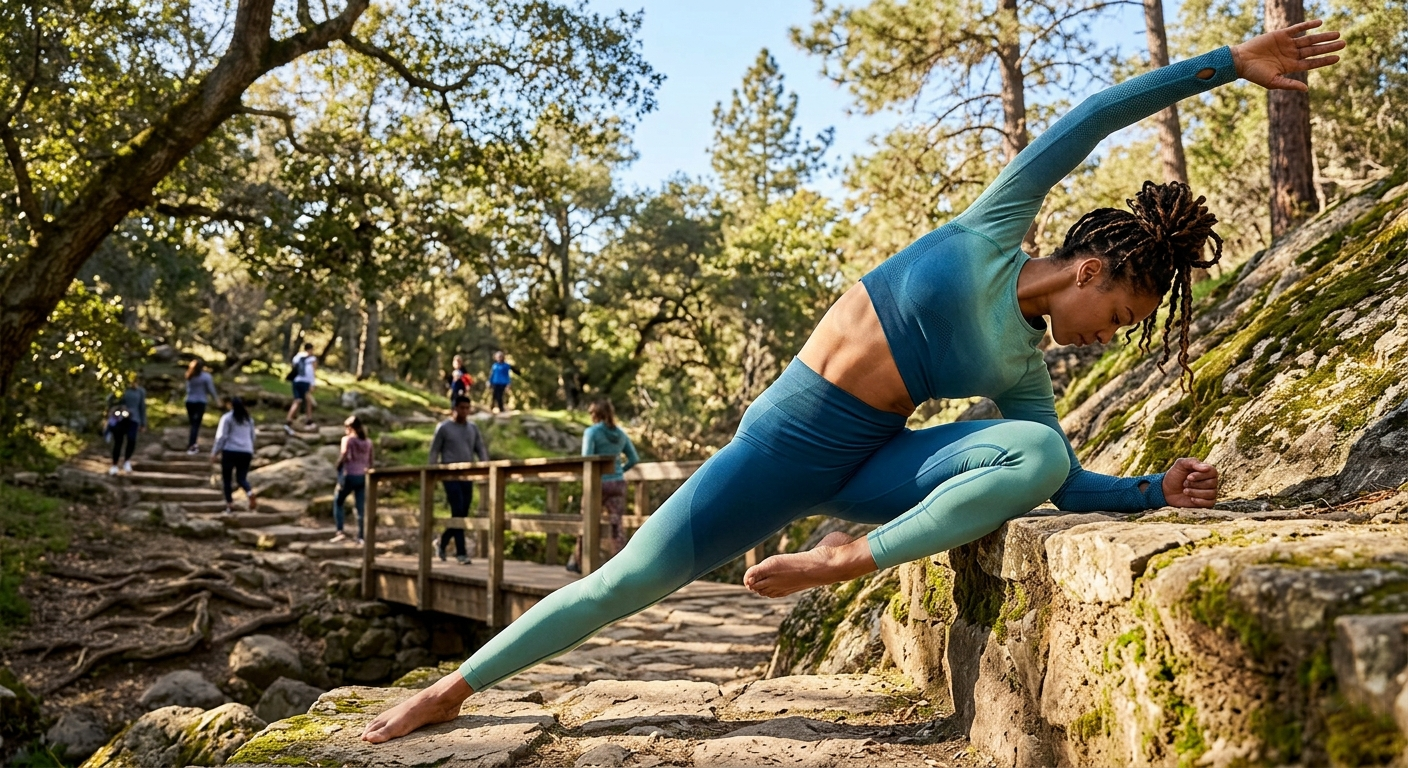
A Weekly Dynamic Stretching Plan for Dancers
This plan provides a daily dynamic warm-up routine and a complementary weekly structure. Each pre-class routine takes 8 to 12 minutes and should be performed before every dance session.
Pre-Class Dynamic Warm-Up (Daily, 8-12 minutes). Begin with two minutes of light jogging or marching in place. Follow with 10 leg swings (front-to-back) per leg, 10 lateral leg swings per leg, 10 walking lunges with a torso twist, 10 arm circles (forward and backward), 10 high knees, and 10 hip circles in each direction. Finish with two minutes of gentle, rhythmic, full-body movement — sway, bounce, let the body find its natural groove.
Monday — Lower Body Focus. Add walking hamstring sweeps (straight-leg kicks to opposite hand), carioca (lateral crossover steps), and deep walking lunges with a hip flexor reach. These movements open the hips and hamstrings — the two areas most vulnerable to strain in dance.
Tuesday — Upper Body and Spine Focus. Add thoracic spine rotations, arm swings across the body, standing cat-cow movements, and shoulder blade squeezes with arm extension. Dancers hold significant tension in the upper back and shoulders — this sequence releases it before it limits movement.
Wednesday — Agility and Reaction Focus. Add lateral shuffles, quick-feet drills (fast small steps in place), and multidirectional lunges (forward, lateral, and reverse). These movements activate the fast-twitch muscle fibers that power quick direction changes and intricate footwork.
Thursday — Full-Body Integration. Combine the lower body, upper body, and agility elements into one fluid sequence. Move continuously for 10 minutes without stopping, flowing from one movement to the next. This trains the body to warm up as a single integrated system rather than a collection of parts.
Friday — Performance Prep (Pre-Show Routine). Use a shortened, high-energy version of the daily warm-up. Focus on movements that mirror the choreography you will perform. If the piece includes big jumps, emphasize squat jumps and high knees. If it includes floorwork, add crawling patterns and rolling transitions. Customize the warm-up to match the demands ahead.
Weekly Focus Summary
Daily: Pre-class dynamic warm-up (8-12 min)
Monday: Lower body emphasis — Hips and hamstrings
Tuesday: Upper body and spine — Release and mobility
Wednesday: Agility and reaction — Fast-twitch activation
Thursday: Full-body integration — Fluid total-body prep
Friday: Performance prep — Choreography-specific warm-up
Why Dynamic Stretching Works for Dancers
Dance is not a static art form. It is movement — constant, dynamic, multidirectional movement. The warm-up should reflect that reality. Dynamic stretching prepares the body in the way it will actually be used: moving, rotating, accelerating, decelerating, jumping, and landing. It is functional preparation for a functional art form.
The shift from static to dynamic warm-ups has already transformed professional sports. Major dance institutions are following suit. Programs at The Juilliard School, LINES Ballet, and Dance Theatre of Harlem have increasingly incorporated dynamic warm-up protocols based on the same research cited in this article. The evidence is overwhelming: dancers who warm up dynamically perform better and get injured less.
“A warm body is a safe body. A moving warm-up creates a moving dancer. It is that simple — and the science agrees.”
How to Get Started
Replace the first 10 minutes of your pre-class routine with the daily dynamic warm-up described above. No equipment is needed — just open floor space. Start at a comfortable pace and gradually increase the range of motion and speed as the body warms. Within two weeks, you will notice a difference in how your body feels at the start of class: more responsive, more fluid, and more ready to move.
Static stretching still has its place — but it belongs at the end of class, not the beginning. After training, when the muscles are warm and the nervous system is ready to downshift, static holds help restore length, promote flexibility gains, and initiate the recovery process. Dynamic before, static after. That is the protocol the science supports.
A Practice Worth Celebrating
Dynamic warm-ups are not an invention of modern sports science. They are a rediscovery of what movement cultures around the world have always practiced. West African dancers have warmed up with full-body rhythmic movement for centuries. Capoeira players have used the ginga as their foundational warm-up for generations. Indian classical dancers begin with rhythmic footwork patterns that gradually increase in speed and complexity. The principle is the same across every tradition: the body must be awakened before it can perform.
Honor that wisdom. Take the first ten minutes of every training session seriously. Move your body through its full range before you ask it to dance at its best. That small investment of time will pay dividends in performance, in longevity, and in the simple, daily joy of a body that is ready for anything.
Explore the full Health & Empowerment Series and discover how the world’s great movement and nutrition traditions can help you build a life of strength, creativity, and lasting wellness.
Disclaimer: This article is for educational purposes only and is not intended as fitness, medical, or nutritional advice. Always consult a qualified healthcare professional or certified fitness instructor before beginning any new exercise program.
Continue Exploring the Series
Health & Empowerment Series — Explore the full collection of articles on movement, nutrition, and self-empowerment.
Why Dance Is Medicine — The science behind how dance heals the body and mind.
The Dancer’s Prescription — A guide to moving, eating, and shining from the inside out.
The Food-Brain Connection — How nutrition shapes the way dancers think, feel, and perform.
Yoga for Dancers — Build flexibility, prevent injury, and sharpen your focus.
Walking for Dancers — The most underrated recovery tool in every culture on earth.
Cardio Training for Dancers — Build endurance that matches the demands of the stage.
West African Organic Meal Prep — Ancient foods that heal the body and honor the culture.
Empowerment Workbooks & Guides — Tools for individuals, families, and young people ready to grow.
© 2026 Dance Mogul Magazine LLC | dancemogul.com | Inspiring Self-Empowerment Through Dance Culture