
The History of the Moonwalk Explained
From the Backslide to Billie Jean — How a Street Dance Technique Became the Most Iconic Move in Pop Culture History
By Dance Mogul Magazine
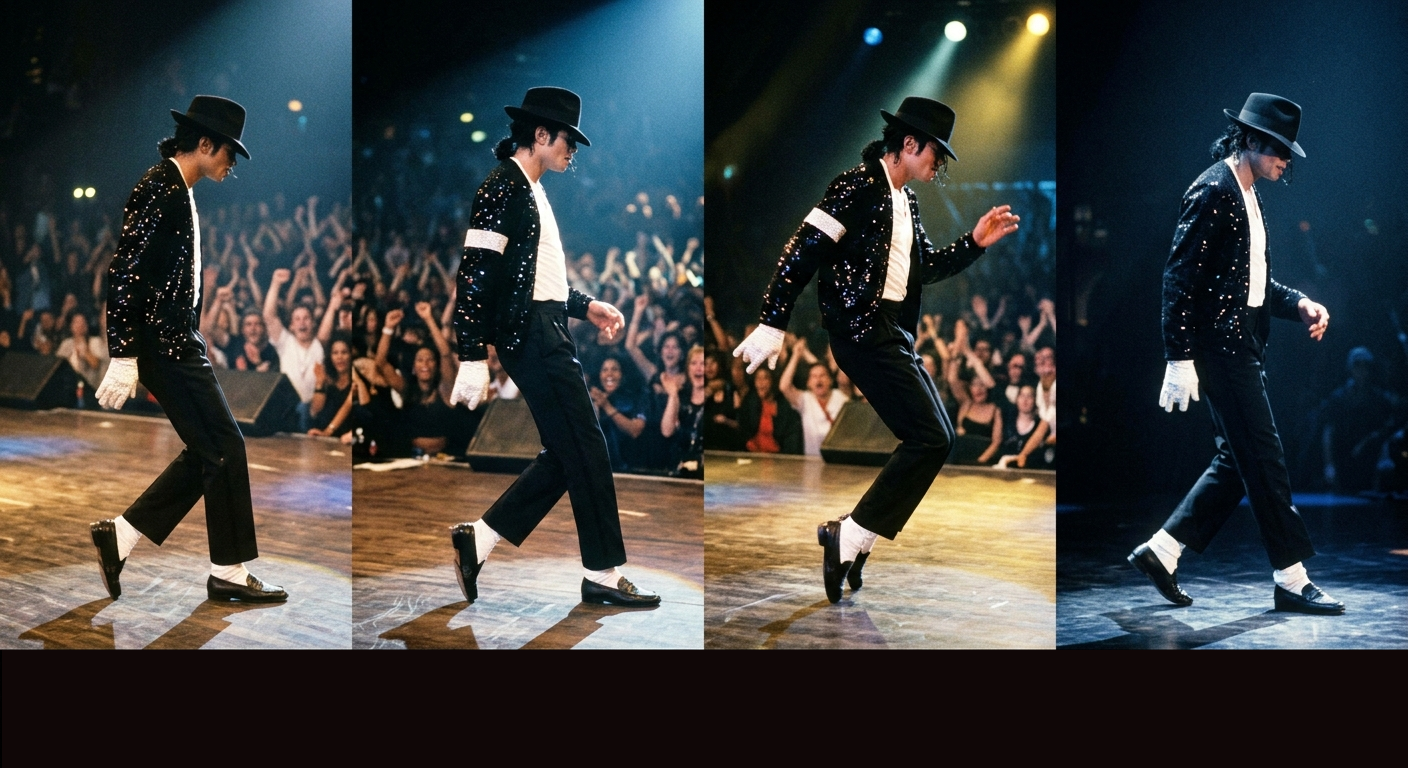
The moonwalk is the single most recognized dance move in modern history. When Michael Jackson glided backward across the stage during the 1983 Motown 25 television special, he did not just perform a step — he created a moment that permanently altered the relationship between popular music and choreography. But the move did not begin with him. Its roots stretch deep into street dance culture, Black performance traditions, and decades of innovation by dancers whose names most audiences have never heard.
With the 2026 release of the biographical film Michael, the moonwalk has returned to the center of global conversation. Choreographers Rich and Tone Talauega — who worked alongside Jackson from the mid-1990s until his passing and who choreographed both MJ The Musical and the new biopic — have spoken publicly about how they codified the move as part of a complete "syllabus" of Jackson's movement vocabulary. Their work ensures the legacy endures not as myth, but as a living, teachable art form.
This article traces the complete history of the moonwalk — from its origins in street performance to the moment it changed pop culture forever, and forward to its enduring influence in the digital age.
Before It Was the Moonwalk: The Backslide and Its Roots
Long before Michael Jackson made the move famous, the technique existed under a different name: the backslide. It was a staple of popping — a precise, mechanized style of street dance built on isolations, pulsing rhythms, and controlled illusions of weight and gravity. The Electric Boogaloos, one of the most influential popping crews in history, were performing variations of the backslide on stages and in dance circles across the West Coast throughout the late 1970s. Their work appeared regularly on Soul Train, the long-running music and dance program that became a weekly showcase for Black dance innovation in America.
The broader roots go back even further. Dance historians have traced the concept of the sliding, gravity-defying illusion to the "Virginia essence," a slow shuffle performed by Black entertainers in the late 19th century, and to the eccentric dance traditions of the vaudeville era, where solo performers used exaggerated movements and visual tricks to captivate audiences. The cakewalk, which originated among enslaved Black Americans in the South, is another ancestor — an exaggerated march and glide that played with the illusion of effortless motion.
By the early 1980s, the backslide had traveled from street corners and Soul Train stages into the awareness of one of the most ambitious young performers alive. Jeffrey Daniel, a member of the R&B group Shalamar and a regular Soul Train dancer, performed the move on the British television program Top of the Pops in 1982 — a full year before Jackson's iconic debut. James Brown had used similar footwork. Professional wrestlers in The Fabulous Freebirds were incorporating variations into their ring entrances as early as 1979.
The technique was already out there. What it needed was someone with the vision, the platform, and the showmanship to make the world stop and stare.
"That's a move that was created in this city. When he moved from Gary, Indiana, to Los Angeles, he started hovering around these dance circles that were brewing out here during the late '70s, early '80s."
— Tone Talauega, choreographer for the Michael biopic and MJ The Musical
March 25, 1983: The Night That Changed Dance Forever
Michael Jackson first performed the moonwalk in public on March 25, 1983, during NBC's Motown 25: Yesterday, Today, Forever special, taped at the Pasadena Civic Auditorium. The show did not air until May, but for the live audience that night, what happened was unlike anything they had witnessed before.
Jackson had been preparing. According to multiple accounts, he sought out dancer Geron "Caszper" Canidate — a Soul Train regular who specialized in the backslide — for private instruction in 1981. When the Motown 25 performance came together, Jackson knew exactly where to place the move: during a solo performance of "Billie Jean," at the precise moment the music opened into a dance break.
Dressed in a black sequined jacket, silver socks, and a single rhinestone glove, Jackson spun, posed, and then glided backward across the stage while appearing to walk forward. The audience erupted. Music critic Ian Inglis would later write that Jackson encapsulated generations of African American dance innovation in that single performance. Nelson George described it as a synthesis that combined the athleticism of Jackie Wilson with the camel walk of James Brown.
The name "moonwalk" was not Jackson's own creation. Fans and media applied it, drawn to the imagery of an astronaut moving in low gravity. The technical name — backslide — faded from popular use almost overnight. What replaced it became one of the most searched, imitated, and studied dance moves in human history.
Why It Changed Everything: The Moonwalk's Impact on Choreography
The moonwalk did more than give Michael Jackson a signature move. It established a new standard for what choreography could accomplish on a public stage. Before Motown 25, dance in mainstream pop performance was largely decorative — something that happened behind or around the vocalist. After that night, dance became the event itself. The visual illusion, the gasp, the moment of disbelief — these became goals that choreographers and performers would chase for decades.
Jackson understood something that most of his contemporaries did not: choreography could be engineered for maximum visual impact the same way a vocal hook could be engineered for maximum emotional impact. He treated every performance as a composition where the body was the primary instrument. The moonwalk was the proof of concept. It demonstrated that a single, perfectly placed movement could define an entire career.
This thinking influenced everything that followed — from the dance culture of the late 1980s and 1990s to the choreography-centered music videos of Janet Jackson, Beyoncé, and Chris Brown. The concept of a "signature move" as a branding tool traces directly back to the moonwalk. Today, when a TikTok choreographer designs a routine around one memorable gesture, they are working inside a framework that Michael Jackson built.
The 2026 Biopic: Recreating the Moonwalk for a New Generation
The Michael biopic includes a full recreation of the Motown 25 performance, with Jaafar Jackson performing the moonwalk as his uncle. The sequence was choreographed by Rich and Tone Talauega, who first danced for Michael Jackson in 1995 and went on to become the foremost archivists of his movement style. For MJ The Musical on Broadway, the brothers broke down every element of Jackson's vocabulary — the moonwalk, the sidewalk, the spin, the toe stand, the robot — into a codified syllabus that could be taught and preserved.
Preparing Jaafar required years of intensive work. The Talauega brothers have described the process as a layered integration of multiple dance traditions: African dance, jazz, and Jackson's own street-influenced innovations. The goal was not imitation but embodiment — teaching Jaafar to move from intention, not just replication. Their work ensures that the moonwalk, and the broader movement language it belongs to, continues to evolve as a living art form rather than a frozen museum piece.
The Moonwalk Today: From TikTok to Dance Studios Worldwide
More than four decades after Motown 25, the moonwalk remains one of the most attempted and searched dance moves on the planet. TikTok is filled with thousands of tutorial videos, challenge clips, and fusion performances that reinterpret the technique across styles — from classical Indian dance to K-Pop to contemporary street choreography. The move's appeal endures because it operates on the same principle that made it revolutionary in 1983: it creates a visual illusion that makes the impossible look effortless.
Lionsgate's promotional campaign for the biopic has amplified this cultural moment. Holographic displays featuring Tone Talauega teaching the moonwalk were installed in 58 shopping malls and theaters across the United States in April 2026. Jaafar Jackson himself has engaged with viral dance tributes on social media, including an Indian classical fusion performance that drew millions of views. The moonwalk is not just being remembered — it is being actively rediscovered, relearned, and reimagined by a global audience.
For dance educators, the moonwalk offers something that few modern viral moves can match: a direct connection to a documented lineage of Black dance innovation stretching back over a century. Teaching the moonwalk is not just teaching a step — it is teaching the history of Black creative expression, artistic resistance, and the power of performance to transcend boundaries.
A Step That Keeps Moving Forward
The moonwalk began as an unnamed technique among street dancers. It became a global phenomenon through the genius of one performer. And now, through the work of choreographers, educators, filmmakers, and a new generation of dancers, it continues to evolve.
What makes the moonwalk timeless is not just its technique — it is what it represents. It is a reminder that a single moment of movement, executed with precision and intention, can reshape culture. It is proof that dance is not decoration. It is language. And the conversation it started in 1983 is far from over.
Explore the full Michael Jackson & Choreography Legacy hub to continue the journey into the moves, the minds, and the culture that made the King of Pop a permanent force in dance history. Visit the DMM Workbook Collection for interactive resources designed to empower dancers at every stage of their journey.
Michael Jackson & Choreography Legacy Hub | Dance Styles | The Legacy Archive | Store