
 Dance Culture | History | Legacy
Queen of the Lindy Hop:
Norma Miller and the Dance That Shook the World
The Birth of the Lindy Hop
The Lindy Hop did not emerge from a ballet studio or a conservatory. It was born in the streets, the stoops, and the ballrooms of Harlem, New York — a living, breathing expression of Black American joy, resilience, and creative genius during one of the most transformative eras in U.S. history. Rooted in jazz music and deeply influenced by African American vernacular dance traditions, the Lindy Hop became the defining partner dance of the late 1920s through the 1940s, a period often referred to as the Swing Era.
Named after Charles Lindbergh's famous 1927 transatlantic solo flight — "Lucky Lindy hopped the Atlantic," so the story goes — the Lindy Hop fused elements of the Charleston, the Breakaway, tap, and early jazz footwork into something entirely new. What set it apart was its embrace of improvisation. Unlike ballroom dances with rigid, prescribed choreography, the Lindy Hop invited dancers to express themselves freely within the structure of swing music. The "breakaway" — a moment where partners briefly separated and improvised solo movements — was revolutionary. It gave both men and women agency on the dance floor and became the blueprint for nearly every partner dance that followed, including East Coast Swing, West Coast Swing, boogie-woogie, and even the foundations of rock and roll dancing.
Central to the spread of the Lindy Hop was a place that has become synonymous with the dance itself: the Savoy Ballroom, located on Lenox Avenue between 140th and 141st streets in Harlem. Opened in 1926, the Savoy — nicknamed "The Home of Happy Feet" — was a stunning two-block-long dance palace that welcomed both Black and white patrons at a time when racial segregation was still deeply embedded in American life. Its 10,000-square-foot maple dance floor could hold 4,000 dancers, and twin bandstands allowed for continuous music, pitting bands against each other in battles that pushed jazz to its creative limits. It was here that the Lindy Hop became a competitive art form — and here that legends were made.
Harlem in the Swing Era: A World on Fire
To understand the Lindy Hop fully, you must understand the moment that produced it. The 1920s through the 1940s in Harlem were defined by the Harlem Renaissance — a sweeping cultural, artistic, and intellectual movement in which Black Americans reclaimed their narrative, their history, and their humanity through art, literature, music, and dance. Jazz was the soundtrack. The Savoy Ballroom was the stage. And the Lindy Hop was the language.
This was the same era that gave the world Louis Armstrong, Duke Ellington, Count Basie, Benny Goodman, and Ella Fitzgerald. It was a time of social upheaval — the Great Migration was bringing hundreds of thousands of Black Americans from the South to Northern cities, the Great Depression was dismantling economic certainty for everyone, and World War II loomed on the horizon. Yet against that backdrop, Harlem pulsed with creative energy unlike anywhere else on earth. The Lindy Hop was not an escape from that reality — it was a full-bodied, full-throated response to it.
Big bands filled the Savoy's twin bandstands night after night — Chick Webb and His Orchestra served as the Savoy's unofficial house band, with vocalist Ella Fitzgerald joining in 1935. Benny Goodman's orchestra made swing music a national phenomenon. Cab Calloway brought his flamboyant showmanship and hi-de-ho vocals that drove dancers into a frenzy. Count Basie's hard-driving rhythms were tailor-made for the most athletic Lindy Hoppers. These bands didn't just play for the dancers — they were in dialogue with them, each feeding the other's energy in a feedback loop that elevated both the music and the movement to art.
Norma Miller: The Queen of Swings
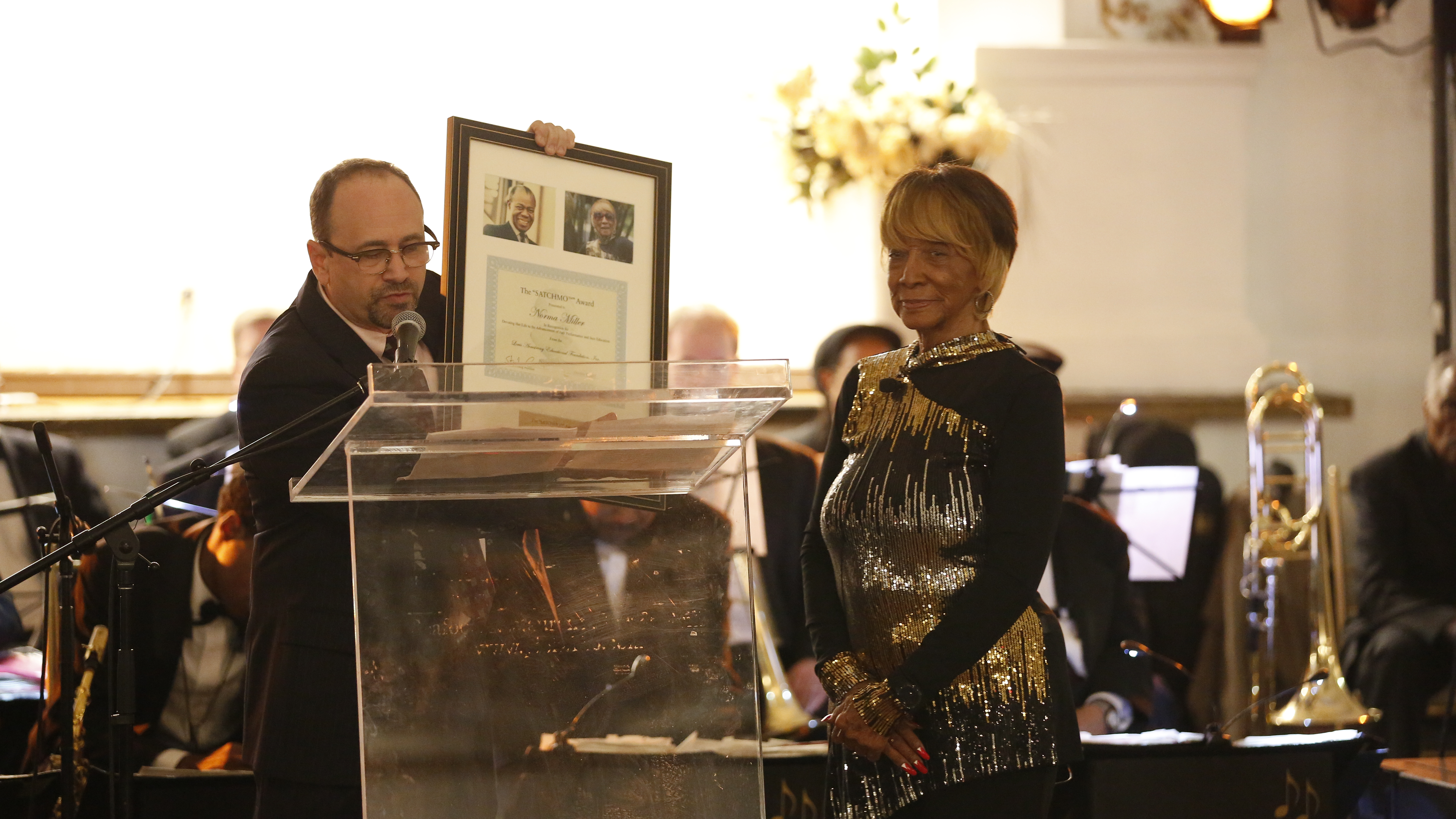
Into this electric world stepped a young girl from 152nd Street in Harlem — Norma Miller, born December 2, 1919. She grew up steps from the Savoy Ballroom and, as a child, would sneak in to watch the dancers. By age twelve, she was performing on the sidewalk outside the Savoy to earn tips from the patrons going in. By fourteen, she had been discovered by Savoy star Frankie Manning, who recognized something extraordinary in her ability to learn, to improvise, and to perform under pressure.
Norma Miller was recruited into Whitey's Lindy Hoppers — the elite Savoy dance troupe organized by the Savoy's head bouncer and dance promoter Herbert "Whitey" White. Whitey's Lindy Hoppers were the most celebrated Lindy Hop company in the world. They didn't just dance at the Savoy — they traveled the globe, performing for international audiences who had never seen anything like them. From Europe to South America to Asia, Whitey's Lindy Hoppers introduced the Lindy Hop as an American art form.
"I danced because I had to. It was in me. It was survival. It was joy. It was everything."
— Norma MillerAs a member of Whitey's Lindy Hoppers, Norma Miller was one of the most athletically gifted and theatrically compelling performers of her generation. She was known for her explosive energy, pinpoint timing, and her ability to communicate emotion through movement — qualities that translated powerfully onto film. She also possessed a rare combination of raw talent and teachable discipline, allowing her to work with professional directors and choreographers while retaining the improvisational authenticity that made Lindy Hop magnetic.
Beyond performing, Norma Miller became a choreographer, director, comedian, author, and ambassador for swing dance. She choreographed for stage and film productions throughout her career, eventually becoming one of the most sought-after authorities on the history and technique of the Lindy Hop. Her memoir, Swingin' at the Savoy: The Memoir of a Jazz Dancer (co-authored with Evette Jensen, published 1996), remains one of the definitive firsthand accounts of Harlem's swing era.
On Screen and On Stage: Lindy Hop in Hollywood
One of the most significant contributions Whitey's Lindy Hoppers — and Norma Miller specifically — made to dance history was bringing the Lindy Hop to film. Their appearances captured a dance that might otherwise have been lost to living memory, preserving its athleticism, joy, and Black cultural genius for generations to come.
Their most iconic film appearance came in the Marx Brothers comedy A Day at the Races (1937), where Whitey's Lindy Hoppers delivered an electrifying seven-minute dance sequence in a barn scene set to the music of Ivie Anderson and the Duke Ellington Orchestra. The sequence is extraordinary — the dancers defy gravity in moves that seem physically impossible, including air steps in which women are thrown high above their partners' heads and caught with precision. Norma Miller was part of that sequence, and the film preserved her dancing for history.
Whitey's Lindy Hoppers also appeared in Hellzapoppin' (1941), which featured what many dance historians consider the greatest Lindy Hop film footage ever recorded. The sequence — featuring dancers Frankie Manning, Al Minns, Willamae Ricker, and others — is a full-throttle display of air steps, rhythmic footwork, and joyful abandon that continues to astonish viewers more than eighty years later. Dance scholars still use the Hellzapoppin' sequence as a teaching tool worldwide.
Additional film appearances by Whitey's Lindy Hoppers included Keep Punchin' (1939), Swing Wedding (1937, an MGM animated short featuring the Lindy Hop performed by cartoon caricatures), and several short features and newsreels that documented the Savoy Ballroom and its dancers. On the theatrical stage, the Lindy Hop was featured in Broadway productions of the era including Swingin' the Dream (1939), a jazz-infused adaptation of A Midsummer Night's Dream that featured Whitey's Lindy Hoppers alongside Louis Armstrong.
On television, as the medium grew in the late 1940s and 1950s, swing dancing appeared regularly on variety shows. Programs like The Ed Sullivan Show, American Bandstand (which helped transition swing into rock and roll partner dance), and later documentary features on PBS helped keep awareness of the Lindy Hop alive even as the dance's golden era faded commercially. Norma Miller herself appeared on television numerous times throughout her career, both as a performer and as a living authority on jazz dance history.
The Great Lindy Hoppers: A Legacy of Names
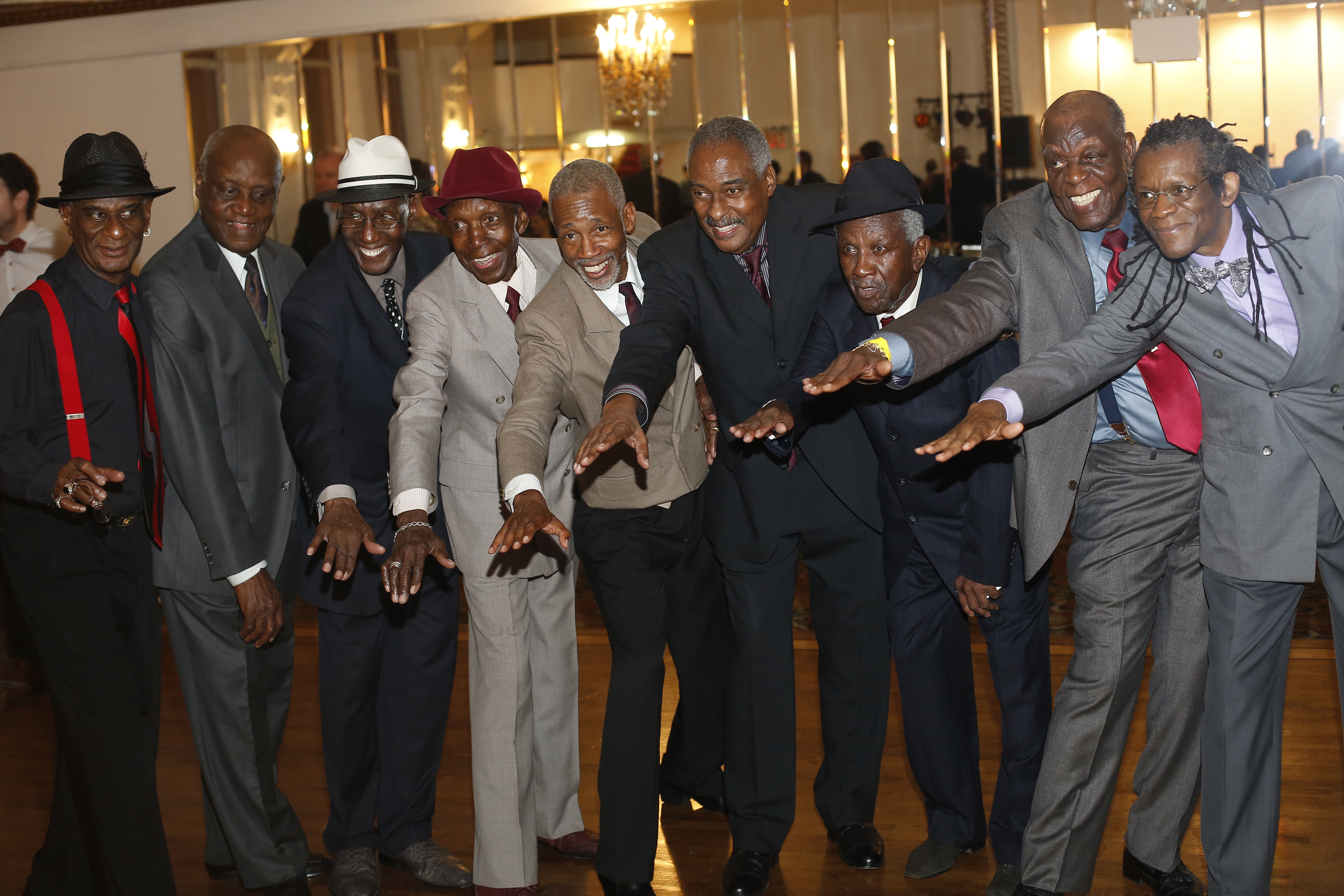
The Lindy Hop was never a solo story. It was built by a community of extraordinary dancers whose names deserve to stand alongside the greatest artists of the 20th century.
Legends of the Lindy Hop
- Frankie Manning — The architect of the aerial Lindy Hop, credited with creating the first air step in 1935. Choreographed Whitey's Lindy Hoppers' most iconic routines and won a Tony Award in 2009 at age 94 for his contribution to Broadway's Swing!
- Norma Miller — Performer, choreographer, author, comedian, and the longest-reigning ambassador of the Lindy Hop. Performed into her eighties.
- Al Minns — One of the most technically gifted Savoy dancers, known for fluid footwork and comedic timing. Featured prominently in Hellzapoppin'.
- Leon James — Minns' longtime partner and one of the original exhibition dancers at the Savoy. Their partnership is documented in historical film footage that remains a study guide for dancers globally.
- Willa Mae Ricker — Frankie Manning's partner in the legendary Hellzapoppin' sequence; considered one of the most fearless aerial dancers of the era.
- Mildred Cruse — A founding member of Whitey's Lindy Hoppers whose elegant style helped define the feminine aesthetic of the dance.
- Pepsi Bethel — A Savoy regular who later became a key figure in the Lindy Hop revival of the 1980s and 90s, teaching the next generation of swing dancers.
- Dean Collins — Brought the Lindy Hop to the West Coast and Hollywood, developing what became known as the "Hollywood Style" of Lindy Hop and appearing in dozens of films and shorts.
The Big Bands Behind the Movement
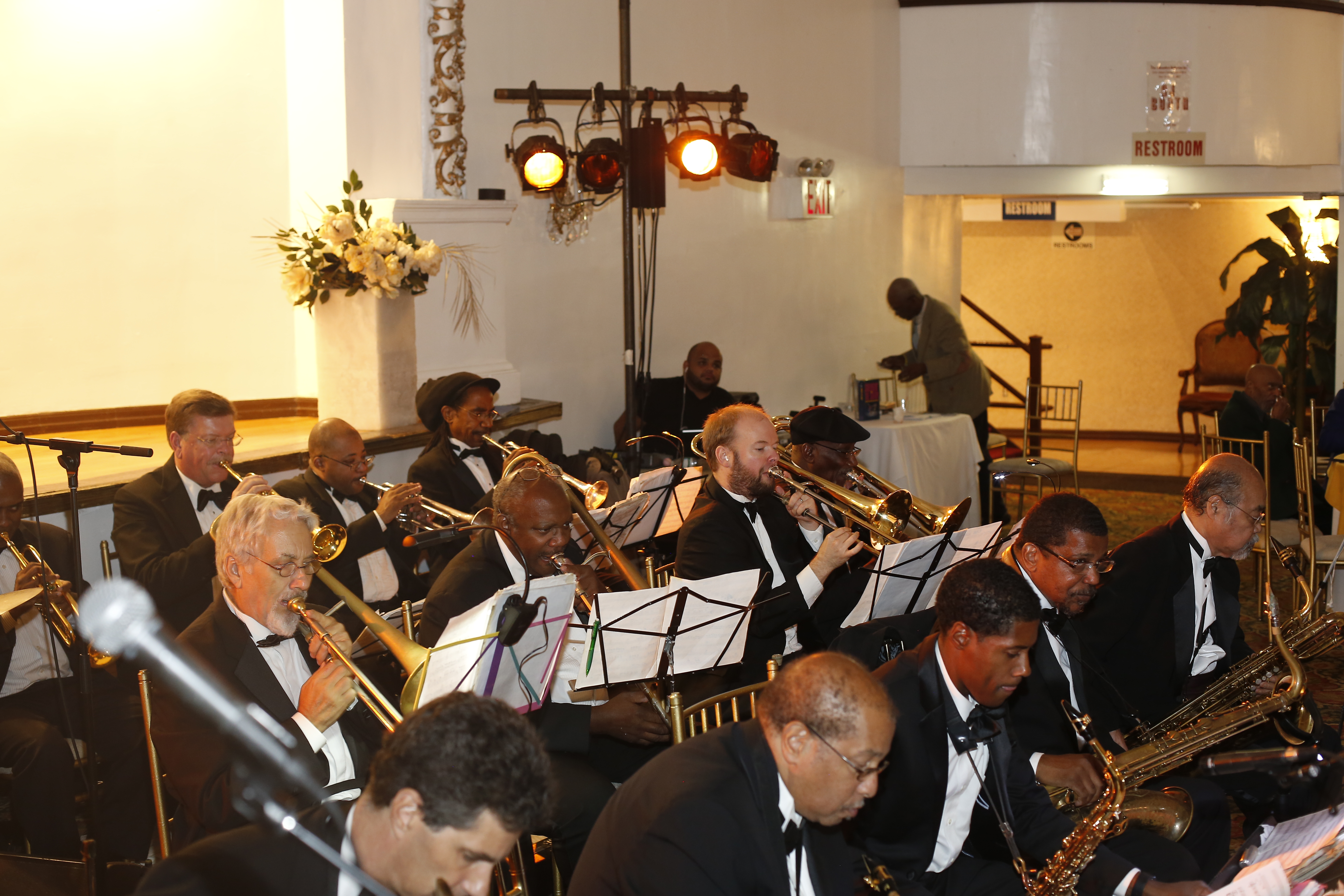
The Lindy Hop and swing music were inseparable. Every great dancer needed a great band, and the Swing Era produced titans. Chick Webb and His Orchestra were the Savoy Ballroom's heartbeat — Webb's explosive drumming drove dancers to new heights, and his band consistently won Savoy battle-of-the-bands contests against all comers, including an infamous showdown with Benny Goodman in 1937 that the Harlem crowd declared a decisive Webb victory. After Webb's death in 1939, the band continued under vocalist Ella Fitzgerald.
Count Basie's Orchestra, with its hard-swinging Kansas City rhythm section, was another Lindy Hop favorite — dancers loved Basie's big, open tempos that left space for footwork and air steps alike. Duke Ellington and His Orchestra brought elegance and sophistication to swing, their music providing the backdrop for some of the Lindy Hop's most memorable film appearances. Cab Calloway brought theatrical electricity to the Savoy stage with his zoot suit flair and call-and-response audience engagement. Benny Goodman's Orchestra, featuring celebrated Black sidemen including Lionel Hampton and Teddy Wilson, helped bring swing to mainstream white America — though the creative origin of the music and the dance remained firmly rooted in Harlem's Black community.
Awards, Honors, and Recognition
For too long, the founders and masters of the Lindy Hop received little formal recognition from mainstream American cultural institutions. That began to change in the final decades of the 20th century, as scholars, dancers, and documentarians worked to restore these legends to their rightful place in American artistic history.
In 1984, the Lindy Hop experienced a significant cultural revival when choreographer and Savoy veteran Pepsi Bethel trained a new generation of dancers for a touring production. The revival accelerated in the late 1980s and 1990s as original Savoy masters Frankie Manning, Norma Miller, Al Minns, and Leon James were brought out of retirement to teach workshops at dance camps and swing events globally. The Lindy Hop went from near-extinction to a worldwide phenomenon, with active scenes in Sweden, Japan, South Korea, Australia, Germany, Brazil, and dozens of other countries — all traced directly back to those original Harlem masters.
The Enduring Legacy
Norma Miller passed away on May 5, 2019, just months before what would have been her 100th birthday. She had danced for more than eight decades, performed on stages across the world, written her memoir, produced comedy shows, and never — not once — stopped advocating for the recognition of Black dance history as American history.
Her legacy lives in every swing dance event held in every corner of the world. It lives in the archived footage of Hellzapoppin' and A Day at the Races, still studied by dancers learning to throw and catch their partners with trust and precision. It lives in the teachers she trained, the stories she told, and the laughter she brought to every stage she graced. It lives in the Savoy Ballroom — demolished in 1958 to make way for a housing project, but memorialized in a plaque on Lenox Avenue and in the hearts of everyone who knows what happened on that floor.
The Lindy Hop was not simply a dance craze. It was a declaration — that Black Americans would create beauty in the face of hardship, community in the face of marginalization, and art that would outlast every obstacle placed in its path. Norma Miller understood that better than anyone. She didn't just dance the Lindy Hop. She was the Lindy Hop.
"The Savoy was our world. We didn't know we were making history. We were just trying to be free."
— Norma Miller, Swingin' at the SavoyQuick Facts — Norma Miller
- Born: December 2, 1919 · Harlem, New York City
- Passed: May 5, 2019 · Las Vegas, Nevada
- Member of Whitey's Lindy Hoppers from age 14
- Film appearances include A Day at the Races (1937) and Keep Punchin' (1939)
- Author: Swingin' at the Savoy: The Memoir of a Jazz Dancer (1996)
- 1992 National Heritage Fellow — National Endowment for the Arts
- Comedian, choreographer, producer, and educator
- Performed and taught on six continents across a career spanning eight decades