
Training & Technique
How to Prepare for an All‑Day Dance Convention: A Complete Guide
Physical readiness, mental focus, and strategic packing — everything dancers and parents need to thrive from the first class to the last.
By Dance Mogul Magazine
Dance conventions are where breakthroughs happen. They bring together master teachers, choreographers, and dancers from across the country for a full day — or weekend — of nonstop training. The schedule is intense, the rooms are crowded, the choreography is fast, and the expectations are high. Dancers who thrive are the ones who show up prepared: physically, mentally, and strategically.
Unlike a regular class or rehearsal, an all-day dance convention requires stamina, organization, and the ability to adapt quickly. Preparing for one is about setting yourself up for success long before you walk through the doors. This guide covers everything dancers and parents need to know — from fueling the body to managing energy to making the most of every class.
Understand the Pace Before You Walk In
The first step in preparing for a dance convention is understanding what you are walking into. Conventions are designed to challenge dancers. They move quickly, expose you to unfamiliar styles, and simulate the pace of professional training environments. The purpose is growth — not perfection. Teachers expect dancers to pick up choreography fast, take corrections well, and stay fully engaged even when fatigue sets in.
Knowing this ahead of time shifts your mindset. Instead of worrying about being the best in the room, the focus becomes absorbing as much as possible. Instead of fearing mistakes, you learn to embrace them as part of the process. When you prepare mentally for the pace of a convention, you stay grounded and open — even when the day becomes intense.
Prepare Your Body Like an Athlete
An all-day convention is physically demanding. Dancers may take six to eight classes back-to-back, each with a different style, tempo, and intensity level. Treating the day like an athletic event means conditioning, fueling, and resting your body in advance.
In the days leading up to the convention, prioritize rest, hydration, and light conditioning. Overtraining right before a convention can lead to fatigue or injury. Focus on mobility, stretching, and maintaining strength. The night before, get a full night of sleep, eat a balanced meal, and avoid anything that could cause soreness or stiffness the next morning.
On convention morning, arrive early enough to warm up independently. Even though teachers often lead warm-ups in class, preparing your body on your own prevents injuries and ensures you can jump into the first class with full energy and focus.
Pack Smart and Stay Organized
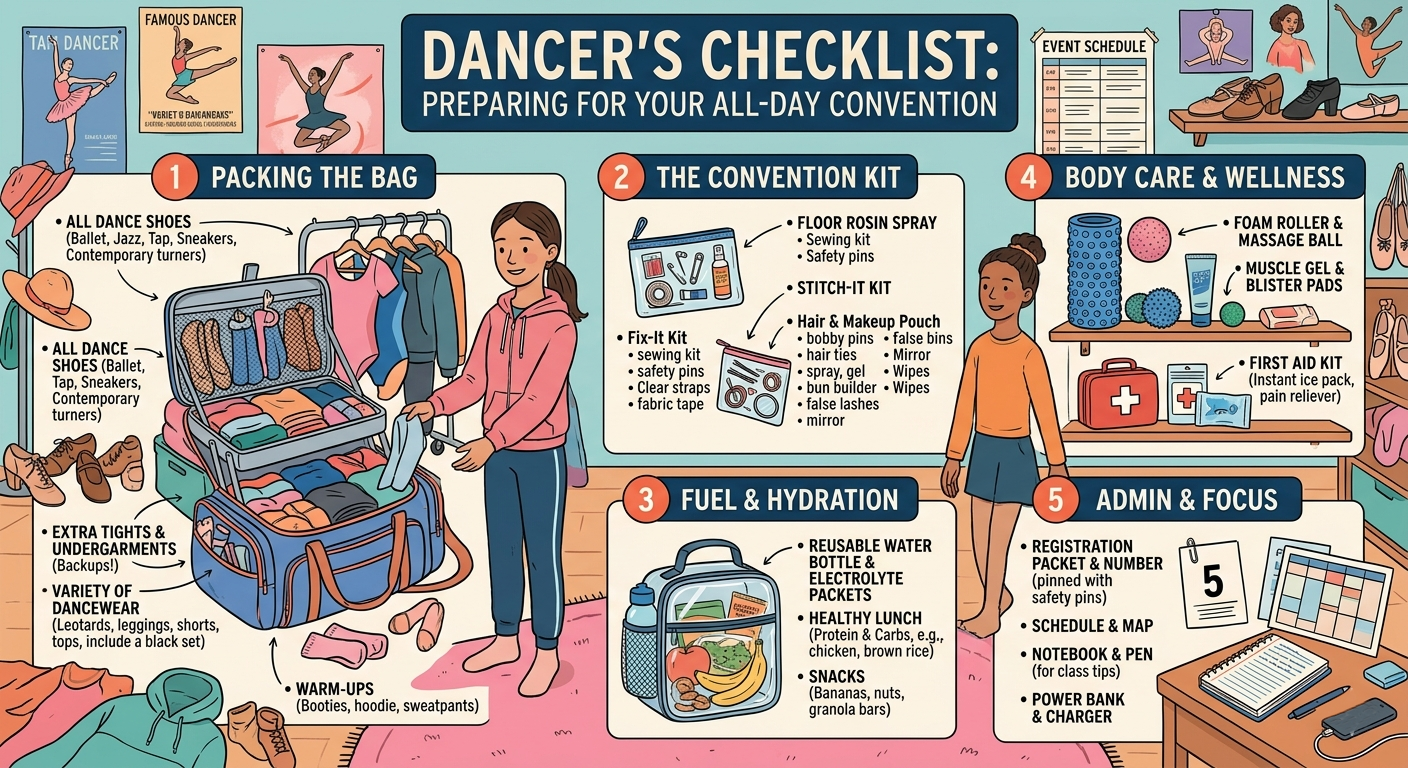
One of the most important aspects of convention preparation is packing strategically. The day is long and dancers need to be self-sufficient. Proper preparation prevents stress, distractions, and last-minute emergencies.
Pack multiple outfits — sweat, spills, and quick changes are inevitable. Comfortable layers are essential, as convention rooms can shift from cold to hot quickly. Shoes for every style should be packed and easily accessible: ballet, jazz, tap, hip-hop, contemporary. Include hair supplies, first-aid items, snacks, water, and personal hygiene products.
Organization matters more than many dancers realize. A dancer who can quickly grab what they need between classes stays calm and focused. A dancer who is scrambling to find shoes or fix their hair loses valuable time and mental clarity. Pack your bag the night before and you will walk into the convention ready for anything.
Convention Bag Essentials
Multiple dancewear outfits and layers, shoes for every style (labeled), hair ties, bobby pins, and hairspray, refillable water bottle and electrolytes, nutrient-dense snacks (trail mix, fruit, protein bars), foam roller or massage ball, notebook and pen for taking notes, basic first-aid supplies (tape, bandages, pain relief), and a reference for the styles you will encounter.
Fuel Your Body Throughout the Day
Nutrition plays a major role in a dancer’s convention performance. The body needs consistent fuel to maintain energy, focus, and stamina across hours of nonstop movement.
Breakfast should be substantial but not heavy — something that provides long-lasting energy without causing sluggishness. Think whole grains, lean protein, and fruit. Throughout the day, eat small, nutrient-dense snacks that keep energy stable. Hydration is equally critical. Conventions are sweaty, high-intensity environments, and dehydration leads to fatigue, dizziness, and decreased performance.
Prepare ahead of time by packing snacks that travel well and support the body’s needs. Avoid sugary foods or drinks that cause energy crashes. When dancers fuel themselves properly, they stay sharp, strong, and focused from the first class to the last.
Prepare Mentally for the Emotional Demands
Conventions are not just physically demanding — they are emotionally intense. Dancers are surrounded by peers who may be more advanced, more flexible, or more experienced. They are learning from teachers they admire. They are being watched, evaluated, and sometimes judged. This environment can create pressure, comparison, and self-doubt.
Preparing mentally means setting intentions before the day begins. Remind yourself that conventions are about growth, not competition. Focus on learning, not perfection. Embrace mistakes as part of the process and celebrate small victories throughout the day.
“Conventions are not about being the best in the room. They are about becoming better than you were when you walked in.”
Mental preparation also means staying adaptable. Teachers may change choreography quickly. Rooms may be crowded. The schedule may shift. Dancers who stay flexible and open-minded thrive in these environments. Preparing mentally helps you stay grounded, confident, and emotionally resilient throughout the entire day.
Understand Convention Etiquette and Professionalism
Conventions are training grounds for the professional dance world. Master teachers and choreographers notice dancers who show respect, discipline, and professionalism. Understanding the etiquette expected in these spaces is part of being prepared.
Arrive early, listen attentively, stay off your phone, and give full effort in every class. Be respectful of space, avoid unnecessary chatter, and show gratitude to teachers. Stay engaged even when tired. Teachers can tell the difference between a dancer who has checked out mentally and one who pushes through with determination. Professionalism is not about being perfect — it is about showing commitment.
Manage Your Energy and Pace Yourself
One of the biggest challenges of an all-day convention is energy management. Dancers often start the day strong but fade by the afternoon. You do not need to dance at full intensity in every moment of every class. Smart dancers know when to push and when to conserve.
This does not mean slacking off. It means being strategic. If a class is focused on technique, use it to refine alignment and placement rather than exhausting yourself with full-out runs. If a class is high-energy, give your all while still listening to your body. Stretching, hydrating, and taking short mental breaks between classes can make a significant difference. Dancers who manage their energy well finish the day strong instead of burning out halfway through.
Take Notes and Retain What You Learn
Conventions move fast and expose dancers to a massive amount of information in a short period. Bringing a notebook or journal and writing down corrections, combinations, insights, and reflections after each class helps internalize the learning and apply it later.
This practice reinforces the idea that conventions are not just about the moment — they are about long-term growth. Dancers who take notes show maturity, discipline, and a commitment to continuous improvement. It is one of the simplest habits that separates those who grow from those who forget.
Prepare for Auditions and Scholarship Opportunities
Many conventions include auditions for scholarships, intensive programs, or special opportunities. Prepare for these by reviewing the audition schedule, understanding the format, and mentally rehearsing for the pressure. Auditions at conventions are fast and intense — dancers must pick up choreography quickly, perform with confidence, and stand out in a room full of talented peers.
Remember that convention auditions are not just about talent. They are about presence, professionalism, and potential. Teachers are looking for dancers who take corrections, show resilience, and bring positive energy to the room. Preparing for this component of the convention is just as important as preparing for the classes themselves.
Reflect After the Convention
Preparation does not end when the convention is over. Take time afterward to review your notes, think about what you learned, and identify areas for improvement. Celebrate your progress, acknowledge your challenges, and set goals for future conventions. Reflection turns a single day of training into long-term growth and helps you understand your strengths, recognize your weaknesses, and continue evolving as an artist.
A Word for Parents
For parents, helping a dancer prepare for an all-day convention is about creating the conditions for success long before the first class begins. Ensure your child gets proper rest, eats a nourishing breakfast, and arrives with everything they need to feel confident and supported. Help them pack their bag the night before — check that shoes are labeled, snacks are ready, and water bottles are filled.
Offer emotional steadiness. Remind your dancer that conventions are about growth, not perfection, and that showing up with a positive attitude matters more than nailing every combination. When you model calm, preparation, and encouragement, your dancer walks into the convention feeling grounded, capable, and ready to learn. Your support becomes the foundation that allows them to stretch, explore, and shine. For more resources on supporting your young dancer, explore the Dance Mogul Magazine Workbooks designed for families navigating the dance journey together.
Final Thoughts
Preparing for an all-day dance convention is about more than packing a bag or warming up. It is about approaching the day with intention, discipline, and strategy. When dancers prepare deeply and thoughtfully, they show up ready to absorb everything the convention has to offer. They stay focused, energized, and confident. They make the most of every class, every correction, and every moment.
Conventions are transformative experiences. They push dancers beyond their comfort zones and expose them to new possibilities. When you prepare well, you walk away not just exhausted — but inspired, empowered, and ready for whatever comes next.