
Health & Empowerment Series | Global Organic Meal Prep
French Organic Meal Prep: How the French Paradox Builds Lasting Health
Global Organic Meal Prep Series — Article 13 of 20
By Dance Mogul Magazine | Health & Empowerment Series | Global Organic Meal Prep
Why France Belongs in the Global Organic Meal Prep Series
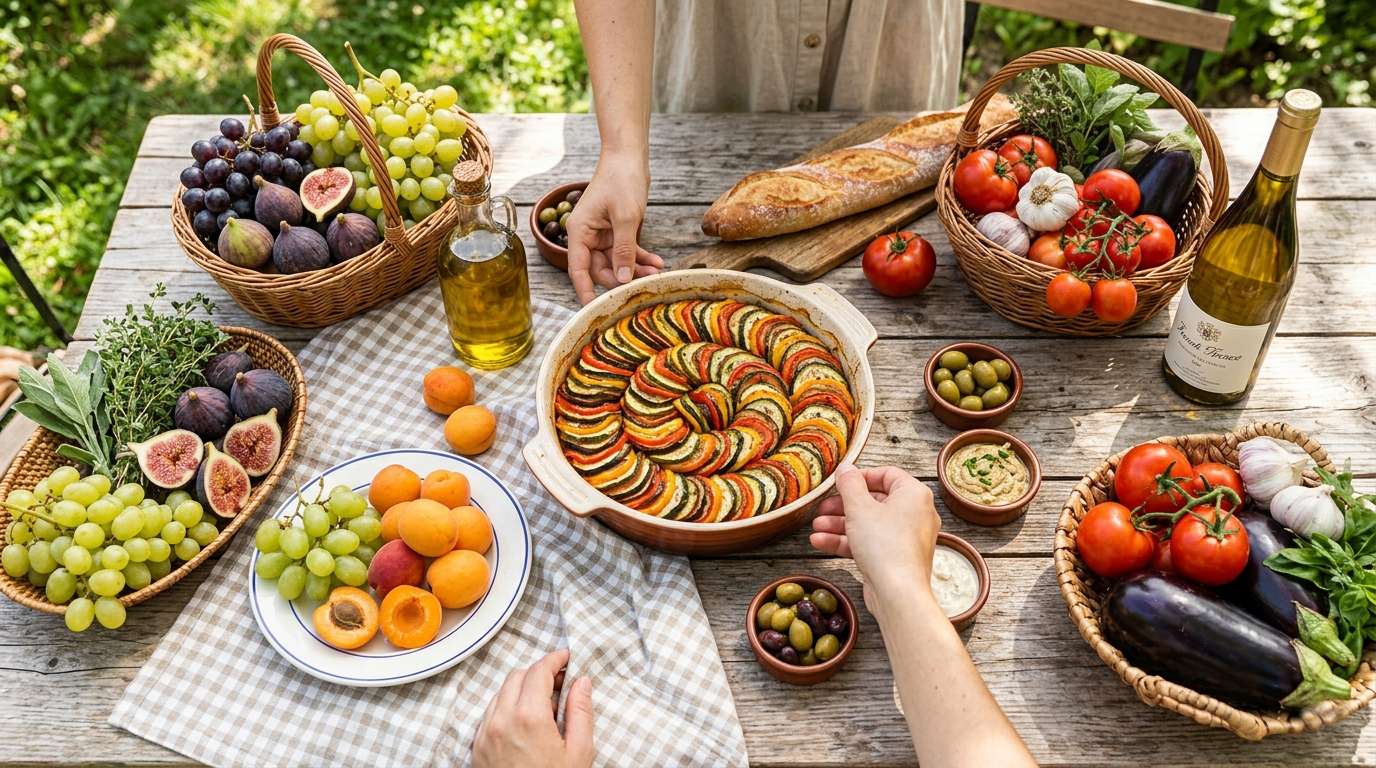
The French Paradox has puzzled researchers for decades: how does a nation famous for butter, cheese, bread, and wine maintain one of the lowest rates of heart disease and obesity in the Western world? The answer lies not in what the French eat but in how they eat. Portion discipline, market-fresh ingredients, structured mealtimes, slow eating, and a cultural relationship with food that treats every meal as an event — not a transaction — combine to create one of the most balanced dietary cultures on earth.
France is also Europe’s largest organic food market, with organic sales exceeding 12 billion euros annually. French marchés (open-air markets) remain central to daily life — fresh produce, artisanal cheese, free-range poultry, wild-caught fish, and seasonal fruits arrive daily from local farms. The French do not meal prep in the American sense — they shop frequently, cook simply, and eat intentionally. For dancers, France offers a masterclass in the art of eating enough to fuel the body without ever burdening it.
The French Organic Meal Prep Healing Pantry
Fresh Vegetables and Herbs: Leeks, shallots, haricots verts, tomatoes, endive, and watercress form the vegetable backbone of French cooking. Fresh herbs — tarragon, chervil, thyme, parsley, and chives (fines herbes) — are used daily and contribute antioxidant and anti-inflammatory compounds far beyond their modest appearance.
Quality Dairy: French butter, yogurt, and aged cheeses (Comté, Roquefort, Chèvre) from grass-fed animals deliver CLA, fat-soluble vitamins, calcium, and probiotics. The key is quality and moderation — the French eat rich dairy but in controlled portions that satisfy without excess.
Legumes and Whole Grains: Lentilles du Puy (French green lentils) are a national treasure — high in protein, fiber, iron, and folate. Whole-grain bread from traditional bakeries, buckwheat crêpes from Brittany, and farro from Provence provide complex carbohydrates for sustained energy.
Wild-Caught Fish and Poultry: Sole, turbot, mussels, and oysters from the Atlantic coast deliver lean protein and omega-3 fatty acids. Free-range chicken (poulet fermier) and duck are staples of French home cooking — flavorful, nutrient-dense, and raised without industrial methods.
Red Wine (in Moderation): The resveratrol in red wine — particularly from Pinot Noir and wines of the South of France — has demonstrated cardiovascular-protective and anti-inflammatory properties. The French tradition of one glass with dinner, never more, is itself a lesson in balance.
5-Day French Organic Meal Prep Plan
Day 1 — Paris: Breakfast: tartine (toasted baguette with butter and apricot jam) and café au lait. Lunch: niçoise salad with tuna, green beans, olives, egg, and potatoes. Dinner: roasted chicken (poulet rôti) with haricots verts and Dijon mustard.
Day 2 — Lyon: Breakfast: yogurt with granola and seasonal berries. Lunch: lentil salad with shallots, Dijon vinaigrette, and fresh herbs. Dinner: pan-seared sole meunière with steamed leeks and new potatoes.
Day 3 — Provence: Breakfast: buckwheat crêpe with goat cheese, honey, and walnuts. Lunch: ratatouille with crusty bread and a green salad. Dinner: grilled lamb with herbes de Provence, roasted tomatoes, and white bean purée.
Day 4 — Brittany: Breakfast: soft-boiled egg with whole-grain bread soldiers and butter. Lunch: moules marinières (mussels in white wine) with frites and watercress salad. Dinner: salmon en papillote with fennel, dill, and lemon.
Day 5 — Bordeaux: Breakfast: fromage blanc with fresh figs and a drizzle of honey. Lunch: soupe au pistou (vegetable soup with basil-garlic paste). Dinner: duck breast with roasted root vegetables, cherry reduction, and wilted spinach.
Why French Organic Meal Prep Works for Dancers
France’s dietary culture solves the problem that derails many dancers: how to eat richly enough to fuel intense physical work without overeating. The French answer is portion control married to ingredient quality. A small amount of excellent cheese satisfies more deeply than a large amount of mediocre food. A properly cooked piece of fish with seasonal vegetables provides complete nutrition in a single, elegant plate. And structured mealtimes — breakfast, lunch, dinner, no snacking — train the body to metabolize efficiently and maintain stable blood sugar.
The anti-inflammatory compounds in French herbs, olive oil, wine polyphenols, and omega-3-rich fish protect joints and speed recovery. The calcium and probiotics from quality dairy strengthen bones and support gut health. And the sheer pleasure of French food — the flavors, the presentation, the ritual — reduces the cortisol and stress that compromise both performance and immune function.
“France teaches that the secret to lasting health is not eating less — it is eating better, with discipline, pleasure, and respect for every ingredient.”
Practical French Organic Meal Prep Tips
Sunday Prep: Roast a whole chicken (use the carcass for stock). Cook a pot of Puy lentils. Prepare a Dijon vinaigrette. Make ratatouille (it improves with time). Wash and portion salad greens. Stock your pantry with Dijon mustard, good butter, shallots, and herbes de Provence.
Sourcing: Quality matters more than quantity in French cooking. Invest in good butter (Plugra or imported French), Dijon mustard (Maille), and Lentilles du Puy. Visit farmers’ markets for seasonal produce and free-range poultry. Choose whole-grain bread from a bakery over sliced supermarket bread.
Hydration: The French drink water with every meal — still or sparkling. Herbal tisanes (verbena, linden, chamomile) are traditional after-dinner drinks that aid digestion and promote restful sleep. Coffee is enjoyed small and strong, typically once or twice daily.
A Culture Worth Celebrating
France has elevated eating to an art form recognized by UNESCO as Intangible Cultural Heritage. The French gastronomic meal — structured, shared, and savored — is a ritual that nourishes body and spirit simultaneously. France proves that pleasure and health are not opposites — they are partners. For the global dance community, France’s message is liberating: you do not have to choose between eating well and enjoying food. The French have been doing both for centuries, and the world is healthier for it.
Continue Exploring the Global Organic Meal Prep Series
Health & Empowerment Series • West African Organic Meal Prep • Spanish Organic Meal Prep • Italian Organic Meal Prep • Japanese Organic Meal Prep • Icelandic Organic Meal Prep • Why Dance Is Medicine • The Dancer’s Prescription • Workbooks & Guides • Italian Organic Meal Prep • Portuguese Organic Meal Prep