
Career & Business
How to Prepare for TV and Film Dance Performances
From stage to screen — the mindset shifts, technical awareness, and emotional discipline every performer needs to deliver on camera.
By Dance Mogul Magazine
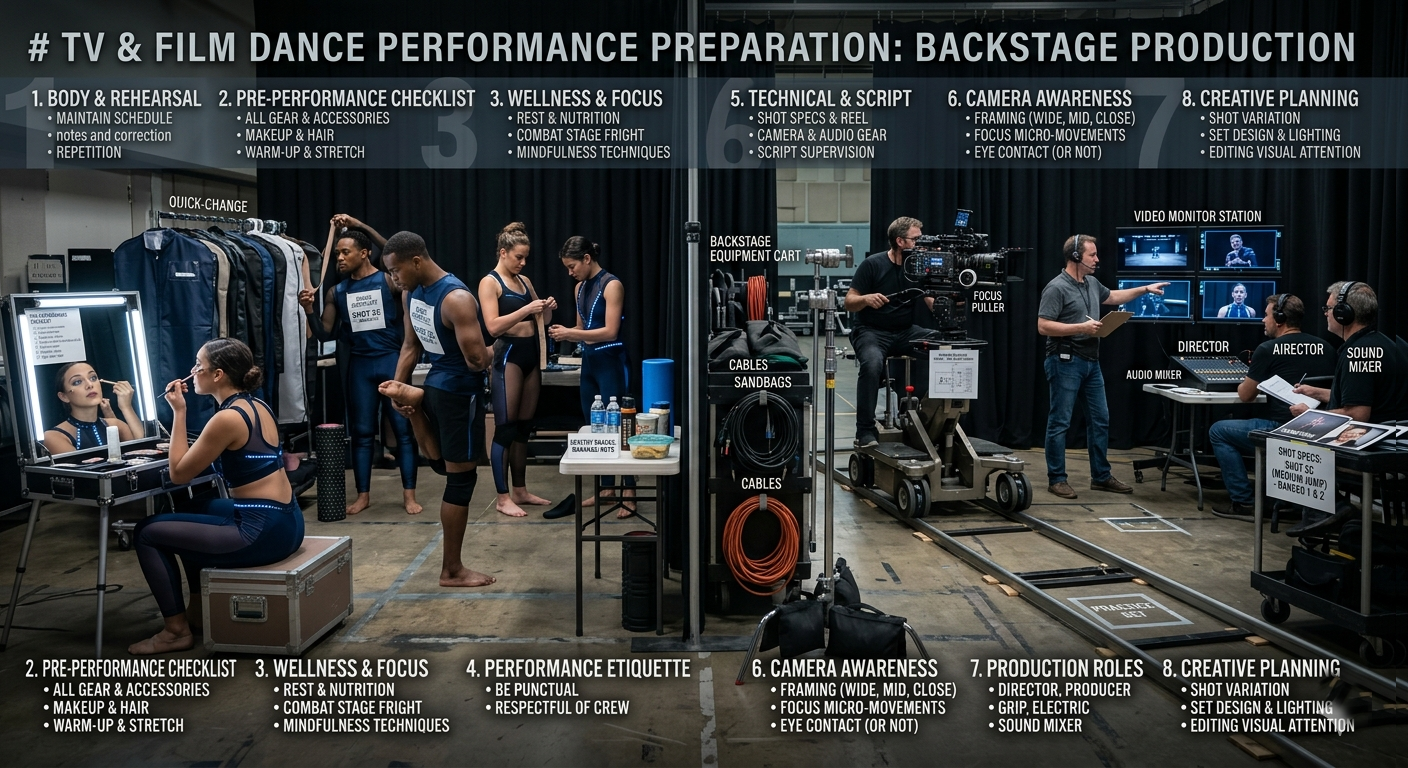
Performing for television and film is a world entirely different from the stage. It demands precision, emotional truth, technical awareness, and a deep understanding of how the camera sees you. The lens magnifies everything — your expressions, your breath, your smallest choices. It captures what is real, not what is projected. And because film is permanent, every moment matters.
Preparing for TV and film performances is both an art and a discipline. Whether you are stepping onto a major film set, shooting a commercial, or performing choreography for a televised event, how you prepare determines how confidently and effectively you show up. This guide covers the essential skills, awareness, and mindset every dancer and performer needs to succeed on camera.
Understand the Difference Between Stage and Screen
The camera is not the same as a live audience. On stage, performers project energy outward — movements are larger, expressions are amplified, and the goal is to reach the back row. On camera, the opposite is true. The lens is intimate. It captures subtlety, nuance, and truth. It sees what you feel, not what you force.
This shift requires performers to internalize their choices. Instead of "performing," you must "be." Instead of exaggerating, you must refine. The camera rewards authenticity and exposes anything that feels artificial. For dancers, this means adjusting movement quality. A gesture that reads beautifully on stage may appear too large or too sharp on camera. A facial expression that works in a theater may look exaggerated on screen. Preparing for film requires studying playback, understanding angles, and learning how to modulate your performance for the lens.
Master Your Material Before You Step on Set
Preparation begins long before you arrive. Whether you are working with dialogue, choreography, or blocking, you must know your material so well that it becomes second nature. Film sets move quickly. Time is money. Directors expect performers to arrive ready.
For dancers, mastering choreography is essential — but so is understanding how it will be captured. You may need to repeat movements dozens of times from different angles. You may need to adjust spacing, timing, or energy based on camera direction. Drill the choreography until it is muscle memory, freeing you to adapt without losing clarity.
Blocking — your movement within the scene — is equally important. You must know where to stand, where to look, and how to hit your marks without breaking character. This requires spatial awareness and the ability to integrate technical notes into your performance seamlessly.
Develop On-Camera Awareness
On-camera awareness does not mean "playing to the camera" in an obvious way. It means understanding how the camera sees you and how your choices translate on screen. This includes knowing your angles, understanding how lighting affects your appearance, and being aware of continuity — the consistency of your actions from take to take.
Continuity Matters
If you pick up a cup with your right hand in one take and your left hand in another, the editor cannot cut the scene together. Train yourself to repeat actions precisely, take after take. This is one of the most overlooked — and most critical — skills for on-camera performance.
On-camera awareness also involves understanding frame size. A close-up requires a different level of energy than a wide shot. In a close-up, the smallest shift of the eyes can communicate volumes. In a wide shot, your full body language matters. Practice scenes at different distances and study how your performance reads on camera.
Build Emotional Readiness and Consistency
Film requires emotional consistency. You may shoot a scene out of order, starting with the climax before the beginning. You may need to access deep emotional states repeatedly. Preparing for this means developing emotional discipline — the ability to summon feeling reliably and safely, take after take.
Actors often use techniques such as sensory work, substitution, or emotional recall. Dancers may rely on musicality, breath, or internal imagery to connect emotionally to movement. Whatever your method, it must be dependable under pressure. Emotional readiness also means protecting your mental health. Film sets can be stressful — long hours, high expectations, and intense scenes take a toll. Developing grounding practices like breathing exercises, visualization, journaling, or meditation keeps you centered through the demands of a production.
Physical Preparation and Stamina
Film shoots are physically demanding. You may be on set for 12 to 16 hours. You may repeat the same movement or line dozens of times. You may perform under hot lights, in heavy costumes, or in challenging environments. For dancers, this means maintaining conditioning, flexibility, and strength. Warm-ups are non-negotiable. Budget for physical therapy, cross-training, and rest as part of your preparation — your body is your instrument, and protecting it is essential to sustaining a career in film.
Hydration and nutrition matter on set. Film productions often provide food, but it may not align with your needs. Prepare by bringing your own snacks, water, and anything required to sustain energy throughout a long day. Dancers who train across multiple dance styles often find that their cross-training gives them an advantage in the varied demands of film choreography.
Navigate the Technical Environment
Film sets are highly technical environments. Cameras, lights, microphones, monitors, and crew members all play a role in capturing your performance. Lighting affects how you look and how you move — you may need to adjust your position to stay in the light or hold still for focus marks. Sound requires awareness of microphones, avoiding clothing rustle, and delivering lines clearly without projecting unnaturally.
Camera movement — whether handheld, dolly, crane, or Steadicam — affects timing and spacing. You may need to match your movement to the camera's path. Preparing for this means practicing adaptability and staying calm under technical pressure. The more you understand about how the technical ecosystem works, the more confident and effective you become on set.
Collaborate and Communicate
Film is a collaborative art form. Directors, cinematographers, choreographers, coaches, and fellow performers all contribute to the final product. Developing strong communication skills means taking direction gracefully, asking clarifying questions when needed, and staying open to adjustments. It also means respecting the crew — camera operators, lighting technicians, sound engineers, and production assistants all play essential roles. A performer who understands and respects the workflow becomes an asset on set.
Building chemistry with scene partners is equally important. Rehearse together, discuss intentions, and create a safe environment for emotional or physical scenes. The business of dance extends well beyond the studio — and on a film set, your professionalism and collaborative spirit are your calling card.
Wardrobe, Makeup, and Character Embodiment
Wardrobe and makeup are not just aesthetic — they are part of character development. Costumes affect posture, movement, and energy. Makeup affects how your expressions read on camera. Before shooting, spend time in costume: move in it, sit in it, practice your scenes in it. This helps you embody the character more fully and prevents surprises on set. Makeup for film is different from everyday makeup — it must withstand lights, sweat, and long hours. Communicate with the makeup team and maintain your look between takes.
"The camera does not capture what you project — it captures what you genuinely feel. Authenticity is the most powerful tool a performer can bring to set."
Mental Focus and On-Set Presence
Film sets can be chaotic. People move constantly. Equipment shifts. Scenes change. You may wait hours before performing. Staying present is essential — you must be able to drop into character instantly, even after long breaks. This requires discipline, patience, and the ability to tune out distractions. Many performers use grounding techniques, breathwork, or quiet spaces to stay centered.
On-set presence also means professionalism in every moment: arriving on time, knowing your material, respecting the crew, and maintaining a positive attitude. These qualities contribute as much to a successful performance as technical skill or talent.
Final Thoughts
Preparing for TV and film performances is a holistic process that blends artistry, discipline, technical understanding, and emotional intelligence. It requires performers to refine their craft, adapt to the camera, and cultivate the mental and physical stamina needed for long, demanding shoots. It demands authenticity, consistency, and collaboration.
When performers prepare deeply and intentionally, they show up ready to deliver truth on screen. They honor the craft, elevate the production, and create performances that resonate long after the cameras stop rolling.