
Health & Empowerment Series | Global Organic Meal Prep
Greek Organic Meal Prep: How the Original Mediterranean Diet Fuels Longevity
Global Organic Meal Prep Series — Article 19 of 20
By Dance Mogul Magazine | Health & Empowerment Series | Global Organic Meal Prep
Why Greece Belongs in the Global Organic Meal Prep Series
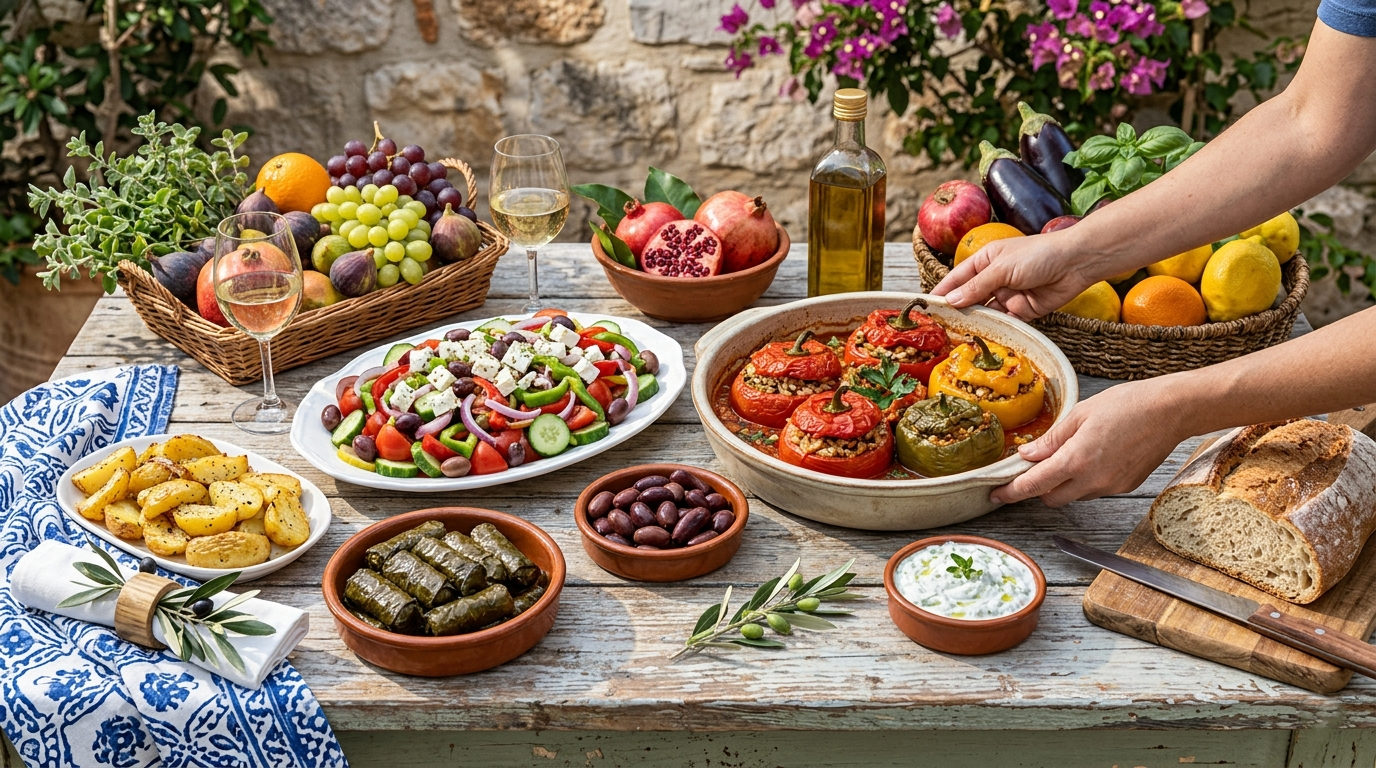
Greece is the birthplace of the Mediterranean diet — the most studied, most validated, and most recommended dietary pattern in the history of nutritional science. But Greece offers something even more powerful than a diet: a way of life. The Greek island of Ikaria is one of the world’s five Blue Zones, where residents live an average of 8–10 years longer than most Americans and experience dramatically lower rates of heart disease, cancer, dementia, and depression. Researchers who have studied Ikarian longevity attribute it to a combination of diet, physical activity, social connection, and a remarkable absence of chronic stress.
The Greek diet is built on abundance — not restriction. Olive oil flows freely, fresh herbs grow wild on hillsides, vegetables dominate every meal, legumes are consumed daily, and fish arrives fresh from the Aegean. Wine is enjoyed in moderation with meals, and food is always shared. For dancers, Greece offers the ultimate proof that eating well does not mean eating less — it means eating right.
The Greek Organic Meal Prep Healing Pantry
Extra-Virgin Olive Oil: Greece consumes more olive oil per capita than any other country on earth — an average of 20 liters per person per year. Greek EVOO is exceptionally rich in polyphenols (particularly oleocanthal), which have anti-inflammatory effects comparable to pharmaceutical agents. Daily olive oil consumption is the single strongest dietary predictor of cardiovascular health in Mediterranean populations.
Wild Herbs and Greens: Greeks forage wild horta (greens) — dandelion, purslane, amaranth, chicory, and wild fennel — from hillsides and fields. These wild greens are dramatically more nutrient-dense than cultivated varieties, containing higher levels of omega-3 fatty acids, antioxidants, and minerals. Mountain oregano, thyme, and rosemary grow wild across Greece and are used medicinally as well as culinarily.
Legumes: Lentils, chickpeas, fava beans, and giant white beans (gigantes) are consumed nearly every day in traditional Greek cooking. Legumes are the cornerstone of the Blue Zone diet on Ikaria — providing plant protein, fiber, iron, and B vitamins that stabilize blood sugar and support heart health.
Feta and Yogurt: Greek sheep’s milk feta and thick strained yogurt provide calcium, probiotics, and high-quality protein. Sheep’s milk is easier to digest than cow’s milk for many people and contains higher levels of CLA and short-chain fatty acids that support gut health.
Wild-Caught Fish: Sardines, anchovies, sea bream, and octopus are staples of island and coastal Greek cooking. Small, oily fish like sardines deliver concentrated omega-3s, calcium (when eaten whole), and vitamin D — critical for bone health, inflammation control, and cardiovascular protection.
5-Day Greek Organic Meal Prep Plan
Day 1 — Ikaria: Breakfast: Greek yogurt with wild honey, walnuts, and fresh figs. Lunch: horta (boiled wild greens) with lemon and olive oil, served with feta and crusty bread. Dinner: grilled sardines with roasted potatoes, tomato salad, and capers.
Day 2 — Crete: Breakfast: dakos (barley rusk topped with grated tomato, feta, olive oil, and oregano). Lunch: gigantes plaki (giant beans baked in tomato sauce with herbs). Dinner: grilled lamb chops with roasted eggplant, tzatziki, and a green salad.
Day 3 — Athens: Breakfast: omelette with tomatoes, olives, feta, and fresh herbs. Lunch: lentil soup (fakés) with lemon, olive oil, and crusty bread. Dinner: baked sea bream with roasted vegetables, oregano, and lemon.
Day 4 — Santorini: Breakfast: strapatsada (scrambled eggs with tomatoes and feta). Lunch: fava (yellow split pea purée) with capers, onions, and olive oil. Dinner: grilled octopus with warm potato salad, red onion, and vinaigrette.
Day 5 — Thessaloniki: Breakfast: Greek yogurt with granola, pomegranate seeds, and a drizzle of olive oil. Lunch: spanakopita (spinach and feta pie in phyllo) with a tomato-cucumber salad. Dinner: baked chicken with artichokes, olives, sun-dried tomatoes, and orzo.
Why Greek Organic Meal Prep Works for Dancers
Greece’s diet is the one against which all other healthy diets are measured. The combination of generous olive oil, daily legumes, wild greens, fresh fish, and fermented dairy creates a nutritional profile that simultaneously reduces inflammation, stabilizes energy, strengthens bones, protects the heart, and supports gut health. For dancers, this means fewer injuries, faster recovery, more consistent energy, better mood stability, and a body that remains resilient through years of demanding physical work.
The Greek approach to life reinforces the diet’s power: midday rest, evening social meals, regular walking, strong community bonds, and a cultural attitude that prioritizes enjoyment over anxiety. On Ikaria, people do not “exercise” — they garden, walk hills, and dance. The integration of movement, food, and community is the complete picture of health that modern wellness culture often fragments into separate categories. Greece keeps it whole.
“Greece teaches that the longest, healthiest lives are not built on deprivation — they are built on olive oil, wild greens, shared meals, and the joy of living fully.”
Practical Greek Organic Meal Prep Tips
Sunday Prep: Cook a large pot of lentil or bean soup. Make a batch of tzatziki. Roast a tray of vegetables. Prepare a Greek salad base (store tomatoes and cucumbers separately from feta and dressing). Grill or bake fish and chicken for the week. Stock olive oil, lemons, and dried oregano — the holy trinity of Greek cooking.
Sourcing: Quality Greek extra-virgin olive oil is worth seeking out — look for Koroneiki variety or Cretan origin. Greek feta (sheep’s milk, PDO certified) is superior to imitations. Dried oregano from Greece is more aromatic and potent than most commercial varieties. Wild greens can be approximated with dandelion greens, arugula, and chicory from farmers’ markets.
Hydration: Greeks drink mountain tea (tsai tou vounou) made from Sideritis plant — research links it to reduced inflammation, improved cognitive function, and cardiovascular protection. Water, herbal teas, and moderate wine with dinner complete the picture. Coffee is deeply cultural — Greek coffee or freddo cappuccino — enjoyed slowly and socially.
A Culture Worth Celebrating
Greece gave the world the Mediterranean diet, the concept of food as medicine (Hippocrates was Greek), and a living example — on the island of Ikaria — of what happens when a people eat, move, and connect the way humans were designed to. Greek food is not a trend. It is a 4,000-year-old practice that modern science validates with every new study. For the global dance community, Greece’s message is the oldest and perhaps the most important in this entire series: let food be thy medicine, let movement be thy joy, and let every meal be an act of celebration.
Continue Exploring the Global Organic Meal Prep Series
Health & Empowerment Series • West African Organic Meal Prep • Spanish Organic Meal Prep • Italian Organic Meal Prep • Japanese Organic Meal Prep • Icelandic Organic Meal Prep • Why Dance Is Medicine • The Dancer’s Prescription • Workbooks & Guides • Italian Organic Meal Prep • Israeli Organic Meal Prep