
STREET DANCE · FINGER TUTTING · PIONEER PROFILE
Razvan “Tiny” Gorea
The Street Dancer Who Pioneered Finger Tutting and Built an Entire Dance Vocabulary with His Hands
By Dance Mogul Magazine | Originally Featured: June 2012 | Updated: May 2026 | 8 min read
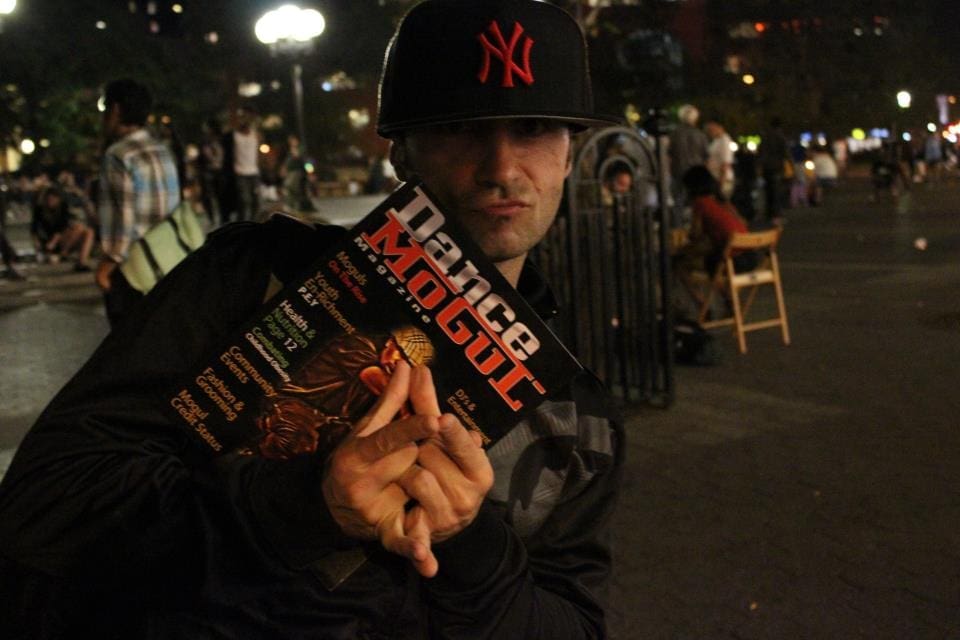
Razvan “Tiny” Gorea, also known as Tiny Love, is recognized globally as a founding figure of finger tutting. | Photo: Dance Mogul Magazine Archives
Ever wonder what young dancers are doing when their fingers move at impossible speeds — creating geometric shapes, interlocking patterns, and fluid waves at angles that seem to defy human anatomy? The art form is called finger tutting, and one of the people most responsible for developing it into a recognized dance style is Razvan Robert Gorea, known to the global street dance community simply as Tiny, or Tiny Love.
Dance Mogul Magazine first featured Tiny back in 2012, when finger tutting was still a relatively underground phenomenon. More than a decade later, his influence has only deepened. The style he helped pioneer has appeared in major films, Samsung commercials, Taylor Swift music videos, and dance competitions around the world. Yet Tiny himself remains a purist — a dedicated street dancer whose commitment to innovation, spirituality, and the craft has never wavered.
This is the comprehensive story of one of street dance’s most important and underrecognized pioneers.
Who Is Razvan “Tiny” Gorea?
Razvan Robert Gorea is an American street dancer, choreographer, and movement innovator based in the United States. Performing under the stage name Tiny Love, he is widely credited as one of the originators of finger tutting — a sub-style of tutting that uses intricate finger movements to create geometric patterns, digital characters, and optical illusions.
His work spans multiple finger-based dance disciplines, including what the community refers to as digitz (finger waves and animations), face tutting (finger patterns performed against the face), character digits (recognizable shapes formed by the fingers), and finger boxing — a term he coined for a combative, rhythmic approach to finger movement. His creative range within the finger dance space is unmatched, and he has been producing content, tutorials, and showcase videos for over fifteen years.
Tiny also has an IMDB credit as himself in the production Switched!, bridging his street dance artistry into the film and media world.
“If you think you know finger tutting, think again. Thank the Most High YAH for the inspiration and continuous love.” — Tiny Love, via YouTube (2010)
The Origins of Finger Tutting: Where Tiny Fits in Dance History
To understand Tiny’s contribution, you need to understand where finger tutting came from. Tutting — the broader style — originated in the mid-1970s in Los Angeles, pioneered by Mark Benson (King Boogaloo Tut), who was inspired by the angular poses in ancient Egyptian art. Benson developed the style alongside the Electric Boogaloos, and it became a recognized element of the popping and funk dance ecosystem.
Nearly two decades later, in the late 1990s, a new wave of dancers in the New York City rave scene began experimenting with finger-specific variations of tutting. While traditional tutting used arms, wrists, and the full body to create 90-degree angles and geometric shapes, these innovators miniaturized the concept down to the fingertips. The result was a new form that required extraordinary dexterity, spatial awareness, and rhythmic precision.
Before finger tutting fully crystallized, there were precursor finger styles. Liquid — a fluid, illusionary dance emphasizing arm-and-hand flow — and digitz — a wave-based finger technique created by a dancer named Mario in the mid-1990s at New York’s legendary Tunnel nightclub — laid the groundwork. The crew LPC (featuring Jared “Code Red”) helped spread digitz globally by releasing one of the first instructional videos for liquid and digitz in 2001.
Tiny Love emerged from this exact ecosystem. He refined intricate and swift finger techniques in the underground rave and hip-hop scenes, and is recognized by the global tutting community — from India to Europe to South America — as one of the key figures who developed finger tutting’s foundational vocabulary. Multiple dance history resources credit “Razvan Gorea a.k.a. Tiny Love” as a discoverer and pioneer of the style.
What Makes Tiny Love’s Style Unique
What separates Tiny from other finger tutters is the sheer breadth and originality of his vocabulary. While many dancers specialize in one aspect of finger dance, Tiny has developed and documented multiple sub-styles within the form:
Finger Tutting — Geometric patterns and angular shapes executed with finger isolations at varying speeds.
Face Tutting — Finger patterns performed against and around the face, creating a visual dialogue between hands and expression.
Character Digits — Recognizable shapes and “characters” formed by the fingers, almost like a visual alphabet.
Finger Waves & Animation — Fluid, wave-like movements through the fingers that create optical illusions of energy flowing through the hands.
Finger Boxing — A combative, rhythmic approach where finger movements mimic the aggression and precision of a boxing match.
Dubstep Finger Dance — Finger tutting choreographed specifically to heavy bass drops and electronic music, requiring explosive timing and control.
This diversity of technique is what earned Tiny the respect of the global tutting community. He didn’t just learn a style — he expanded the entire vocabulary of what fingers could do in dance.
Career Timeline & Key Milestones
Late 1990s — Emerges from the New York City rave and underground hip-hop scenes, experimenting with finger isolations alongside the broader tutting and digitz movements.
Early 2000s — Begins developing what would become recognized as finger tutting. Contributes to the foundational vocabulary of the style alongside other NYC-based innovators.
2010 — Publishes early YouTube finger tutting showcases. His video descriptions carry a signature spiritual gratitude, thanking “the Most High YAH” for inspiration. Conducts an interview documenting “The History of Finger Tutting” with fellow dancer ShiftedShapes.
2012 — Featured in Dance Mogul Magazine — one of the first media outlets to profile him as an originator of finger tutting. Publishes “Tiny Love Finger Styles of Dance Showcase,” a comprehensive video demonstrating digitz, finger waves, face tutting, and character digits.
2013 — Releases additional YouTube tutorials and showcases, including “Shogun Assassin” and “FingerStyles Showcase,” which demonstrate his expanding vocabulary of finger boxing and mask-style tutting.
2016–2017 — Produces a prolific series of videos: “Mystery of Chess Finger Boxing,” “Dubstep Dancer,” “Nice Crisp Day,” and “Dark Matter,” each showcasing different approaches to finger dance set against dubstep, electronic, and bass-heavy music.
2020 — Credited on IMDB for the production Switched!, marking a crossover into film and media.
2021 — Enters the Big Tut Challenge, a community-wide tutting competition, demonstrating that he remains active and respected within the competitive tutting community. His archived works continue to be preserved and catalogued on the Internet Archive.
2026 — Multiple dance history resources, including Grokipedia’s comprehensive entry on finger-tutting, identify “Gorea” as a pioneering practitioner who “refined intricate and swift finger techniques” that contributed to the form’s foundational vocabulary.
Cultural Impact: How Finger Tutting Changed Dance Forever
The style that Tiny Love helped create didn’t stay underground. Finger tutting has become one of the most recognizable street dance forms of the 21st century, reaching audiences far beyond the hip-hop and rave communities where it originated.
In 2010, dancer Jay “JSmooth” Gutierrez brought finger tutting to mainstream attention through the end credits of Step Up 3D. In 2014, dancer Julian “JayFunk” Daniels performed in a viral Samsung commercial called “Unleash Your Fingers” that was viewed millions of times. The crew Finger Circus — featuring John “P-Nut” Hunt and Chase “C-Tut” Lindsey — further popularized the form through YouTube tutorials and even taught Taylor Swift the basics for her “Shake It Off” music video.
Today, finger tutting is practiced on every continent. There are dedicated tutting communities in India, Japan, Brazil, France, and across Africa. TikTok has introduced the form to an entirely new generation, with millions of videos tagged under tutting-related hashtags. The style has also influenced animation, motion graphics, sign language artistry, and even therapeutic hand exercises.
All of this traces back to the pioneers — people like Tiny Love who spent years in underground scenes developing a vocabulary that the world would eventually embrace.
“Finger tutting is not the first finger style. There were a couple other styles that preceded it. But it was the innovators who brought it all together into something the world could feel.” — Tutting India, on the evolution of finger styles
The Spiritual Foundation: How Faith Fuels Tiny’s Art
One of the most distinctive aspects of Tiny Love’s persona is the spiritual grounding that runs through everything he does. Across his YouTube videos, social media posts, and video descriptions, he consistently attributes his creativity and inspiration to a higher power. His 2010 YouTube description reads: “Thank the Most High YAH for the inspiration and continuous love.”
This is not performative branding — it’s a core philosophy. In a street dance culture that can sometimes prioritize competition and ego, Tiny’s approach centers gratitude, humility, and continuous growth. His dedication to innovation without chasing mainstream fame is a model for what it means to be a true artist in the dance community.
For young dancers watching his videos today, the message is clear: the goal isn’t virality. The goal is mastery, authenticity, and giving something meaningful to the culture.
Why Dance Mogul Magazine Featured Tiny — Then and Now
Dance Mogul Magazine has always been committed to documenting the pioneers — not just the famous names, but the foundation builders. When we first profiled Tiny in 2012, finger tutting was still a niche movement. We saw what so many mainstream outlets missed: a dedicated artist who was building an entirely new dance vocabulary from the ground up.
Updating this profile in 2026 isn’t just an editorial choice — it’s a responsibility. As finger tutting continues to grow globally, the people who planted the seeds deserve to be named, recognized, and respected. That’s what Dance Mogul Magazine’s commitment to dance culture is all about: ensuring that the history is told right, by the people who were there first.
If you’re a young dancer who learned finger tutting from TikTok, from Finger Circus tutorials, or from a Step Up movie — now you know one of the names behind the movement. And that matters.
Watch Tiny Love in Action
Below are some of Tiny Love’s most notable performances and showcases. These videos document the evolution of his craft over more than a decade:
Tiny Love — Finger Tutting Showcase
Tiny Love — Finger Dance Performance
Tiny Love — “Finger Tutting Ya” (2010) — One of his earliest published showcases
Tiny Love interviewing ShiftedShapes — “The History of Finger Tutting” (2010)
Quick Reference: Razvan “Tiny” Gorea
Full Name: Razvan Robert Gorea
Stage Name: Tiny / Tiny Love
Based In: United States
Dance Styles: Finger Tutting, Face Tutting, Digitz, Character Digits, Finger Waves, Finger Boxing, Animation
Known For: Pioneering finger tutting; developing multiple sub-styles of finger dance; preserving the history of the art form through interviews and documentation
Film/TV Credit: Switched! (IMDB: nm3495282)
Active Years: Late 1990s – Present
Legacy: Recognized globally as a founding figure of finger tutting; credited in dance history resources including Grokipedia, Tutting India, and Dance Mogul Magazine
Inspiring self-empowerment through dance culture, community, and the stories of the pioneers who built the foundation for everything we see today.
Explore More Street Dance Stories | Read Our Exclusive Interviews
TAGS
Razvan Gorea · Tiny Love · Finger Tutting · Tutting · Digitz · Street Dance · Hip-Hop · Dance Pioneer · NYC Rave Scene · Face Tutting · Character Digits · Dance History · Popping
© 2026 Dance Mogul Magazine LLC. All rights reserved. Originally published June 2012. Updated May 2026 with comprehensive research, career timeline, and cultural impact analysis.