
EXCLUSIVE INTERVIEWS | VOGUING | BALL CULTURE
Benny Ninja and the Art of Voguing: History, Legacy, and the Living Culture
How the Father of the House of Ninja Carries Forward the Godfather's Vision — And Why Diversity in Dance Media Matters More Than Ever
By Dance Mogul Magazine
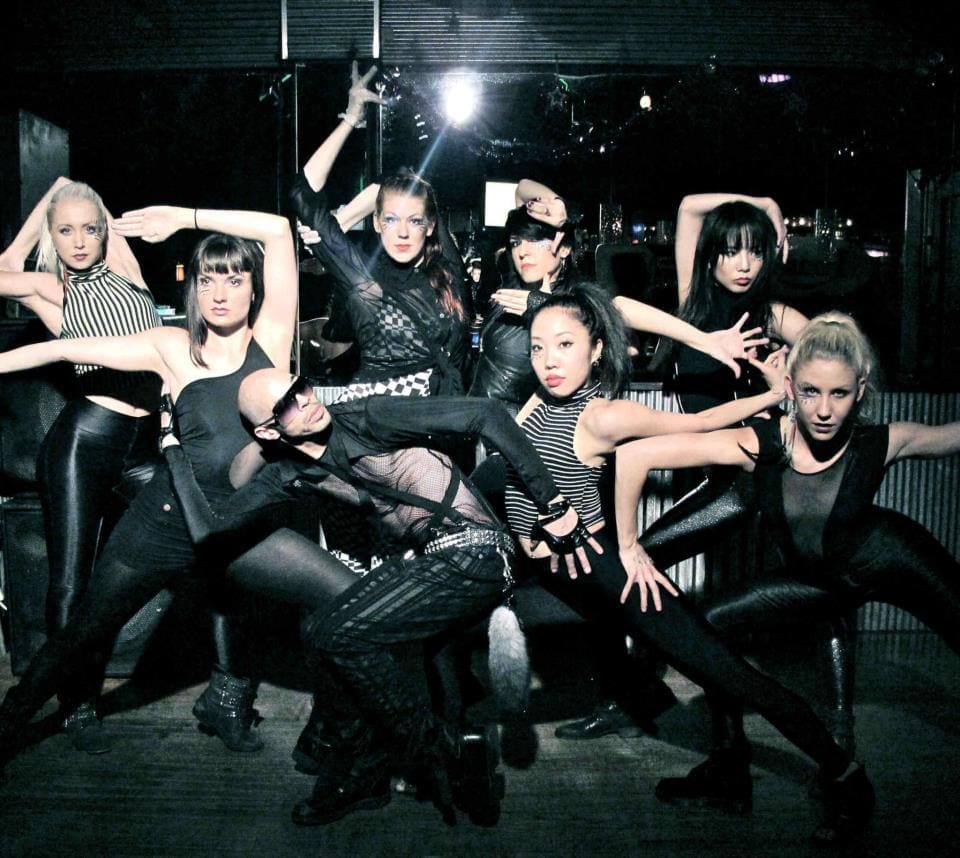
Benny Ninja — Father of the Legendary House of Ninja | Photo: Dance Mogul Magazine Archives
Dance Mogul Magazine has had the honor of sitting down with Benny Ninja, one of the most recognizable figures in ballroom culture and a global ambassador for the art of voguing. Benjamin Thomas — known worldwide as Benny Ninja — has been voguing since 1990 and is well known for his involvement in the underground ball culture that shaped an entire generation of dancers, artists, and cultural leaders.
He is the Father of the House of Ninja, a position bestowed upon him by the late Willi Ninja, who is universally recognized as the Godfather of Voguing. Benny's journey represents more than personal achievement — it represents the continuation of a legacy, the preservation of a culture, and the power of dance as a vehicle for identity, resilience, and self-expression.
This article explores the deep history of voguing, the current state of the art form, Benny Ninja's role in carrying the culture forward, and why diversity in dance media has always been central to the mission of Dance Mogul Magazine.
Benny Ninja — Dance Mogul Magazine Exclusive
The History of Voguing: From Harlem Ballrooms to Global Phenomenon
Voguing is a highly stylized form of dance that emerged from the Black and Latino LGBTQ+ communities in Harlem, New York, between the 1960s and 1980s. Named after Vogue magazine, the dance form draws inspiration from the dramatic poses of high-fashion models, blending sharp angular movements, fluid transitions, and expressive storytelling through the body.
The roots of ballroom culture stretch back even further. Drag balls were documented as early as the late 19th century in the United States, with events like the Annual Odd Fellows Ball at Harlem's Hamilton Lodge drawing hundreds of participants. These early gatherings served as safe spaces for queer people to explore identity and expression during eras of intense social hostility.
By the 1960s and 1970s, however, Black and Latino participants grew frustrated with racism in predominantly white drag spaces. In 1972, Crystal and Lottie LaBeija founded the House of LaBeija in Harlem — the first formal ballroom "house" — marking the birth of the modern ballroom scene as we know it today.
Houses functioned as chosen families — led by house "mothers" or "fathers," they offered practical and emotional support, especially to members estranged from biological families due to homophobia or transphobia. These communities were vital networks of care and resilience.
As the 1980s progressed, voguing evolved into three distinct styles that remain foundational today. Old Way (pre-1990) emphasizes hard angles, straight lines, symmetry, and precision with graceful, fluid-like action. New Way (post-1990) introduced elements like the catwalk, the duckwalk, spinning, and enhanced hand performance — characterized by rigid movements and joint contortions known as "clicks." Vogue Fem (circa 1995) uses similar elements but focuses on speed, flow, dramatic floor work, and acrobatic stunts.
The competitive element of the ballroom was also a revolutionary concept. Battles were introduced as a nonviolent way to achieve supremacy — part dance-off, part fashion face-off. Participants competed for trophies and the reputation of their houses, but the real prize was always the sense of achievement, belonging, and acceptance that came from being seen and celebrated.
Willi Ninja: The Godfather Who Brought Voguing to the World
No conversation about voguing is complete without honoring the legacy of Willi Ninja. Born William Roscoe Leake on April 12, 1961, in New Hyde Park, New York, Willi was a self-taught dancer who drew inspiration from sources as diverse as Fred Astaire, ancient Egyptian hieroglyphics, Olympic gymnastics, and martial arts — hence the name "Ninja."
Willi founded the House of Ninja in 1982, serving as its "Mother" — a guide, mentor, and protector to a community of young dancers, many of whom had been rejected by their biological families. The House of Ninja became known for its exceptional dancers and its multiracial makeup, which was unusual for the time.
Willi's appearance in the groundbreaking 1990 documentary Paris Is Burning catapulted both him and the ballroom scene into mainstream consciousness. The film, directed by Jennie Livingston, chronicled the Harlem ball culture and its participants with an intimacy that had never been captured before. Willi's technical brilliance and magnetic presence made him the film's breakout star.
"Whenever you talk about vogue or voguing, Willi's name is there. Willi refined voguing. He really brought it to an amazing level." — Jennie Livingston, director of Paris Is Burning
Following the documentary's success, Willi modeled on runways for Chanel, Jean Paul Gaultier, Thierry Mugler, and Karl Lagerfeld. He trained supermodels like Naomi Campbell and Iman in the art of the walk. He starred in Malcolm McLaren's music video "Deep in Vogue" and performed alongside Madonna and Janet Jackson. He opened Elements of Ninja (EON), a modeling and talent agency, and he traveled the globe teaching voguing classes in Europe and Asia — establishing the footprint for the international ballroom scenes that thrive today.
Willi Ninja passed away on September 2, 2006, from AIDS-related heart failure at the age of 45. Madonna, through a spokeswoman, said he was "a great cultural influence to me and hundreds of thousands of other people." In 2023, Google honored Willi with a Doodle featuring current members of the House of Ninja dancing in celebration of his legacy.
His legacy endures — not just as a dance pioneer, but as someone who divorced voguing from narrow assumptions and treated it as a legitimate, universal art form. He paved the way for Black LGBTQ+ representation and acceptance in ways that continue to resonate.
Benny Ninja: Carrying the Torch Forward
When Willi Ninja passed, the future of the House of Ninja — and much of the culture he built — rested on the shoulders of those he had mentored. Benny Ninja, who had been walking balls and refining his craft since 1990, was the natural successor. Willi bestowed upon him the title of Father of the House of Ninja, recognizing not only Benny's extraordinary talent but his commitment to preserving the values, standards, and spirit of the house.
Benny Ninja is the Co-Owner and Master Training Instructor for The Benny Ninja Training Academy, where he teaches his unique style of runway walking, posing, and voguing to students around the world. His teaching portfolio spans the United States — New York, Boston, California, Florida, Illinois, Minnesota, New Jersey, and Texas — as well as international destinations including Paris, Amsterdam, Australia, China, and Estonia.
He is perhaps most widely recognized for his role on America's Next Top Model, where he served as runway coach, instructor, and guest judge. On the show, Benny brought the principles of ballroom — confidence, precision, presence, and fearless self-expression — to a mainstream audience, demonstrating that the art form born in Harlem's underground had direct relevance to the highest levels of fashion and entertainment.
"I am who I am because I am in love with myself." — Benny Ninja
Benny's work extends beyond performance and teaching. As the Father of the House of Ninja, he is a steward of one of the most storied institutions in ballroom history. He maintains the house's values of excellence, discipline, and multiracial inclusivity — the same values Willi championed. He represents the bridge between the pioneering generation and the young voguers who are discovering the art form today.
The Current State of Voguing: A Global Movement
Voguing in 2026 is not what it was in 1990 — it is bigger, more diverse, and more visible than at any point in its history. What began in Harlem's underground has become a global movement, with thriving ballroom scenes on every continent.
In the United States, New York City remains the mecca of ballroom culture, with weekly events like Open to All (OTA) drawing packed crowds to Brooklyn venues every Monday night. Regional scenes flourish in Chicago, Detroit, Atlanta, Dallas, Miami, Los Angeles, Philadelphia, Washington D.C., and beyond. Events like the Royal Bloom Vogue Ball at the Museum of the City of New York — held in collaboration with the Royal House of LaBeija — sell out, bringing ballroom into major cultural institutions.
Internationally, the reach is remarkable. Cities across Western Europe — London, Paris, Amsterdam, Berlin, Vienna, and Stockholm — have established ballroom communities. Eastern European scenes are growing rapidly. In Latin America, Mexico City, São Paulo, Bogotá, and San Juan all host regular balls. The House of Labori in Puerto Rico, founded in 2021, has become a major presence. In Asia, Shanghai's Voguing Shanghai studio — the first platform dedicated to the movement in mainland China — has organized some of the country's largest balls. Scenes have taken root in Japan, Hong Kong, Singapore, and New Zealand.
The influence of voguing on mainstream pop culture continues to accelerate. Artists including Beyoncé, Rihanna, FKA Twigs, Ariana Grande, and Teyana Taylor have drawn directly from the ballroom aesthetic in their performances and music videos. Ryan Murphy's television series Pose (2018–2021) brought ballroom culture to millions of viewers with the largest cast of transgender actors in television history. The Andrew Lloyd Webber stage adaptation of The Devil Wears Prada, which transferred to Broadway in 2026, features elements of ballroom choreography. At the 2026 Milano-Cortina Winter Olympics, ice skating routines incorporated voguing-inspired movements set to Madonna's "Vogue."
Social media — particularly TikTok and Instagram — has introduced a new generation to the art form. Young people are discovering ballroom culture through viral clips, joining houses, and attending their first balls. This digital visibility, while powerful, also raises important questions about cultural credit, context, and the line between appreciation and appropriation.
Despite its global expansion, the ballroom community continues to face real challenges. The scene was devastated by the HIV/AIDS epidemic, which claimed the lives of many pioneers including Willi Ninja, Hector Xtravaganza, and Angie Xtravaganza. Access to healthcare, housing stability, and safety remain urgent concerns for LGBTQ+ communities of color. The art form's increasing commercialization also demands vigilance about who profits and who receives credit. The elders and current house leaders like Benny Ninja play a crucial role in ensuring that as voguing grows, its roots are honored and its communities are protected.
Why Diversity Matters: Dance Mogul Magazine’s Commitment to Every Voice
Dance Mogul Magazine has always believed that the full story of dance cannot be told without honoring every community, every style, and every voice that contributes to the art form. From hip-hop to ballet, from street dance to ballroom, the magazine exists to ensure that no community is invisible and no contribution is erased.
Featuring Benny Ninja and the voguing community is not a departure from Dance Mogul Magazine's mission — it is the mission in action. Voguing was created by Black and Latino LGBTQ+ communities as an act of resilience, creativity, and resistance. It is one of the most important cultural innovations in American dance history, and it deserves to be documented, celebrated, and respected with the same editorial rigor and care given to any other art form.
Diversity in dance media is not a trend or a talking point. It is a responsibility. When publications choose to cover only certain styles or certain communities, they participate in erasure. When they make room for every voice — including voices that have historically been marginalized — they help build a more complete, more honest, and more empowering understanding of what dance is and what it means.
Voguing is very much about telling one's story through movement. Because of who is doing it, it is very much an act of resistance to an entire world that tells certain communities their lives are devoid of meaning and that they have nothing to contribute.
Dance Mogul Magazine stands firm in the belief that every dancer, every style, and every culture has inherent value. The dance community is strongest when it is inclusive. Empowerment is not selective — it extends to every person who uses movement to express who they are, where they come from, and where they are going.
The story of Benny Ninja and the House of Ninja is the story of what happens when art, community, and courage converge. It is a story that belongs in the canon of American dance — and Dance Mogul Magazine is honored to help tell it.
The Legacy Continues
Voguing is no longer underground. It is on Broadway, in the Olympics, on your phone screen, and in dance studios across the globe. But at its core, it remains what it has always been — a language of survival, self-love, and unapologetic identity. The houses still serve as chosen families. The balls still provide a space where people can be fully seen and celebrated. The mothers and fathers still mentor, protect, and inspire.
Benny Ninja carries this responsibility with grace, skill, and dedication. As the Father of the House of Ninja, he is a living link to the Godfather himself — to Willi's vision, Willi's standards, and Willi's belief that voguing belongs to the world.
Dance Mogul Magazine will continue to cover every corner of the dance world with integrity, respect, and purpose. Because every style has a story. Every dancer has a voice. And every community deserves to be seen.
EXPLORE MORE
Discover the full range of dance styles and cultures covered by Dance Mogul Magazine on our Dance Styles Hub. Explore our Exclusive Interviews for more conversations with the artists shaping dance culture worldwide.
Voguing Benny Ninja Ball Culture House of Ninja Willi Ninja LGBTQ Dance Dance History Paris Is Burning Diversity in Dance
© 2026 Dance Mogul Magazine LLC. All rights reserved.