
The Origins of Punking: How a Dance Born in Struggle Became a Global Movement
Punking • Waacking • Posing — The Full Story
By Dance Mogul Magazine
Viktor Manoel — Original Punker, pioneer of Punking, Waacking, and Posing. Photo courtesy of Dance Mogul Magazine archives.
Before the spelling debates — Waacking, Whacking, Waack — before the television appearances, the music videos, and the global dance competitions, there was a style with no name. It was born on the dance floors of underground gay clubs in 1970s Los Angeles, created by a multiracial group of young men who transformed oppression into art. They called it Punking.
Today, Punking and its evolution into Waacking/Whacking have influenced dancers on every continent. Yet the roots of this powerful art form remain widely misunderstood. Dance Mogul Magazine has long been committed to preserving the true history of dance culture — and the story of Punking is one that demands to be told with accuracy, respect, and reverence for the community that gave it life.
Where It All Began: Paradise Ballroom, Hollywood
In the early 1970s, the Paradise Ballroom at 836 N. Highland Boulevard in Hollywood, California was one of the few places where young gay men of color could exist freely. At a time when being openly gay carried the threat of arrest, violence, and social exile, the dance floor became a sanctuary — a place where the body could speak what society would not allow the voice to say.
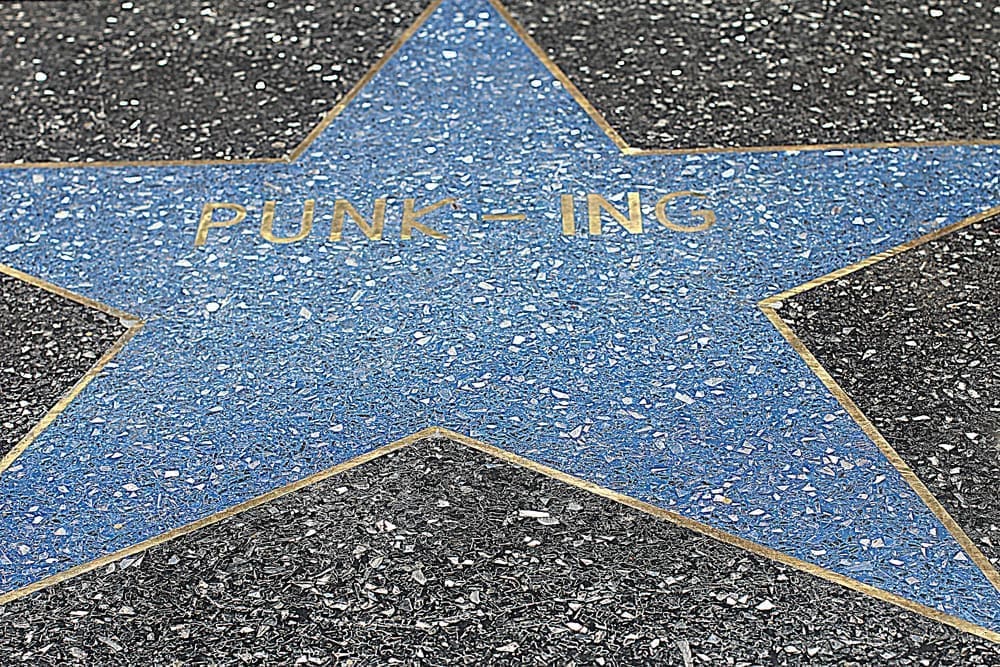
It was here, and at clubs like Gino’s, Gino’s II, and later Peanuts, that a collective of dancers began developing a form of movement unlike anything the world had seen. Using the entire body and space as tools of expression, they created what DJ and originator Michael Angelo Harris would name “Punking” — reclaiming a derogatory slur used against the LGBTQ+ community and transforming it into a declaration of power.
“PUNKING — it’s the Action. Initiation. Ignition. Inner-Dialogue, Behavior. FULL-USE of BODY and SPACE as a tool to Attack, Dominate, Conquer, Challenge, Play… making the people watching feel as if sound and music is emanating from your body.”
— Viktor Manoel, Original Punker
The Original Punkers
Punking was not the invention of a single person. It was forged collectively by a group of dancers whose individual influences — from ballet folklórico to Bugs Bunny cartoons, from silent film to ice skating — merged into a revolutionary style. The founding architects of the art form include: Andrew Frank, Arthur Goff, Billy Starr Estrada, China Doll (Kenny), Lonny Carbajal, Viktor Manoel, Tommy Mitchell, Tinker Toy, and Faye Raye, with Michael Angelo Harris serving as the visionary DJ who drove the sonic landscape of the movement.
Each brought their own cultural DNA to the dance floor. Manoel, who was born in Michoacán, Mexico and raised in Culver City, drew from the grace of Mexican folk dance traditions. Tinker channeled the irreverent energy of Looney Tunes. Andrew Frank drew from the dramatic intensity of Hollywood cinema. Together, they were creating silent movies on the dance floor — the music serving only as a soundtrack to the visual stories their bodies told.
Understanding the Three Elements: Punking, Posing, and Whacking
The complete art form consists of three interconnected elements, each with its own purpose and identity:
PUNKING — The theatrical core. The storytelling, character, drama, and behavior. It is the essence of the dance: creating a persona, channeling a narrative, acting out an inner dialogue through movement. Punking is what makes this art form more than choreography — it is performance in its purest sense.
POSING — The foundational element from which everything grew. In the early 1970s, dancers would freeze into dramatic positions synchronized to the music, like a screenshot from a film. Posing evolved from a simple freeze into a sophisticated language of shapes, angles, and attitudes.
WHACKING — The sharp, striking arm movements that became the style’s most visible signature. The name was inspired by the exaggerated sound effects from the 1960s Batman and Robin television series. Whacking means to strike with force — and that definition carries deep symbolic weight for the community that created it.
Collectively, these three elements form the complete dance. When the style moved into mainstream and straight club environments, the name shifted from “Punking” to “Whacking” and eventually “Waacking” — each spelling carrying its own era and context. But the originators were, and will always be, Punkers.
Viktor Manoel: The Last Living Pioneer
Of all the original Punkers, Viktor Manoel stands as the sole surviving architect of the art form. After the AIDS epidemic devastated the underground community throughout the 1980s and 1990s, claiming the lives of many of his fellow originators, Manoel became the living bridge between the history of Punking and its global future.
Manoel’s career carried him far beyond the underground clubs. With his iconic dynamism, cutting-edge style, and charismatic androgyny, he performed alongside Grace Jones during her Do or Die and Muse eras, toured internationally with David Bowie as an alter-ego performer, and appeared in films, music videos, and major stage productions. His professional journey demonstrated that Punking was never just a club dance — it was a complete performing art.
“I don’t teach to impress. I teach you how to find yourself in my movement.”
— Viktor Manoel
Dance Mogul Magazine sat down with Viktor Manoel at The Performing Arts Center in California, where he shared the origins of the dance in an intimate, unfiltered conversation. That interview — VIKTOR MANOEL – PUNKING – WAACKING – POSING — remains one of the most important pieces of primary-source documentation in street dance history. In it, Viktor took the audience on a journey into the language of Punking, explaining how the translation of gender behavior into movement became an accredited dance style rooted in the underground club scene.
In 2009, legendary choreographer Toni Basil urged Manoel and the remaining originators to come forward and reclaim the narrative. Since then, Manoel has dedicated himself to teaching, judging, and preserving the art form through workshops, festivals, and mentorship — most notably through the international What The Punk Fest, a multi-day festival honoring the dances born from the LGBTQ+ community.
From the Underground to the World Stage
The journey of Punking from Hollywood’s underground to global recognition followed a winding path through some of the most iconic platforms in entertainment. Original Punkers appeared on Soul Train and NBC’s The Big Show. The style surfaced in Staying Alive (1983) and the Breakin’ films beginning in 1984. Dancer Tyrone “The Bone” Proctor carried the form internationally through the Soul Train tour, while Adolfo “Shabba Doo” Quinones brought whacking to mainstream audiences as a leading man.
Yet as the dance spread, something was lost. The name shifted. The LGBTQ+ origins were quietly set aside. The style became divorced from the community and context that created it. What was once an act of radical self-expression became, for many new practitioners, simply a technique — a set of arm movements stripped of meaning.
This is precisely why the work of preservation matters. When Viktor Manoel says he is “still fighting for that truth that needs to be told,” he is speaking not only about dance history but about cultural integrity — the principle that a community’s story must remain attached to the art it created.
Passing the Torch: The Next Generation
Manoel’s mentorship has produced a new wave of practitioners who carry the history forward with integrity. Lorena Valenzuela, a Mexican dancer who first encountered Punking through her crew Funkdation, traveled to Los Angeles in 2011 to study directly with Manoel. She went on to launch Strike With Force, a Los Angeles-based festival dedicated to preserving the history and practice of Punking and Whacking for emerging generations.
The style has also found deep resonance in Mexico, Japan, Europe, and across the global street dance community. Competitions featuring Waacking categories now appear alongside breaking, locking, and popping at major international events. Television shows like So You Think You Can Dance and America’s Best Dance Crew have brought further visibility. But with visibility comes responsibility — the responsibility to know where the movement came from and who sacrificed for it to exist.
“What’s the groove of Punking and Whacking? I say it’s to create something beautiful from something ugly.”
— Viktor Manoel
DMM’s Commitment to Dance History
Dance Mogul Magazine has documented Punking culture since 2012, including Viktor Manoel’s landmark piece “The Arms of Yesterday As You See Today” and coverage of the Soul Train Dancers Reunion, where Manoel, Tyrone Proctor, and Dallace Zeigler united to pass two hours of history and technique to the next generation.
As a Black owned publication dedicated to empowerment and cultural preservation, DMM believes that every dance style deserves to have its story told accurately. The history of Punking is inseparable from the history of LGBTQ+ resilience, Black and Latino creativity, and the enduring power of the human body to communicate what words cannot. Explore more dance histories on our Dance Styles hub and discover the full archive of pioneers at The Archive.
Know the history. Honor the culture. Find yourself in the movement.
Watch: Viktor Manoel — Original Punker | Punking – Waacking Pt.1
© Dance Mogul Magazine LLC • dancemogul.com • Inspiring Self-Empowerment