Drake × Storyboard P: When the Mainstream Honors the Underground
One collaboration is reshaping what the world values in movement culture. The "Little Birdie" visual is more than a music video — it's a declaration that dance artists are visionaries, storytellers, and cultural architects.
There are moments in culture where two worlds collide and the impact reshapes everything that follows. The appearance of Storyboard P in Drake's "Little Birdie" visual is one of those moments. It is not simply a featured performance inside a music video. It is a statement — from one of the most commercially dominant artists on Earth — that independent movement culture deserves the same spotlight, the same reverence, and the same permanence as the music itself.
For decades, dance artists have fueled the visual language of Hip-Hop without receiving the credit, the compensation, or the cultural positioning they deserved. Choreographers went uncredited. Freestylers were treated as set decoration. Movement innovators built the aesthetic vocabulary that made music videos iconic, yet their names rarely appeared in the final cut. Drake choosing Storyboard P changes that conversation in a way that cannot be reversed.
The Collaboration: What It Means for Culture
What makes this pairing so significant is the intentionality behind it. Drake did not reach for a commercial choreographer or a trending TikTok dancer. He reached for a visionary — an artist whose movement language exists outside traditional categories, outside algorithm-friendly formulas, outside anything that could be easily replicated or mass-produced.
Storyboard P represents authenticity in an era that often rewards imitation. His style is deeply personal, spiritually driven, abstract, and emotionally raw. By placing that energy inside a billion-view ecosystem, Drake sends a clear message: individuality still has power, and underground culture is shaping mainstream visuals more profoundly than ever before.
"I never try to 'fit' into the moment. I try to bring truth into the moment. That's what people connect to, whether they understand it immediately or not."
— Storyboard P, Dance Mogul Magazine ExclusiveThis collaboration also signals a return to dance as narrative. Storyboard P does not simply move to the beat. He embodies emotion, tension, memory, struggle, freedom, and surrealism through every gesture. His presence in "Little Birdie" elevates movement from background performance to cinematic storytelling — the kind of integration that Hip-Hop's golden era once celebrated and that the culture is now reclaiming.
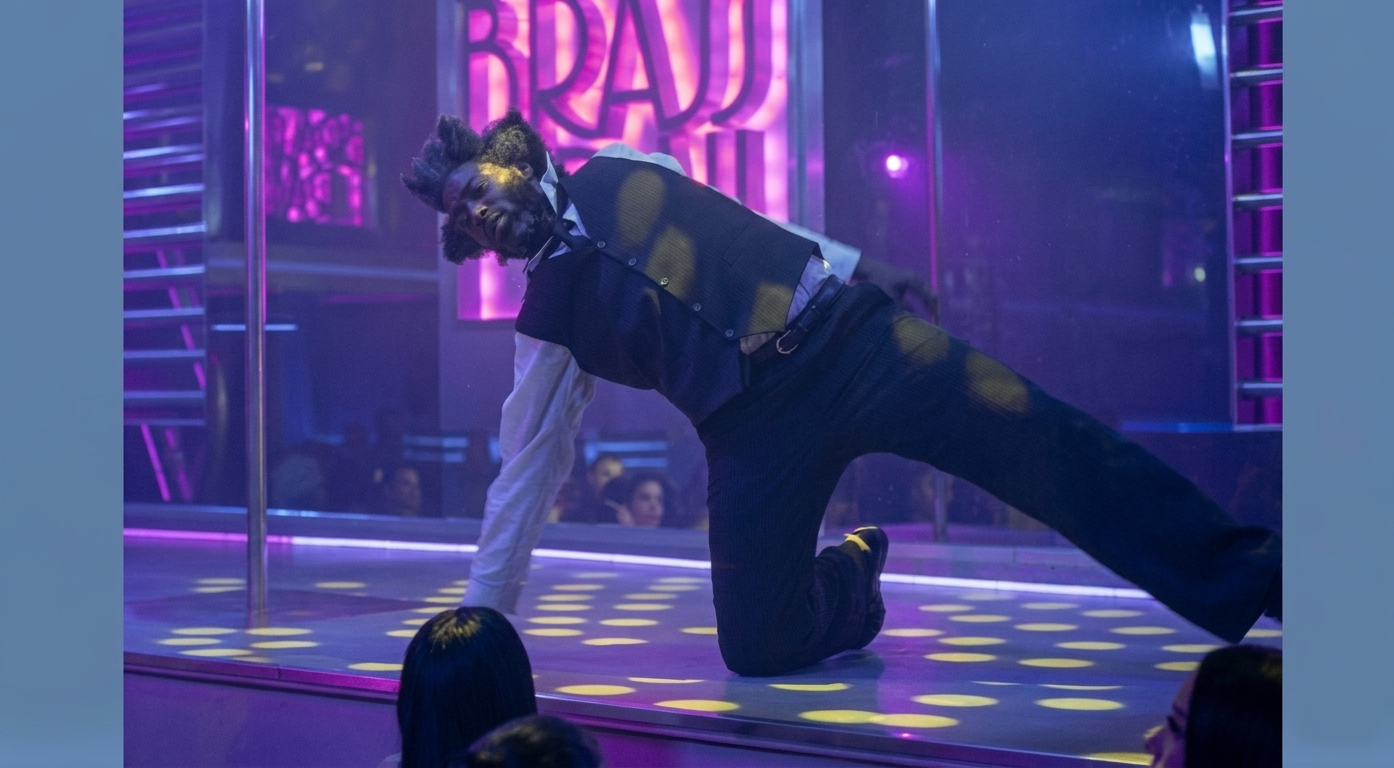
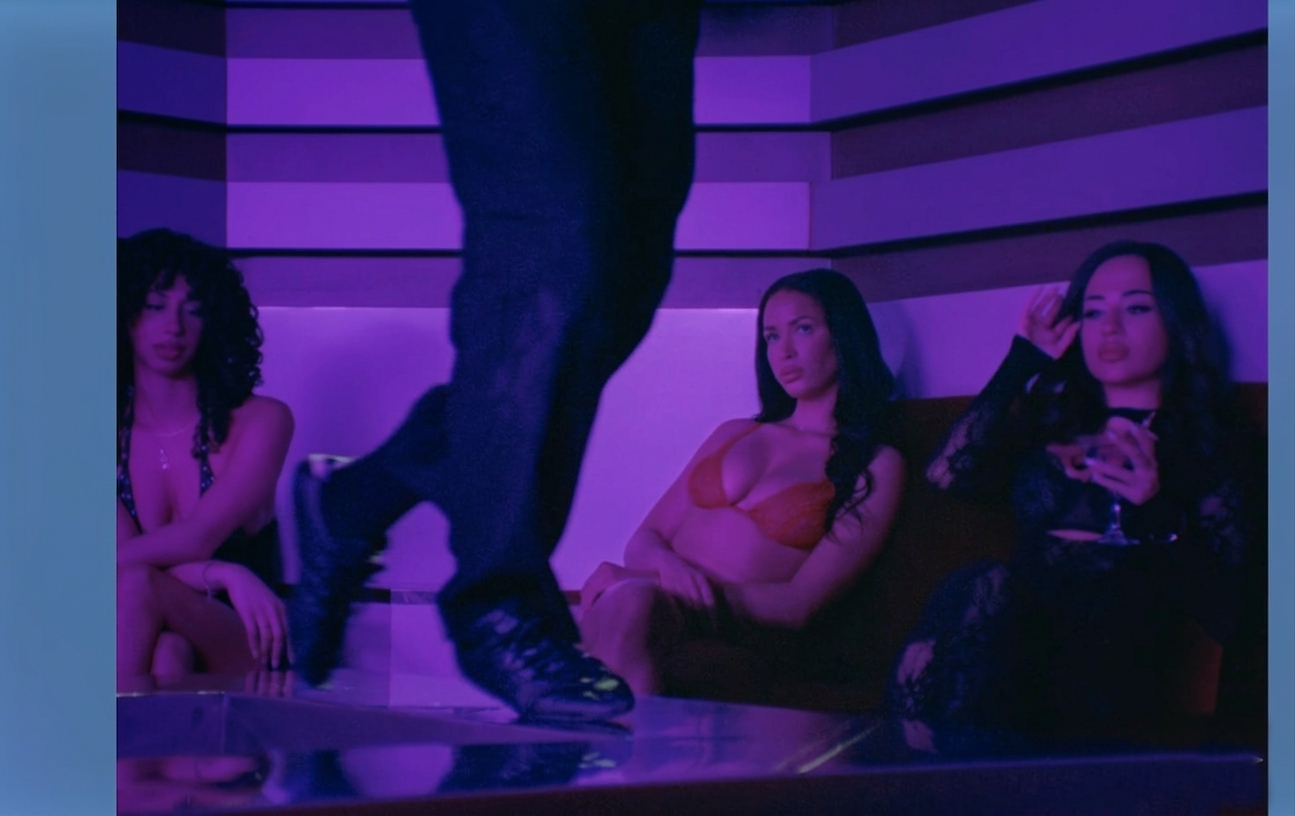
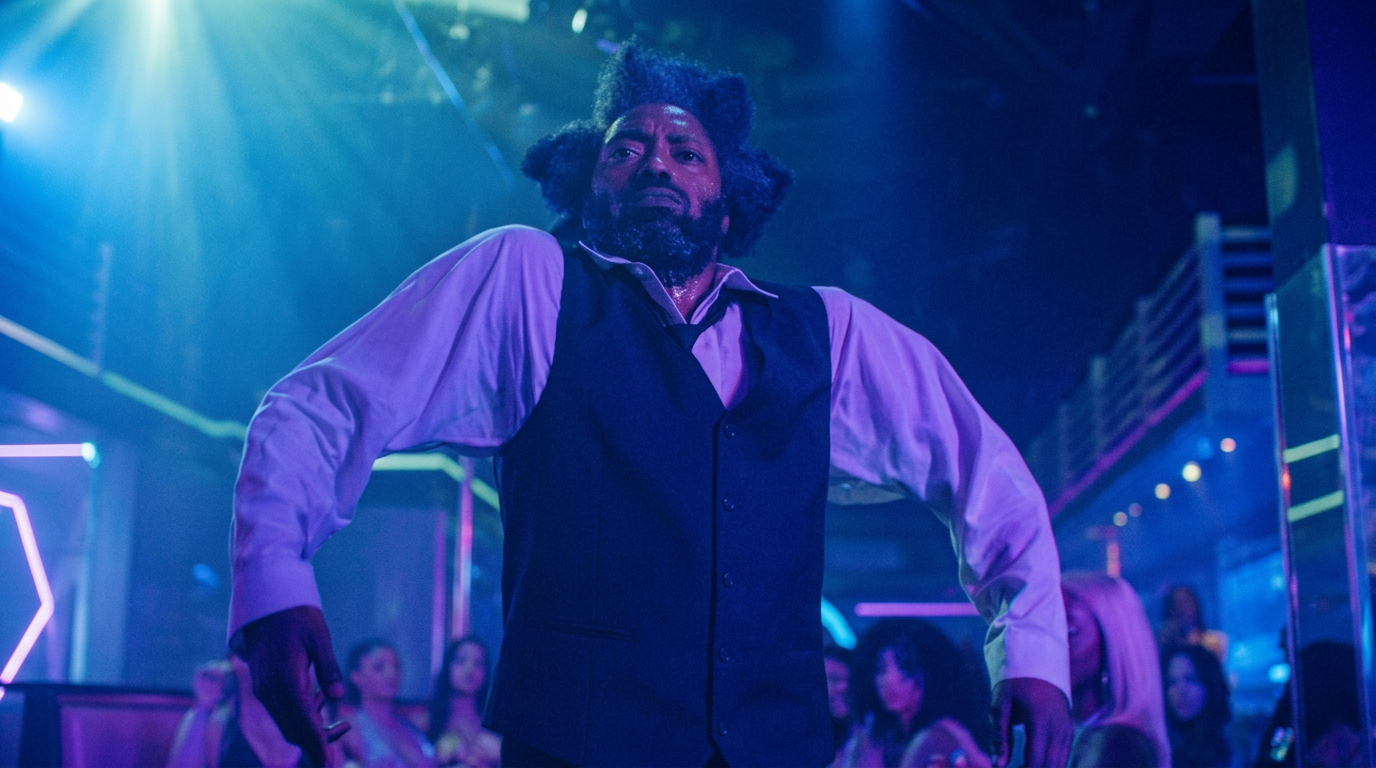
Storyboard P commanding the room in Drake's "Little Birdie" visual — where movement becomes the story
Drake: The Artist, the Brand, the Community Builder
Aubrey Drake Graham is, by any measurable standard, one of the most successful recording artists in history. With over 75 billion streams across platforms, more Billboard Hot 100 entries than any artist in the chart's history, and multiple Grammy Awards, Drake has spent nearly two decades at the center of global music culture. His discography — from "Take Care" and "Nothing Was the Same" to "Certified Lover Boy" and the 2025 releases of "Habibti," "Maid of Honour," and the "Iceman" livestream series — has consistently redefined the boundaries of Hip-Hop, R&B, and pop.
His OVO Sound label and brand have become cultural institutions in their own right, representing not just a roster of artists but a lifestyle movement rooted in Toronto and reaching every corner of the globe. Beyond the music and the business, however, Drake has built a legacy of community investment that often goes underreported.
Community Sponsorship and Philanthropy
Drake's approach to giving back is as direct as his music. His 2018 "God's Plan" music video became a landmark moment in music philanthropy — instead of allocating the production budget to a high-concept visual, he gave away nearly one million dollars directly to families, students, and organizations in Miami. He donated $25,000 to Miami Senior High School along with OVO-designed uniforms, surprised University of Miami student Destiny James with a $50,000 tuition scholarship, donated $50,000 to a local homeless shelter, and covered grocery bills for families at Sabor Tropical Supermarket.
That spirit of direct community investment has continued year after year. During his 2024 "It's All A Blur — Big As The What?" tour, Drake gave away money at nearly every stop — covering student loans, gifting $100,000 to a fan who had completed chemotherapy, and making financial gifts that changed lives in real time. His partnership with the Toronto Raptors resulted in a $1 million pledge to refurbish community basketball courts across Toronto, and he committed an additional $2 million to Canada Basketball to support athletic development nationwide. He donated $200,000 to fund scholarships at the University of Miami, gave $200,000 to Hurricane Harvey relief through J.J. Watt's foundation, contributed $30,000 to a learning center in Cassava Piece, Jamaica, $10,000 to Dixon Hall community services in Toronto, and donated $100,000 to a Toronto women's shelter. Through the OVO Charity Golf Classic, the brand continues to raise funds for the Scarborough Shooting Stars Foundation, which supports youth programs and scholarships across the Greater Toronto Area.
Drake's philanthropy is not performative — it is structural, personal, and recurring. That same instinct to elevate people and communities is visible in his creative choices, including the decision to feature Storyboard P in "Little Birdie." When the biggest artist in the world chooses to spotlight an independent movement artist, it creates a pathway that did not exist before.
Storyboard P: The Visionary Brooklyn Never Let the World Forget
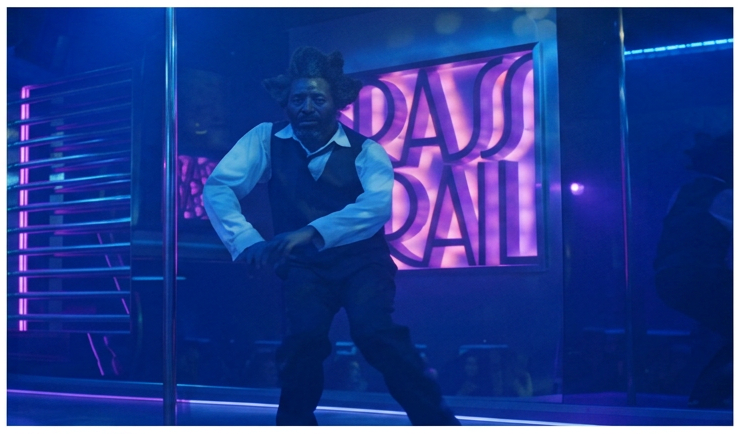
Storyboard P — Born Saalim Muslim, raised between Crown Heights and Brownsville, Brooklyn
For those encountering Storyboard P for the first time through "Little Birdie," the depth of what you are watching may take a moment to register. He is not performing choreography. He is channeling something closer to language — a physical vocabulary built from decades of lived experience, cultural immersion, spiritual practice, and relentless artistic evolution.
Born Saalim Muslim and raised between Crown Heights and Brownsville in Brooklyn, New York, Storyboard P began absorbing movement from the world around him before he could name what he was doing. By age five, he was studying Jamaican dancehall videos. As a child, he picked up body language, rhythm, and gestural communication from the people and streets of his neighborhoods. By his early teens, he had entered the Brooklyn flex scene — a competitive form of street dance originating in Jamaican Bruk Up that combines contortion, pantomime, and footwork simulating levitation.
He did not stay inside the lines for long. Storyboard P absorbed influences from krumping, Old Way voguing from the Christopher Street pier scene, stop-motion animation, and the legacy of Michael Jackson, the Nicholas Brothers, and Jerome Robbins. He fused all of these into something entirely new — a self-described "mutant" style that fractures movement into frames, like a living storyboard come to life. His stage name is itself a declaration of artistic identity: "Storyboard" references the cinematic framing of stop-motion animation, and the "P" is carried over from his earlier name, Professoar.
At just 16 years old, he won the title of King of the Streets at the inaugural Battlefest in 2007, the biggest flex competition of its kind. That victory announced him to the Brooklyn dance community as a generational talent, but it was only the beginning.
A Career That Defies Every Category
The New Yorker profiled him in 2014, writer Jonah Weiner calling him "the Basquiat of street dancing" — a comparison that captured both his raw genius and his outsider positioning within the art world. The New York Times featured his work. The Wire magazine gave him a cover story. Dance Spirit, Dazed, i-D, Afropunk, Okayplayer, and cultural publications around the globe have covered his artistry. He has performed at Lincoln Center, MASS MoCA, and Breakin' Convention.
His collaborative resume reads like a who's-who of visionary artists across disciplines. He appeared in Jay-Z's "4:44" music video, directed by the legendary Arthur Jafa — a project where Jay-Z himself chose not to appear on screen, allowing the dancers and visual collage to carry the emotional weight of the work. He starred in Flying Lotus's short film "Until the Quiet Comes" (2012), directed by Kahlil Joseph, and appeared in Joseph's follow-up "Fly Paper" (2017). He worked with Arthur Jafa on the acclaimed film "Dreams Are Colder Than Death" (2013). He collaborated with The Bullitts alongside actress Lucy Liu and rapper Jay Electronica on the visual for "Close Your Eyes." He performed in an Apple Watch commercial, bringing his movement language to one of the most-watched advertising platforms on Earth. He appeared in a Sony Xperia campaign. And he worked with Erykah Badu, further cementing his reputation as the dancer that visionary artists call when they need something beyond performance — something that lives and breathes on its own terms.
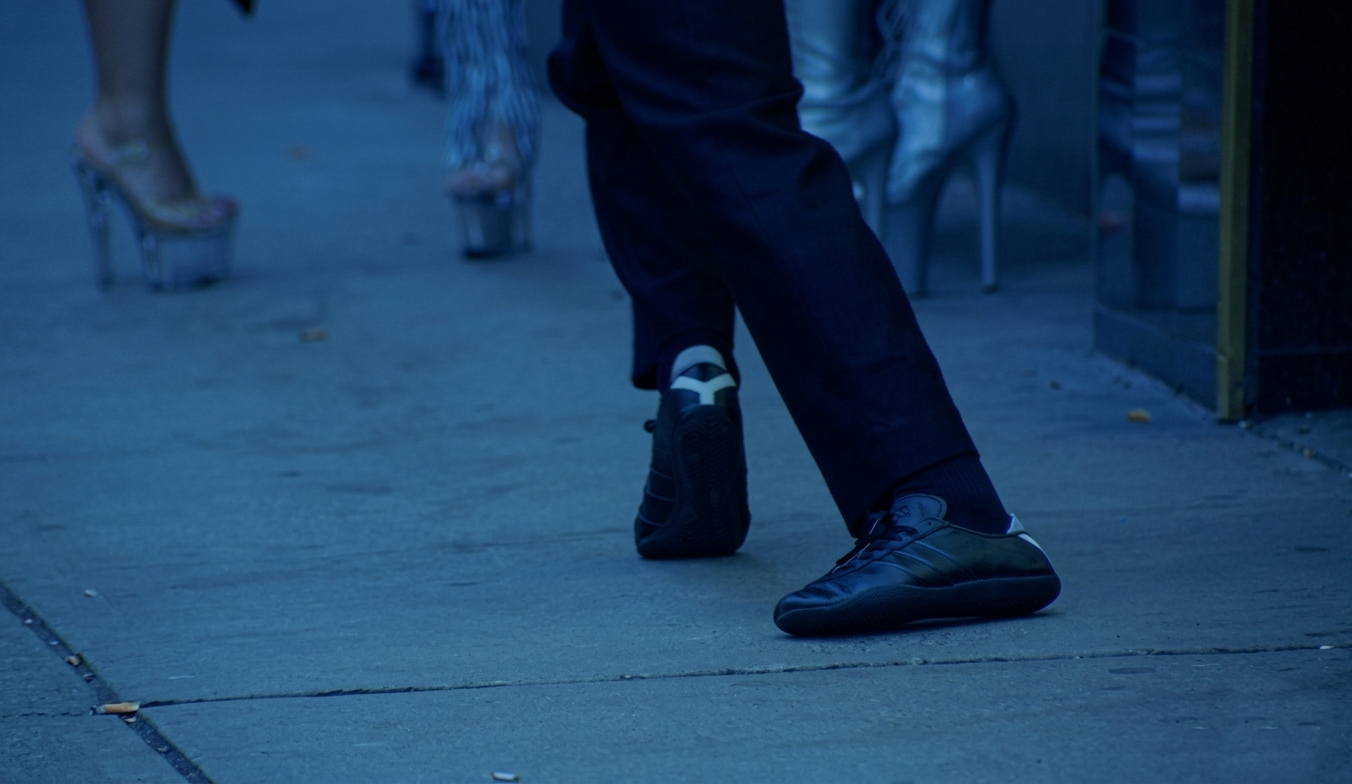
Every pause, every reach, every shift in balance means something — movement as language
Viral Impact: Half a Billion Views and Counting
Before the mainstream ever attached his name to a headline, Storyboard P was already a phenomenon. By 2017, YouTube videos featuring his dancing had accumulated approximately 500 million views — a staggering number for an independent movement artist with no major label backing, no reality television platform, and no viral dance challenge formula. His views came from the work itself: raw clips on the Brooklyn Bridge at dawn, improvised performances in subway stations, collaborations with filmmakers who understood that his movement was cinematic before it ever touched a screen.
His documentary "Storyboard P, A Stranger in Sweden," directed by Matthew D'Arcy, premiered at Lincoln Center in 2017 and chronicled his journey to teach and perform alongside dancers in Stockholm — revealing both the brilliance and the complexity of an artist who has always existed between worlds. The film showed a man who is not merely a dancer but a thinker, a philosopher of movement, and a human being navigating the tension between artistic freedom and the industry structures that were never built to support someone like him.
In 2015, he received the Bessie Award for Outstanding Emerging Choreographer — the New York Dance and Performance Awards, widely regarded as one of the most prestigious recognitions in the dance world. That honor placed his name alongside choreographers from every discipline, confirming what the streets of Brooklyn already knew: Storyboard P is not emerging. He has been here. The institutions are just finally catching up.
Storyboard P — Career Accomplishments Timeline
Why Storyboard P Chose Dance Mogul Magazine
When the moment came to tell this story — his story, on his terms — Storyboard P reached out to Dance Mogul Magazine for the exclusive.
That decision was not random. It was rooted in something that the mainstream media cycle often overlooks: trust. Grassroots artists do not entrust their legacy to publications that chase algorithms, sensationalize narratives, or reduce complex creative journeys into clickbait headlines. They choose platforms that have earned their respect through years of consistent, honest, culturally respectful coverage.
Dance Mogul Magazine has operated since 2010 with a singular mission: Inspiring Self-Empowerment through dance culture. For over 15 years, the publication has documented the stories of dancers, choreographers, educators, and movement artists who are building legacies from the ground up — without waiting for mainstream validation to begin their work. That is the same ethos Storyboard P has lived by his entire career.
"Study yourself as deeply as you study dance. Everybody wants moves, but not everybody wants identity. Your originality comes from your experiences, your struggles, your imagination, your spirit. Protect that. That's your superpower."
— Storyboard P, Dance Mogul Magazine ExclusiveWhen an artist like Storyboard P selects a publication for a moment this significant, it speaks to something deeper than media coverage. It speaks to journalistic integrity — the commitment to tell stories with accuracy, context, cultural understanding, and respect for the artist's voice. Dance Mogul Magazine does not edit the truth to fit a trending narrative. The publication lets the artist speak, provides the cultural context the story deserves, and ensures that the historical record is preserved for future generations of dancers, creators, and culture builders.
That is the value of independent, mission-driven journalism in an era of disposable content. The stories documented here do not disappear after a 24-hour news cycle. They become part of the archive — a living record of dance culture that scholars, students, and artists will reference for decades to come.
The Legacy Continues
For independent dancers and movement artists watching this moment, the message is clear: you do not have to abandon your originality to reach the highest levels of visibility. Storyboard P built his reputation through authenticity, experimentation, and consistency — not through major dance agencies or reality television pipelines. Drake recognized that. And now the world sees it too.
This is what happens when the mainstream honors the underground. Not by diluting it. Not by repackaging it. But by meeting it exactly where it stands — and elevating it to the global stage it always deserved.
Read the full exclusive interview → Dance Mogul Magazine Exclusive: Storyboard P on "Little Birdie"
Explore dance culture → Dance Styles Hub · DMM Store