
The Faison Firehouse: Harlem Loses a Landmark of Black Performing Arts
By Dance Mogul Magazine
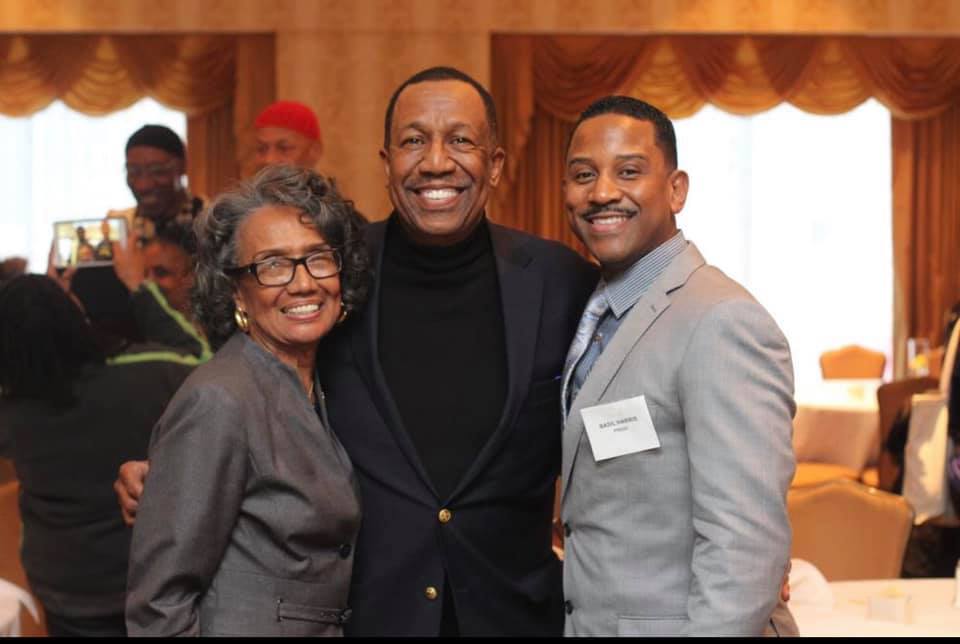
There are places that hold more than people. They hold purpose. They hold memory. They hold the sound of a community finding its voice through movement and music. The Faison Firehouse Theater at 6 Hancock Place in West Harlem was one of those places. And now, as the building transitions into the hands of the National Action Network, the dance and performing arts world must pause to honor what was built there — and what it meant.
The story of the Faison Firehouse is, at its core, a story about vision. It is the story of a man who understood that art does not just entertain — it empowers, it heals, and it preserves. That man is Dr. George Faison, and what he built in Harlem over the course of two decades deserves more than a footnote. It deserves a full page in the history of American performing arts.
From Alvin Ailey to Broadway History
To understand the Firehouse, you first have to understand the man who created it. George W. Faison was born on December 21, 1945, in Washington, D.C. His professional journey began in 1967 as a principal dancer with the Alvin Ailey American Dance Theater, one of the most important modern dance companies in the world. For three years, he absorbed everything — discipline, artistry, the language of the body as a tool of cultural expression.
After leaving the Ailey company in 1970, Faison appeared in the original Broadway production of Purlie, then took a step that would define his legacy: in 1971, with just six hundred dollars, he founded the George Faison Universal Dance Experience. That small company, which included future stars like Debbie Allen, became a vehicle for telling the stories of Black Americans through dance — blending ballet, contemporary movement, and jazz into works like Suite Otis and Slaves that have since been recognized as American dance classics.
Then came The Wiz. In 1975, George Faison became the first African American to win a Tony Award for Best Choreography, earning the honor for his electric, culture-shifting work on the all-Black Broadway musical that reimagined The Wizard of Oz. The production won seven Tony Awards that year, ran for five years, and launched the career of Stephanie Mills. No other Black musical has matched that Tony sweep in the history of Broadway.
Faison would go on to earn an Emmy Award for his choreography in the HBO special The Josephine Baker Story in 1991. He choreographed and staged concerts for legends including Earth, Wind & Fire, Stevie Wonder, Ashford & Simpson, Dionne Warwick, Roberta Flack, Gladys Knight & the Pips, and Patti LaBelle. He directed King, a musical performed at President Bill Clinton's inauguration. His talent touched Broadway stages, regional theaters, television, film, concert arenas, and trade shows for brands like Ford, AT&T, IBM, and Coca-Cola.
But George Faison's greatest act of leadership may not have been what he created on a stage. It may have been what he created on a quiet street one block south of 125th.
Rescuing a Firehouse, Building a Cultural Home
In 1997, Faison co-founded the American Performing Arts Collaborative (APAC) with producer Tad Schnugg, a nonprofit dedicated to fostering artistic excellence, community outreach, and education in theater, dance, music, and the related disciplines. Two years later, in 1999, Faison purchased an abandoned Beaux Arts firehouse at 6 Hancock Place for $600,000. The building, designed by architect Howard Constable in 1909, had originally served as the home of Hook and Ladder Company 40. After six decades of service, the firehouse was decommissioned in the 1960s and sat empty for nearly thirty years.
Faison saw what others could not — or would not. Where the city saw decay, he saw potential. He envisioned a full-service performing arts and cultural center in the heart of Harlem, and he spent the better part of a decade turning that vision into reality through a painstaking, multi-stage renovation. The ornamental limestone facade and large mullioned bays from the original 1909 design were preserved. Inside, the building was transformed into a 130- to 350-seat auditorium with a distinctive diagonal aisle, a cabaret-style café, professional dance and rehearsal studios, a fine arts gallery, and a recording studio.
The media dubbed it "Hollywood in Harlem."
The official inaugural performance came in the fall of 2007. The guest speaker that evening was none other than the late Dr. Maya Angelou, joined by professional musical theater and dance performances choreographed and directed by Faison himself, alongside a showcase by APAC youth performers. From the very first night, the Firehouse made its mission clear: this was a space where professional excellence and community empowerment would share the same stage.
More Than a Theater — A Community Institution
What made the Faison Firehouse special was never just the performances inside it. It was the ecosystem it created. The venue hosted opera productions by the Center for Contemporary Opera and the Harlem Opera Theater. It presented art exhibitions. It offered rehearsal space to emerging and established artists. It ran the Firehouse Respect Project, a youth empowerment troupe founded by Faison in 1999 that used the performing arts as a vehicle for community outreach and mentorship.
Faison had a keen eye for recognizing emerging talent throughout his career — names like S. Epatha Merkerson, Debbie Allen, Phylicia Rashad, Stephanie Mills, and Hinton Battle all came through his orbit. At the Firehouse, that tradition continued with young people from all over New York City. As Faison described it, he took in "kids of all colors, ethnicities, and religions," encouraging them to express themselves and share their stories through art.
The dance studio on the upper floors — affectionately dubbed the "torture chamber" by Faison himself — was a place where real work happened. The red velvet furniture, detailed rugs, and wooden accents of the lounge spaces gave the building a cozy, Victorian warmth. Every room had intention. Every corner had a story.
This is what community-centered arts infrastructure looks like when it is built by someone who has lived the culture, not someone studying it from the outside.
The Weight of Preservation in a Gentrifying Harlem
Running a historic performing arts venue in a rapidly gentrifying neighborhood is not a romantic endeavor. It is an expensive, exhausting, often thankless one. The costs of maintaining a century-old building — ongoing structural repairs, property taxes that climbed every year, utilities, and the overhead of running a theater, studios, gallery, and programming spaces — accumulated relentlessly.
In 2013, Faison expanded the footprint, purchasing the neighboring unit at 4 Hancock Place for $1 million to grow the community space. But by 2018, the financial reality caught up. Tad Schnugg, his co-founder and partner in the Firehouse vision, passed away that January. Faison, then in his 70s, put the two-lot assemblage on the market for $13 million. No buyers came. In 2021, he cut the price to $11 million. Still nothing.
The silence around that listing tells its own story. Harlem's Black population declined from roughly 77 percent in 2000 to approximately 50 percent by 2023. Between 2010 and 2020 alone, the neighborhood lost over 10,000 Black residents while gaining nearly 19,000 white ones. Cultural spaces that once anchored the community — barbershops, restaurants, gathering halls, performance venues — have been steadily replaced or priced out. The Faison Firehouse was not immune to these forces.
In March 2025, Faison reached out to the Rev. Al Sharpton about selling the property to a non-developer. By March 2026, the National Action Network completed the purchase. The building will be renamed the "House of Justice Rev. Jesse Jackson's Workshop," serving as NAN's new permanent headquarters — a hub intended to blend civil rights activism with cultural programming in the spirit of the Harlem Renaissance.
The fact that the building will remain in the service of the Black community — rather than being demolished for luxury condominiums — is meaningful. But let us be honest about what was also lost in this transition: a dedicated performing arts venue, founded and operated by one of the most decorated Black choreographers in American history, that served dancers, musicians, visual artists, opera companies, and young people for more than two decades.
What the Dance Community Must Remember
The loss of the Faison Firehouse as a performing arts venue is not an isolated event. It fits into a broader pattern that the dance and performing arts communities must reckon with: Black cultural spaces — especially those built independently, without major institutional backing — are disappearing. Not because the work is unimportant, but because the economics of urban America have made it nearly impossible for a single artist, no matter how accomplished, to sustain a cultural institution on vision and dedication alone.
George Faison purchased an abandoned building for $600,000, poured years of labor and personal resources into its renovation, opened it with Maya Angelou at the podium, and ran it for over two decades. He gave young people a place to discover their voices. He gave professional artists a place to create. He gave Harlem a cultural anchor at a time when those anchors were being pulled up one by one.
And still, the weight became too much to carry.
This is a call to every dancer, choreographer, arts educator, and culture builder reading this: the spaces we create are only as strong as the systems we build around them. Grants, endowments, community fundraising, partnerships with local government, corporate sponsorships rooted in real relationships — these are not extras. They are the difference between a cultural institution that lasts one generation and one that lasts five.
If we love this culture — if we truly believe that dance is more than entertainment — then we must be intentional about protecting the spaces where it lives. Not just the stages, but the studios. Not just the performances, but the rehearsal rooms. Not just the stars, but the young people who have not yet been discovered.
The Legacy of George Faison
George Faison's legacy is secure. He made history as the first African American to win a Tony Award for Best Choreography. He danced with Alvin Ailey. He created works that have been called American dance classics. He earned an Emmy. He choreographed for the biggest names in music. He directed a musical at a presidential inauguration. And then, after all of that, he took everything he had learned and poured it back into a community that needed it.
When asked about his Tony Award in a 2022 interview, Faison said it simply: "It all meant freedom. I got my piece of freedom paper with the Tony Award." That freedom did not lead him to a life of comfortable retirement. It led him to Hancock Place, to an abandoned firehouse, to the work of building something that mattered for the people around him.
That is what leadership in the arts looks like. Not just talent on stage, but sacrifice behind the curtain.
Rest in power to the Faison Firehouse Theater. And deep, enduring respect to Dr. George Faison for every single year he kept those doors open.
Dance Mogul Magazine is a Black owned media brand dedicated to empowerment, leadership, and cultural excellence in the global dance community. Explore more stories of culture and legacy on our Dance Styles hub, and support the movement through our online store.