
RIP Shabba-Doo: The Early Beginnings of a Street Dance Legend
By Dance Mogul Magazine
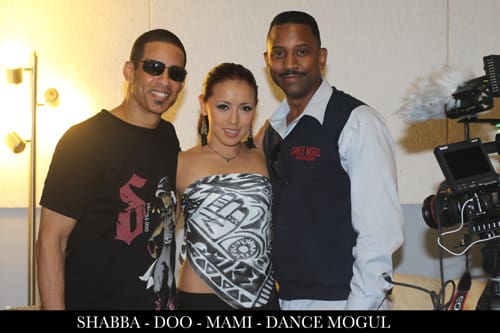
Long before the cameras rolled on the set of Breakin' and long before audiences around the world witnessed locking on their television screens through Soul Train, there was a young boy in one of Chicago's toughest neighborhoods who discovered that movement could set him free. His name was Adolfo Quiñones. The world would come to know him as Shabba-Doo — the Godfather of Street Dance.
Shabba-Doo's passing on December 29, 2020, at the age of 65 left a profound void in the dance community. But his early beginnings tell a story of resilience, creativity, and self-empowerment that every dancer, young and seasoned, can draw strength from today.
Born in Chicago, Forged in Cabrini-Green
Adolfo Quiñones was born on May 11, 1955, in Chicago, Illinois. His father, Adolfo Sr., was Puerto Rican, and his mother, Ruth McDaniel Quiñones, was an African American woman whose family had migrated from Mississippi to Chicago during the Great Migration. Ruth was an accountant who raised Adolfo and his younger sister, Fawn, as a single parent from the time he was three years old.
The family lived in the Cabrini-Green housing complex on Chicago's Near North Side — one of the most infamous public housing developments in American history. In his own words during an NPR interview, Shabba-Doo once said that you don't grow up in Cabrini-Green — you survive it. The growing up, he reflected, happened after he left.
Despite the environment, young Adolfo found community. He attended Talcott Elementary in the West Town neighborhood and spent meaningful time at the nearby Boys and Girls Club. He later attended Cooley Vocational High School and Robert A. Waller High School, now known as Lincoln Park High School. These formative years in Chicago planted the seeds of discipline, creativity, and a hunger for expression that would define his entire career.
The Gift Revealed: Dancing at Family Gatherings
The spark of dance ignited early. By around four years old, Adolfo was already performing at family parties, putting on little shows for relatives — an instinct that hinted at the extraordinary path ahead. In a culture where family gatherings were celebrations of togetherness and joy, the living room became his first stage, and his family became his first audience.
He was entirely self-taught. There were no formal classes, no ballet studios, no structured training programs. Everything he developed came from within — from listening to the music, feeling the rhythm, and letting his body respond. As he once told the Chicago Sun-Times, trained dancers sometimes struggled to understand his approach, but his style worked because it was authentically his own.
That raw, self-made quality would become Shabba-Doo's signature — an aggressive but fluid style that couldn't be copied because it wasn't learned from anyone else. It was born from the streets, from survival, and from the pure love of movement.
The Move to Los Angeles: Everything Changed
In the early 1970s, Ruth Quiñones made a decision that would alter the course of dance history. She packed up her family and drove them across the country from Chicago to Los Angeles, California. It was a bold move — leaving behind everything familiar in search of something better.
In LA, Adolfo found his world. He began dancing in nightclubs along Crenshaw Boulevard and at venues like the Radiotron near MacArthur Park, where breakdance culture was beginning to take root. Night after night, he engaged in dance battles, sharpening his skills against other dancers in an environment that demanded innovation and fearlessness.
It was during this period that his identity as a performer began to crystallize. He first called himself Sir Lance-a-Lock — a nod to the locking style he was mastering. That name evolved into Shabba-Dabba-Do-Bop before finally being shortened to the iconic name the world would remember: Shabba-Doo.
The Fullerton College Contest: Meeting Campbellock
Around 1971, a pivotal moment arrived. Adolfo and his sister Fawn entered a dance contest at Fullerton College. It was there, at just 16 years old, that he met a dancer named Don "Campbellock" Campbell — the creator of locking. This meeting was a turning point. Campbell recognized the raw brilliance in the young Quiñones, and the two connected over a shared vision for what street dance could become.
From that encounter, Shabba-Doo became a founding member of The Original Lockers — the legendary dance crew that also included Toni Basil and Fred "Rerun" Berry. Together, they developed and popularized locking as a recognized dance form: a style characterized by sudden freezes from fast movements, exaggerated poses, and rhythmic points that became foundational to what the world now knows as hip-hop dance.
The Lockers didn't just perform — they pioneered. They brought street dance from underground clubs and living rooms into mainstream American culture, laying groundwork that would influence generations of dancers to come.
Soul Train: The Platform That Changed Everything
Shabba-Doo and his sister Fawn were original members of the Soul Train Gang — the iconic group of dancers who appeared on Don Cornelius's groundbreaking television program. Soul Train was more than a dance show. It was a cultural movement that gave Black artists, musicians, and dancers a national platform at a time when mainstream media offered very few.
For Shabba-Doo, Soul Train was transformative. In his own reflections, he described Don Cornelius as a liberator for street dancers — someone who put them on a world stage and told them to show everyone who they really were. The dances he performed in his bedroom and on the streets of Chicago and LA suddenly had a television audience of millions.
The moves that became professional gold standards in street dance and hip-hop culture — locking chief among them — were introduced to the nation through that platform. Soul Train didn't just showcase talent; it validated an entire art form and empowered a generation of young people who saw themselves reflected in the dancers on screen.
The Legacy of His Beginnings
Shabba-Doo's early story is not just a dance story — it is a story about the power of self-belief. A boy from Cabrini-Green, raised by a single mother, with no formal dance training, became one of the most influential figures in the history of hip-hop and street dance. He went on to star in Breakin' and Breakin' 2: Electric Boogaloo, choreograph for Madonna, Lionel Richie, Luther Vandross, and Three Six Mafia, and earn an honorary street sign in his childhood neighborhood of West Town, Chicago.
But all of it — every Hollywood role, every world tour, every award — traces back to those early beginnings. A family party at four years old. A living room stage. A housing project that tried to define his limits. And a young man who refused to let it.
Shabba-Doo once described the world without dancing as a place painted entirely gray — a planet turned into a prison without a roller coaster. His gift was making sure that never happened. His early beginnings remind us that greatness doesn't require permission. It requires purpose.
Rest in power, Shabba-Doo. The dance community honors your legacy, your journey, and the fire you carried from the streets of Chicago to the stages of the world.
Explore more stories of dance pioneers and cultural leaders at Dance Mogul Magazine's Dance Styles Hub. And discover books and resources that celebrate the spirit of empowerment and community in our DMM Store.