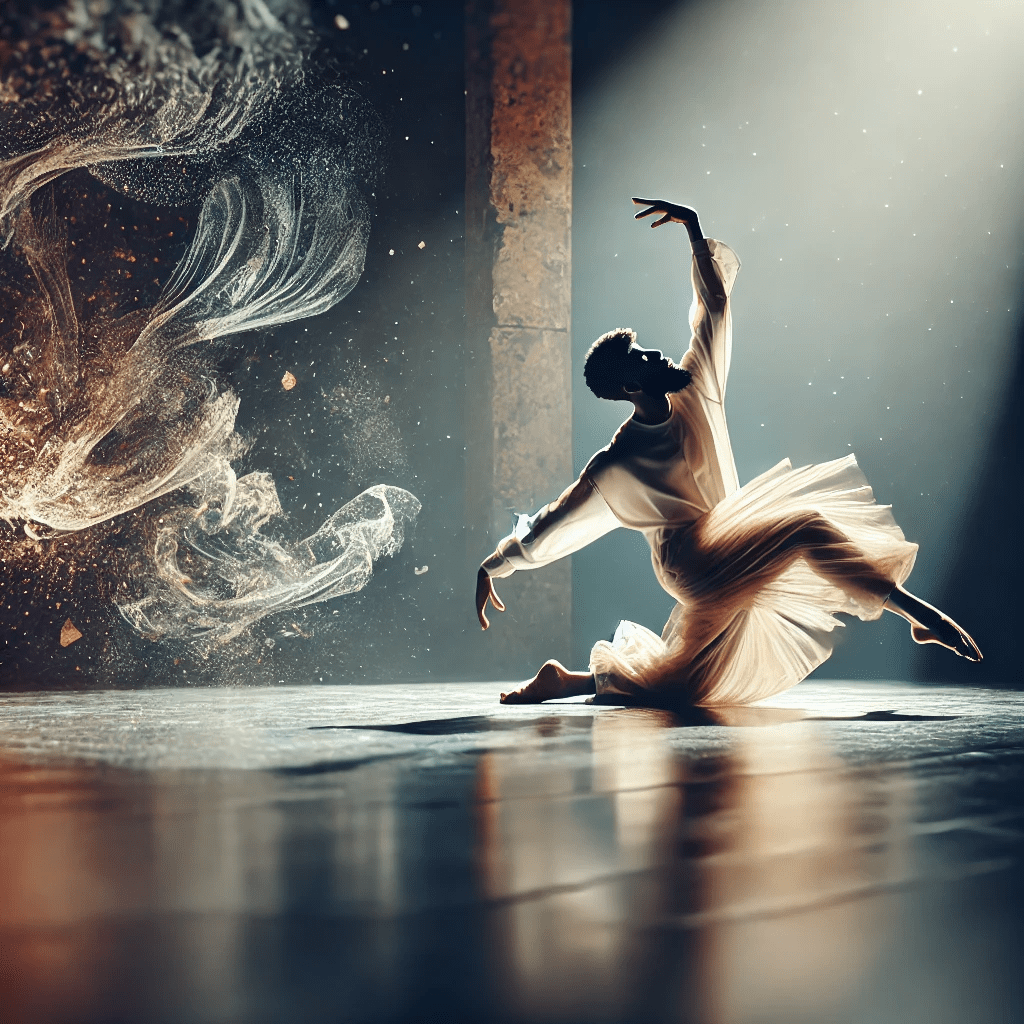
Self-Discovery Through Dance | Finding Your Why
By Dance Mogul Magazine

Dance is more than movement. It is a language — one that speaks before words form, one that tells the truth when nothing else can. The style you choose, the way your body responds to rhythm, the emotions that surface when the music plays — all of it reveals something deeper about who you are. Self-discovery through dance is not a phase. It is a lifelong practice of learning your own name, over and over again, through every beat, every step, every stage of life.
At Dance Mogul Magazine, we believe that every dancer carries a purpose inside their movement. But purpose does not announce itself. It unfolds — through training, through failure, through quiet moments in an empty studio, through the courage to try a style that scares you. This article is a guide to that unfolding. Whether you are a young dancer searching for direction, a seasoned artist questioning your next chapter, or someone who simply feels alive when they move — this is for you.
What Does It Mean to "Find Your Why"?
Your "why" is the reason you keep showing up. It is bigger than applause, bigger than competition wins, bigger than social media numbers. Your why is the answer to a simple but powerful question: Why does dance matter to me — not to my parents, not to my teacher, not to the audience — but to me?
Some dancers move because it is the only place they feel free. Some dance to carry forward a cultural tradition that their grandparents passed down. Some dance because the discipline of training gives them structure in a world that feels chaotic. Others dance because it is the one space where their emotions make sense. None of these reasons is more valid than another. What matters is that you know yours — because when the road gets hard (and it will), your why is what pulls you through.
Your Dance Style Is a Mirror
The style of dance you gravitate toward is never random. It reflects something real about your personality, your values, and often your life experience. Understanding that connection is one of the most powerful acts of self-awareness a dancer can practice.
Ballet — If you are drawn to ballet, you likely value precision, patience, and the beauty of earned mastery. Ballet demands that you show up every single day and give your best to movements that may take years to refine. That kind of commitment mirrors a personality that respects process over shortcuts.
Hip-Hop — Hip-hop attracts dancers who value authenticity, storytelling, and cultural truth. Born from Black and Latino communities as an expression of resilience and identity, hip-hop is rooted in real life. If this style speaks to you, it may be because you refuse to perform a version of yourself that is not real. You want your movement to mean something.
Contemporary — Contemporary dance lives in emotion. It asks you to feel first and move second. Dancers drawn to contemporary often have a deep inner world — they process life through sensation and find clarity in the space between structure and freedom.
Afrobeat and African Dance — These styles carry the heartbeat of community, celebration, and ancestral connection. Dancers drawn here often feel a pull toward collective energy — the idea that movement is not just personal expression but a shared experience that honors those who came before.
Latin Dance (Salsa, Bachata, Samba) — Passion, connection, and partnership define these styles. If Latin dance calls to you, you may thrive in spaces that require trust, communication, and the willingness to be vulnerable with another person.
Street and Freestyle — Freedom is the language here. If you are drawn to cypher culture, battles, and freestyle sessions, you likely value independence, quick thinking, and the ability to make something powerful out of nothing but the present moment.
The key insight is this: your style is not just what you do — it is who you are becoming. Pay attention to what draws you in. That attraction is a compass.
Explore the full range of movement traditions on our Dance Styles hub — each one is a doorway to a different part of yourself.
The Five Layers of Self-Discovery Through Dance
Self-discovery is not a single moment. It is a layered process, and dance gives you access to each layer in a way that few other practices can.
Layer 1: Physical Awareness — The first thing dance teaches you is your own body. You learn where you hold tension, which side is stronger, how your breath connects to your movement. This is not vanity — it is the foundation of self-knowledge. You cannot know who you are if you are disconnected from the body you live in.
Layer 2: Emotional Honesty — Dance surfaces emotions that words cannot reach. A song plays and suddenly you are in tears, or filled with joy, or flooded with a memory you had forgotten. This is not weakness. This is your body telling you the truth. The dancers who grow the most are the ones who let those moments happen instead of pushing them away.
Layer 3: Cultural Identity — Dance connects you to history. When you learn a style rooted in a specific culture — whether it is West African dance, Irish step, flamenco, or breaking — you are participating in a lineage. Understanding where a dance comes from deepens your understanding of where you come from, and it teaches respect for communities whose stories are woven into the movement.
Layer 4: Social Identity — Who you are in a group changes when you dance. The shy person becomes bold. The leader learns to follow. The person who always needs control learns to trust a partner. Dance studios, cyphers, and rehearsal rooms are social laboratories where you discover how you relate to others — and how you want to be seen.
Layer 5: Purpose — This is the deepest layer, and it does not come quickly. Purpose emerges when physical awareness, emotional honesty, cultural identity, and social identity all align. It is the moment you stop asking "What should I dance?" and start knowing "This is why I dance." It is the shift from performing for others to moving from your truth.
A Practical Framework for Finding Your Why
Knowing yourself does not happen by accident. It takes intentional practice. Here is a framework any dancer — at any level — can use to deepen their self-discovery.
1. Journal Your Journey — After each class, rehearsal, or freestyle session, spend five minutes writing. Not about technique — about feeling. What emotions came up? What moment surprised you? What felt effortless, and what felt forced? Over time, patterns will emerge that reveal your authentic connection to dance.
2. Cross-Train in Styles Outside Your Comfort Zone — If you are a hip-hop dancer, take a ballet class. If you are trained in contemporary, try a West African dance workshop. Discomfort is one of the fastest paths to self-knowledge. The styles that challenge you most will reveal your edges — and your edges are where growth lives.
3. Seek Mentorship, Not Just Instruction — A teacher gives you steps. A mentor gives you perspective. Find someone in the dance community whose journey inspires you — not because they are famous, but because they move with purpose. Ask them questions. Listen to their story. Let their experience inform your own path.
4. Create, Do Not Only Consume — Watching dance videos is valuable, but choreographing — even imperfectly — forces you to make choices that reveal your artistic voice. Start small: pick a song that moves you and create 30 seconds of movement. Do not worry about it being polished. The point is to hear what your body wants to say when no one else is directing it.
5. Practice Self-Compassion — Self-discovery is not always comfortable. You will have days where you feel disconnected from your body, frustrated with your progress, or unsure of your direction. That is not failure. That is the process. The dancers who endure are not the ones who never doubt — they are the ones who keep showing up through the doubt.
6. Document Your Evolution — Record yourself. Not to post — to review. Watch footage from six months ago and compare it to today. You will see growth you could never feel in real time. This practice builds confidence rooted in evidence, not ego.
Why Self-Discovery Matters Beyond the Dance Floor
The skills you build through dance-based self-discovery do not stay in the studio. They follow you into every room you enter. The physical awareness becomes poise in a job interview. The emotional honesty becomes depth in your relationships. The cultural identity becomes pride in your heritage. The social awareness becomes leadership in your community. The purpose becomes direction in your career, your parenting, your life.
This is what separates a dancer who performs from a dancer who transforms. Performance is temporary. Transformation is permanent. And transformation starts with knowing who you are.
For parents and educators looking to guide young dancers through this process, our family workbooks provide structured activities that build self-awareness, goal-setting, and emotional intelligence through the lens of dance and creativity.
Dance is the one art form where the instrument is your own body and the music is your own truth. When you align the two, you do not just perform — you become.
The dance community is vast, and so is the journey of knowing yourself within it. Do not rush it. Do not compare your chapter one to someone else's chapter twenty. Every class you take, every freestyle session you survive, every moment of vulnerability on the floor — it is all building something. Trust the process. Trust your body. Trust that the movement will teach you what you need to know, exactly when you need to know it.
Your why is already inside you. Dance is simply the practice of letting it out.