
Health & Empowerment Series
Why Men Won't Ask for Help (And What Actually Works)
Depression in men is undertreated, underdiagnosed, and underreported. The research points to solutions they'll actually use.

The Silence That Costs Lives
Men are significantly less likely than women to seek mental health treatment, less likely to be diagnosed with depression, and dramatically more likely to die by suicide. This is not because men experience depression less -- it is because the systems and stigmas surrounding depression treatment have historically failed to meet men where they are. The question researchers are beginning to ask is not why men will not ask for help -- but what help would look like if it was designed for men.
The AMMEND Trial -- Designed for Men
The AMMEND trial directly targeted young men aged 18 to 25 with moderate to severe clinical depression. Researchers noted that young men are often reluctant to seek traditional mental health support -- so the trial used food, not therapy rooms, as the entry point. Three appointments with a clinical nutritionist over 12 weeks. The result was a clinically significant 20.6-point reduction in Beck Depression Inventory scores. Young men changed their diet. Their depression responded.
Young men changed their diet. Their depression responded. The AMMEND trial didn't wait for men to come to therapy -- it met them at the table.
Exercise -- The Treatment Men Will Accept
Multiple meta-analyses confirm that exercise is among the most effective depression treatments available, with higher-intensity exercise showing the greatest effects. For men -- particularly young men, men of color, and men from working-class communities -- exercise carries none of the stigma associated with traditional therapy. It is culturally embedded, socially acceptable, and practically accessible. The 2023 University of South Australia meta-analysis found physical activity 1.5 times more effective than leading medications.
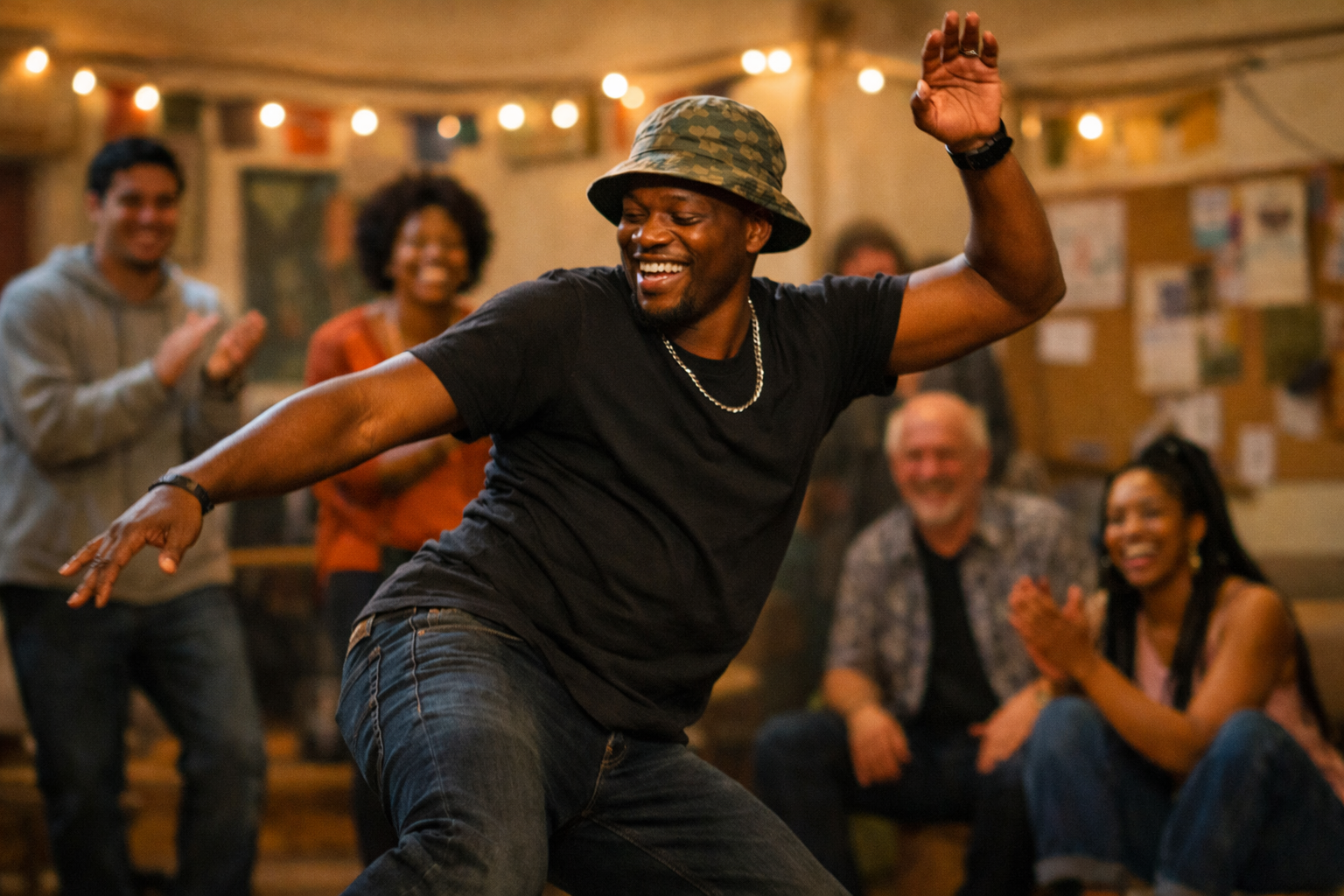
Dance and the Black Male Experience
In Black communities, dance has always been a space where men move, express, compete, and connect. From hip-hop to stepping to ballroom to Jersey Club -- the dance floor is a place of masculine presence and emotional release. The clinical research on DMT and exercise confirms what the culture has always practiced: moving your body in a community context is healing. Naming it as such -- removing the stigma from a practice that is already happening -- is the work.
What Actually Helps
The research points clearly: for men who resist traditional therapy, the most effective entry points are physical. Exercise. Food. Movement. Dance. These are not lesser treatments -- the evidence shows they are often superior. Move at meaningful intensity, eat whole foods, spend time in natural light, find community through movement. This is not soft. This is science.
More From This Series
- Why Dance Is Medicine
- What Doctors Are Now Prescribing Instead of Pills
- Treatment-Resistant Depression -- And the Dance Floor That Helped
- Your Body Knows Before Your Brain Does
- Bachata Saved My Life
- Why 12 Weeks on the Dance Floor Changes Everything
- What You Eat Is Talking to Your Brain
- Go Outside. It's Medicine.
- The Dancer's Prescription: Move, Eat, Shine
- Your Gut Is Depressed Too
- The 12-Week Reset
© 2026 Dance Mogul Magazine LLC | dancemogul.com | Inspiring Self-Empowerment Through Dance Culture