
Debbie Allen: The Early Beginnings of a Dance Legend
By Dance Mogul Magazine Staff
Published May 2026 | Dance Icons
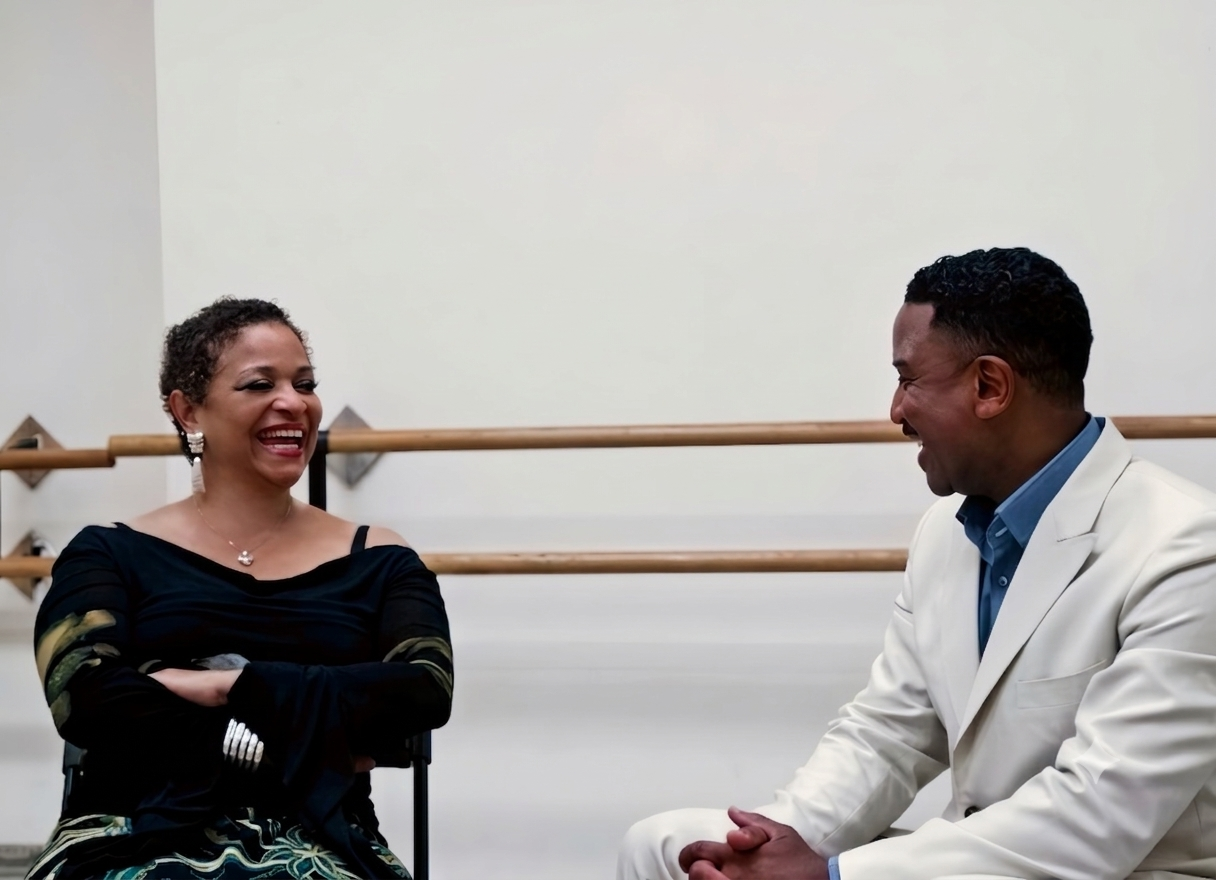
Long before she became one of the most celebrated forces in American entertainment — directing, choreographing, producing, and performing across every major stage and screen — Debbie Allen was a little girl in Houston, Texas, with an unstoppable fire to dance. Her journey from those earliest years is a story of resilience, family, and the refusal to let anyone else define her limits.
Born Into a Creative Household
Deborrah Kaye Allen was born on January 16, 1950, in Houston, Texas — the third child of Arthur Allen, a dentist, and Vivian Ayers Allen, a Pulitzer Prize-nominated poet and cultural activist. Creativity was not just encouraged in the Allen household — it was the family language. Her older sister, Phylicia Rashad, would go on to become one of the most revered actresses in American theater and television. Her brother, "Tex" Allen, became a respected jazz musician. From the very beginning, the Allen children were surrounded by art, literature, and the expectation that excellence was not optional.
Debbie began moving to music at the age of three. By four, she had already declared to her family that she would become a professional performer. Her parents responded by enrolling her in dance classes at the age of five — a decision that would set the entire trajectory of her life.
The Window That Changed Everything
One of the most defining moments of young Debbie's life came through a chance encounter with Patsy Swayze — the legendary Houston dance teacher and choreographer who would later become known as the mother of actor Patrick Swayze. As the story goes, Swayze noticed a young Debbie Allen peering into her dance studio window, captivated by the movement inside. Rather than shoo her away, Swayze invited the girl to come back the next day — ready to dance.
That invitation opened a world of serious training. Under Swayze's guidance at the Swayze School of Dance in Houston's Bellaire neighborhood, Debbie studied ballet, jazz, and tap alongside future stars like Tommy Tune, Jaclyn Smith, and Randy Quaid. Swayze's studio was a place where talent was the only currency that mattered — a rare space in the segregated South of the 1950s and 1960s.
"Your talent will speak louder than any barrier they put in front of you." — The spirit that guided Debbie Allen's early training
Rejected for the Color of Her Skin
When Debbie was twelve years old, she auditioned for the Houston Ballet School. Her performance was strong enough for admission — but the school denied her entry because she was African American. It was a crushing blow for a young girl who had poured her heart into every plié and pirouette. But the rejection did not go unnoticed by everyone.
A Russian ballet instructor who had seen Debbie perform was so impressed by her ability that he secretly enrolled her in the school. By the time the admissions office discovered the situation, her skill was undeniable — and they allowed her to remain as the only Black student in the program. It was a small but significant victory, won not by the institution doing the right thing on its own, but by the undeniable power of a young girl's talent forcing the door open.
A Family's Journey Through Mexico
Vivian Ayers Allen was not the kind of mother who would stand by while her children were limited by segregation. In an extraordinary act of cultural defiance, she temporarily relocated the family to Mexico City — a place where the racial walls of the American South did not exist. During this time, young Debbie danced with the Ballet Nacional de Mexico, expanding her artistic vocabulary far beyond what Houston could offer at the time. She also studied privately with a former dancer from the legendary Ballet Russes, giving her a foundation in classical technique that few young dancers of any background could claim.
When the family returned to Texas, Debbie was not just a talented child anymore — she was a trained dancer with international experience and an unshakable sense of purpose.
Told She Didn't Have the "Right Body"
At sixteen, Debbie auditioned for the North Carolina School of the Arts. By all accounts, her audition was exceptional — so much so that the school asked her to demonstrate technique for other prospective students. Yet when the decision came, she was refused admission. The reason given was that she did not have the "right body type" for ballet — a phrase that was frequently used to exclude Black dancers from classical ballet programs across the country.
The rejection devastated her. For the remainder of high school, Debbie pulled away from dance and focused entirely on her academics — excelling as an honor roll student. But the fire never truly went out. It was simply waiting for the right moment to reignite.
Howard University: A Cultural Rebirth
Debbie followed her sister Phylicia to Howard University in Washington, D.C. — and it was there that everything shifted. She later described her time at Howard as being "bathed in her cultural identity," a transformative experience that reconnected her not only with dance, but with who she was as a Black woman and as an artist.
It was at a party during her Howard years that a man approached her and said, "Your sister tells me you can really dance." That man was Mike Malone, a well-known choreographer in the D.C. area who would become her mentor. When he saw her dance, he was stunned — and he helped reignite the dream that rejection had nearly extinguished. Under Malone's mentorship, Debbie returned to dance with a fire that would never go out again.
She graduated cum laude from Howard in 1971 with a Bachelor of Fine Arts in Theater and Classical Greek Studies — and she set her sights on Broadway.
The Road to Broadway and Beyond
Debbie Allen moved to New York City after graduation, and alongside her sister Phylicia, began the relentless work of auditioning and performing wherever she could. She made her Broadway debut in the chorus of Purlie in 1972. She then created the role of Beneatha in the Tony Award-winning musical Raisin in 1973, followed by appearances in Ain't Misbehavin' and other productions.
By 1980, everything converged. Her electrifying performance as Anita in a Broadway revival of West Side Story earned her a Tony Award nomination and a Drama Desk Award — and landed her the role that would make her a household name: dance instructor Lydia Grant in the film Fame. The rest, as they say, is history — but none of it would have happened without those early years of struggle, sacrifice, and the unbreakable belief of a girl from Houston who refused to stop dancing.
Debbie Allen's early journey is proof that greatness does not come from the absence of obstacles — it comes from the refusal to accept them as final. From a studio window in Houston to the brightest stages in the world, she danced her way forward — and opened the door for generations behind her.
The Legacy Continues
In 2001, Debbie Allen founded the Debbie Allen Dance Academy in Los Angeles — a nonprofit school offering comprehensive dance training to students ages four to eighteen, regardless of financial background. The same institution that once rejected her — the North Carolina School of the Arts — later awarded her an honorary doctorate, a full-circle moment that speaks volumes about what persistence and purpose can accomplish.
Today, Allen holds a star on the Hollywood Walk of Fame, has choreographed the Academy Awards a record ten times, has been honored with a National Medal of Arts, and in 2025 received an honorary Doctor of Fine Arts from Yale University. She continues to direct, choreograph, and mentor — still guided by the same fire that was lit in a Houston living room more than seventy years ago.
For more stories celebrating the leaders and pioneers who shape our dance community, explore the Dance Styles section of Dance Mogul Magazine, and discover empowerment resources in our online store.
© 2026 Dance Mogul Magazine LLC. All rights reserved.