
DANCE EDUCATION · LEGACY
Debbie Allen Dance Academy: 7 Powerful Lessons in Dance and Legacy
From a Houston childhood shaped by segregation to a Los Angeles institution creating opportunities for the next generation, Debbie Allen turns personal struggle into a lasting educational legacy.
By Dance Mogul Magazine Staff | Originally published May 19, 2026 · Updated November 24, 2026
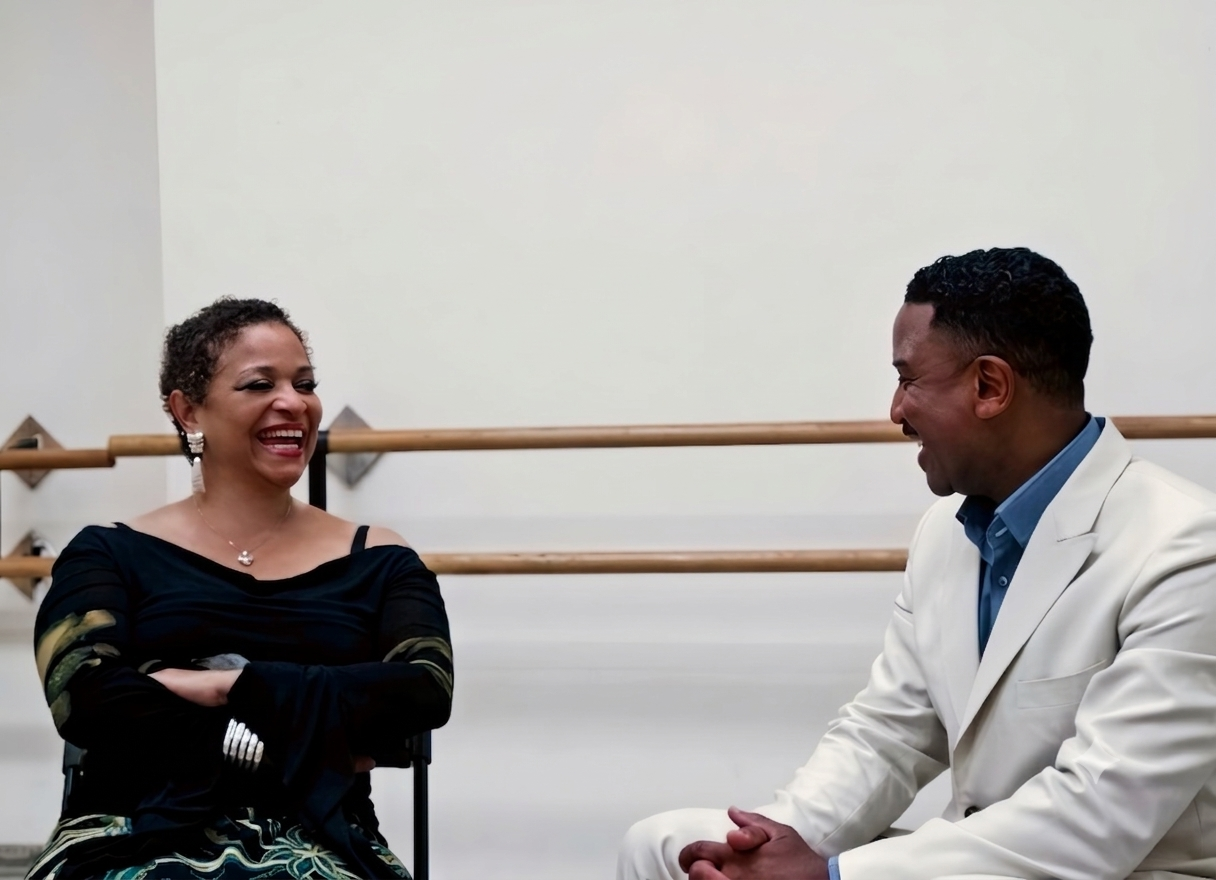
The Debbie Allen Dance Academy (DADA) in Los Angeles represents more than the achievements of a celebrated choreographer. It is an answer to the barriers she encountered as a young Black dancer. Long before she earned recognition on Broadway, on television and in Hollywood, Allen was a child in Houston who wanted an opportunity to study the art she loved.
Her experience offers a different way to understand dance history: not simply through the stars who reach the stage, but through the teachers, families and institutions that make reaching the stage possible. This updated feature connects her early beginnings with the academy she built and the lessons that dancers, parents and educators can apply today.
AT A GLANCE
Founders: Debbie Allen and Norman Nixon
Established: 2001 (some accounts date its founding to 2000)
Location: Rhimes Performing Arts Center, Los Angeles, California
Mission: Dance and theater education, with particular attention to underserved Black and Latino communities
Official website: Debbie Allen Dance Academy
IN THIS ARTICLE
Born Into a Creative Household
Debbie Allen was born on January 16, 1950, in Houston, Texas. Her mother, Vivian Ayers Allen, was a poet and cultural advocate, and her sister Phylicia Rashad went on to become an acclaimed actor. The family’s artistic environment helped nurture the imagination and ambition that would eventually distinguish Allen’s work.
Dance became a calling early in life. According to Yale University’s 2025 honorary-degree profile, Houston teacher Patsy Swayze noticed the young Allen watching a class through a studio window and welcomed her to return. That invitation mattered because access to serious training was not equally available to Black children in segregated Texas. A teacher’s decision to recognize potential can alter the course of a life.
Houston, Mexico and the Barriers to Ballet
Allen encountered racial exclusion when she sought admission to formal ballet training in Houston. Howard University’s account describes her eventual breakthrough as the first Black dancer with the Houston Foundation for Ballet. The path was not straightforward: she benefited from teachers who recognized her talent even when institutions resisted admitting Black students.
Her mother also took the family to Mexico during Allen’s childhood, seeking relief from the racial restrictions of the American South. In her Directors Guild of America visual-history interview, Allen recalls ballet training at the Ballet Nacional de Mexico. The experience widened her understanding of what an artistic life could look like beyond the boundaries of her hometown.
Another rejection came when Allen auditioned for the North Carolina School of the Arts as a teenager. She was denied admission on the grounds of her body type. Instead of treating that judgment as a final verdict on her potential, she pursued higher education. Years later, the institution awarded her an honorary doctorate.
Howard University: A Cultural Rebirth
At Howard University, Allen encountered an environment where Black artistic expression and intellectual life were central rather than peripheral. Choreographer and educator Mike Malone helped reconnect her with dance. She graduated cum laude in 1971, having studied theater, speech and classical Greek literature.
That period matters to dancers because it demonstrates the value of education beyond technical movement. Literature, history, language and theater can inform a performer’s choices. A dancer who understands character, narrative and culture has more tools with which to communicate on stage.
The Road to Broadway, Fame and Beyond
Allen’s Broadway credits began with Purlie, whose original run was 1970–1971. She originated Beneatha Younger in Raisin in 1973 and later appeared in Ain’t Misbehavin’. Her performance as Anita in the 1980 revival of West Side Story earned a Drama Desk Award and a Tony nomination. A second Tony nomination followed for Sweet Charity in 1986.
As Lydia Grant in Fame, Allen helped bring the demands of dance training into mainstream popular culture. Her subsequent career expanded into directing, producing and choreography. For a dancer watching her career, the key lesson is not to reduce artistic success to one role: movement experience can support an entire lifetime of creative leadership.
The academy is the institutional expression of that journey. Allen and her husband Norman Nixon created a nonprofit organization that gives young people access to training and performance. Yale and the Television Academy date the founding to 2001, while some published accounts use 2000. The distinction may reflect the organization’s establishment and opening, but the precise reason for the difference has not been established here.
Debbie Allen Dance Academy: Training and Programs
The academy operates from the Rhimes Performing Arts Center, which opened in Los Angeles in 2022. Its approach brings classical technique into conversation with other dance disciplines and theater arts. Families can use the official program listings to identify a suitable path, rather than assuming every student must pursue professional performance.
- Early Bird: Foundational movement and musical learning for young children.
- Academy: Structured, intensive study for committed dancers ages eight and older.
- Conservatory and Red Birds: Advanced tracks emphasizing technique and artistic development.
- Sons of DADA: An audition-based scholarship pathway for young male dancers.
- RISE: Musical theater instruction that connects dance, acting and voice.
- Open classes and intensives: Additional options for different experience levels and focused training.
- Ensemble: A pre-professional company that includes students and graduates.
The associated Debbie Allen Middle School for the Arts combines academic studies and arts education for grades six through eight. For students and families, admissions criteria, costs, scholarships and schedules differ by program. Visit the official academy website for the current requirements before making plans. No admission or funding is guaranteed.
DADA’s combination of education and performance offers a useful model for dance studio owners: plan for progression, not just participation. Give young artists clear goals, provide age-appropriate challenges, and help them understand how classroom technique relates to professional rehearsal and performance.
Hot Chocolate Nutcracker: Reimagining a Holiday Tradition
The Hot Chocolate Nutcracker is a practical example of how the academy connects training to storytelling. It transforms the familiar holiday ballet into a production that incorporates multiple movement languages and musical approaches. The 2020 Netflix documentary Dance Dreams: Hot Chocolate Nutcracker follows Allen’s students preparing for the show.
Watch: Dance Dreams — official Netflix trailer
Official documentary trailer, 2020 — not footage of the 2026 production. Watch on YouTube.
As you watch, pay attention to the relationship between correction and repetition. Notice how individual preparation supports ensemble timing and how the excitement of a performance is earned through rehearsal. The documentary also invites the audience to consider the emotional investment of the students and the adults who support them.
What Is Coming Next in 2026?
The academy’s official website advertises its 2026 Hot Chocolate Nutcracker at the Redondo Beach Performing Arts Center in California. Public performances are listed for December 10–13, including two performances on December 12. The academy says proceeds benefit its students. Consult the official production page for showtimes, ticketing and any schedule changes. Prices and availability are not reproduced here because they can change.
Where Is Debbie Allen Now?
Allen remains active as a creative leader and educator. Yale awarded her an honorary Doctor of Fine Arts in May 2025, and she received an honorary Oscar at the Academy’s November 16, 2025 Governors Awards. In 2026, she directed the Broadway revival of August Wilson’s Joe Turner’s Come and Gone, which concluded its run on July 26, according to the official production site and IBDB.
These achievements illustrate a career that has continued beyond performance into direction and institution-building. The Debbie Allen Dance Academy is still an active educational organization, with ongoing programs and public productions listed on its official website as of November 24, 2026.
Why the Debbie Allen Dance Academy Matters
Dance Mogul Magazine’s mission is to inspire self-empowerment through dance culture. Allen’s story speaks to that purpose because she did more than overcome obstacles for herself. She helped establish an environment in which other young artists could develop skills, confidence and creative identity.
An institution cannot eliminate every financial or social obstacle its students face. But it can choose whose potential it recognizes, what forms of movement it respects, and how it connects learning to opportunity. In that sense, building a school is an act of cultural preservation as much as it is an act of education.
A dancer’s legacy is not measured only by the stages they reach, but also by the doors they help open for those who follow. — Dance Mogul Magazine editorial reflection
7 Powerful Lessons Dancers Can Take Away
1. Rejection is not a final assessment.
Seek constructive feedback and other pathways when one institution says no. A rejection may reflect the institution’s limitations as much as your current abilities.
2. Technical training creates options.
Build a foundation in timing, alignment, musicality and strength. Practice across disciplines with respect for their histories and teachers.
3. Mentorship matters.
Learn from educators who challenge and support you. When you have experience to share, make that knowledge available to the next generation.
4. Know the history behind the movement.
Study the cultural traditions that inform choreography, and acknowledge the people who developed them.
5. Prepare for more than performance.
Explore teaching, production, direction and choreography. Creative leadership can extend a dance career in many directions.
6. Make rehearsal a professional habit.
Arrive prepared, listen to feedback, care for your body and respect the people working beside you. Consistency creates trust.
7. Build opportunities for others.
Consider how your own progress can support younger dancers, community programs and equitable access to training. A legacy becomes stronger when it is shared.
Frequently Asked Questions
What is the Debbie Allen Dance Academy?
It is a nonprofit dance and theater training organization in Los Angeles, co-founded by Debbie Allen and Norman Nixon, with a mission that includes expanding opportunities for underserved communities.
When was the Debbie Allen Dance Academy founded?
Yale University and the Television Academy’s biography date its founding to 2001, although some accounts cite 2000.
Where is the Debbie Allen Dance Academy located?
The academy operates at the Rhimes Performing Arts Center, 1850 S. Manhattan Place, Los Angeles, California 90019.
Does the academy offer classes for beginners and young dancers?
Yes. It lists foundational children’s instruction and open classes alongside intensive and pre-professional training. Check the official site for age ranges and requirements.
Does the academy offer scholarships?
The academy lists scholarship pathways, including Sons of DADA. Eligibility and availability depend on the program; contact the academy for current details.
When is the 2026 Hot Chocolate Nutcracker?
The official academy website lists public performances December 10–13, 2026, at the Redondo Beach Performing Arts Center in California. Check the production page before attending.
What can dancers learn from Debbie Allen’s career?
Her career illustrates the value of consistent training, cultural identity, mentorship, creative versatility and building opportunities for others.
Sources and Further Reading
- Yale University — 2025 honorary degree profile
- Howard University — Debbie Allen: Maven of the Arts
- Directors Guild of America — Debbie Allen visual history
- Television Academy — career biography
- Television Academy — Foundation interview
- Internet Broadway Database — Debbie Allen credits
- USC Charlotta Bass Lab — DADA location spotlight
- Debbie Allen Dance Academy — official programs
- DADA — Hot Chocolate Nutcracker public performances
- Netflix — Dance Dreams documentary
- Academy of Motion Picture Arts and Sciences — 2025 Governors Awards
- Joe Turner’s Come and Gone — official Broadway site
Continue Exploring Dance Mogul Magazine
- Debbie Allen — DMM Legacy profile
- Debbie Allen Returns to Hillman
- The American Social Dance Movement
- Celebrating Black Creative Directors & Choreographers
- The Legacy
- Dance Styles
- DMM empowerment resources
© 2026 Dance Mogul Magazine LLC | dancemogul.com | Inspiring Self-Empowerment Through Dance Culture