
Industry Guide · Dance Business
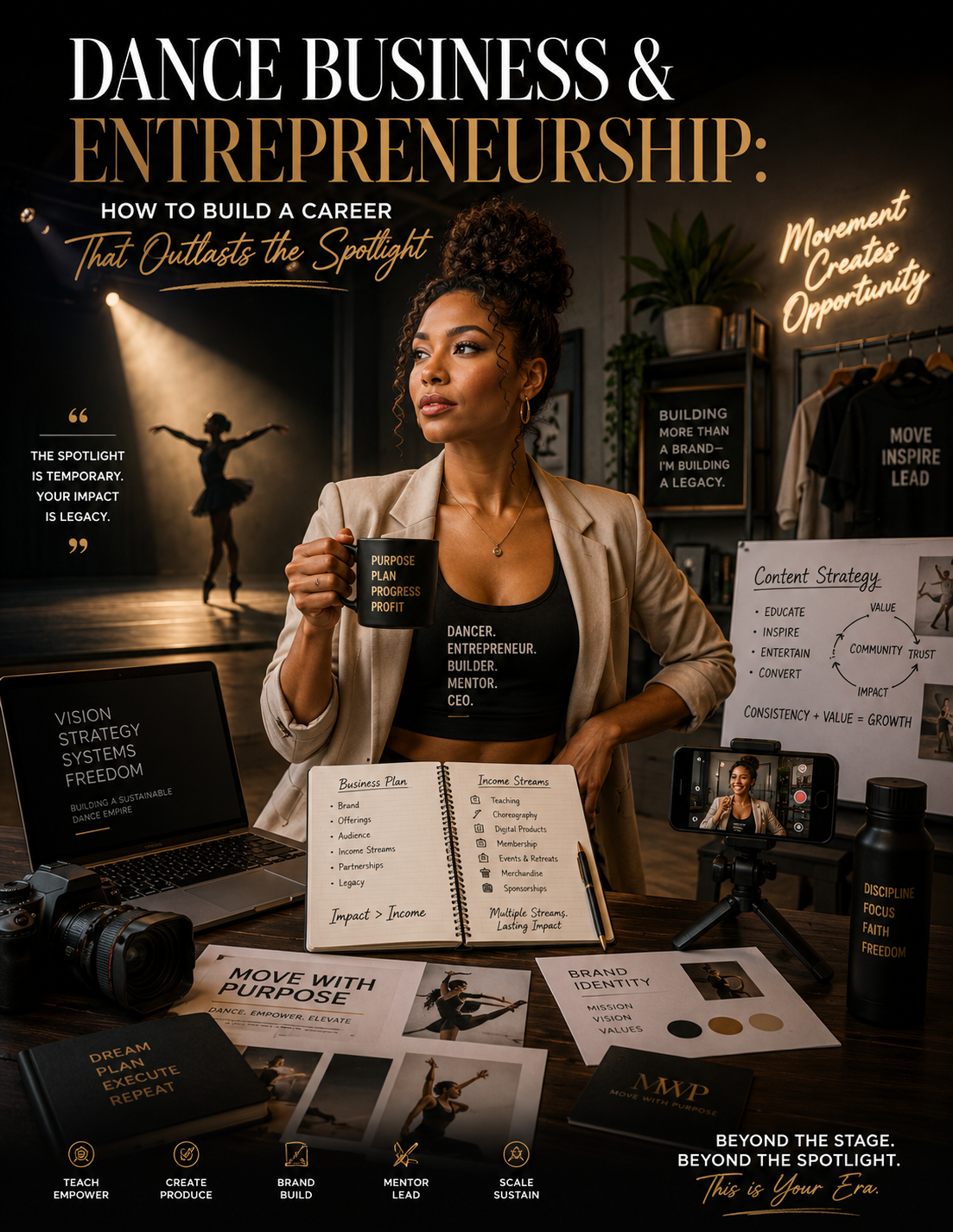
Dance Business & Entrepreneurship: How to Build a Career That Outlasts the Spotlight
Talent gets you in the room. Business keeps you there. A Dance Mogul Magazine playbook for the entrepreneur living inside every serious artist.
By Dance Mogul Magazine | Industry Guide
Why Every Dancer Is Already an Entrepreneur
Here is a truth the dance world rarely says out loud: the most gifted dancer in the room is not always the one with the longest career. Often, the dancer who lasts is the one who learned to think like an owner. They learned to price their work, protect their time, market their name, and build something that keeps paying them long after a single gig ends. That shift — from performer to professional, from artist to dance business owner — is the difference between a passion that drains you and a passion that sustains you.
At Dance Mogul Magazine, we have spent years documenting the journeys of choreographers, studio founders, and movement artists who turned culture into careers. The pattern is consistent. The ones who build lasting legacies treat their artistry as the heart of a real business — not a hobby they hope someone notices. This guide breaks down how to do exactly that, whether you are booking your first paid job or scaling a brand.
The Entrepreneurial Mindset for Artists
Entrepreneurship is not a personality — it is a set of habits. The first habit is ownership. When you stop waiting to be chosen and start building offers people can say yes to, everything changes. The second is clarity: knowing who you serve, what you do better than anyone, and why it matters. The third is consistency, the quiet engine behind every overnight success.
Dancers are uniquely built for this. The discipline of daily training, the resilience of audition rejection, the ability to take direction and still bring something original — those are the exact muscles entrepreneurship requires. You have been training for the business of dance your whole life. You just may not have called it that yet.
Treat Your Career Like a Company of One
Even if you never hire a single employee, you are running an enterprise. You have a product (your skill and creativity), customers (studios, clients, audiences, brands), operations (scheduling, bookkeeping, contracts), and marketing (your name and reputation). Naming these functions out loud is the first step to managing them well.
Build Multiple Income Streams: The Portfolio Career
The single most important financial lesson in dance is this: never depend on one source of income. The artists who thrive build what many now call a portfolio career — several streams that, together, create stability no single gig could. A contemporary artist might teach online classes, choreograph for music videos, and perform at corporate events. A hip-hop dancer might combine convention teaching, brand campaigns, and digital content. When one stream slows, the others carry you.
Common income streams for dance professionals include:
- Teaching & choreography — studio classes, private lessons, conventions, master classes, and commissioned work.
- Performance & bookings — tours, commercials, music videos, corporate and live events.
- Digital products — online courses, tutorial libraries, downloadable choreography, and memberships.
- Brand partnerships — sponsored content, ambassadorships, and creative direction.
- Merchandise & IP — apparel, licensing your choreography, and royalties.
Build a Brand People Trust
Your brand is not your logo. It is the feeling people get when they hear your name — the promise of what you deliver. In a crowded industry, a clear, consistent brand is what makes a casting director remember you, a parent enroll their child in your class, and a company choose you over someone equally talented.
Strong dance brands do three things well. They show the work — consistent, high-quality content that proves the craft. They tell a story — a clear point of view about who they are and what they stand for. And they serve a community — because audiences follow artists who make them feel something and give them something. Build your presence around generosity and excellence, not vanity, and the right opportunities follow.
Price Your Worth Without Apology
Underpricing is the most common mistake in dance. Many artists quote a rate, brace for rejection, and discount before they are even asked. Stop. Your rate should reflect your training, your preparation, your travel, your time, and the value you create — not your fear. When you set a price, you are also setting the market's expectation of your worth.
A simple framework: know your minimum (the number below which the job costs you money), research what your market pays, and quote with confidence. Always put the agreement in writing. A short contract that names the deliverable, the fee, the timeline, and the payment terms protects everyone and signals that you are a professional. The money side of this work — invoicing, taxes, and getting paid on time — deserves its own deep dive, which we cover in our companion guide, Freelance Dancer Finances: Taxes, Invoicing & Getting Paid.
Your First 90 Days as a Dance Entrepreneur
1. Define your offer in one sentence: what you do, for whom, and why it matters.
2. Set your rates in writing and create a simple contract template.
3. Open a separate business bank account — never mix personal and business money.
4. List three income streams you can realistically build this year.
5. Post consistently. Show the work. Build the audience before you need it.
Make It Official: Structure, Systems, and Protection
As your income grows, so should your structure. Many dancers start as sole proprietors and later form an LLC to protect personal assets and unlock tax flexibility. Whatever you choose, build the basics early: a separate business account, a bookkeeping habit (even a simple spreadsheet updated weekly), and a system for saving a portion of every payment for taxes. These are not glamorous, but they are the scaffolding that lets your art scale without chaos.
Protection also means knowing your rights. Your choreography, your brand, and your content carry value worth defending. Understanding contracts, credit, and intellectual property keeps you from giving away the very things that make you irreplaceable.
From Hustle to Legacy
The goal is not to grind forever. The goal is to build something that grows beyond your own two feet. That might mean opening a studio, building a digital platform, training other teachers under your name, or licensing your work so it earns while you rest. Legacy is what happens when your business can serve people whether or not you are in the room.
This is the heart of what Dance Mogul Magazine champions: dancers who own their careers, build generational impact, and lift the next generation as they rise. The spotlight fades. A business built on excellence, integrity, and community does not.
Resources & Further Reading
From Dance Mogul Magazine:
- Freelance Dancer Finances: Taxes, Invoicing & Getting Paid
- The Dance Mogul Magazine Store & Publications
- Partner With Dance Mogul Magazine — Media Kit
- Explore the Dance Mogul Magazine Dance Styles Hub
Trusted external resources:
- U.S. Small Business Administration — Business Guide
- Dance/USA — National Service Organization for Professional Dance
- Dancers' Alliance — Industry Rate & Standards Advocacy
The Dance Mogul Mission
Dance Mogul Magazine exists to inspire self-empowerment, celebrate cultural excellence, and equip the global dance community with the tools to build lasting legacies. We don't just cover the culture — we invest in the people who move it forward. Explore our resources and keep building.