
Global Dance & Culture Feature
Dance at the FIFA World Cup 2026: The Movement That Moved the World
From a dusty street in Kampala to the biggest stage on Earth — how dance became the heartbeat of the 2026 FIFA World Cup, and why it belonged there all along.
By Dance Mogul Magazine | Global Dance & Culture Feature
Is It Worth Doing a Dance at the FIFA World Cup?
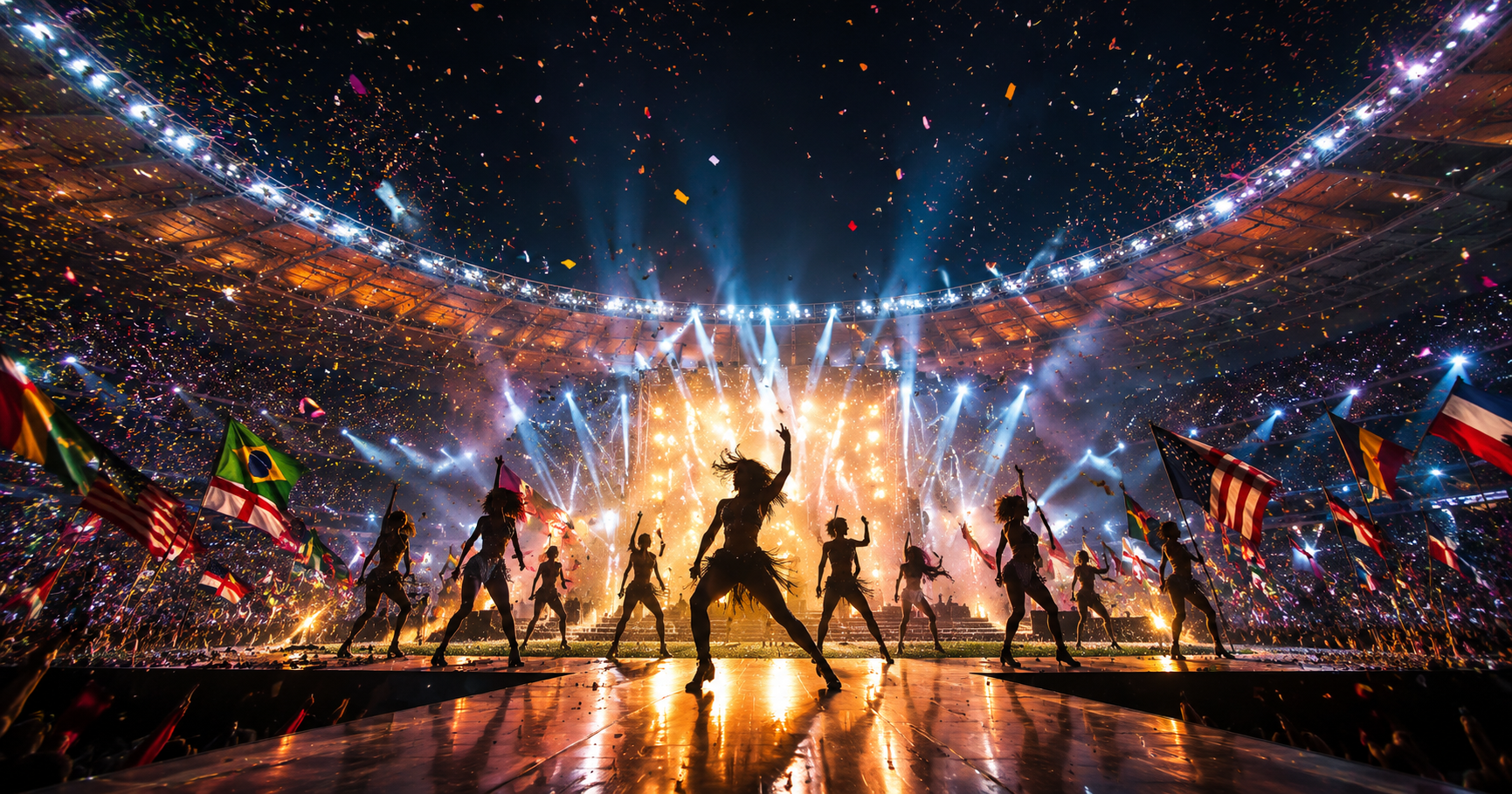
The short answer is yes — and in 2026, the world's most-watched sporting event proved it on the grandest stage imaginable. For nearly a century, the FIFA World Cup Final delivered its drama on the pitch. This year, for the first time in tournament history, it added an equally massive spectacle away from it: a Super Bowl-style halftime show, staged during the Final on July 19 at the New York / New Jersey Stadium and curated by Coldplay's Chris Martin.
That "first" is the headline. But the deeper story is that dance did not arrive at the World Cup as a guest. It has always been there — in the goal celebrations that circle the globe within seconds, in the anthems that turn stadiums into dance floors, in the way a single movement can carry a nation's joy. The 2026 tournament simply made it official, handing dance a spotlight the size of a billion-viewer broadcast.
This is the story of how dance moved the world at the 2026 FIFA World Cup — the performers, the choreographers, the children from Kampala who danced their way onto football's ultimate stage, and the reason movement has always belonged at the center of the beautiful game.
The First-Ever World Cup Final Halftime Show
FIFA partnered with Global Citizen to build something the tournament had never attempted: a dedicated halftime concert during the championship match. The co-headliners read like a summit of global pop — Madonna, Shakira, BTS, and Justin Bieber — with additional performances from Afrobeats superstar Burna Boy, Venezuelan conductor Gustavo Dudamel of the New York Philharmonic, and the PS22 Chorus alongside Coldplay. Characters from Sesame Street and The Muppets were woven in to reinforce the show's purpose: raising money for children's education worldwide.
Every artist on that bill is, in some form, a movement artist. Madonna reshaped what pop choreography could be. BTS built a global empire on precision synchronized dance. Shakira turned hips and rhythm into a universal language decades ago. When you assemble a lineup like this for an eleven-minute broadcast, you are not staging a concert — you are staging a dance.
“It's where people get together and there's singing and there's dancing and there's music — a chance to show how amazing all different kinds of humans are.” — Chris Martin, on the halftime show
The Ghetto Kids: From the Streets of Kampala to MetLife Stadium
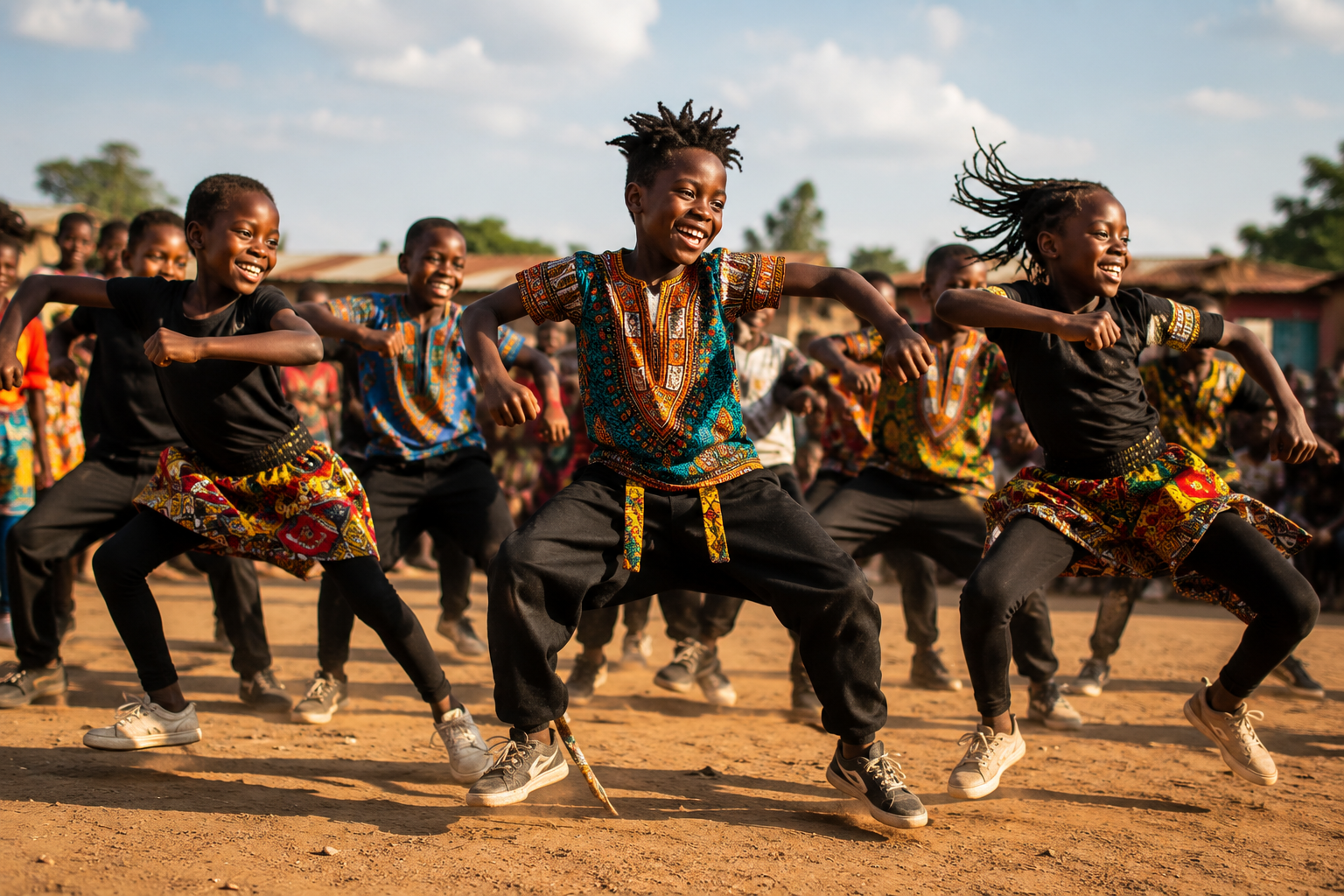
The most powerful dance story of the tournament did not belong to a superstar. It belonged to a group of children. Shakira personally invited Uganda's Ghetto Kids to join her for the halftime performance, placing a troupe born in the Katwe slums of Kampala in front of a global audience expected to exceed one billion viewers.
Their journey is the kind of story Dance Mogul Magazine exists to tell. The group was founded around 2013–2014 by dancer, educator, and philanthropist Dauda Kavuma, whose foundation provided shelter, nutrition, and education to vulnerable street children — using music, dance, and drama as a pathway to a better life. In 2014, five children filming an energetic routine to Eddy Kenzo's "Sitya Loss" went viral after the singer shared it. Over the years the footage grew sharper, the shoes appeared on their feet, and the choreography grew more intricate — but the infectious joy never changed.
From that dusty street, the Ghetto Kids reached Britain's Got Talent, earned a golden buzzer, danced in a French Montana music video, performed at the 2022 World Cup in Qatar, and accumulated billions of views across platforms. Their invitation to 2026 came full circle: they created a viral routine to "Dai Dai," Shakira's official World Cup anthem with Burna Boy, and Shakira — captivated — asked them to dance with her at the Final. One young dancer put the stakes plainly: before the group, he said, they weren't going to school or getting their basic needs met.
Transforming lives through dance — the Ghetto Kids' founding slogan became a literal passport from the margins of society to the center of the world's biggest stage.
This is dance as more than entertainment. It is dance as opportunity, as education, as a way out and a way up. For a nation whose national team did not qualify for the tournament, the Ghetto Kids became Uganda's only representatives at the World Cup — carried there not by a ball, but by rhythm.
Dance Was Always on the Pitch: The Goal Celebration
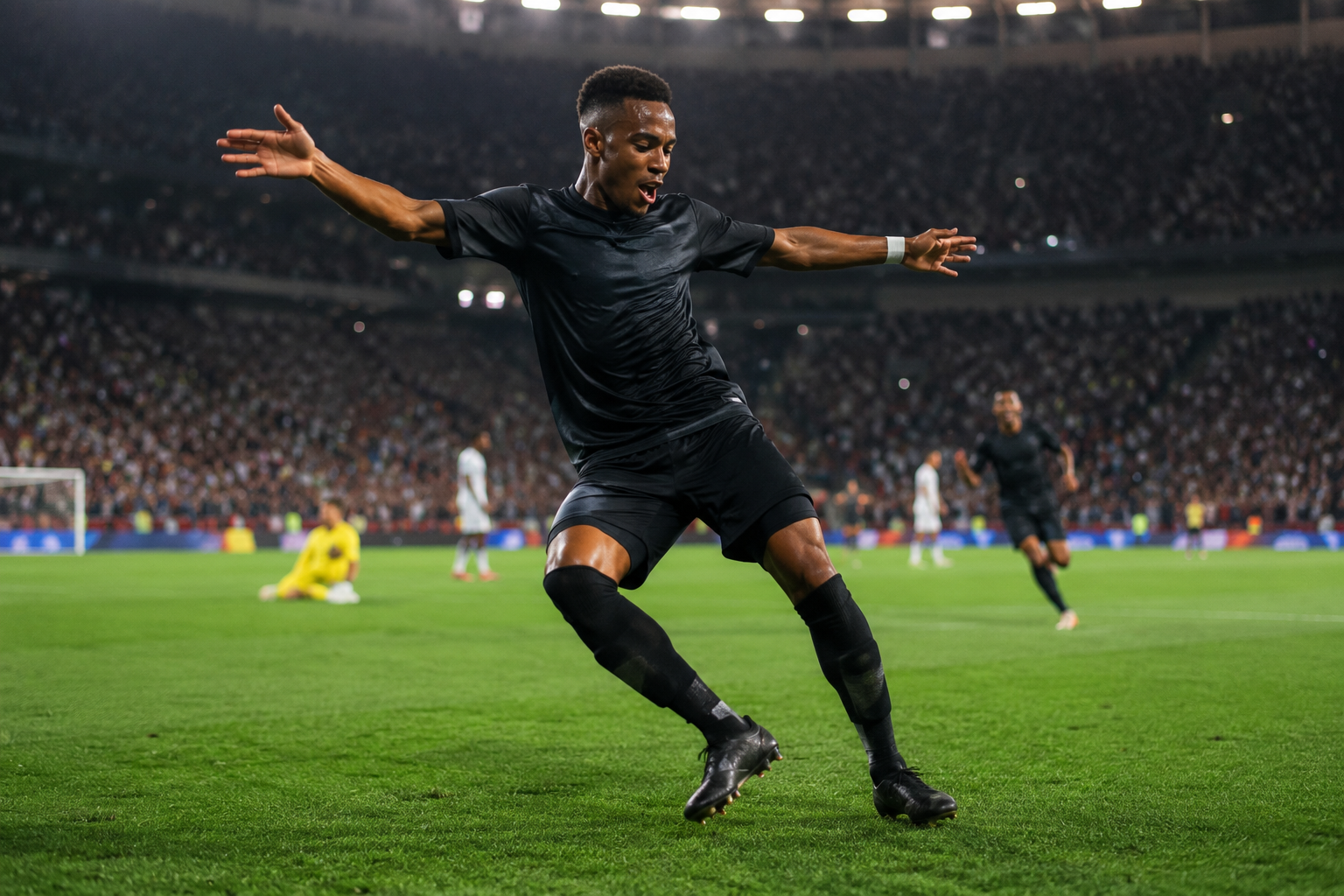
Long before the halftime show, dance lived in football's most electric moments. In 1990, Cameroon's Roger Milla — at 38, the oldest goal-scorer in World Cup history — ran to the corner flag and danced a joyful wiggle after each goal. It became one of the first globally copied celebrations, and a statement that African teams could shine on the world stage.
The tradition only deepened. Siphiwe Tshabalala's celebration after South Africa's opening goal in 2010 became the sound and movement of a continent hosting the tournament for the first time. Paul Pogba carried Afrobeats moves like the shaku-shaku and gwara gwara into global football, inspiring kids from Lagos to Paris to copy him. Antoine Griezmann brought gaming culture onto the pitch with the Fortnite "Take the L" dance in 2018. Cristiano Ronaldo's leaping "Siu" became the most imitated celebration in the sport — and, at 41, he chased one final World Cup in 2026, meaning a "Siu" in front of a packed American stadium was one of the tournament's signature images.
These are not throwaway moments. They are choreography under pressure — spontaneous movement that travels farther and faster than any highlight reel. When a player dances after a goal, millions of fans learn the steps by morning. That is the same viral pipeline that carried the Ghetto Kids from Kampala to MetLife: dance as the internet's true universal language.
How Dance Is Woven Into Every Corner of American Culture
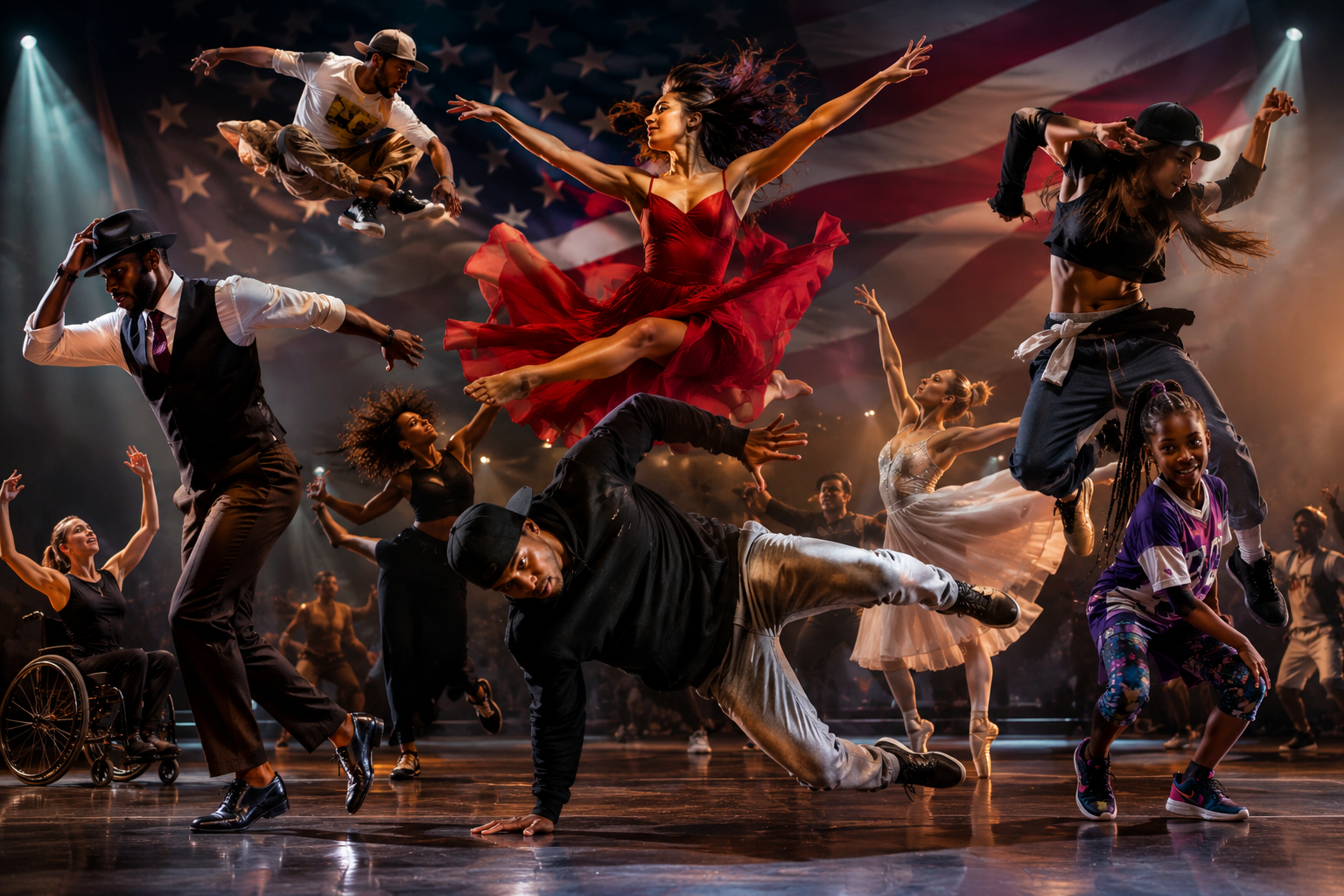
It is no accident that the World Cup's first halftime show landed on American soil. The Super Bowl halftime show — the very template FIFA borrowed — is one of the United States' most recognizable cultural exports, a moment when the country stops to watch artists move. America has always told its story through dance.
Consider the lineage. Tap and jazz gave the nation its first homegrown movement languages, carried by Black artists from vaudeville stages to Hollywood screens. Soul Train turned a television dance floor into a weekly celebration of Black culture and style that shaped how the whole country moved. Hip-hop — born in the Bronx — grew from block parties into a global industry, exporting breaking, popping, locking, and the entire visual grammar of street dance to every continent. Broadway built an art form on the triple threat. And in the streaming era, TikTok turned choreography into the primary way a generation communicates, launches songs, and finds community.
Dance is stitched into how Americans mourn, celebrate, worship, protest, and connect. It shows up at weddings and halftime shows, in music videos and school gyms, at inaugurations and on front porches. When the World Cup chose the United States to debut its first halftime spectacle, it was tapping into a country that has spent a century proving that movement is a language everyone understands — the same truth Dance Mogul Magazine has built its mission upon.
The 2026 World Cup — Dance & Music Highlights
June 12 — Opening ceremony, SoFi Stadium (Los Angeles): Rema & Tyla headline African talent
Mexico City Opening — Shakira & Burna Boy perform “Dai Dai,” the official anthem
Throughout — Goal-celebration dances from Ronaldo, Afrobeats-inspired moves, and global fan culture
July 19 — First-ever Final Halftime Show, curated by Chris Martin: Madonna, Shakira, BTS, Justin Bieber, Burna Boy
July 19 — Uganda's Ghetto Kids dance live alongside Shakira at the Final
The Cause — The show supports the FIFA Global Citizen Education Fund, targeting $100 million for children's education and football access
Why It Matters: Dance, Purpose, and the Global Good
The most important thing about the 2026 halftime show is not who performed — it is why. Every element served the FIFA Global Citizen Education Fund, an initiative aiming to raise $100 million to expand access to education and football for children worldwide, with $1 from every match ticket contributing to the cause. Dance was not decoration on top of a game. It was the vehicle for something larger than the game.
That is precisely the belief at the heart of Dance Mogul Magazine: that dance, in all its forms, has the power to transform lives. The Ghetto Kids are living proof. A child who once had no path to school stood on the world's biggest stage because a dance foundation believed movement could change a life. Multiply that by the millions of children the Education Fund aims to reach, and the picture becomes clear — dance is one of the most powerful tools humanity has for building opportunity, unity, and hope.
The World Cup brings the world together in a way almost nothing else can. In 2026, dance made sure that unity had a rhythm. From the diaspora pride carried in an Afrobeats celebration, to the immigrant dream embodied by children from Kampala, to the American cultural stage that welcomed them all — the tournament reminded us that when the world needs to say something together, it does not always use words. Sometimes, it dances.
Dance at the World Cup is not a sideshow to the beautiful game. It is the beautiful game's beating heart, made visible.
Watch: Dance Takes the World Cup Stage
Continue Your Journey
Explore more from the Dance Styles Hub and discover how dancers across every genre — from Afrobeats to hip-hop — are shaping the future of movement and culture.
• The Business of Dance — Building a sustainable career in the dance industry
• Dance Creating Stability — How dancers build financial and creative independence
• Empowerment Workbooks & Guides — Tools for individuals, families, and young people ready to grow
• Join the Dance Mogul Community — Connect with the global dance community
© 2026 Dance Mogul Magazine LLC | dancemogul.com | Inspiring Self-Empowerment Through Dance Culture