
Industry Guide · Grants & Funding
Grants & Funding for Dance: How to Fund Your Work in 2026
The funding landscape is shifting fast. Here is how dancers, choreographers, and companies find the money to create — and build the kind of support that doesn't depend on any single source.
By Dance Mogul Magazine | Industry Guide
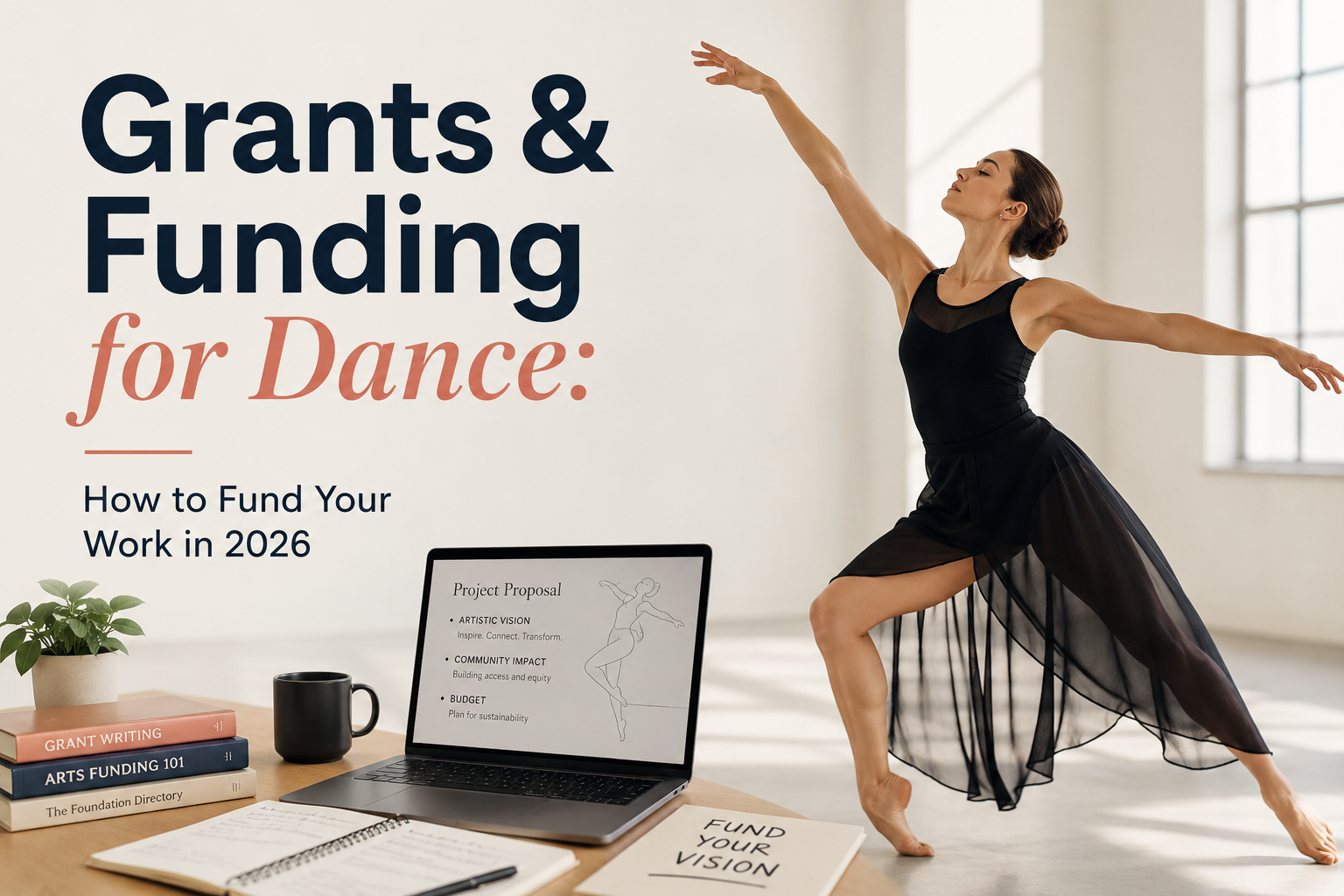
Funding the Art in a Changing World
Dance has always been undercapitalized relative to its cultural value. Choreographers create world-class work on shoestring budgets; companies survive on grit as much as grants. Understanding grants and funding for dance — where the money lives, who can apply, and how to ask for it well — is one of the most practical skills an artist or organization can build. It is the difference between an idea that stays in your notebook and a work that reaches a stage.
It is also a moment of real change. Several long-standing supporters of the performing arts have announced shifts in focus, and major federal funding has faced uncertainty heading into the 2026 cycle. None of that means the money is gone — it means the smartest artists are diversifying where they look. This guide maps the full landscape so you can fund your work from more than one direction.
Federal Funding: The National Endowment for the Arts
The National Endowment for the Arts (NEA) is the largest federal funder of the arts, and its consolidated Grants for Arts Projects program supports dance alongside other disciplines. Awards generally range from about $10,000 to $100,000, with most landing in the $20,000 to $40,000 range, and they typically require a 1:1 cost-share match — for every dollar the NEA grants, you raise a matching dollar from other sources.
One critical detail: NEA project grants go to organizations — nonprofit 501(c)(3) groups, units of government, and federally recognized tribes — not to individuals directly. Individual artists access this funding either through a nonprofit fiscal sponsor or by applying through state-level programs. Knowing this rule up front saves you from applying to the wrong door.
State and Local Funding: Closer Than You Think
Some of the most accessible money is the closest to home. Every U.S. state has an arts agency, and many run fellowship and project grant programs — state fellowships commonly range from around $5,000 to $50,000 depending on the state. Below that, look to your county arts council, your local community foundation, and your city's cultural affairs office. These local funders often have less competition than national programs and a genuine mandate to support artists in their own communities.
A simple starting strategy: begin with your state arts agency, then work outward to county and city sources. Local funders also build relationships — a small first grant often opens the door to larger ones down the road.
Project Grants and Dance-Specific Funds
Beyond government, regional arts organizations and dance-specific funds support the creation and touring of new work. The New England Foundation for the Arts (NEFA), for example, has run the National Dance Project — a major source of creation and touring support for choreographers and companies — though its 2026 cycle is set to be its final one, a reminder of how quickly the landscape moves. NEFA also offers smaller, direct awards such as the New England Dance Fund, which grants funds straight to choreographers for timely, career-advancing opportunities.
Programs like these change year to year, so the habit that matters most is staying informed: follow the funders relevant to your region and discipline, sign up for their newsletters, and track deadlines like you track audition dates.
Fiscal Sponsorship: The Key for Individual Artists
If you are an individual artist or an unincorporated collective, fiscal sponsorship is often your gateway to grant money. A fiscal sponsor is an established nonprofit that — for a small administrative fee — allows your project to receive grants and tax-deductible donations under its 501(c)(3) status. You keep creative control; the sponsor provides the legal and financial umbrella that most funders require. Many major grants cannot be paid to individuals or LLCs at all, so a fiscal sponsor is frequently not optional but essential.
Your Grant-Readiness Checklist
1. Confirm your eligibility — nonprofit, government, tribe, or fiscally sponsored?
2. Line up a fiscal sponsor early if you are an individual artist.
3. Build a clear, realistic project budget — and a plan to meet any match.
4. Write a compelling narrative: what, why now, who it serves, and the impact.
5. Track deadlines and never miss a required grantee report.
How to Write an Application That Wins
A great application answers the funder's real questions clearly and honestly. Lead with a compelling narrative: what you will create, why it matters now, who it serves, and the impact it will have. Funders invest in clarity and credibility, not in vague ambition. Back the story with a detailed, realistic budget — one that shows you understand your true costs and, where required, how you will raise matching funds.
Two more things separate funded artists from the rest. First, follow the guidelines exactly — eligibility, formatting, and deadlines are non-negotiable. Second, honor your reporting obligations: most funders require a grantee report after the project, and an overdue report can make you ineligible for future support. Treat every grant as the beginning of a long relationship, not a one-time transaction.
Beyond Grants: Building Diversified Support
Grants are powerful, but they are competitive and slow, and they should never be your only plan. The most resilient artists and companies blend funding sources: earned revenue from performances, classes, and commissions; individual donors and members who believe in the work; community crowdfunding for specific projects; and corporate or brand support where there is genuine alignment. When grant money tightens — as it has in 2026 — the artists with diversified support keep creating while others stall.
Whatever combination you build, manage it well. Funded work still has to be tracked, budgeted, and reported — which is why the money fundamentals in Freelance Dancer Finances: Taxes, Invoicing & Getting Paid matter as much to grant recipients as to freelancers. Funding is fuel; financial discipline is what turns it into lasting work.
At Dance Mogul Magazine, we believe the dance community deserves to be resourced as richly as it gives. Learning to fund your work is an act of self-empowerment — it puts the future of the culture in the hands of the people who make it.
Resources & Further Reading
From Dance Mogul Magazine:
- Dance Studio Business Operations: Run a Studio That Thrives
- Freelance Dancer Finances: Taxes, Invoicing & Getting Paid
- Dance Business & Entrepreneurship: Build a Career That Lasts
- Partner With Dance Mogul Magazine — Media Kit
Trusted external resources:
- National Endowment for the Arts — Grants
- Directory of State Arts Agencies (NASAA)
- New England Foundation for the Arts — Grants
- Dance/USA — National Service Organization for Dance
The Dance Mogul Mission
Dance Mogul Magazine exists to inspire self-empowerment, celebrate cultural excellence, and equip the global dance community with the tools to build lasting legacies. Learning to fund your work puts the future of the culture in the hands of the people who make it. Partner with us and keep building.