
Legacy Artist Feature
Misty Copeland: The Unlikely Ballerina Who Shattered Ceilings, Inspired Millions, and Redefined What Classical Dance Looks Like
From a Boys & Girls Club in San Pedro, California to principal dancer at American Ballet Theatre — Misty Copeland built her legacy one barrier at a time.
By Dance Mogul Magazine | Legacy Artist Feature | Updated May 2026
Misty Copeland — First African American female principal dancer in ABT's 75-year history
Quick Facts
Full Name: Misty Danielle Copeland
Born: September 10, 1982 — Kansas City, Missouri
Raised: San Pedro, Los Angeles, California
Dance Style: Classical Ballet
Company: American Ballet Theatre (2000–2025)
Historic Achievement: First African American female principal dancer at ABT (June 30, 2015)
Spouse: Olu Evans (m. 2016)
Foundation: The Misty Copeland Foundation (est. 2022)
Known For: Breaking barriers in classical ballet, bestselling authorship, cultural activism
Who Is Misty Copeland?
There are artists who enter the stage. And then there are artists who change it forever. Misty Copeland is the latter. She is a retired American ballet dancer, New York Times bestselling author, philanthropist, and cultural icon whose 25-year career with American Ballet Theatre redefined what it means to belong in classical ballet.
On June 30, 2015, Copeland made history by becoming the first African American woman promoted to principal dancer in ABT's then-75-year existence — a moment that reverberated far beyond the world of dance. It was a milestone in American culture, a long-overdue recognition that classical ballet's highest stages belong to everyone.
But Misty Copeland's story is not defined by a single promotion. It is defined by the journey that made that moment possible — a journey through poverty, instability, late beginnings, injury, and relentless self-belief. She did not start ballet until age thirteen. She grew up without knowing where she would sleep each night. And she became the most famous ballerina of her generation.
This is her full story — as told by Dance Mogul Magazine, where we believe the stories that shape dance culture deserve to be told with the respect, depth, and authority they demand.
A Childhood Defined by Resilience
Misty Danielle Copeland was born on September 10, 1982, in Kansas City, Missouri, to Sylvia DelaCerna and Doug Copeland. Her father, of German and African American descent, and her mother, of Italian and African American heritage, separated when Misty was young. By three, she had moved to San Pedro, California, and would not see her father again for twenty years.
Sylvia, a single mother to six children across multiple marriages, struggled with severe financial instability. The family moved constantly — between the homes of Sylvia's boyfriends and husbands, friends' couches, and, during the hardest stretches, motel rooms where the children slept on the floor. Years later, in a revealing conversation with The New York Times, Copeland described not knowing where she would sleep on any given night, whether there would be food, or how she would get to school.
It was a childhood defined by uncertainty. But it was also a childhood that built something steel-hard inside the young girl who would one day command the stage at the Metropolitan Opera House.
Discovering Ballet at Thirteen — An Impossibly Late Start
In the world of classical ballet, serious training typically begins between the ages of four and eight. By thirteen, most aspiring professionals are already deep into technique, pointe work, and repertory. Misty Copeland walked into her first ballet class at thirteen years old and changed the rules.
Her introduction came through the drill team at Dana Middle School in San Pedro, where she followed in the footsteps of her older sister Erica and was quickly promoted to captain. Her coach, Elizabeth Cantine, noticed something exceptional in the way Misty moved — a natural grace and musicality that transcended drill choreography. Cantine recommended she attend a free ballet class at the local Boys & Girls Club, taught by Cynthia Bradley, creative director of the San Pedro City Ballet.
Bradley, a DMM community partner and former professional dancer, recognized Copeland's extraordinary talent immediately. Within weeks, she offered Misty a full scholarship to train at the San Pedro Dance Center. After initially declining, Copeland accepted with her mother's blessing. Three months into formal training, she was en pointe. After just eight months, she danced the role of Clara in her school's production of The Nutcracker.
The word prodigy does not begin to describe it.
"I knew that I just didn't have it in me to give up, even if I sometimes felt like a fool for continuing to believe."
— Misty Copeland
The Custody Battle That Nearly Ended Everything
As Copeland's training intensified, she moved in with the Bradley family to be closer to the studio. The arrangement worked — Misty flourished under intensive daily training — but it created a rift between the Bradleys and Sylvia DelaCerna that would become one of the most painful chapters in Copeland's early life.
In 1998, at fifteen, Copeland won first place in the ballet category of the prestigious Los Angeles Music Center Spotlight Awards — a competition recognizing the most talented young performers in Southern California. That same summer, she received a full scholarship to the San Francisco Ballet School's intensive program. Professional offers were already arriving.
But behind the scenes, a legal battle was unfolding. Sylvia filed for the return of her daughter. The Bradleys, who had been serving as Misty's custodial guardians, believed they were acting in her best interest. Copeland herself, caught between two worlds, filed emancipation papers in an attempt to secure her independence. Restraining orders were filed. Media attention descended.
Ultimately, both sides dropped proceedings. Copeland returned home to her mother and began studying under a new teacher — a former member of ABT who would help prepare her for the next stage. The experience left scars, but it also forged something unbreakable in Copeland's character. She had survived instability once in her childhood and survived it again in her adolescence. She was ready for what came next.
The Rise Through American Ballet Theatre
In 2000, Copeland received a full scholarship to ABT's prestigious Summer Intensive program and was named ABT's National Coca-Cola Scholar. That September, she joined the ABT Studio Company. By April 2001, she was accepted into the corps de ballet — the core performing body of one of the world's most elite ballet companies.
For most of her time in the corps, Copeland was the only African American woman in the company. The isolation was real. The scrutiny — of her technique, her body type, her skin color — was constant. She has spoken openly about being compared to Jackie Robinson, about carrying the weight of representation in an art form overwhelmingly dominated by white dancers and European aesthetics.
In August 2007, Copeland was promoted to soloist — only the second African American woman to achieve that rank at ABT, and the first in two decades. The following year, she was honored with the Leonore Annenberg Fellowship in the Arts, a competitive two-year fellowship awarded to young artists exhibiting extraordinary potential.
The signature performances followed. In 2012, choreographer Alexei Ratmansky created the title role in Firebird on Copeland — a production that became her artistic calling card. She performed it while dealing with multiple stress fractures in her tibia, a fact that speaks to both her dedication and the physical toll ballet demands. In December 2014, she danced the lead role of Clara in ABT's production of The Nutcracker, choreographed by Ratmansky. That same fall, she made history as the first Black woman to perform the lead role of Odette/Odile in ABT's Swan Lake during the company's inaugural tour to Australia.
"Misty didn't just perform ballet. She transformed it."
— Oprah Winfrey, at Copeland's ABT Farewell Gala, October 2025
June 30, 2015 — The Day That Changed Ballet Forever
On June 30, 2015, American Ballet Theatre announced that Misty Copeland had been promoted to principal dancer. She was the first African American woman to achieve this rank in the company's 75-year history.
The announcement sent shockwaves through the arts world — and well beyond it. Copeland appeared on the cover of Time magazine as one of the 100 Most Influential People in the world, making her the first dancer to grace that cover since 1994. She was named one of Glamour's Women of the Year, added to ESPN's Impact 25, and included on Barbara Walters' Most Fascinating People list.
The promotion was not just a personal triumph. It was a cultural turning point. For young Black dancers who had been told, explicitly or implicitly, that their bodies, their skin, and their stories did not belong in classical ballet, Copeland's rise was proof that those barriers were built by people — and could be broken by people, too.
Following her promotion, Copeland performed lead roles in Romeo and Juliet, Giselle, Manon, Don Quixote, and Coppélia — drawing audiences who had never before seen themselves represented on the stages of American ballet.
Career Timeline & Milestones
1982 — Born September 10 in Kansas City, Missouri
1995 — Begins ballet training at age 13 at the Boys & Girls Club in San Pedro, California, under Cynthia Bradley
1998 — Wins first place at the Los Angeles Music Center Spotlight Awards; receives full scholarship to San Francisco Ballet School
2000 — Named ABT's National Coca-Cola Scholar; joins ABT Studio Company
2001 — Joins ABT's corps de ballet
2007 — Promoted to soloist — second African American woman to hold the rank at ABT, first in 20 years
2008 — Receives the Leonore Annenberg Fellowship in the Arts
2012 — Performs the title role in Firebird (choreography by Alexei Ratmansky) — her breakthrough performance
2014 — Under Armour partnership launches "I Will What I Want" campaign (viral, 9M+ views); becomes first Black woman to dance Odette/Odile in ABT's Swan Lake; publishes Life in Motion and Firebird; appointed to President's Council on Fitness by President Obama; receives honorary doctorate from University of Hartford
2015 — Promoted to principal dancer at ABT (June 30) — first African American woman in 75 years; named to Time 100 Most Influential People; Broadway debut in On the Town; featured on 60 Minutes
2016 — Marries attorney Olu Evans; Mattel creates Misty Copeland Barbie doll; becomes Dannon Oikos spokesperson
2018 — Major film debut in Disney's The Nutcracker and the Four Realms
2019 — Performs with Taylor Swift at American Music Awards
2020 — Performs at the Grammy Awards; steps away from ABT due to back injury
2021 — Receives the NAACP Spingarn Medal — the organization's highest honor
2022 — Welcomes son with husband Olu Evans; founds The Misty Copeland Foundation with BE BOLD program; publishes The Wind At My Back
2023 — Receives Honorary Doctorate of Fine Arts from New York University; Trailblazer Icon Award at The Grio Awards; co-founds Greatness Wins athletic wear with Derek Jeter
2024 — Receives Innovator Award from the African American Film Critics Association; Flower documentary screens at Bentonville Film Festival
2025 — Receives YoungArts Arison Award; gives farewell performance at ABT's Fall Gala (October 22) at Lincoln Center — Oprah Winfrey and Caroline Kennedy serve as honorary chairs; officially retires after 25 years with ABT
2026 — Performs at the 98th Academy Awards (March); attends the Met Gala; continues advocacy through The Misty Copeland Foundation's "Celebrating Misty" $1 million campaign
Beyond the Stage: Author, Activist, Entrepreneur
Misty Copeland's influence extends far beyond the stage. She is a New York Times bestselling author whose books have reached audiences ranging from young children to adults navigating their own journeys of self-belief.
Her published works include Life in Motion: An Unlikely Ballerina (2014), the children's picture book Firebird (winner of the Coretta Scott King Award, 2014), Ballerina Body: Dancing and Eating Your Way to a Leaner, Stronger, and More Graceful You (2017), Black Ballerinas, Bunheads, and The Wind At My Back (2022) — a tribute to her late mentor, pioneering ballerina Raven Wilkinson.
Her commercial partnerships have been equally groundbreaking. In 2014, Copeland became a sponsored athlete for Under Armour, our partner in athletic empowerment, whose "I Will What I Want" campaign featuring Copeland went viral with over nine million views and was named one of Adweek's 10 Best Ads of 2014. She has also partnered with Coach, Estée Lauder, Seiko, T-Mobile, and Dr Pepper. In 2016, Mattel, our partner in representation and play, created a Misty Copeland Barbie doll — putting a Black ballerina in toy aisles around the world. In 2023, she co-founded the athletic wear company Greatness Wins alongside Derek Jeter and Chris Riccobono.
In 2022, Copeland established The Misty Copeland Foundation, whose signature BE BOLD program works to bring diversity, equity, and inclusion to dance education — especially ballet. The foundation's "Celebrating Misty" campaign, a one-year, $1 million fundraising initiative running through September 2026, ensures that her vision for an inclusive dance world continues to grow.
She has also served as an ambassador for the Boys & Girls Clubs of America, the very organization where she first discovered ballet — and where she now works to ensure the next generation of dancers have the same opportunity she did.
Awards & Honors
1998 — Los Angeles Music Center Spotlight Award (First Place, Ballet)
2000 — ABT National Coca-Cola Scholar
2008 — Leonore Annenberg Fellowship in the Arts
2014 — Appointed to President's Council on Fitness, Sports & Nutrition by President Obama
2014 — Honorary Doctorate, University of Hartford
2014 — Coretta Scott King Award (Firebird)
2015 — Time 100 Most Influential People (cover)
2015 — Glamour Women of the Year
2015 — ESPN Impact 25
2015 — Barbara Walters' Most Fascinating People
2015 — Black Girls Rock! Award
2015 — Vanity Fair International Best Dressed List
2016 — Shorty Award for Best in Dance in Social Media
2021 — NAACP Spingarn Medal (highest honor)
2023 — Honorary Doctorate of Fine Arts, New York University
2023 — Trailblazer Icon Award, The Grio Awards
2024 — Innovator Award, African American Film Critics Association
2025 — YoungArts Arison Award
The Farewell: October 22, 2025
On October 22, 2025, Misty Copeland returned to the stage one final time for "A Celebration Honoring Misty Copeland" — ABT's star-studded Fall Gala at the David H. Koch Theater at Lincoln Center. It was her first performance with the company in five years, following a back injury in 2020 and the birth of her son in 2022.
The evening, curated in part by Copeland herself, featured performances from Romeo and Juliet and Sinatra Suite, as well as the world premiere of a new work choreographed by Kyle Abraham. Oprah Winfrey and Caroline Kennedy served as honorary chairs. Winfrey delivered a tribute that captured what Copeland meant not just to ballet, but to culture itself. Debbie Allen, a longtime champion of dance diversity, also spoke.
Copeland was showered with golden glitter and bouquets as she took her final bow. It was not just the end of a career. It was the punctuation mark on an era.
"This moment isn't a farewell — it's a celebration of everything we've built together, and a step toward all the work that's still ahead."
— Misty Copeland, October 2025
Cultural Impact: Why Misty Copeland Matters
Misty Copeland's significance cannot be measured in performances alone. She is the reason a generation of young Black dancers looked at a ballet stage and saw themselves there for the first time. She is the reason conversations about body diversity, racial equity, and institutional access in classical dance moved from whispered frustrations to national headlines.
She appeared in Prince's music videos and toured with him as a featured dancer. She made her Broadway debut in On the Town in 2015. She starred in Disney's The Nutcracker and the Four Realms in 2018. She performed with Taylor Swift at the American Music Awards and at the Grammy Awards alongside artists from the Debbie Allen Dance Academy. She was featured on 60 Minutes, CBS Sunday Morning, Good Morning America, The Today Show, and the covers of Time, Vogue, Essence, Self, and People.
She was interviewed alongside President Barack Obama in a video series for Time and Essence on race, gender, and creating opportunity for young people. She spoke at the United Nations. She was named a National Youth of the Year Ambassador by the Boys & Girls Clubs of America.
Through her production company, Life in Motion Productions, she continues to bring representative stories of artists past, present, and future to the screen. Her independently produced film Flower, a silent arts activism piece using dance to raise awareness about intergenerational equity, premiered at the Tribeca Festival in 2023.
And through her foundation, she ensures that the pipeline of young dancers — especially those who come from communities where ballet has historically been inaccessible — continues to grow.
Watch: Misty Copeland's Under Armour "I Will What I Want" Campaign
Published Works
Life in Motion: An Unlikely Ballerina (2014) — New York Times bestselling memoir co-written with Charisse Jones
Firebird (2014) — Children's picture book; Coretta Scott King Award winner (illustrated by Christopher Myers)
Ballerina Body: Dancing and Eating Your Way to a Leaner, Stronger, and More Graceful You (2017)
Black Ballerinas: My Journey to Our Legacy (2021)
Bunheads (2020) — Children's picture book
The Wind At My Back (2022) — Tribute to pioneering ballerina Raven Wilkinson
Why Dance Mogul Magazine Tells This Story
Dance Mogul Magazine exists to amplify the stories of artists who use their gifts to inspire, uplift, and transform communities. Misty Copeland's story is the embodiment of everything DMM stands for — self-empowerment through discipline, resilience through adversity, and legacy through service.
She did not come from privilege. She did not have early access. She did not fit the mold. She built her own mold — and in doing so, she made space for every dancer who comes after her.
At Dance Mogul Magazine, we believe that dance is more than movement. It is a vehicle for change, a language of resilience, and a path to self-discovery. We cover every style — from ballet to hip-hop, from contemporary to street dance — because every style carries a story worth telling. Explore our full range at the Dance Styles Hub, or visit our Featured Artist page to read more profiles like this one.
"Decide what you want. Declare it to the world. See yourself winning. And remember that if you are persistent as well as patient, you can get whatever you seek."
— Misty Copeland
Dance Mogul Magazine
Inspiring Self-Empowerment Through Dance Culture
This profile is part of DMM's Legacy Artist Feature series — comprehensive, one-stop profiles of the dancers, choreographers, and visionaries who have shaped global dance culture. For corrections, updates, or media inquiries, contact dancemogulmagazine@gmail.com.
© 2026 Dance Mogul Magazine LLC. All rights reserved.
Live Event Coverage
Howard University Honors Brown Ballerinas: A Celebration of Black Excellence, HBCU Legacy, and the Power of Classical Dance
Inside Howard University's tribute to the Brown Ballerinas — where history, artistry, and representation converged on one of America's most storied HBCU stages.
By Dance Mogul Magazine | Live Event Coverage | Originally Published March 2015 | Updated May 2026
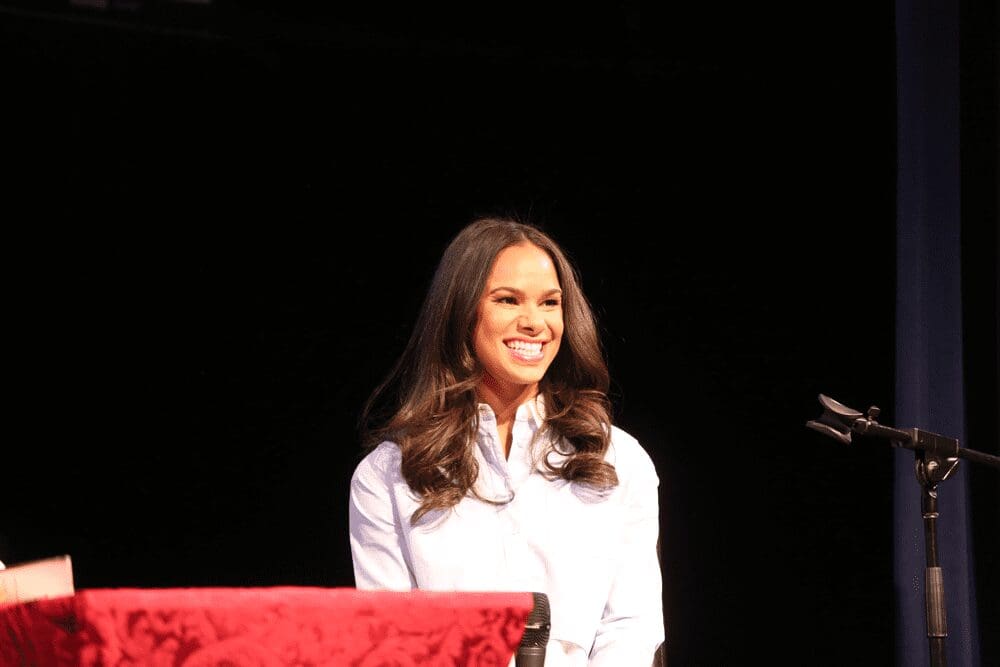
Howard University — Honoring Brown Ballerinas | Photo by Dance Mogul Magazine
Event Quick Facts
Event: Howard University Honors Brown Ballerinas
Year: 2015
Location: Howard University — Washington, D.C.
Focus: Celebrating Black women in classical ballet and the legacy of representation on stage
Significance: A historic HBCU event honoring ballerinas of color who redefined access and excellence in dance
Covered By: Dance Mogul Magazine — live on-site event coverage
The Mecca Meets the Stage
In 2015, Howard University — widely known as "The Mecca" of Black higher education — hosted a powerful celebration honoring Brown Ballerinas: the women of color who have broken barriers, redefined standards, and opened doors in classical ballet for generations to come. The event brought together dancers, educators, students, and community leaders for an evening that was equal parts tribute, education, and inspiration.
Dance Mogul Magazine was there. On the ground, behind the scenes, and in the audience — capturing the performances, the conversations, and the moments that mattered. Because this is what DMM was built to do: bring the stories that shape dance culture directly to the community that needs them most.
This was not just a recital. It was a statement. Howard University, the institution that has produced Supreme Court Justices, Nobel laureates, Vice Presidents, and some of the most influential artists in American history, turned its spotlight on the women who have fought for a place on ballet's highest stages — and won.
Howard University: The Mecca and What It Means for People of Color
Founded in 1867, just two years after the end of the Civil War, Howard University was chartered by an act of the United States Congress with a mission that remains as urgent today as it was then: to provide educational opportunity for those who had been systematically denied it. Named for General Oliver Otis Howard, who led the Freedmen's Bureau, the university was built on the belief that education is the foundation of lasting freedom.
For more than 150 years, Howard has stood as the premier institution for Black academic excellence in America. It is the only HBCU chartered by Congress, the only HBCU to achieve R1 Carnegie Classification for research, and one of the largest HBCUs in the nation with approximately 10,000 students on its 256-acre campus in northwest Washington, D.C.
The list of Howard alumni reads like a blueprint for American leadership: Thurgood Marshall, the first African American Supreme Court Justice. Kamala Harris, the first HBCU graduate to serve as Vice President. Toni Morrison, Nobel Prize-winning author. Chadwick Boseman, Academy Award-nominated actor — for whom Howard renamed its College of Fine Arts. Zora Neale Hurston. Roberta Flack. Ta-Nehisi Coates. The legacy is deep, wide, and still growing.
But Howard's significance goes beyond its famous graduates. For generations of Black students, Howard has been the place where they could learn, grow, and lead without having to justify their presence. It is a space where Black culture is not a sidebar — it is the curriculum, the conversation, and the community. That is what makes Howard the right institution to honor the Brown Ballerinas: because Howard understands what it means to build excellence in spaces that were never designed for you.
The Dance and Arts Programs at Howard University
Howard University's Chadwick A. Boseman College of Fine Arts is home to one of the most distinguished performing arts programs in the country — and one with deep roots in the Black artistic tradition. The Department of Theatre Arts offers professional training in Acting, Dance, Musical Theatre, Theatre Arts Administration, and Theatre Technology, with a stated commitment to fostering research, experimentation, and pioneering forms of drama and dance that enable African American artists to speak in their own distinctive cultural voice.
The Dance Program at Howard holds a singular distinction: it is the pioneering HBCU to offer a four-year Bachelor of Fine Arts degree in Dance Arts. Founded by Dr. Sherrill Berryman Johnson, the program predates its formal 1991 curriculum through earlier offerings in the Department of Physical Education. Today, it prepares students across five disciplines of dance technique, grounded in historical and ethnological study, with hands-on theatre technology education and personalized career planning.
Students in the BFA program engage with visiting artists for choreography and workshops, pursue internships with leading Black dance companies, and perform in productions at venues including the Ira Aldridge Theater on campus. The program's alumni have gone on to dance with Alvin Ailey American Dance Theater, Philadanco, Complexions Contemporary Ballet, and companies around the world. In recent years, the program has welcomed masterclasses from Desmond Richardson, co-founder of Complexions Contemporary Ballet, and collaborated with organizations across the African diaspora — including residencies in Thailand, Uganda, Rwanda, and Guinea.
The Dance Minor offers 18 credit hours spanning three core dance disciplines plus African diasporic dance history, giving students across the university access to movement, performance, and cultural study. Combined with Howard's music, theatre, and visual arts programs, the College of Fine Arts provides one of the most comprehensive creative ecosystems available at any HBCU in America.
This is the institutional foundation that made the Brown Ballerinas tribute possible — a university that does not simply teach dance, but understands dance as a vehicle for cultural preservation, community empowerment, and artistic leadership.
"The Howard University Dance program is truly like no other. Throughout my four years, I was pushed to be an artist I never imagined myself to be."
— Howard University Dance Program Alumni
Honoring the Brown Ballerinas: Purpose, Performance, and Representation
The Howard University Honors Brown Ballerinas event was a deliberate and powerful act of recognition. In classical ballet — an art form historically dominated by European aesthetics and predominantly white institutions — Black ballerinas have long been forced to fight for visibility, respect, and opportunity. This event placed them at the center of the stage, where they belong.
The evening featured performances, tributes, and conversations that traced the lineage of Black women in ballet — from the pioneers who trained in segregated studios and danced for companies that would not hire them, to the contemporary artists who are reshaping what classical dance looks like in the 21st century. It was a celebration of resilience, artistry, and the refusal to accept that any stage is off-limits.
For the students of Howard's Dance Program, the event was more than a performance opportunity — it was a living lesson. To see their own university honor the women whose shoulders they stand on gave them permission to dream bigger and push harder. It reinforced the truth that their bodies, their training, and their stories are not just welcome in ballet — they are essential to it.
The Brown Ballerinas event connected directly to the broader conversation that would intensify later in 2015, when Misty Copeland was promoted to principal dancer at American Ballet Theatre — the first African American woman to achieve that rank in the company's 75-year history. Howard's tribute was ahead of its time, and its message endures: representation matters, and the institutions that champion it are building something that lasts.
Why Dance Mogul Magazine Covers Live Events Like This
Dance Mogul Magazine was founded on a simple belief: the stories that shape dance culture deserve to be told with respect, depth, and authority. That belief does not live in a studio or a newsroom alone — it lives in the venues, the rehearsal halls, the university theaters, and the community spaces where dance happens in real time.
Live event coverage is at the heart of what DMM does. When we show up to an event like Howard's tribute to the Brown Ballerinas, we are not there as passive observers. We are there as community partners — capturing the energy, preserving the history, and delivering that content back to readers who may never have the chance to be in the room, but who deserve to feel like they were.
For a young dancer in Easton, Pennsylvania, or Newark, New Jersey, or rural Georgia — someone who may have never visited Howard's campus or seen a Black ballerina perform live — DMM's coverage becomes a window into what is possible. It becomes proof that institutions like Howard are investing in their future. It becomes inspiration that travels far beyond the walls of any theater.
This is what community partnership looks like. DMM and institutions like Howard University share a purpose: to uplift, to empower, and to ensure that the next generation has access to the stories, the role models, and the opportunities that will carry them forward. Every article we publish from a live event is an extension of that shared mission.
"Dance Mogul Magazine exists to amplify the stories of artists who use their gifts to inspire, uplift, and transform communities."
— Dance Mogul Magazine Mission
Community Partners, Shared Purpose
Every live event DMM covers is a reflection of our community partners' shared purpose. Howard University's decision to honor the Brown Ballerinas aligned perfectly with DMM's founding mission — self-empowerment through discipline, resilience through adversity, and legacy through service. When institutions and media work together with aligned values, the impact multiplies.
Howard's Dance Program trains the next generation of artists who will carry the torch that the Brown Ballerinas lit. DMM's coverage ensures those stories reach audiences who need them — young dancers who need to see themselves reflected, parents who need to know where to invest in their children's futures, and educators who need examples of what excellence looks like when access is real.
This is also why DMM covers dance across every style — from ballet to hip-hop, from contemporary to street dance — because every style carries a story worth telling, and every community that supports dance culture deserves to see its story reflected in the media it reads. Explore our full range at the Dance Styles Hub, or visit our Featured Artist page to discover more profiles of the dancers, choreographers, and visionaries shaping global dance culture.
Watch: The Movement That Changed Ballet
The Howard University Brown Ballerinas tribute took place in the same year that Misty Copeland shattered one of ballet's most enduring barriers. Her Under Armour "I Will What I Want" campaign, which had gone viral just months earlier, captured the spirit of everything the Brown Ballerinas represent — proving that classical dance belongs to everyone who earns their place on the stage.
Looking Forward: The Legacy Continues
Since the 2015 event, Howard University's Dance Program has only grown stronger. Now housed within the renamed Chadwick A. Boseman College of Fine Arts, the program continues to produce artists who are shaping the national dance landscape. Recent milestones include collaborations with Complexions Contemporary Ballet, international residencies across Africa and Asia, student-produced short films, and performances at the Kennedy Center.
The Brown Ballerinas honored that evening are no longer exceptions — they are the standard. And as Howard continues to train the next generation of dancers, choreographers, educators, and advocates, the pipeline of Black excellence in classical dance grows deeper every year.
Dance Mogul Magazine remains committed to covering these stories — not because they are trending, but because they matter. The work of institutions like Howard University and the courage of every Brown Ballerina who stepped onto a stage she was told was not hers is the foundation upon which the future of dance is built.
That is a story worth telling. And DMM will keep telling it.
"At Dance Mogul Magazine, we believe that dance is more than movement. It is a vehicle for change, a language of resilience, and a path to self-discovery."
— Dance Mogul Magazine
Dance Mogul Magazine
Inspiring Self-Empowerment Through Dance Culture
This article is part of DMM's Live Event Coverage series — on-the-ground reporting from the performances, tributes, and celebrations that shape dance culture. For corrections, updates, or media inquiries, contact dancemogulmagazine@gmail.com.
© 2026 Dance Mogul Magazine LLC. All rights reserved.