Featured Choreographers
Keone and Mari Madrid: The Storytellers Who Turn Movement Into Film, Theater, and Legacy
From “Love Yourself” and Beyond Babel to Disney animation and Broadway, the husband-and-wife creative team has expanded choreography into a complete storytelling language.
By Dance Mogul Magazine | Featured Choreographers
Who Are Keone and Mari Madrid?
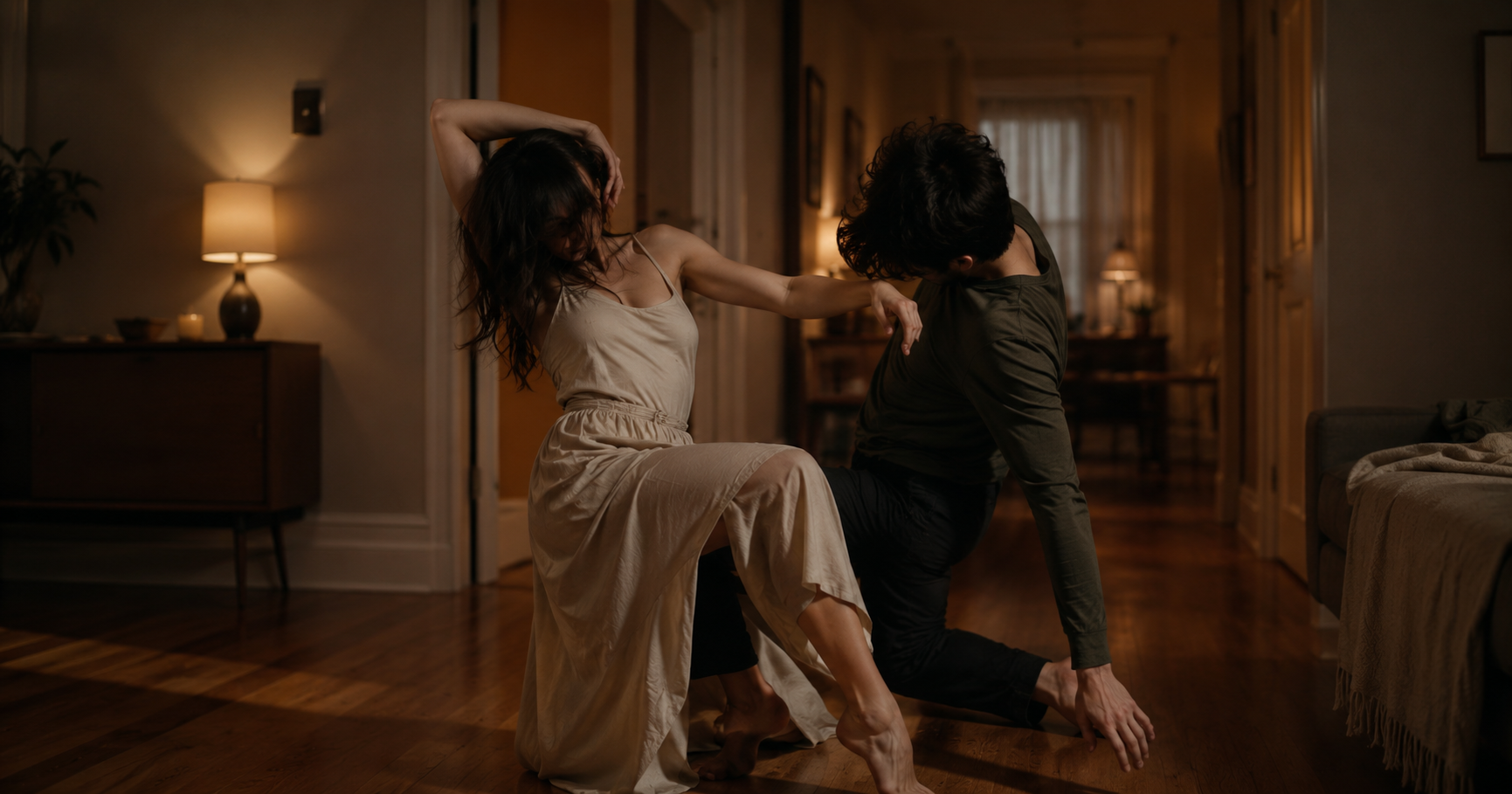
Keone and Mari Madrid are a husband-and-wife director-choreographer team whose work treats movement as narrative. They have created for film, theater, music, television, books, digital platforms, and live performance, building a career around the belief that choreography can carry character, conflict, humor, tenderness, and entire worlds without depending on spoken explanation.
Their public story first reached many viewers through intimate dance films and online choreography. The audience could recognize the relationship between them — not only as two synchronized performers, but as two distinct people listening and responding through movement. That quality became globally visible in Justin Bieber's “Love Yourself” video from Purpose: The Movement, which featured Keone and Mari as the dancers and choreographers inside a domestic story.
But the Madrids' contribution extends far beyond one viral video. Their work has moved into Off-Broadway dance theater, a Britney Spears Broadway musical, Disney animation, original films, publishing, and large-scale storytelling projects. They are part of a generation that expanded what commercial choreographers could author.
A Partnership Built on Reaction, Not Mirroring
Couples choreography can easily become visual symmetry: two people performing the same phrase at the same time. Keone and Mari became known for something more conversational. One body initiates, the other interrupts. A gesture lands like a question. Timing reveals affection, distance, irritation, or play. The choreography creates a relationship rather than merely displaying two skilled dancers.
That approach helped their online work connect beyond the dance community. Viewers did not need technical vocabulary to understand what was happening. The story lived in eye focus, pauses, ordinary gestures, spatial distance, and the difference between reaching toward someone and moving away.
Their Filipino American identity, San Diego roots, marriage, and experience as parents also inform the way their creative partnership is understood. They are not marketed only as a dance duo. They are a family and artistic team navigating how life and work shape each other.
“Their strongest choreography does not ask two dancers to look identical. It asks two characters to make us understand their relationship.”
“Love Yourself” and the Power of Domestic Choreography
The “Love Yourself” movement film placed choreography inside a home rather than a stage. The gestures were precise, but the setting made them feel like private habits made visible. The camera followed a relationship breaking down through attention, avoidance, touch, and routine.
That project helped a mass audience see dance storytelling without spectacle. There was no need for a large ensemble or a rapid edit every few seconds. The emotional architecture came from the performers' timing and from choreography designed to reveal character.
For dancers, the lesson is significant: scale does not determine impact. A hallway, bed, table, or phone screen can become choreographic space when the movement has purpose.
Beyond Babel: Dance Theater Without Spoken Dialogue
Keone and Mari carried that narrative method into Beyond Babel, co-created with Hideaway Circus. Inspired by Romeo and Juliet, the production used dance theater to tell a story about division, walls, community, and love. The show became a New York Times Critics' Pick and received two 2020 Drama Desk nominations, including recognition for choreography.
Beyond Babel was important because it resisted the idea that hip-hop-rooted choreography belongs only in support of a concert artist or competition routine. It treated the movement language as capable of sustaining a full theatrical world, character arc, and evening-length narrative.
The production also demonstrated the demands of authorship. The Madrids were not simply hired to add dances. They co-created, directed, wrote, choreographed, and performed. That level of responsibility expands the professional identity from choreographer to world-builder.
Keone & Mari Madrid — Selected Creative Milestones
Online dance-film era — Build an international audience through narrative choreography and concept videos.
2015 — Receive an MTV VMA Best Choreography nomination for Flying Lotus and Kendrick Lamar's “Never Catch Me.”
2015 — Choreograph and perform in Justin Bieber's “Love Yourself” video for Purpose: The Movement.
2018 — Launch the dance-centered e-book Ruth and premiere Beyond Babel.
2020 — Beyond Babel earns two Drama Desk nominations during its Off-Broadway run.
2021 — Choreograph Disney's animated short Us Again, which later wins an NAACP Image Award for Animated Short Form.
2023 — Make their Broadway debut as directors and choreographers of Once Upon a One More Time.
From Animation to Broadway
Disney's Us Again extended the Madrids' movement storytelling into animation. The short tells its story through music and dance, requiring choreography to be translated through animated bodies while preserving emotional weight. The project was shortlisted for an Academy Award and won the NAACP Image Award for Animated Short Form.
On Broadway, Keone and Mari directed and choreographed Once Upon a One More Time, a musical built around songs performed and recorded by Britney Spears. The production placed them in leadership positions that required movement, staging, tone, transitions, comedy, character, and the full architecture of a commercial musical to work together.
The move into directing is a natural extension of their practice. Their choreography has always considered the frame around the body: where the audience looks, what the environment means, and how one moment changes the next.
Marriage, Parenting, and Creative Longevity
The romantic image of a married creative team can hide the difficulty of sustaining both partnership and profession. Keone and Mari have spoken and written about the tension between ambition, family, parenting, social media, health, and artistic identity. That honesty matters because dance careers are often described as if the only challenge is getting the next opportunity.
Their work suggests that collaboration is not permanent agreement. It is a structure for disagreement, trust, editing, and returning to the shared purpose of the piece. The ability to remain distinct while building together is visible in both their choreography and their career.
“Creative partnership is not the disappearance of two voices into one. It is the discipline of building a third voice together.”
Why Keone and Mari Matter to Dance Culture
The Madrids helped expand the public image of what choreography can be. A dance can be a short film, a digital book, an animated narrative, an Off-Broadway production, a Broadway musical, or an intimate conversation between two people in a room. Their career does not abandon commercial dance; it uses that training as a foundation for authorship.
They also offer a model for multidisciplinary creators. Writing, directing, editing, visual effects, performance, choreography, and production are not treated as unrelated lanes. They are tools for telling the same story.
Movement as a Complete Story Language
Keone and Mari Madrid are often described as choreographers, but their deepest contribution may be the insistence that movement can carry the whole narrative burden. It can introduce character, establish a world, reveal conflict, and complete an emotional arc.
That belief has taken them from studio videos to global pop, theater, animation, and Broadway. It has also created a path for dancers who do not want to remain only interpreters of someone else's vision.
The Madrids show that dancers can become authors — not by leaving movement behind, but by trusting it enough to build entire stories around it.
Frequently Asked Questions
Who are Keone and Mari Madrid?
Keone and Mari Madrid are a husband-and-wife director-choreographer team known for narrative dance work across film, theater, music, animation, publishing, and digital media.
Did Keone and Mari choreograph Love Yourself?
Yes. They choreographed and performed in Justin Bieber's “Love Yourself” video for Purpose: The Movement.
What is Beyond Babel?
Beyond Babel is a dance-theater production co-created by Keone and Mari Madrid and Hideaway Circus. Inspired by Romeo and Juliet, it tells a story of division, community, and love through movement.
What did Keone and Mari do on Broadway?
They made their Broadway debut as the directors and choreographers of Once Upon a One More Time, a musical featuring songs performed and recorded by Britney Spears.
Did they work on Disney’s Us Again?
Yes. They choreographed the animated short Us Again, which tells its story through music and dance and won an NAACP Image Award for Animated Short Form.
Watch: Justin Bieber — “Love Yourself” Featuring Keone and Mari Madrid
Confirm Universal Music/YouTube embedding remains available before publication.
Continue Your Journey
Explore more from the Dance Styles Hub and discover how dancers across every genre are shaping culture, community, and the future of movement.
• Celebrating Black Creative Directors & Choreographers — The visionaries shaping culture from behind the scenes
• The Business of Dance — Building a sustainable career in the dance industry
• Empowerment Workbooks & Guides — Tools for individuals, families, and young people ready to grow
• Join the Dance Mogul Community — Connect with the global dance community
© 2026 Dance Mogul Magazine LLC | dancemogul.com | Inspiring Self-Empowerment Through Dance Culture