
Dance Style Deep-Dive
The Line Dance Revival: How Black Social Dance Is Moving the Culture Again
From the Electric Slide and Cupid Shuffle to trail-ride anthems and country-pop nights, the 2026 line-dance wave is new visibility for a tradition that never stopped moving.
By Dance Mogul Magazine | Dance Style Deep-Dive
Why Line Dancing Is Everywhere Again
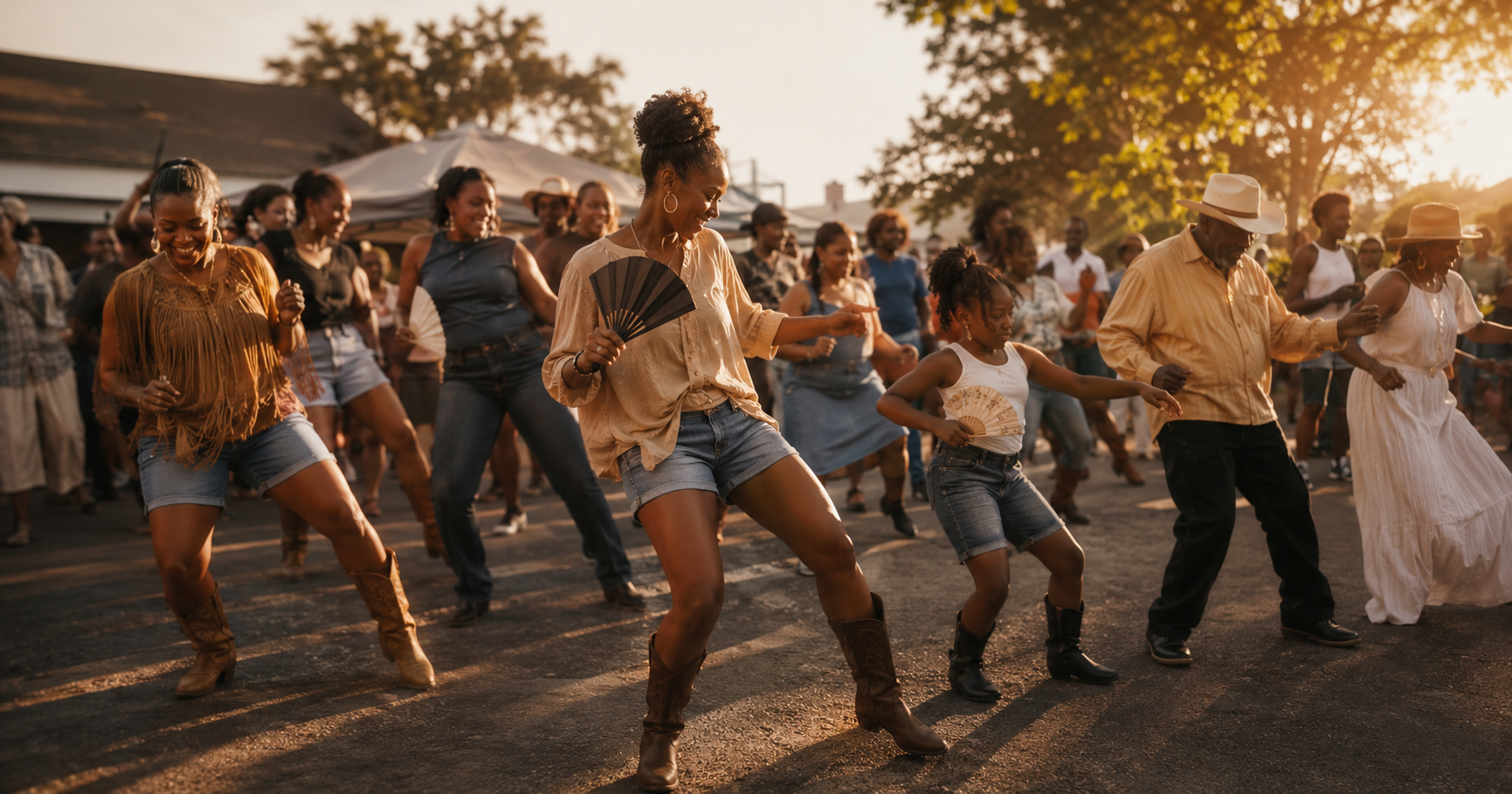
Line dancing did not suddenly return in 2026. It never truly left. It stayed alive at family reunions, weddings, cookouts, trail rides, clubs, community centers, fitness classes, college events, and neighborhood celebrations. What has changed is visibility. A tradition that communities have carried for generations is now moving through country-pop playlists, viral videos, packed social-dance nights, and mainstream concert stages at the same time.
The current revival is broad enough to hold several stories at once. Country-western venues are welcoming new dancers. Queer-led line-dance communities are rebuilding social spaces around inclusion. Black Southern trail-ride culture is reaching national audiences. Social media is helping one routine travel from a lunch break or local class to millions of screens. The result is not one trend with one owner. It is a renewed public appetite for dancing together.
For Dance Mogul Magazine, the most important part of this moment is the history beneath the headlines. Before line dancing became a lifestyle keyword, Black communities had already made synchronized social dancing part of how joy, memory, and belonging moved from one generation to the next.
The Soul-Line Tradition Was Already a Cultural Institution
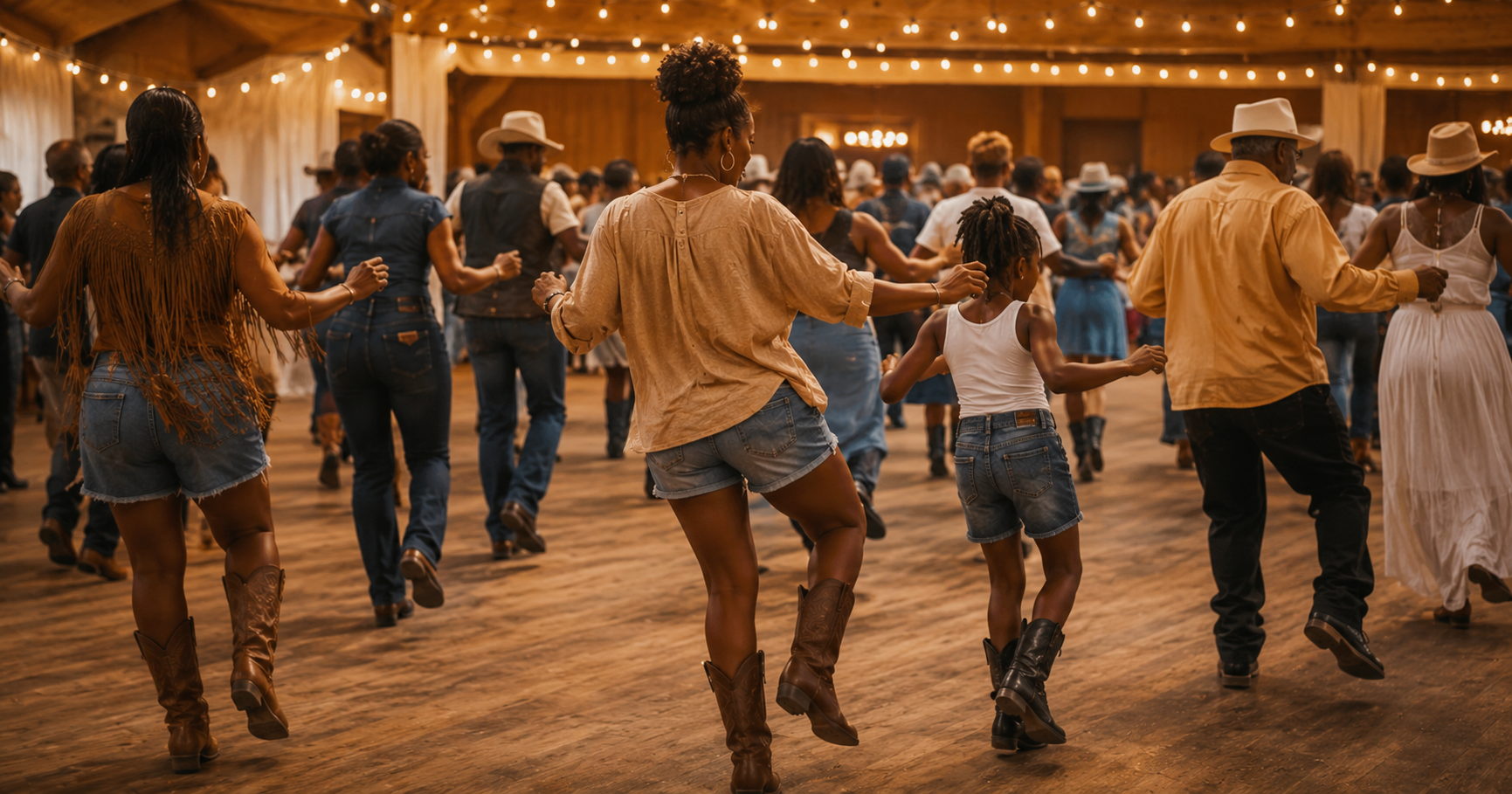
At a Black function, the first few counts often work like a language. Someone steps to the side, another person recognizes the pattern, and the floor organizes itself without an announcement. Older dancers, teenagers, cousins, neighbors, and first-timers enter the same formation. Skill matters less than willingness. The dance becomes a temporary community.
The Electric Slide remains one of the strongest examples. The routine became inseparable from Marcia Griffiths' recording of “Electric Boogie,” and it has endured because it can be learned in real time. The Cha Cha Slide, created around DJ Casper's instructional song, turned verbal cues into a universal invitation. The Cupid Shuffle, the Wobble, and many regional soul-line dances continued that pattern: the record does not merely accompany the dance; it helps organize the people.
These dances are sometimes dismissed as easy or casual. That misses their cultural intelligence. A successful social line dance has to be memorable without becoming empty, repeatable without becoming lifeless, and open enough for a room full of different bodies. It is choreography designed for participation rather than separation between performer and audience.
“A great line dance does not ask who the best dancer is. It asks whether the room is willing to move together.”
From the Electric Slide to “Boots on the Ground”
The 2025 rise of 803Fresh's “Boots on the Ground,” with choreography created by Tre Little, showed how quickly a new soul-line dance can become a cultural ritual. The dance moved through TikTok, trail rides, weddings, reunions, cookouts, classes, celebrity clips, and the BET Awards preshow. Its hand-fan rhythm gave the routine a visible identity, but its deeper power came from familiarity: it felt new and rooted at the same time.
That balance explains why the current revival has traveled so far. The steps are accessible. The music carries regional character. The dance makes room for personal flavor without breaking the group structure. People can watch once, join on the next wall, and feel included before they have mastered every count.
The country-pop boom has widened the doorway, but Black dancers are not guests in that space. Black cowboy traditions, Southern soul, zydeco, trail-ride music, gospel-inflected rhythm, and communal social dancing have long occupied the American landscape. The revival offers an opportunity to correct the record while the public is paying attention.
A Living Soul-Line Timeline
Late 20th century — The Electric Slide becomes a lasting international social-dance standard.
1990s–2000s — DJ Casper's Cha Cha Slide turns call-and-response instruction into a global party ritual.
2007 — Cupid releases the Cupid Shuffle, extending the soul-line tradition across generations.
2008 — V.I.C.'s Wobble becomes another durable celebration-floor staple.
2024–2026 — Country crossover, Black trail-ride culture, queer social-dance nights, and viral choreography drive a visible new wave.
2025 — Tre Little's Boots on the Ground choreography becomes a national cultural moment.
Why the Revival Is Happening Now
First, line dancing solves a social problem. It gives people a way to enter the floor without needing a partner, advanced training, or the confidence to freestyle alone. In a time when many people experience culture through private screens, synchronized movement offers immediate physical connection.
Second, the form is built for short video. A repeated phrase can be taught, mirrored, remixed, and shared. The camera can capture a solo learner, a family gathering, a large class, or a concert crowd performing the same sequence. Each version proves that the dance belongs to a community rather than a single polished performance.
Third, the country and Western revival has opened new aesthetic space. Boots, hats, denim, hand fans, and trail-ride sounds give creators a recognizable visual language. But the strongest events are not costume parties. They are places where history, music, regional identity, and intergenerational participation meet.
Finally, line dancing creates joy without requiring perfection. The laughter that follows a wrong turn is part of the experience. The form rewards return: one more wall, one more song, one more chance to catch the count.
Credit the Creator, Name the Community
Viral growth can make a dance appear ownerless. A routine spreads so fast that the name of the choreographer disappears while brands, influencers, and entertainment platforms benefit from the movement. The 2026 revival should be different. Publications, event promoters, artists, and creators can help by naming the person who made the routine, identifying the music and regional tradition, and linking audiences back to instruction from the source whenever possible.
Tre Little's visible credit on “Boots on the Ground” is a model worth protecting. So is the public recognition of Cupid as both recording artist and line-dance culture advocate. Choreographic credit is not a footnote. It is part of dance history.
Why Line Dancing Belongs in Dance Education
Line dancing can teach musicality, directional awareness, weight transfer, repetition, memory, spatial discipline, and community etiquette. It also gives beginning dancers an early success. A student who is afraid of improvisation can still experience rhythm and group timing. An older adult can modify impact while remaining part of the formation. A trained dancer can study how small changes in groove transform the same basic pattern.
Most important, the form teaches that dance is not valuable only when it is difficult. Dance also carries culture by being remembered, shared, and performed again.
The Revival Is Really a Recognition
The line-dance boom of 2026 is not simply a comeback. It is a public recognition of something communities already knew: people need dances that belong to the room. They need movement that can hold generations, welcome beginners, and turn a familiar song into a shared memory.
The Electric Slide, Cha Cha Slide, Cupid Shuffle, Wobble, and Boots on the Ground are not interchangeable, and their histories should not be flattened into one playlist. Together, however, they demonstrate the strength of participatory choreography. Each one gives people a structure, then lets the people fill it with personality.
That is why this revival has staying power. The real trend is not boots, country-pop, or a particular platform. The real trend is the return of the dance floor as a community.
Frequently Asked Questions
Why is line dancing popular again in 2026?
Its accessibility, social-media reach, country crossover, Black trail-ride visibility, and ability to create in-person community have converged into a broad revival.
Is the Electric Slide part of Black dance culture?
The dance has a complex and debated history, but its long life at Black weddings, reunions, cookouts, clubs, and community events has made it a major part of Black social-dance tradition.
What is soul line dancing?
Soul line dancing is synchronized group dancing commonly performed to R&B, soul, hip-hop, Southern soul, and related music. It emphasizes participation, groove, repetition, and community.
Who created the Boots on the Ground dance?
Tre Little created the viral choreography performed to 803Fresh's song “Boots on the Ground.”
Why does choreographer credit matter for viral line dances?
Credit preserves dance history, directs audiences back to the creator, and helps choreographers receive recognition and professional opportunity from work that platforms and brands may amplify.
Watch: 803Fresh — “Boots on the Ground”
Editorial note: Confirm YouTube embedding remains available before publication.
Continue Your Journey
Explore more from the Dance Styles Hub and discover how dancers across every genre are shaping culture, community, and the future of movement.
• Celebrating Black Creative Directors & Choreographers — The visionaries shaping culture from behind the scenes
• The Business of Dance — Building a sustainable career in the dance industry
• Empowerment Workbooks & Guides — Tools for individuals, families, and young people ready to grow
• Join the Dance Mogul Community — Connect with the global dance community
© 2026 Dance Mogul Magazine LLC | dancemogul.com | Inspiring Self-Empowerment Through Dance Culture