
Dance Technology & Culture
Practice Video Culture and AI Dance Content: The New Formats Shaping How We Learn Movement
Rehearsal clips, dance-practice videos, motion-reactive edits, and AI tools are changing what audiences value — and raising urgent questions about credit, consent, and human authorship.
By Dance Mogul Magazine | Dance Technology & Culture
When the Rehearsal Becomes the Main Event
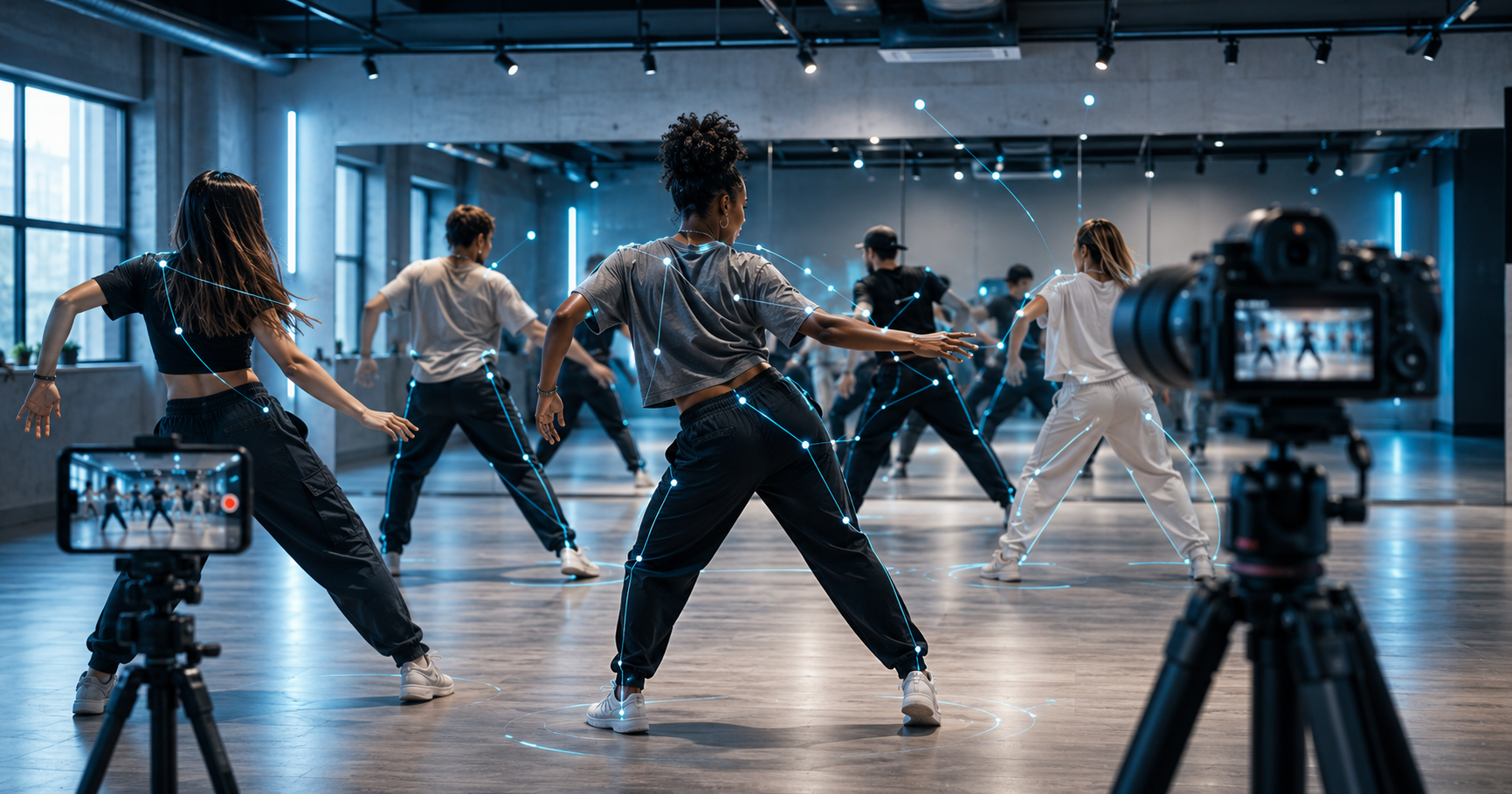
For decades, dancers were trained to hide the work. The audience saw the finished routine, while the counts, corrections, missed attempts, spacing changes, and creative arguments stayed in the studio. Digital dance culture has reversed that relationship. Today, a rehearsal clip can travel farther than the final music video. A dance-practice upload can become the definitive version fans study. A choreographer talking through one eight-count can build more trust than a flawless stage performance.
This is not simply behind-the-scenes material. Practice-video culture has become its own content language: full-body framing, visible formations, repeated sections, mirrored tutorials, split-screen comparisons, slow-motion breakdowns, raw studio audio, and dancers learning in public. The process is no longer treated as something that weakens the art. It often proves the skill behind it.
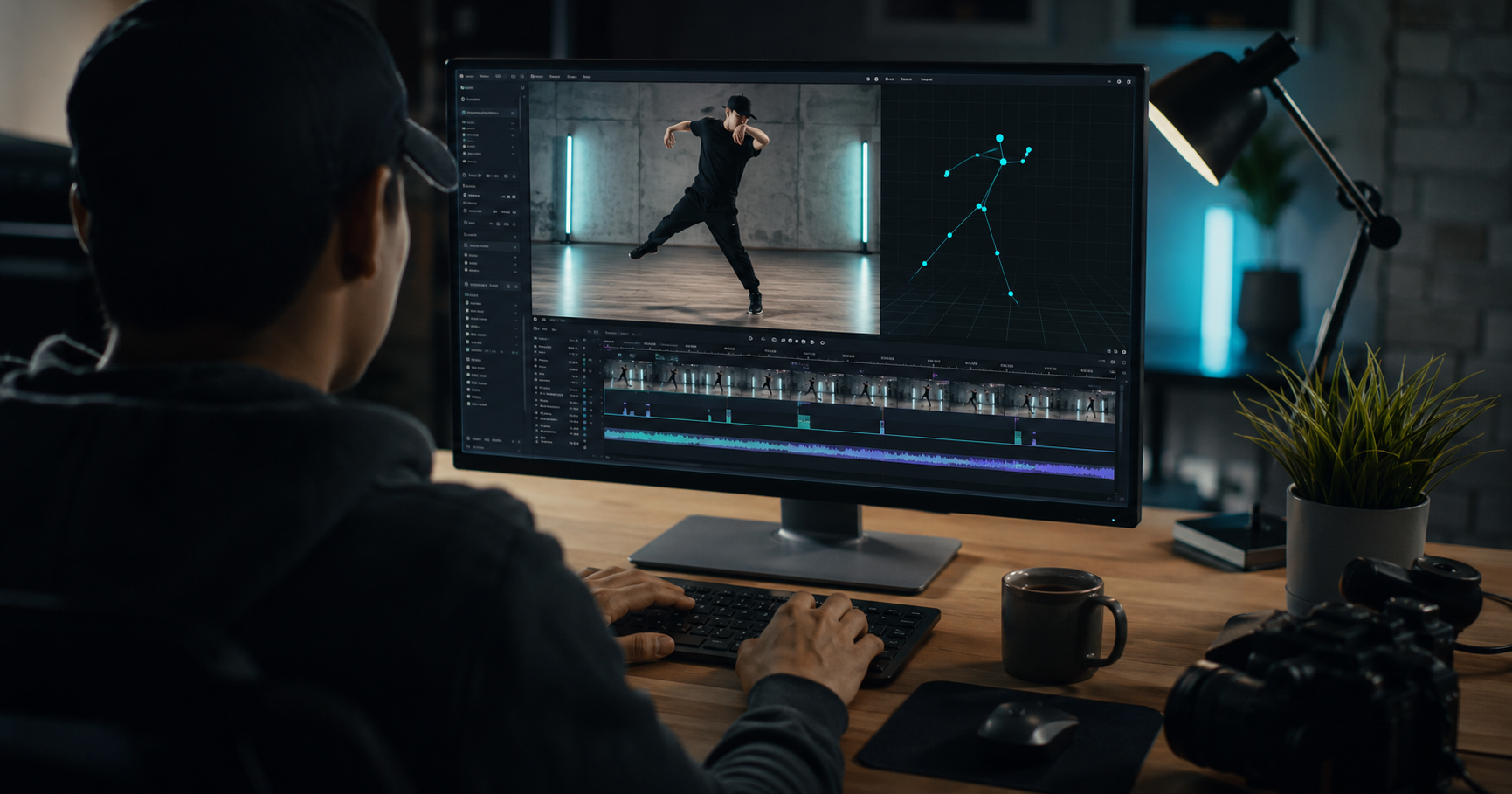
At the same time, AI-assisted editing and motion tools are changing what creators can do with that footage. Automatic reframing, background cleanup, captioning, beat detection, motion tracking, generative transitions, and dance-comparison systems can make learning and publishing faster. The opportunity is real, but so are the questions about authorship, consent, likeness, and cultural credit.
Dance-Practice Videos Changed How Choreography Travels
K-pop helped establish the dance-practice video as a major global format. A fixed or lightly moving camera, plain studio clothing, and a clear view of the full formation gave viewers something the official music video often could not: uninterrupted choreography. Fans could see who moved where, how transitions worked, and what the dancers were actually asked to perform.
That transparency created a learning ecosystem. Viewers slowed clips down, mirrored them, made tutorials, posted attempts, and returned to compare progress. The choreography became a text people could study rather than a visual effect they could only admire.
The same logic now appears across street dance, commercial choreography, ballroom, line dance, studio training, and concert rehearsal. Creators are showing first attempts, teaching assistants marking movement, dancers cleaning formations, and choreographers explaining why a phrase changed. Audiences are not losing interest when they see the labor. They are often becoming more invested.
“The finished performance shows what happened. The practice clip shows how knowledge moved from one body to another.”
The Process Is Content — and Education
A useful practice clip can teach more than steps. It can reveal how professionals take correction, how dancers mark to conserve energy, how spacing is negotiated, how texture changes with music, and how repetition builds confidence. It also makes mastery look human. Young dancers see that strong performers miss counts, ask questions, and improve through work.
This matters in an industry shaped by comparison. Highly edited dance content can make technique appear instant. Practice culture restores time to the picture. The viewer sees the gap between idea and execution, and that gap becomes encouraging rather than embarrassing.
Research into online dance learning is moving in the same direction. Recent systems explore automatic segmentation of choreography, motion simplification for novice learners, pose comparison, and AI-assisted ideation. The strongest use cases do not replace the teacher or dancer. They help people see, repeat, compare, and understand movement more clearly.
The New Dance-Content Vocabulary
Practice clip — A rehearsal or studio performance presented with minimal visual obstruction.
Learning diary — Multiple attempts showing progress rather than only the successful take.
Breakdown — Counts, directions, textures, or transitions explained for learners.
Motion-reactive edit — Graphics, camera effects, or visual elements that respond to body movement.
AI-assisted edit — Human dance footage enhanced through tools such as reframing, captioning, cleanup, tracking, or generative transitions.
AI-generated dance — Movement or a dancing figure synthesized by a model; this must be labeled differently from human performance.
What AI Can Do Well for Dance Creators
AI can remove technical friction. A solo creator can automatically create vertical, square, and horizontal versions of one rehearsal. Speech-to-text can caption a choreographer's explanation. Tracking can keep a moving dancer centered. Segmentation can identify phrases for practice loops. Visual cleanup can reduce distractions. Translation tools can help instruction cross language barriers.
For educators, the possibilities are especially useful. A learner may be able to compare timing or body position without waiting for the next class. A complex phrase can be divided into smaller units. A teacher can prepare accessible versions for students with different experience levels. None of this eliminates the need for artistic judgment. It gives the teacher and dancer more ways to communicate.
AI can also support previsualization. Choreographers may test camera pathways, stage spacing, or rough motion ideas before a full cast arrives. Used responsibly, the tool becomes a sketchbook — not the author.
Where the Line Must Be Drawn
The same technology can be used to create synthetic dancers, copy a recognizable style, alter a person's body, or make someone appear to perform movement they never consented to. That is not a minor production choice. Dance is tied to identity, labor, training, and cultural lineage. A generated body can obscure all four.
DMM recommends a simple distinction: enhancement should preserve the truth of the performance; generation should be clearly labeled. When AI changes who appears to be dancing, what movement was performed, or who created the choreography, the audience deserves disclosure.
Creators should also ask whether the tool has permission to use the footage, whether collaborators agreed to upload their likeness, who owns the generated output, and whether a style prompt is borrowing from a living choreographer without credit. Speed does not cancel responsibility.
“AI may help package movement, analyze movement, or sketch movement. It should not quietly erase the human being who made the movement matter.”
A Credit Standard for Practice and AI-Enhanced Dance Content
Every practice clip should identify the choreographer, dancers, music, studio or location, and editor when those roles are known. If the clip teaches another creator's routine, that relationship should be stated. If AI tools materially changed the image or motion, the description should say so.
A practical credit line might read: Choreography by ___. Performed by ___. Rehearsal filmed at ___. Edited with AI-assisted reframing and captions; original human movement unchanged. That sentence protects clarity without turning the post into a technical report.
For generated movement, the standard should be stronger: identify that the dancer or sequence is synthetic, do not use a real person's likeness without permission, and do not imply a human choreographer performed or approved work they did not create.
The Future of Dance Content Is More Honest, Not Less Human
The rise of practice video is a healthy correction. It places dancers, choreographers, assistants, teachers, and rehearsal labor closer to the center of the story. It shows that excellence is built rather than downloaded.
AI can support that honesty when it improves access, reduces repetitive editing, and helps learners understand movement. It becomes a threat when it uses the appearance of dance while removing the dancer, the creator, or the history.
The most powerful new format may therefore be the simplest: a human body, a clear frame, visible work, and enough context for the audience to know whose movement they are watching. Technology should help us see that more clearly.
Frequently Asked Questions
What is practice-video culture in dance?
It is the growing audience and creator practice of publishing rehearsals, learning attempts, studio run-throughs, tutorials, corrections, and progress clips as meaningful content rather than hiding everything except the final performance.
Are dance-practice videos the same as tutorials?
No. A practice video usually shows the complete choreography clearly, while a tutorial actively explains how to perform it. Many creators combine the two formats.
How can dancers use AI responsibly?
Use it to improve access and workflow — such as captions, reframing, tracking, segmentation, translation, and cleanup — while preserving consent, truthful representation, and full choreographic credit.
Should AI-generated dancers be labeled?
Yes. Audiences should be told when the person or movement is synthetic, especially when the content could be mistaken for a real dancer or real performance.
Can AI replace a choreographer?
AI can generate options and assist analysis, but choreography also requires cultural knowledge, musical interpretation, embodied judgment, collaboration, and responsibility. Those human roles remain central.
Watch: BLACKPINK — “Playing With Fire” Dance Practice Video
BLACKPINK — “Playing With Fire” (© YG Entertainment), embedded as an iconic example of dance-practice culture for media-literacy discussion. Confirm the official embed remains available before publication.
Continue Your Journey
Explore more from the Dance Styles Hub and discover how dancers across every genre are shaping culture, community, and the future of movement.
• Celebrating Black Creative Directors & Choreographers — The visionaries shaping culture from behind the scenes
• The Business of Dance — Building a sustainable career in the dance industry
• Empowerment Workbooks & Guides — Tools for individuals, families, and young people ready to grow
• Join the Dance Mogul Community — Connect with the global dance community
© 2026 Dance Mogul Magazine LLC | dancemogul.com | Inspiring Self-Empowerment Through Dance Culture