
Exclusive Interview | Street Dance | Where Are They Now
Tofo Tofo Dancers: How WTOFO Carried Maputo to the World Stage
Mario Buce and Xavier Campione danced at a wedding in Mozambique. A stranger uploaded the clip. Beyoncé found it. Fifteen years later, the movement they gave away is still traveling.
By Dance Mogul Magazine | Originally published in the Dance Mogul Magazine print edition | Digitally rebuilt and expanded 2026
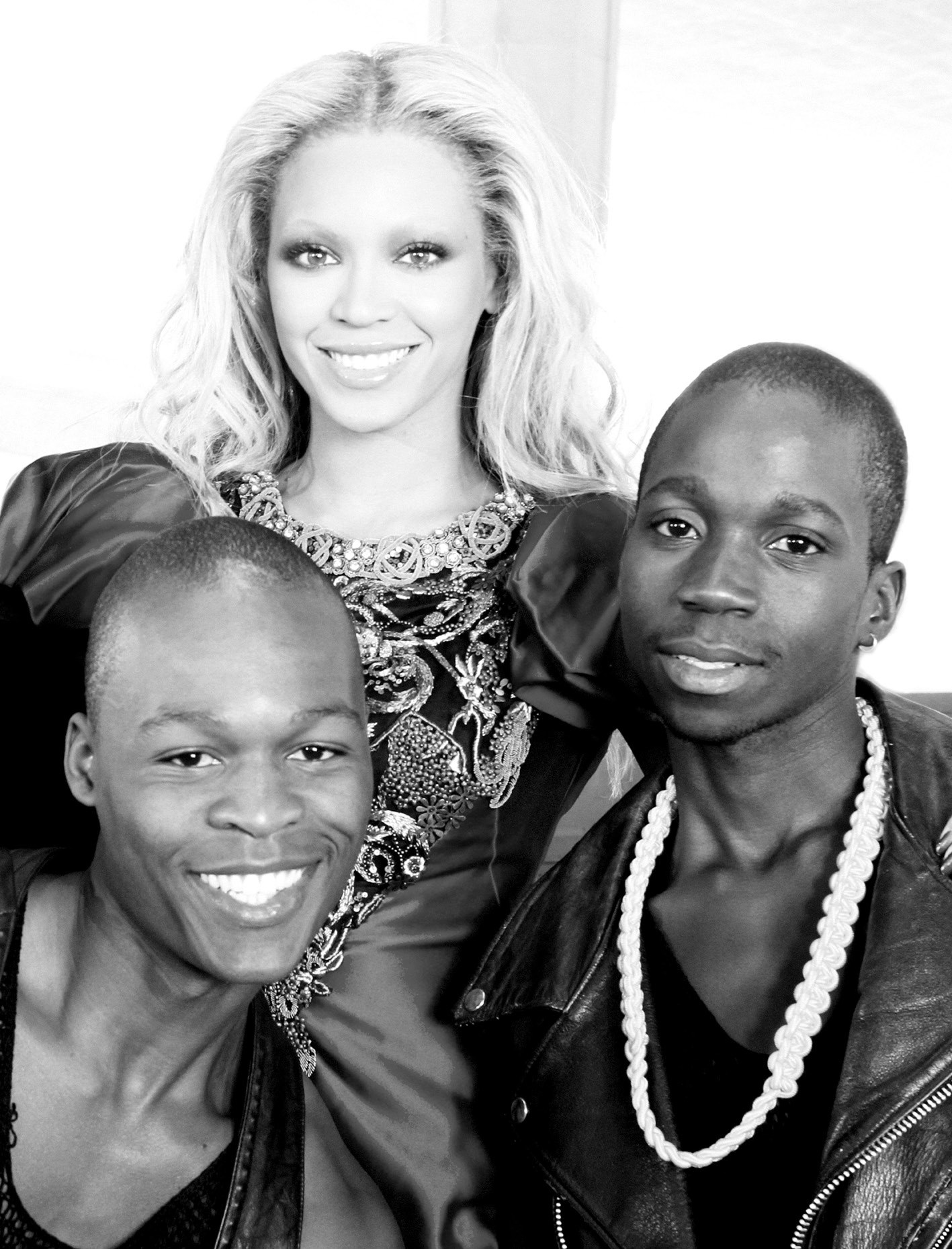
Mario Buce and Xavier Campione with Beyoncé Knowles Carter. Photo courtesy of Parkwood Entertainment.
Artist Spotlight
Mario Abel Buce (Kwela) and Xavier Manuel Campione (Xavitto) still live and work in Maputo, Mozambique. Since the global exposure of 2011, they have shifted their energy from international stages toward teaching — building a W-Tofo dance academy presence at home and passing the vocabulary to the next generation of Mozambican dancers.
A Wedding, a Camera Phone, and a Global Stage
The Tofo Tofo dancers did not audition. They did not have a manager, a reel, or a demo tape. Mario Buce and Xavier Campione were hired to dance at a wedding in Maputo, Mozambique. Someone in the crowd recorded it and put it on YouTube. That clip — two young men from a poor neighborhood, moving with a precision no one in Los Angeles could replicate — became the seed of one of the most talked-about dance sequences of the last two decades.
Beyoncé saw it. Her longtime choreographer Frank Gatson Jr. saw it. A months-long search followed, with help from the U.S. Embassy in Maputo, before the group was located and flown to Los Angeles to teach the routine to Beyoncé and her dancers for the "Run the World (Girls)" video. Dance Mogul Magazine ran the duo's exclusive interview in print at the height of that moment. Nearly fifteen years on, the story reads differently — less as a Cinderella headline, more as a case study in what happens when a culture exports its movement and keeps its home.
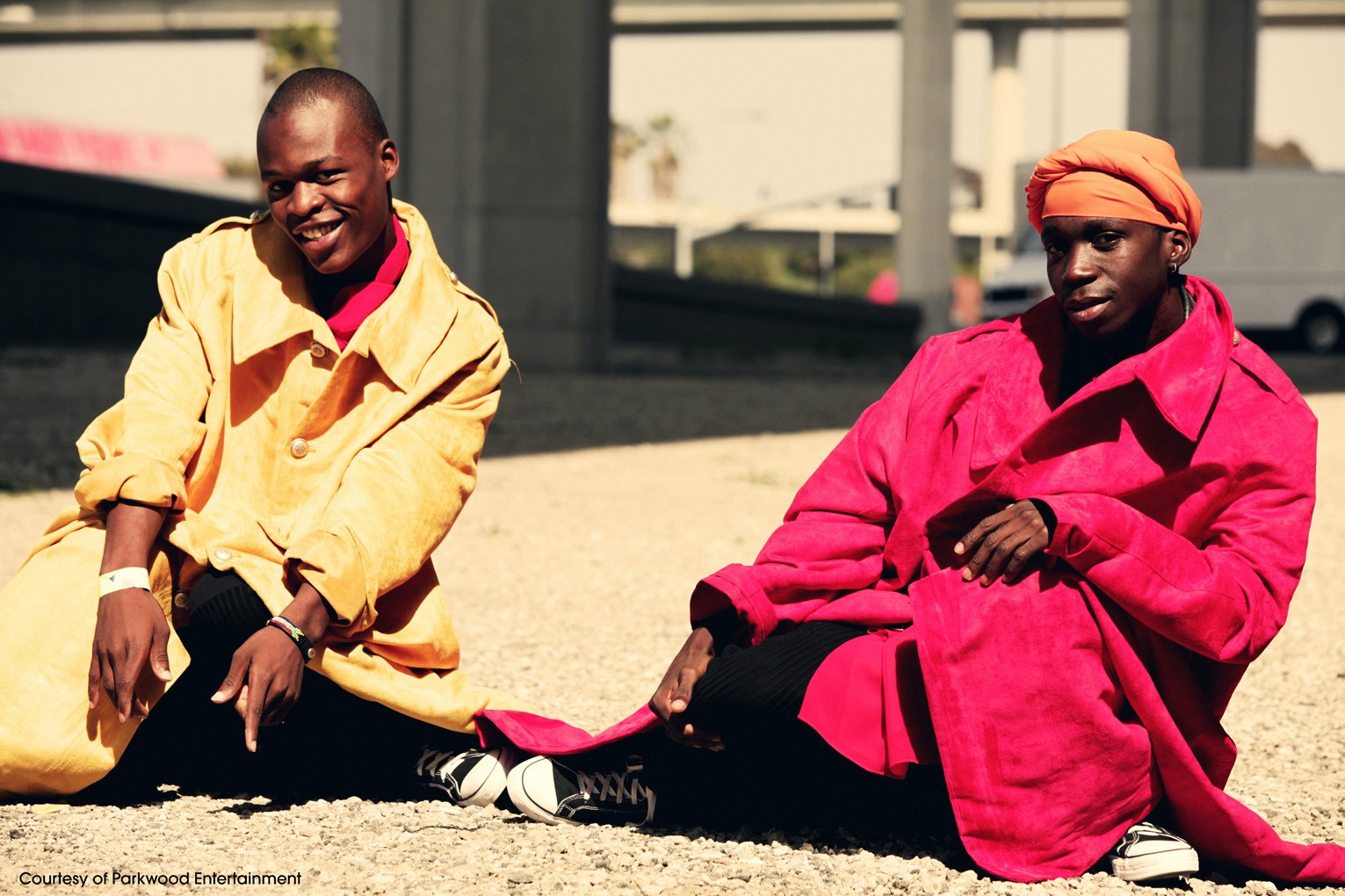
Mario Buce and Xavier Campione. Photo courtesy of Parkwood Entertainment.
The Dance Mogul Magazine Exclusive Interview
Dance Mogul: Congratulations, where are you guys from?
We are Mario Buce and Xavier Campione from Mozambique in Africa. We live in the province of Maputo.
Dance Mogul: What is the dance culture like there?
African dance culture is very rich. Each country has some sort of dance movement that originates from there. Our local and traditional dance there is called Marabenta, which originated in the 1930's and 1940's while our country was still under Portuguese rule. The music is very lively and energetic.
Dance Mogul: Was it hard growing up?
It was very hard growing up because we come from very poor backgrounds. But we grew up together and we both loved to dance so much. It was just something that we did together like playing as children; we just never stopped!
"It was just something that we did together like playing as children; we just never stopped."
Dance Mogul: Did your family support your dancing?
They didn't support our dancing. They were quite against it actually. It wasn't a serious thing to be doing, especially not as a job and when you're born into a poor family. We were always told that we needed to focus on education first and dance could be a hobby.
Our parents are proud of us now for what we have achieved. They saw that we followed our dreams and they just want us to be happy.
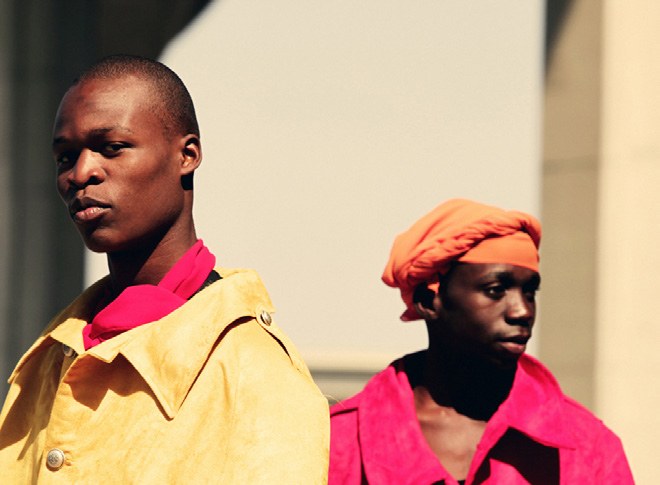
The duo photographed for the original Dance Mogul Magazine feature. Photo courtesy of Parkwood Entertainment.
Dance Mogul: When was your big break in the industry?
When we were contacted by Guido and Caroline at Chokolate, who are now our managers, they said Beyonce wanted to fly us out to the States because she had seen a You Tube clip of us dancing at a wedding and was inspired by our movement for her Run The World Video.
We didn't quite understand what was going on. They were speaking to our translator who also didn't speak great English. They helped us sort out our passports and our visas with the Embassy and the Embassy explained what was going on but we really only understood the scope of what was going on when we actually landed in L.A. It was our first time out of Africa. We were transported from our backyard at home to L.A. to work with Beyonce. We had to teach her how to dance like us. It all happened very quickly. We were not used to that fast pace. It was exciting and scary all at the same time.
We flew to South Africa, stopped over in Paris where Caroline and Guido picked us up and then continued on to L.A. It was the longest journey we had ever been on!
When we got there they put us in a very nice hotel and then we started doing dance rehearsals with all her dancers and met Frank Gatson who asked us to show him our moves. He said that he had looked for dancers all over the U.S. but couldn't find anyone who could move like us. The best thing though was to have appeared in the video. We were not expecting to so that was definitely a highlight for us.
"We were transported from our backyard at home to L.A. to work with Beyonce. We had to teach her how to dance like us."
Dance Mogul: What advice do you have for the kids in your country that want to dance like you?
Really just to keep the faith and always believe in yourself. Believe that you too can also be winners if you persist and work hard at what you love. Keep dancing and someone will notice you like they noticed us.
Dance Mogul: What was it like to dance for Mrs. Carter in Stockholm?
It was a fantastic experience for us! We had no idea we were going to get up on stage with her so it was a big surprise!
We were in Stockholm doing a dance workshop and it happened to be the day before her concert. Our managers told Beyonce's team that we were in town and they said she was happy to meet us backstage. So we were so pleased to be able to see her again.
That alone was amazing for us, especially because we know how busy she is and how much she has to prepare before her shows.
We were watching the show from the backstage and just before the end our managers came to get us to make sure we wouldn't get lost in the crowds. We stood at the side of the stage and she out of the blue signaled for us to come up and join her! So we ran on and while she was thanking the band and the dancers, we understood that she wanted us to show the crowd some moves so we did! It was totally unexpected but such a great moment!
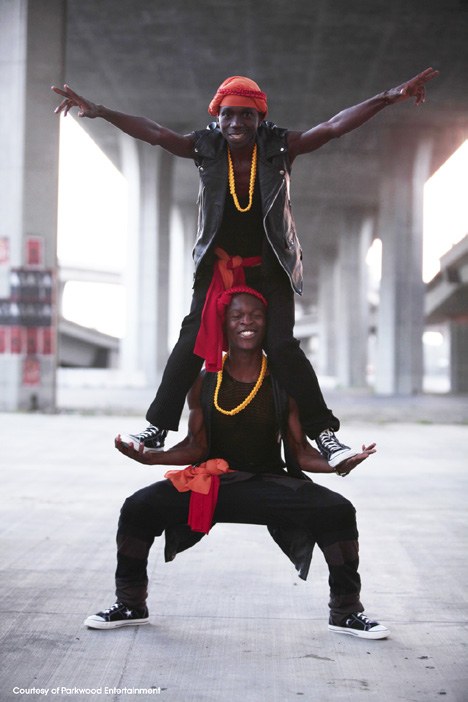
Teamwork is the through-line of every WTOFO routine. Photo courtesy of Parkwood Entertainment.
Dance Mogul: What makes your style unique?
We always try to be creative and find new, different movements; not to follow the norm. And I think that's what attracted Beyonce to us.
She must have seen something in us which was special. We don't have the luxury of dance classes or anything so we work together and everything Mario can do, I can do too. We're at the same level technically and we're always pushing each other to do better. We're always together, dancing and coming up with new ideas and new routines. We really love music, especially South African house. And we try and come up with beats and collaborate with DJS to make our music unique and fit with our movement. 'Tofo' relates to the movement of the hips, most of the movement happens below the waist while our top area is relatively still. People call us Tofo Tofo because that was the name of the You Tube clip, but our group name is WTOFO.
"We don't have the luxury of dance classes or anything so we work together, and everything Mario can do, I can do too."
Dance Mogul: What are your future plans for your dance careers?
After Beyonce's 'Year of 4' documentary came out we were followed by a Swedish documentary crew who was very intrigued by our story, and who have captured our lives since the 'Run The World' Video. They came all the way to Maputo to film us and also followed us to Stockholm. So we can't wait to see how that turns out.
We had a great turnout at the Swedish dance workshop so we're hoping we can do more of those around the world. And while we were there we did a performance at a club night so the more we can perform the better for us. Otherwise people hire us here to work locally at events and parties.
Dance Mogul: Is there anyone you would like to thank for helping you on your journey?
We have to thank Beyonce of course for giving us the opportunity to share our dance with the world and giving us a platform. She was also very generous to us and our families and we will never forget her kindness.
We want to thank Frank Gatson for organizing us and guiding us through rehearsals, Guido Fabris and Caroline Khouri for finding us and looking after us, and also the U.S Embassy in Maputo for helping us get to the U.S in time and being patient and super helpful.
We'd also like to thank Viktor and Andreas the filmmakers for believing in our story and keeping it alive.
Kwaito, Pantsula, and the Roots Beneath the Routine
To understand WTOFO, you have to understand what they are standing on. Their movement sits at the meeting point of two traditions. Pantsula rose in the 1980s in South African townships — most prominently in the streets of Soweto — as an energetic, improvisational expression of township life, and has since moved out of the townships into commercial and mainstream spaces. It is often described as a flat-footed African tap-and-glide style, performed with props like brooms, cans, and sticks.
The music is kwaito — a South African form of house music that developed in the 1990s, its name derived from the Afrikaans word for strict or angry, though in common use it translates closer to "cool." Mario and Xavier layered Mozambican sensibility onto both, and the result was something neither South Africa nor Los Angeles had a name for. As they explain in the interview above, "tofo" points to the hips: the movement lives below the waist while the upper body stays quiet. That contradiction is what made it un-copyable.
It is worth being precise about this, because the record has often been sloppy. The choreography that made "Run the World (Girls)" famous was not invented in a studio. It was learned, in person, from two Mozambican men who had been refining it at weddings and street events in Maputo for years before any camera from outside Africa arrived. Frank Gatson himself told MTV that no one on his team could imitate the movement — they had to bring the Tofo Tofo dancers in to teach it. That is not a footnote. That is authorship.
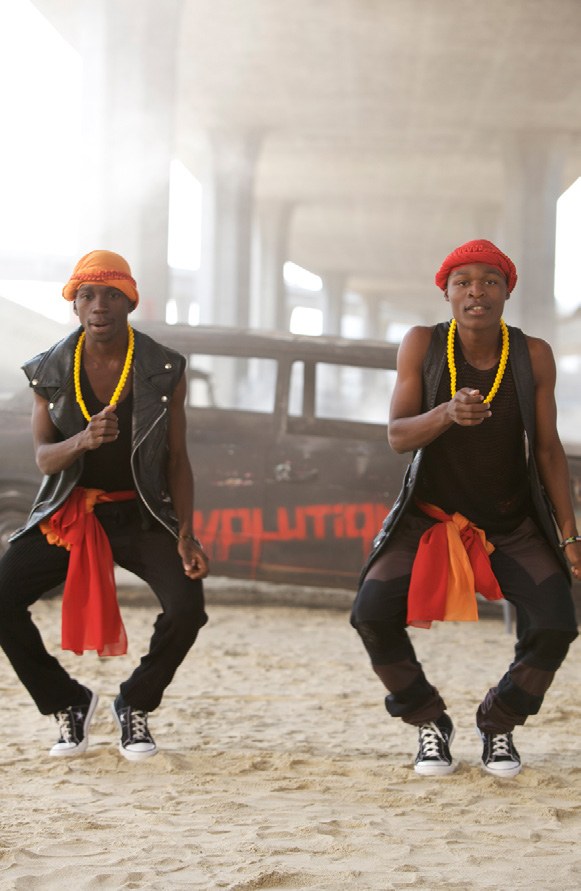
WTOFO in Maputo. Photo courtesy of Parkwood Entertainment.
Scale and Reach: What the Clip Actually Did
The scale of what followed is easy to underestimate. Beyoncé's "Run the World (Girls)" video won Best Choreography at the 2011 MTV Video Music Awards and Best Dance Performance at the 2011 Soul Train Music Awards — awards that belong, in part, to a movement vocabulary developed in Maputo.
The ripple went further. WTOFO went on to open for Ciara, appear in a concert in Mozambique with the Portuguese electronic group Buraka Som Sistema, and travel to Sweden for a kwaito dance workshop and a performance at the Urban Gala — the Stockholm trip that ended with Beyoncé calling them onstage, as they describe above. They also appeared in a Target commercial tied to Beyoncé's album "4," in an ad campaign sponsored by Coca-Cola, and in the music video for "Xingomana" with Lizha James. In 2018 they joined Beyoncé onstage again at the Global Citizen Festival in Johannesburg.
And at home, the effect was immediate. Mozambican musician Stewart Sukuma, who had featured the duo in his own live shows, told City Press at the time that the video set off a kwaito dance craze in Maputo, and that he hoped the country's youth would take the lesson: if Africa is to make its mark in the world, it has to present something uniquely its own.
The Lesson
Sukuma also noted, in the same 2011 interview, that the duo had no internet at home — they had to go to someone else's house to watch the video they were in. Global reach and local resource are two different things. Exposure is not equity. That gap is the reason a magazine like this one exists.
Where Are the Tofo Tofo Dancers Now?
The Swedish film the duo were waiting on in this interview did get made. Directed by Victor Nordenskiöld, it was titled The Clip – All My Love, Beyoncé. Shadow and Act reported in 2017 that the feature was in post-production and had been acquired by Sweden's national broadcaster, SVT. We were not able to verify a wide international release or streaming availability for the film as of this writing, and we would welcome a correction from the filmmakers or from Mario and Xavier themselves.
What is clearer is the shape of their work now. Mario Abel Buce — known as Kwela — and Xavier Manuel Campione — known as Xavitto — have remained based in Maputo. Their public activity in recent years centers on a W-Tofo dance academy and on local workshops and training, rather than on international touring. Their Instagram and Facebook presences have continued to post performance content into recent years. Reporting on their current activity is thin, which is itself part of the story: the international press that arrived in 2011 did not stay.
Read that against the last line of their own advice above — keep dancing and someone will notice you — and a harder truth surfaces. Being noticed once is not a career. What Mario and Xavier appear to have chosen instead is durable: teaching the next generation of Mozambican dancers in the city that made them, so the vocabulary does not depend on a stranger with a camera phone ever again.
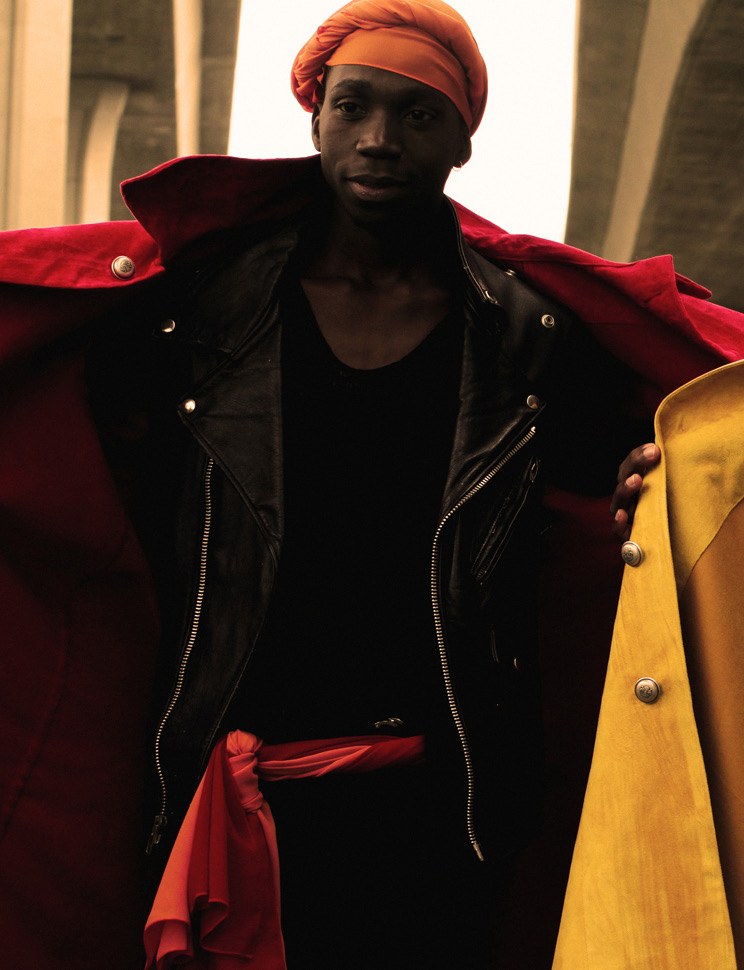
Xavier Campione. Photo courtesy of Parkwood Entertainment.
Why It Matters to Dance Mogul Magazine
Dance Mogul Magazine covered WTOFO in print at a moment when most outlets were writing about Beyoncé and mentioning "two dancers from Africa" in a clause. We put their names in the headline. That editorial choice is the whole thesis of this publication: the people who create the movement deserve to be named, credited, and interviewed at length.
This story also sits at the center of what our Dance Styles Hub exists to document — the lineages that connect Soweto townships, Maputo weddings, Newark street corners, and Los Angeles soundstages. Pantsula and kwaito belong in the same conversation as street dance traditions born in the United States, because the questions are identical: who owns the movement, who gets paid, and who gets remembered.
For fifteen years we have built an archive of exclusive interviews with dancers in their own words, before the industry decides what their story is supposed to mean. Brands, festivals, and cultural institutions looking to partner with a publication that does this work can review our media kit.
Keep Exploring
Trace the global roots of the movement in the Dance Styles Hub, hear from the artists themselves in our Exclusive Interviews archive, or dig into the Street Dance collection.
The Story Continues
The four lines WTOFO gave us for the original print feature have not aged: hard work and dedication; believe in yourself always; if you get turned down, keep trying; dance is a gift that we share. That last one is doing more work than it looks like. They gave the gift away — to a stranger's camera, to a superstar, to a rehearsal room in Los Angeles full of dancers who could not copy it — and they did it without a contract, a credit line, or a guarantee that anyone would say their names afterward.
Dance Mogul Magazine said their names then, and we are saying them again now. Mario Abel Buce. Xavier Manuel Campione. Maputo, Mozambique. If you are a young dancer in Africa reading this, understand that the world already came looking once. It will come again. Be building something worth finding when it does.
Dance Mogul Magazine Exclusive Interview | Photos courtesy of Parkwood Entertainment | © 2026 Dance Mogul Magazine LLC. All rights reserved.