
Dance History • Harlem • Lindy Hop • Legacy
Queen of the Lindy Hop: Norma Miller and the Dance That Shook the World
From the sidewalks outside Harlem’s Savoy Ballroom to international stages and the silver screen, Norma Miller carried the Lindy Hop’s rhythm, history, humor, and cultural authority across nearly nine decades.
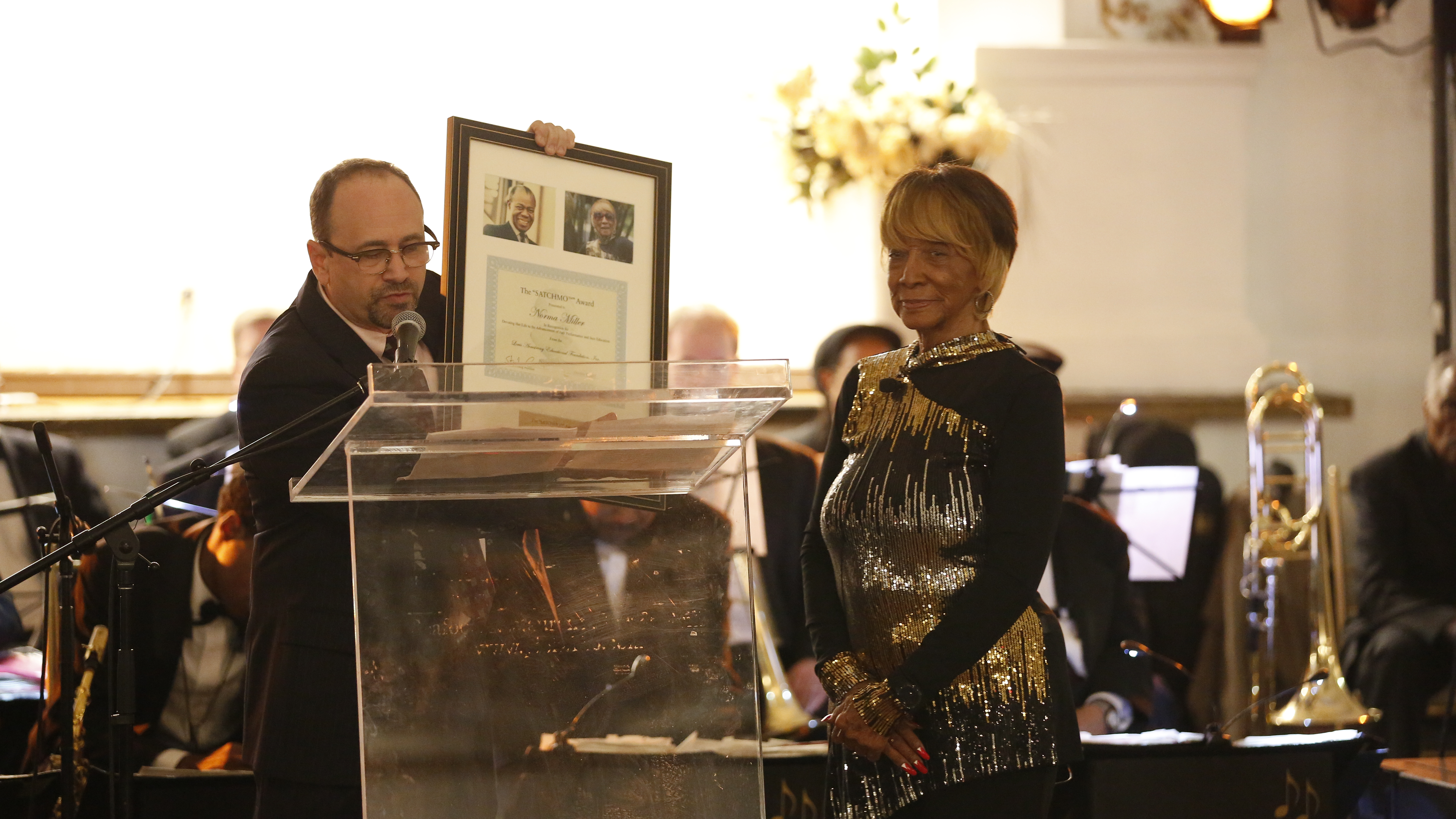
Norma Miller did not simply witness the rise of the Lindy Hop. She helped shape it, perform it, preserve it, and explain its importance to generations who came long after Harlem’s great swing ballrooms had gone quiet. Known internationally as the “Queen of Swing,” Miller became one of the most recognizable living links between the original Savoy Ballroom community and the global swing-dance movement that followed.
Her story begins in Harlem, where Black musicians and dancers were building a new American language from jazz, social dance, improvisation, competition, and community. It continues through touring companies, Broadway stages, Hollywood films, comedy clubs, television, choreography, teaching, and historical preservation. Across each chapter, Miller insisted that the Lindy Hop be understood not as a passing dance craze, but as a major Black American cultural achievement.
Harlem and the Birth of the Lindy Hop
The Lindy Hop emerged in Harlem during the late 1920s, growing from African American vernacular dance traditions and the rhythmic possibilities of swing music. It brought together social connection and individual expression. Partners could move as a unit, separate into improvised “breakaways,” answer the band, challenge one another, and return to the shared pulse of the music.
That balance between structure and freedom made the dance revolutionary. Lindy Hoppers did not merely follow steps. They listened, responded, invented, competed, and communicated. The dance could be playful one moment and breathtakingly athletic the next. Its vocabulary absorbed and transformed earlier forms, including the Charleston, tap, jazz steps, and the Breakaway, while creating a distinctive identity of its own.
The Savoy Ballroom became the dance’s most celebrated home. Opened on Lenox Avenue in 1926 and remembered as the “Home of Happy Feet,” the Savoy offered dancers a place where elite musicians, neighborhood regulars, visiting celebrities, and emerging innovators met on the same floor. Its famous band battles pushed musicians and dancers to greater heights, while the ballroom’s social environment allowed Black artistry to define the culture rather than remain at its margins.
The Girl Outside the Savoy
Norma Adele Miller was born in Harlem on December 2, 1919. She grew up near the Savoy and watched its dancers from outside because she was too young to enter. The music still reached the street, and the sidewalk became her first public stage.
According to biographical accounts preserved by the National Endowment for the Arts and the Frankie Manning Foundation, Miller was noticed while dancing outside the ballroom at approximately twelve years old. In 1934, as a teenager, she joined Whitey’s Lindy Hoppers, the professional company organized by Herbert “Whitey” White.
That invitation changed her life. Whitey’s Lindy Hoppers represented the most visible and technically advanced edge of Savoy dance culture. The company took the Lindy Hop beyond Harlem through live engagements, international touring, stage productions, and motion pictures. Miller entered a demanding professional world while still remarkably young, learning how to preserve the dance’s improvisational spirit while meeting the precision required by theaters and film sets.
Norma Miller did more than perform the Lindy Hop. She carried its memory, humor, history, and cultural authority into the modern era.
Dance Mogul Magazine
Whitey’s Lindy Hoppers and the Power of the Ensemble
Whitey’s Lindy Hoppers were not simply a collection of talented individuals. They were an artistic community whose members sharpened one another through contests, rehearsals, social dancing, performance, and constant invention. Dancers such as Frankie Manning, Al Minns, Leon James, Willa Mae Ricker, Ann Johnson, Billy Ricker, and Miller helped develop an approach that could be rhythmically intricate, theatrically clear, and physically astonishing.
The ensemble’s signature “air steps” expanded the visual possibilities of partner dance. These lifts, flips, and assisted aerial movements required timing, trust, strength, and musical awareness. Yet the spectacle never replaced the groove. At its best, the athleticism remained connected to the band, the floor, and the social-dance foundation from which the Lindy Hop had grown.
Why Whitey’s Lindy Hoppers Matter
- They carried a Harlem-born social dance into major theaters, touring circuits, and motion pictures.
- They preserved Black improvisational practices while adapting them for ensemble performance.
- They helped establish the Lindy Hop as both a community dance and a serious professional art form.
- Their surviving films remain essential teaching documents for dancers, historians, and choreographers.
Hollywood, Hellzapoppin’, and a Legacy in Motion
Film allowed Norma Miller and her fellow Lindy Hoppers to leave more than written descriptions behind. Their movement could be seen—its speed, syncopation, humor, partnering, and daring preserved frame by frame.
Miller appeared with Whitey’s Lindy Hoppers in the Marx Brothers’ A Day at the Races in 1937. She also appeared in Keep Punchin’ in 1939 and in the celebrated Lindy Hop sequence from Hellzapoppin’ in 1941. In the latter, the dancers perform in service uniforms while unleashing a routine of extraordinary musicality and athletic force. Miller appears as one of the dancing cooks.
The sequence remains one of the most studied records of high-level Lindy Hop performance. Contemporary dancers repeatedly return to it to examine rhythm, posture, partnership, transitions, air steps, and the individual style each dancer maintained within the ensemble. Its continuing influence demonstrates how film can become an archive—especially when the institutions that originally benefited from Black performance did not always preserve or credit that history with equal care.
Miller’s screen presence also matters because it places a young Black woman at the center of one of American dance history’s most technically demanding traditions. She was not merely a background figure supporting a star. She was one of the artists generating the excitement.
Choreographer, Comedian, Author, and Cultural Witness
Miller’s career continued far beyond the peak years of Whitey’s Lindy Hoppers. She formed the Norma Miller Jazz Dancers, worked in stage entertainment, and built a parallel career in comedy. Her professional relationship with comedian Redd Foxx led to nightclub work and appearances connected to his television career, including Sanford and Son.
She also remained active as a choreographer and consultant. Her later credits included work on Spike Lee’s Malcolm X and Debbie Allen’s television production Stompin’ at the Savoy. These projects placed her firsthand knowledge inside modern interpretations of Black history rather than treating that knowledge as distant research.
In 1996, Temple University Press published Swingin’ at the Savoy: The Memoir of a Jazz Dancer, written by Miller with Evette Jensen. The book is more than a personal success story. It is an eyewitness account of the people, labor, touring conditions, humor, ambition, racial realities, and creative relationships that shaped the Swing Era.
Miller understood that cultural memory could disappear when the people who lived it were not invited to tell the story. By speaking, writing, teaching, and appearing in documentaries, she became a historian of her own community. Her voice helped ensure that the Lindy Hop revival would reconnect with Harlem’s originators rather than celebrate the dance while erasing the people who made it.
Norma Miller’s Life in Motion
Norma Adele Miller is born in Harlem, New York City, on December 2.
She is noticed dancing outside the Savoy Ballroom while still too young to enter regularly.
Miller joins Whitey’s Lindy Hoppers and enters professional touring and performance.
She appears in the Lindy Hop sequence in A Day at the Races.
She appears in Keep Punchin’.
She performs in the landmark Whitey’s Lindy Hoppers sequence in Hellzapoppin’.
Her dance knowledge contributes to the screen histories represented in Malcolm X and Stompin’ at the Savoy.
Swingin’ at the Savoy: The Memoir of a Jazz Dancer is published by Temple University Press.
The National Endowment for the Arts names Miller a National Heritage Fellow, one of the United States’ highest honors in folk and traditional arts.
Miller dies at age 99 on May 5 at her home in Fort Myers, Florida.
Norma Miller’s Legacy Today
Today, Lindy Hop communities exist across the United States and around the world. Dancers gather for social events, competitions, workshops, historical discussions, live-band weekends, and commemorations of the original Savoy generation. Miller’s name remains central because the modern movement inherited more than steps from her. It inherited stories, standards, corrections, humor, and a demand for cultural recognition.
Her legacy also carries a warning. A dance can become globally popular while its originators become invisible. Miller repeatedly redirected attention to the Black dancers and musicians who built the form. That work remains unfinished whenever Lindy Hop is presented without Harlem, without the Savoy, or without the social and racial history that shaped its development.
The most meaningful tribute to Norma Miller is therefore not simply to reproduce a vintage routine. It is to study the history, credit the community, respect the music, support living culture bearers, and understand improvisation as a form of knowledge.
The dance survived because the people who created it kept teaching the world how to remember.
Dance Mogul Magazine
Quick Facts About Norma Miller
Norma Miller FAQ
Why was Norma Miller called the Queen of Swing?
Miller earned the title through her long career as a Lindy Hop performer, choreographer, teacher, historian, author, and ambassador. She connected the original Savoy Ballroom generation with later swing-dance communities around the world.
How old was Norma Miller when she began dancing professionally?
She was noticed dancing outside the Savoy Ballroom while still a child and joined Whitey’s Lindy Hoppers as a teenager in 1934.
Which famous films featured Norma Miller?
Her best-known early film appearances include A Day at the Races (1937), Keep Punchin’ (1939), and Hellzapoppin’ (1941).
What award did Norma Miller receive from the National Endowment for the Arts?
She received an NEA National Heritage Fellowship in 2003. The honor recognizes major contributors to the nation’s folk and traditional arts.
Why is Norma Miller important to dance history?
She was both a creator and a cultural witness. Her performances helped define the public image of the Lindy Hop, while her teaching, memoir, interviews, and later choreography preserved the Black history behind the dance.
More From Dance Mogul Magazine
Sources
- National Endowment for the Arts — Norma Miller, 2003 National Heritage Fellow
- Library of Congress — National Visionary Leadership Project interview materials
- Temple University Press — Swingin’ at the Savoy
- Frankie Manning Foundation — Norma Miller biography
- Smithsonian National Museum of American History — Savoy Ballroom and swing-era history