
Industry Guide · Health & Wellbeing
Dance & Mental Health: The Healing Power and the Hidden Pressures
Movement can be medicine for the mind — and the dance world can also carry real pressure. A Dance Mogul Magazine look at both truths, and where to turn for support.
By Dance Mogul Magazine | Industry Guide
Two Truths About Dance and the Mind
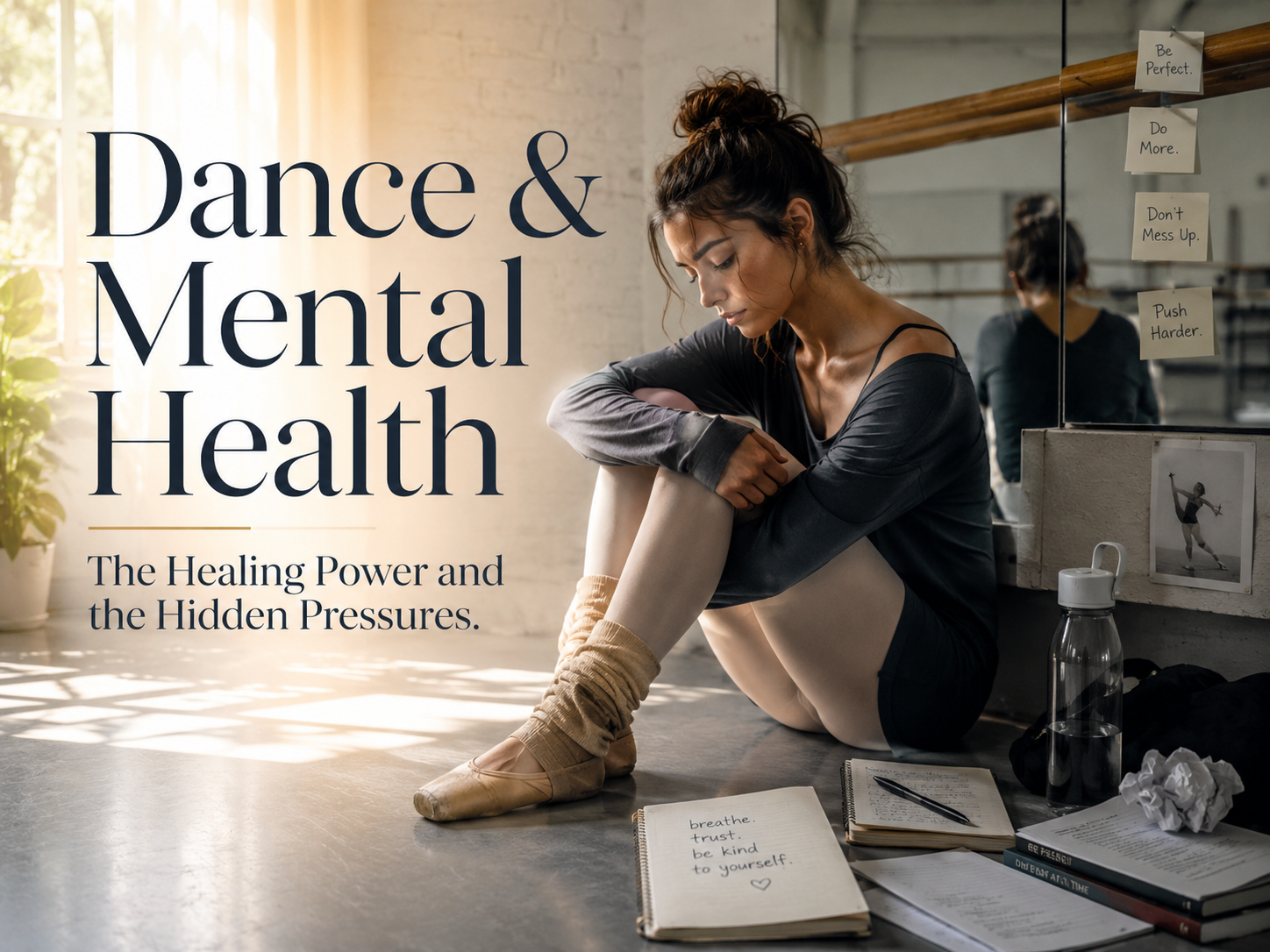
Dance holds two truths at once. For many people, movement is one of the most powerful tools for healing the mind — a way to process emotion, reconnect with the body, and feel joy. And for many dancers, the same art form carries intense psychological pressure: the pursuit of perfection, the scrutiny of the body, the highs and lows of performance. Talking honestly about dance and mental health means holding both of these truths with care. This guide explores the healing, names the pressures plainly, and points toward real support.
At Dance Mogul Magazine, we believe a dancer's wellbeing matters as much as their craft. You cannot build a lasting legacy on a foundation that is quietly breaking. So let's talk about the mind with the same seriousness we give the body.
The Healing Power of Movement
The evidence that dance supports mental health is strong and growing. In a UCLA Health study of a thousand dancers around the world, the vast majority reported that free, expressive movement helped them cope — including the overwhelming majority of those living with anxiety or depression — and nearly all said the practice improved their mood. Participants described feeling more present, more relaxed, and more aware of their emotions.
There is a clinical field built on this: dance/movement therapy, a recognized creative-arts therapy that uses movement to support emotional, cognitive, and social wellbeing. Reviews of controlled studies have found dance and dance/movement therapy can meaningfully reduce symptoms of depression and anxiety. The reasons make intuitive sense. Trauma, anxiety, and depression often cause people to disconnect from their bodies; movement is a way back in. Dance engages the brain's reward system, releases stress, and — when done with others — builds the social connection and belonging that are themselves protective for mental health.
The Pressures the Dance World Doesn't Always Name
Dancers are athletes and artists at once, and that dual demand carries real psychological weight. Among the most common challenges the research and the community point to:
- Performance anxiety. The pressure to be flawless can produce racing thoughts, physical tension, and self-doubt before or during a performance.
- Perfectionism and self-criticism. A culture of constant correction can turn a healthy drive to improve into a harsh inner voice that never rests.
- Body image and eating concerns. Dance's emphasis on the body makes dancers vulnerable to body-image struggles and disordered eating — serious issues that deserve professional, compassionate care, never silence or shame.
- Depression and isolation. The lows can be lonely, and withdrawal can compound the very feelings a dancer is fighting.
- Injury and identity. When an injury sidelines a dancer, the loss of the thing that defines them can hit the mind as hard as the body.
Naming these openly is not weakness — it is the first step toward a healthier culture. The most resilient studios and companies are the ones where dancers can say "I'm struggling" without fear it will cost them the next role.
Finding Real Support
The most important thing any dancer can know is that help exists and seeking it is a sign of strength. Working with a licensed mental health professional — a therapist or counselor — is one of the most effective steps for performance anxiety, depression, body-image concerns, and more. Research on dancers points to approaches such as mindfulness and compassion-based practices that can reduce performance anxiety and improve focus and wellbeing, alongside professional treatment when it's needed.
Support is not only clinical. Rest and recovery, honest relationships, a teacher who leads with care, and a community that values the person over the performance all protect a dancer's mind. If you carry responsibility for other dancers — as a teacher, director, or parent — building that culture of care is part of the job. Inner strength and outside support work together; we explore the mindset side in our companion piece, Self-Empowerment Through Dance: How Movement Builds Confidence, Identity, and Power.
If You're Struggling, Help Is Available
You don't have to carry it alone. Reaching out is a sign of strength, not failure.
988 Suicide & Crisis Lifeline (U.S.): call or text 988, or visit 988lifeline.org — free and confidential support, 24/7.
National Alliance for Eating Disorders: helpline and referrals at allianceforeatingdisorders.com.
Find a therapist: a licensed mental health professional can offer personalized, ongoing care.
A Healthier Future for Dancers
Dance Mogul Magazine has long championed mental fortitude — but real fortitude is not pretending you're fine. It is knowing your own limits, building your support, and choosing the long game over the next applause. The strongest dancers are not the ones who never struggle; they are the ones who learn to care for the instrument that carries everything they do: themselves.
If this article reflects something you're carrying right now, please know that support is real and within reach — and that the world is better with you in it. Use the resources above, lean on people you trust, and treat your mind with the same devotion you give your craft.
Resources & Further Reading
From Dance Mogul Magazine:
- Self-Empowerment Through Dance: Find Your Confidence and Power
- Dance Mogul Magazine Workbooks & Wellbeing Tools
- Explore the Dance Mogul Magazine Dance Styles Hub
Trusted external resources:
- 988 Suicide & Crisis Lifeline
- National Alliance for Eating Disorders
- American Dance Therapy Association (ADTA)
The Dance Mogul Mission
Dance Mogul Magazine exists to inspire self-empowerment, celebrate cultural excellence, and equip the global dance community with the tools to build lasting legacies — including the mental and emotional wellbeing that makes everything else possible. Explore our resources and take care of yourself.
Mental health is a sensitive subject. This article is for general information and is not a substitute for professional care. If you or someone you know is struggling, the resources above can help you find the right support.