
FEATURED CHOREOGRAPHER | CREATIVE DIRECTION | THE LEGACY
Jamaica Craft: The Choreographer Who Turned Movement Into Full Creative Authority
A self-taught kid in Kansas City taped music videos off the television and learned every routine. Three decades later she is staging Ciara, Usher, the Pynk on P-Valley and a cotillion on network daytime — and deciding which unknown dancer gets a stage next.
By Dance Mogul Magazine | Featured Choreographer | August 2026
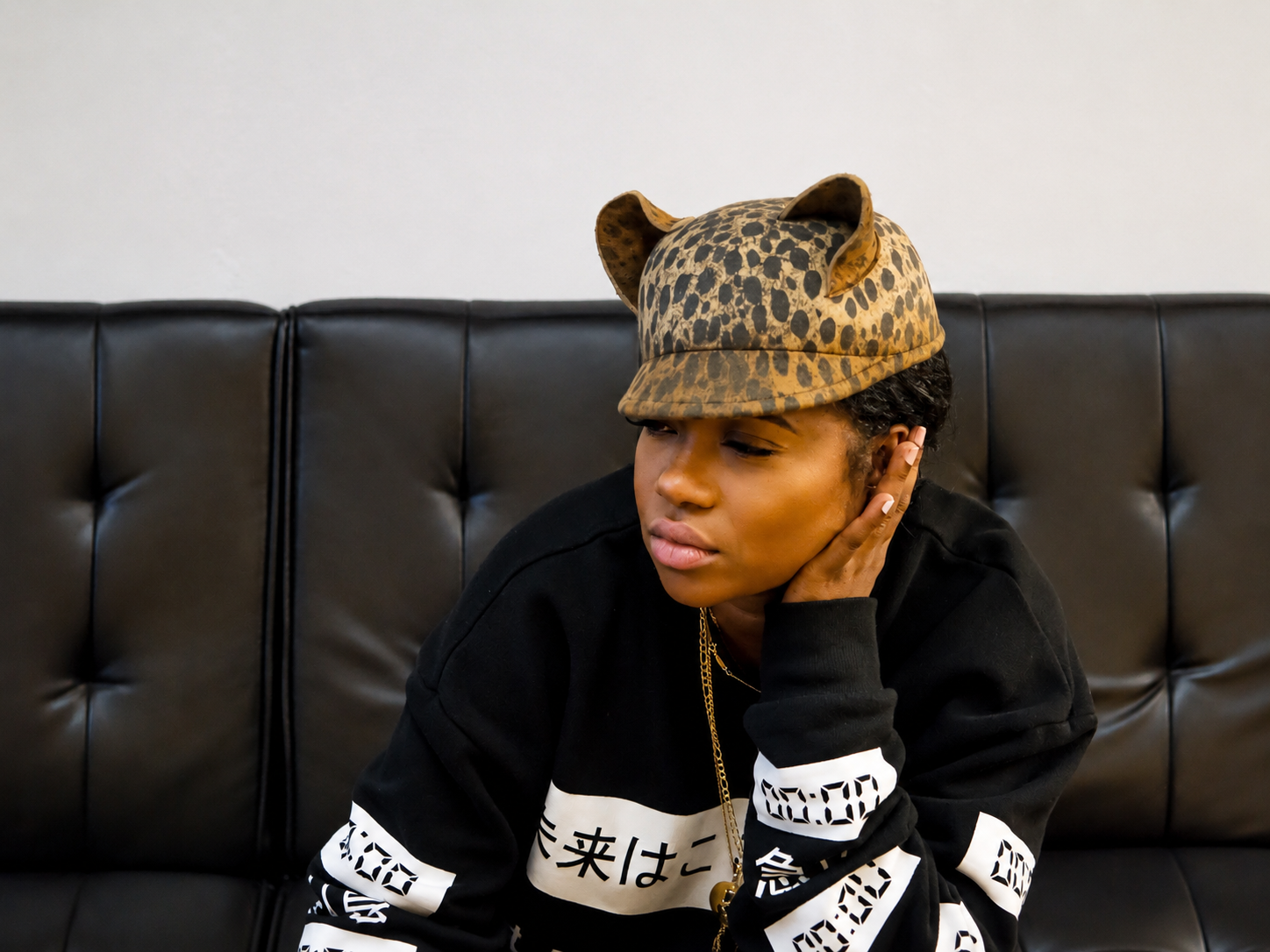
Jamaica Craft — choreographer, artist developer, creative director | Dance Mogul Magazine
ARTIST SPOTLIGHT
Jamaica Craft is a Kansas City-raised, self-taught choreographer, artist developer and creative director whose credits run from arena stages to prestige television. She has been the driving movement force behind Ciara's performances since early in the singer's career, and has worked with Usher, Justin Bieber, Ne-Yo, Missy Elliott, Nicki Minaj, Jessie J, Shakira and Tinashe. She has received at least six MTV Video Music Award nominations for Best Choreography across two decades, and she built the movement language of Empire, Step Up: High Water, Lovecraft Country and P-Valley, and choreographed Universal's film adaptation of Dear Evan Hansen. She founded the apparel line Jam Session Gear and its 1:11 Project. In 2025 she sat as a judge for Ciara Presents: Dance Icon; in May 2026 she choreographed the three-episode cotillion arc on CBS's Beyond the Gates; and her third season of P-Valley is finished and waiting on Starz.
File // At a Glance
NAME — Jamaica Craft
ROLES — Choreographer | Artist Developer | Creative Director | Designer
ORIGIN — Kansas City, Missouri
TRAINED — Self-taught
FIRST BREAK — MC Hammer
SIGNATURE ARTIST — Ciara, since the 2004 album Goodies
SCREEN WORK — Empire | Lovecraft Country | P-Valley | Dear Evan Hansen | Beyond the Gates
BRAND — Jam Session Gear | The 1:11 Project
MANAGEMENT — King Creative Group
|
30+ Years in the Industry |
20+ Years as Ciara's Choreographer |
6+ Documented VMA Nominations |
$2.58M Raised for Youth Programs |
You have almost certainly seen Jamaica Craft's work. You may not have seen her name attached to it. That gap — between the labor and the label — is one of the oldest problems in dance, and it is exactly why this story belongs in Dance Mogul Magazine.
Choreography is the discipline that carries a performance and gets named last. A video goes viral and the artist gets the headline. A television series earns awards and the craft categories skip past the person who taught the cast how to move like they belong in that world. Meanwhile the choreographer is in a rehearsal room at midnight, translating a producer's vague adjective into eight counts a human body can actually execute — on camera, on the tenth take, without getting hurt.
Craft has spent more than three decades in that room. What makes her career worth studying is not just the client list, impressive as it is. It is the shape of the climb: dancer, then choreographer, then artist developer, then creative director, then the person on the other side of the table deciding who gets the opportunity next. That progression is the real subject of this piece — because it is repeatable, and because most young dancers are never shown that it exists.
Kansas City First: Self-Taught, in Front of a Television
Before the credits, there was Kansas City, Missouri, and a kid taping music videos off the television so she could learn the routines.
Craft has described her origin plainly: her love of dance began by watching the artists she idolized on screen. This was the era when The Arsenio Hall Show was new and MTV Jams had just launched — Michael Jackson, MC Hammer, Janet Jackson, TLC, Aaliyah. She would sit in front of the set, record the videos and work the choreography out frame by frame.
Understand what that means. She is a self-taught dancer. There was no conservatory, no company track, no early access to the industry. There was a television, a tape, and an unreasonable amount of repetition. Every dancer who has ever learned a routine off a screen in a bedroom shares a starting line with a woman who went on to stage the Grammys.
As a teenager she founded her own dance troupe, the Trendsetters, which tells you something important about her instincts. She did not wait to be selected. She built the room she wanted to be in, and then filled it with other people. In interviews she has described those earliest crew days as fundamentally about community: who else in the neighborhood can dance, and how do we get them in here too.
“If I see you across the water, how can I help you?” — Jamaica Craft, describing the mindset she carried from her first dance troupe into every room since (Flaunt)
The Hammer Audition and the Atlanta Education
She left Kansas City to chase dancing and landed in Atlanta, which put her inside the early-1990s hip-hop and R&B boom at exactly the moment that city became one of the most influential movement laboratories in the country.
Her love for dance led her to audition for MC Hammer. According to a 2017 profile in Rolling Out, that audition did not stay an audition: the magazine reported it developed into a role as one of Hammer's closest advisers as well as his choreographer. Other published profiles describe the Hammer work more simply, as one of her first professional bookings as a dancer. Either way, the pattern that defines her career starts here — she was in the room early, and she did not stay in the back of it.
From there she danced for TLC, and Atlanta shaped her eye permanently. Club culture, southern rhythm and stage performance fed each other constantly in that scene, and Craft has spoken openly about studying the craft of Atlanta's club dancers rather than dismissing it. That refusal to look down on vernacular movement is not a personality trait. It is a professional method, and it pays off decades later on P-Valley.
Her published biographies credit her early on with the video for Kandi Burruss's "Don't Think I'm Not," the kind of regional job that never makes a highlight reel but teaches a young choreographer how to deliver under a real budget and a real clock.
The Ciara Era: What Happens When a Choreographer Stays
Craft became Ciara's full-time choreographer and has been described by the singer's own camp as a key force behind her performances from the start of her career. The partnership dates to Ciara's 2004 debut album Goodies — which means Craft has shaped one artist's movement identity for more than twenty years. In an industry that treats choreographers as interchangeable freelancers, that longevity is the story.
A one-off video gives you a paycheck. A long artist relationship gives you a body of work. Because Craft stayed, Ciara's movement identity had continuity — a recognizable attack, a control of stillness, a comfort with floor work and isolation that read the same from a music video to an awards stage to a tour. Craft has spoken about drawing on exotic-dance technique in her commercial work, an unusual sourcing choice for mainstream pop that gave pieces like "Ride" their coiled, hypnotic quality. Three years later, her choreography for "Body Party" earned an MTV Video Music Award nomination for Best Choreography.
Alongside the artist work, she moved into the highest-pressure format in the business: live award-show staging. Her professional biographies credit her with pieces staged for the Grammys, the American Music Awards, BET and the World Music Awards — one-take television with no safety net, where a missed mark is permanent.
KNOW THE ROLE
Choreographer answers one question: what does the body do? Creative director answers a bigger one: who is this artist, and what should the whole world around them look and feel like?
That means concept, casting, staging, camera language, wardrobe conversations, and the through-line that ties a single into a tour into an era. Craft said years ago that she wanted to be recognized not only as a choreographer but as the creative director behind superstars — the person who builds the vision of who an artist is. She then went and did it. If you are a young dancer reading this: that job title is available to you, and choreography is the on-ramp.
Usher, Bieber, and a Widening Circle
The reach expanded fast. Craft's work with Usher on "Good Kisser" brought her an MTV Video Music Award nomination for Best Choreography in 2014, shared with Todd Sams — her second in consecutive years, and one of at least six across her career, in a category where the same short list of names tends to recycle for decades.
She also worked with Justin Bieber during his early global run, including the 2010 video for "Baby" — one of the most-viewed music videos ever released. Her published professional biographies and screen credits further list work with Ne-Yo, Missy Elliott, Nicki Minaj, Jessie J, Shakira and Tinashe.
Read that list as a range test rather than a brag sheet. Pop, R&B, hip-hop and global crossover all demand different physical logic, different camera instincts and different levels of technical support for the artist. Very few choreographers are trusted across all of them, and the ones who are usually got there the same way she did — by being the person who solves the problem instead of the person who needs one solved for them.
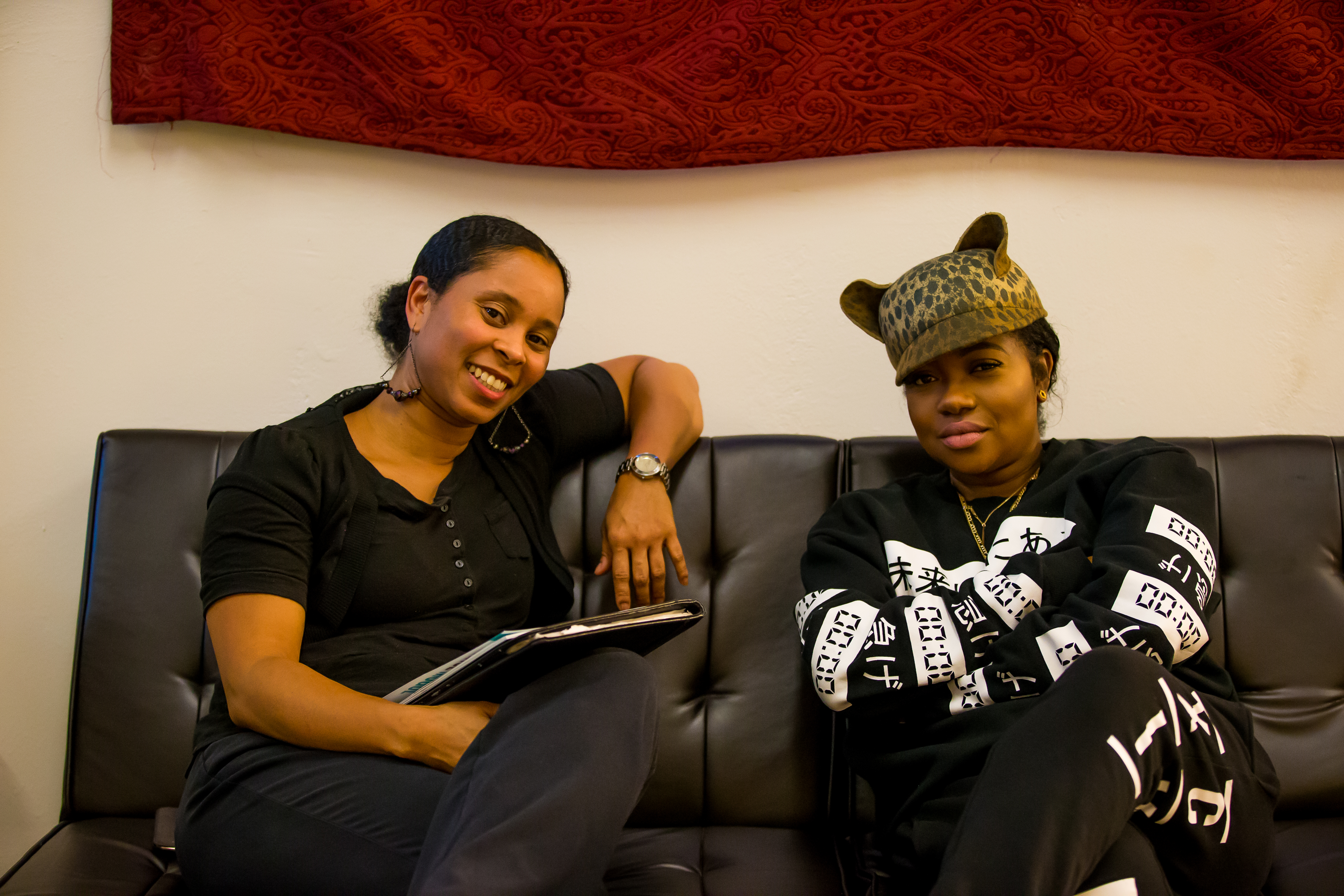
Jamaica Craft with a longtime collaborator | Dance Mogul Magazine archives
Television and Film: Choreography as Storytelling
The move into scripted television is where Craft's work stopped being about performance and started being about character. Music choreography asks a dancer to look powerful. Screen choreography asks an actor to move like a specific person with a specific history — and to do it while hitting a mark, holding a line and serving a scene.
On Fox's Empire, she became widely recognized for the show's musical performance sequences. She also choreographed Step Up: High Water, and worked in film on The Boss and Fist Fight.
In 2021 she choreographed Universal's film adaptation of Dear Evan Hansen, directed by Stephen Chbosky — a studio musical, and a register about as far from a music video as the job gets. Rolling Stone's review, otherwise unkind to the film, singled out the musical numbers, crediting the director, cinematographer, editor and Craft with constructing "something that gives this film a life force." For a choreographer whose reputation was built in hip-hop and R&B, a Broadway adaptation is the kind of credit that proves range rather than decorating it.
Then came HBO's Lovecraft Country, which asked something much harder. Craft built the movement for the series across its full run — a point she has had to make repeatedly, since one sequence became so famous that people assumed it was her only contribution. That sequence was the horrifying minstrel jig performed by Topsy and Bopsy, which she researched and assembled from period minstrel movement mixed with regional Chicago and Miami styles. In the same series she choreographed the sequence in which Montrose finds the freedom to live openly, and she used the production as an opportunity to hire from inside the ballroom, drag, transgender and broader LGBTQ+ communities whose vocabulary the work drew on. That is not a small detail. That is a choreographer using her hiring power as the point.
Her work on Starz's P-Valley raised the technical stakes again. The series demanded pole choreography of real athletic risk, performed by actors, repeatedly, safely. Craft assembled a team of pole specialists, built strength and conditioning into the process, and brought working club dancers into rehearsals so the cast could absorb not just the tricks but the culture, the timing and the ease of physical proximity that the world of the Pynk required. With Brandee Evans, she developed Mercedes's signature drop over weeks of preparation before cameras ever rolled — designing not just a move but a character's authority.
“I wanted Brandee to have the power as she moved” — Jamaica Craft on building Mercedes's presence for P-Valley (Variety)
2026: Staging a Cotillion on Network Daytime
In May 2026, Craft took on a job that sits about as far from a strip club pole as choreography can travel — and revealed exactly how her process works.
CBS's daytime drama Beyond the Gates built a three-episode arc around the cotillion, the coming-of-age tradition long held in the Black community, airing May 18 through May 20. Craft guided the young women of Fairmont Crest through it. She had never been part of a cotillion herself, so she started where she always starts: research. She went to choreographer friends who had lived it and asked what happened before anybody danced.
What she found reframed the assignment. She has described it as history, culture and etiquette — Black excellence, and more broadly the excellence of a young person stepping into adulthood. Her research also widened the frame in a way she did not expect: she learned that cotillion traditions exist across many different ethnicities, not only the community she knew. So she built the work to be universal, wanting to be certain that anyone watching could see themselves in the moment.
That is the whole method in one job. Do not assume you know the movement. Go find the people who lived it, learn the culture underneath the steps, then build something that honors the source and still opens outward. It is the same instinct that produced Topsy and Bopsy and the Pynk, applied to a debutante ball on daytime television.
Hiring Power: Getting Dancers Onto the Call Sheet
There is a quieter campaign running underneath Craft's television career, and it may end up being the most consequential thing she does.
She has worked repeatedly with women showrunners — Misha Green on Lovecraft Country, Katori Hall on P-Valley, and Holly Sorensen on Step Up: High Water — alongside her run on Fox's Empire. On those shows the same conversation kept happening. The showrunner wanted dancers cast in the actual roles. On Lovecraft Country, Green specifically wanted Topsy and Bopsy played by dancers, believing dancers would do the parts justice. Craft has said that Hall and Sorensen approached her the same way.
The distinction Craft draws is precise and worth memorizing. Being a double is honorable work. Being on the call sheet under the character's name is a different job, a different rate and a different career. Moving professional dancers out of the double slot and into credited acting roles expands what a dance career can even be — and she has described that shift as one of the great pleasures of her move into television and film.
This is what a choreographer's power actually looks like when it is used well. Not just choosing the steps. Choosing who is in the room, and making sure the industry has to write their names down.
Jam Session Gear: Building Something She Owns
Craft is also a designer. Rolling Out reported in 2017 that she had spent roughly three years developing an apparel line, Jam Session Gear, whose first collection of parka-style jackets sold out, and that she unveiled a new collection around New York Fashion Week. Dance Mogul Magazine was not able to independently confirm the launch dates or sell-through figures.
The brand's organizing idea is The 1:11 Project, whose stated purpose is nurturing positivity in mind, body and soul. Craft has framed the whole venture around message rather than merchandise — she has said she cares about the message and wants people to feel empowered when they are wearing a Jam Session piece.
File this under the same heading as the Trendsetters and the acting-role advocacy. Choreography credits expire the moment the project wraps. A brand you own does not. For dancers watching a career and trying to understand how it stays durable across thirty years, the apparel line is not a side hustle or a vanity project. It is an asset.
The Awards — and the Ones That Don't Exist Yet
Best Choreography at the MTV Video Music Awards is one of the very few major categories that names choreographers at all. Craft has appeared in it at least six times, across nearly a decade:
2005 — Amerie, "1 Thing"
2007 — Ciara, "Like a Boy"
2009 — Ciara featuring Justin Timberlake, "Love Sex Magic" (with Marty Kudelka)
2009 — Kristinia DeBarge, "Goodbye"
2013 — Ciara, "Body Party"
2014 — Usher, "Good Kisser" (with Todd Sams)
Two nominations in a single year, and consecutive nominations in 2013 and 2014, in a category historically dominated by a tight circle of repeat names. That is a sustained record, not a moment.
Here is the honest part, and Dance Mogul Magazine would rather print it than pad a page: we did not locate any single comprehensive record of Jamaica Craft's full awards history. The six nominations above had to be assembled one at a time from separate archives. That is not because the work went unhonored — it is because the industry has never built the infrastructure to track choreography credit in one place. Her prestige television work sits inside series that collected significant critical recognition — P-Valley took multiple honors from the African American Film Critics Association, including Best TV Drama and Best Ensemble Cast — yet award ceremonies rarely have a line item for the person who authored the movement that made those performances legible.
That absence is not a footnote to her story. It is the argument. When a discipline is undercredited, its practitioners' achievements have to be documented deliberately, by publications willing to do it. Otherwise a body of work that shaped how millions of people understood a character, a song or an era simply evaporates from the record.
Where Jamaica Craft Is Now
In 2025, Craft took a seat that says everything about where her career has arrived: judge. Alongside Ciara, she evaluated the finalists of Ciara Presents: Dance Icon, a national competition produced with Colossal in partnership with the Why Not You Foundation. More than 100,000 dancers entered. Eight finalists were flown to Phoenix, where Craft judged in person and Ciara joined virtually before appearing at the April 2025 finale. The winner, Lexington Suttle, took a $20,000 prize and a spot in an upcoming Ciara music video, and the broader effort raised over $2.5 million for the foundation's work in education and youth empowerment.
Sit with the symmetry there. The teenager who started her own troupe in Kansas City because nobody handed her a stage is now the person deciding which unknown dancer gets one.
Her next major release is already finished. P-Valley wrapped production on its third season in November 2024, and Starz has confirmed the season is coming in 2026 — but as of this publication no exact premiere date has been announced, and the wait has now stretched across four years and an industry shutdown. Craft's most technically demanding body of choreography to date is, in effect, sitting in a vault waiting on a network calendar. She continues to be represented by King Creative Group.
Beyond that, we are not going to invent a schedule for her. Public reporting on the rest of her 2026 slate is thin, which is normal for creative directors whose projects are under wrap. When there is verified news, this publication will report it.
Career Timeline
CHILDHOOD — KANSAS CITY, MISSOURITeaches herself to dance by taping music videos off television and learning the routines. Influences include Michael Jackson, MC Hammer, Janet Jackson, TLC and Aaliyah.
TEENAGE YEARSFounds her own dance troupe, the Trendsetters.
EARLY 1990sLeaves Kansas City for Atlanta at the height of the city's hip-hop and R&B boom. Auditions for MC Hammer. A 2017 Rolling Out profile says the work expanded into choreography and an adviser role; other professional biographies describe the Hammer booking more simply as early professional work as a dancer.
MID-TO-LATE 1990sDances for TLC. Studies Atlanta club dancers as a discipline. Published professional biographies credit her early choreography work with Kandi Burruss's "Don't Think I'm Not."
2004Begins working with Ciara around the release of her debut album Goodies, starting a partnership that is still running two decades later.
2005First MTV Video Music Award nomination for Best Choreography, for Amerie's "1 Thing."
2007Second VMA nomination, for Ciara's "Like a Boy."
2009Two VMA nominations in a single year: Ciara and Justin Timberlake's "Love Sex Magic," shared with Marty Kudelka, and Kristinia DeBarge's "Goodbye."
2010Choreographs Ciara's "Ride." Works with Justin Bieber on the video for "Baby," released in February 2010.
2013MTV Video Music Award nomination, Best Choreography, for Ciara's "Body Party."
2014A second consecutive VMA nomination, and her sixth documented, for Usher's "Good Kisser," shared with Todd Sams.
2015–2019Choreographs Fox's Empire and Step Up: High Water. Film work on The Boss and Fist Fight.
2021Choreographs Universal's film adaptation of Dear Evan Hansen, directed by Stephen Chbosky.
2017 PROFILERolling Out reports that Craft had spent roughly three years developing Jam Session Gear, that its first parka-style collection sold out, and that she unveiled a new collection around New York Fashion Week. Dance Mogul Magazine did not independently confirm the launch dates or sell-through figures.
2020Choreographs HBO's Lovecraft Country, including the Topsy and Bopsy minstrel jig and Montrose's liberation sequence, hiring from ballroom, drag, transgender and LGBTQ+ communities.
2020–2022Series choreographer on Starz's P-Valley, building the pole vocabulary and developing Mercedes's signature move with Brandee Evans.
NOVEMBER 2024P-Valley season three completes production.
2025Judges Ciara Presents: Dance Icon. Over 100,000 entrants; more than $2.5 million raised for the Why Not You Foundation.
MAY 2026Choreographs the three-episode cotillion arc on CBS's Beyond the Gates, airing May 18 through May 20.
2026Starz has confirmed P-Valley season three for this year; no premiere date announced as of August 2026.
What She Represents to Young, Up-and-Coming Female Dancers
Commercial dance has never lacked talented women. What it has historically lacked is women with ownership. For decades the pattern was familiar: brilliant female dancers, brilliant female choreographers, and someone else's name on the concept, the contract and the company.
Craft broke that pattern in a specific and teachable way. Read as a career path rather than a résumé, her trajectory shows five distinct stages, and any serious dancer can locate herself on this ladder — which is the whole reason we are laying it out.
1. Become the most reliable person in the room
Before the credits came the bookings, and bookings go to dancers who are prepared, coachable, early and low-drama. Talent opens the door once. Reliability is what gets you called back — and occasionally, as with Hammer, it turns a hired dancer into a trusted adviser.
2. Build one deep artist relationship, not ten shallow ones
The Ciara partnership is the engine of Craft's whole career. One artist who trusts you completely will generate more work, more range and more creative freedom than a dozen one-off gigs. Depth compounds; scattering does not.
3. Learn to move story, not just bodies
The jump from music video to scripted television is a jump in literacy. It requires understanding character, period, subtext and camera. Craft made that jump with Empire, Lovecraft Country and P-Valley, and it doubled the size of her career.
4. Claim the vision, and own something outside the credit
Choreographers get hired to execute someone else's idea. Creative directors get hired to have the idea. Craft named that ambition out loud years before she reached it, then built the credibility to be handed it — and built Jam Session Gear alongside it, so that not everything she owns depends on someone else's production calendar.
5. Turn access into a door for other people
The final stage is the one most careers never reach: using your position to hire, cast, judge and mentor. Craft has done it by staffing from the communities her work draws on, by moving professional dancers onto the call sheet as credited actors, and by sitting on the judging panel of a national competition built to fund youth programs. That is what a career looks like when it stops being about you.
Why Jamaica Craft Matters to Dance Mogul Magazine
Dance Mogul Magazine has published for over fifteen years on a single conviction: dance is the foundation, not the ceiling. Every story in this publication has to answer one question — how does this help someone become a better version of themselves? Craft's answer is unusually direct. She shows that the skill you built in a rehearsal room is transferable into authorship, into leadership, into ownership of a creative vision, and finally into the power to open doors for others.
Her origin makes the point even harder. She is self-taught. She learned from a television screen in Kansas City. Nothing about the start of that story predicts the Grammys, and that is precisely why we publish it.
She also represents a truth this publication has argued since 2010: the movement vocabulary that drives mainstream entertainment is overwhelmingly born in Black communities, in club culture, in street dance and hip-hop, and is then absorbed upward into pop, film and television — frequently without credit traveling with it. Craft's insistence on sourcing her work honestly, naming its origins and hiring from the communities that created it is precisely the standard we hold up. As a father and son Black owned dance publication, documenting that chain of authorship is not a side project for us. It is the work. She belongs squarely in the conversation we keep in Celebrating Black Creative Directors & Choreographers and in the record we maintain at The American Social Dance Movement.
If her story lands with you, keep going: explore the full range of forms in our Dance Styles Hub, read more conversations with working professionals in our Exclusive Interviews, and study the pioneers whose work made these careers possible in The Legacy. If you are trying to build the discipline behind a plan like the one mapped above, our workbooks were built for exactly that.
Frequently Asked Questions About Jamaica Craft
Who is Jamaica Craft?
Jamaica Craft is an American choreographer, artist developer and creative director from Kansas City, Missouri. She is best known as Ciara's longtime choreographer and for building the movement language of television series including Empire, Lovecraft Country and P-Valley.
How did Jamaica Craft learn to dance?
She is self-taught. Growing up in Kansas City she recorded music videos off television and learned the routines frame by frame, drawing on Michael Jackson, MC Hammer, Janet Jackson, TLC and Aaliyah. As a teenager she founded her own dance troupe, the Trendsetters.
What is Jamaica Craft best known for?
Two bodies of work: her long creative partnership with Ciara, including the choreography for "Ride" and "Body Party," and her screen choreography — most notably the pole work on P-Valley, the period movement sequences on HBO's Lovecraft Country, and Universal's film adaptation of Dear Evan Hansen.
Has Jamaica Craft won awards?
She has received at least six MTV Video Music Award nominations for Best Choreography: Amerie's "1 Thing" (2005), Ciara's "Like a Boy" (2007), Ciara and Justin Timberlake's "Love Sex Magic" and Kristinia DeBarge's "Goodbye" (both 2009), Ciara's "Body Party" (2013) and Usher's "Good Kisser" (2014). Dance Mogul Magazine did not locate a single comprehensive record of her full awards history, which reflects how poorly the industry tracks choreography credit rather than the scale of her work.
Which artists has Jamaica Craft worked with?
Her published professional biographies and screen credits list work with Ciara, Usher, Justin Bieber, Ne-Yo, Missy Elliott, Nicki Minaj, Jessie J, Shakira and Tinashe. Professional biographies also credit her with pieces staged for the Grammys, the American Music Awards, BET and the World Music Awards. Published profiles describe early professional work with MC Hammer and later dancing for TLC in Atlanta.
What did Jamaica Craft do on P-Valley?
She served as the series choreographer, designing the club performances and pole routines. She built a team of pole specialists, integrated strength training and safety protocols for the cast, brought working dancers into rehearsals for authenticity, and developed Brandee Evans's signature move as Mercedes.
What is Jam Session Gear?
Jam Session Gear is Jamaica Craft's apparel line. Rolling Out reported in 2017 that she developed it over roughly three years, that its first parka collection sold out, and that she presented a collection around New York Fashion Week. Dance Mogul Magazine did not independently confirm the launch dates or sell-through figures. Its organizing idea, The 1:11 Project, is built around nurturing positivity in mind, body and soul.
What is Jamaica Craft doing now?
In 2025 she judged Ciara Presents: Dance Icon, a national competition that drew over 100,000 entrants and raised more than $2.5 million for the Why Not You Foundation. In May 2026 she choreographed the three-episode cotillion arc on CBS's Beyond the Gates, which aired May 18 through May 20. Her third season of P-Valley completed production in November 2024 and Starz has confirmed a 2026 return, though no exact premiere date had been announced as of August 2026.
KEEP EXPLORING
Dance Mogul Magazine documents the artists who build the culture and the careers that grow out of it. Start with the Featured Artist series, dig into the Archive, build your foundation in the Dance Knowledge Hub, and browse everything we have published in the Article Library.
Reporting sources: Variety, Rolling Stone, Flaunt, EURweb, MadameNoire, Rolling Out, AllHipHop, BOSSIP, NPR, People, TV Insider, IMDb, MTV Video Music Award nominee records, danceicon.org, Colossal / Why Not You Foundation press materials, Starz announcements, and MTV Video Music Award records. Career details reflect verified public reporting as of August 2026.
Jamaica Craft Choreographer Creative Director Ciara P-Valley Lovecraft Country Empire Beyond the Gates Hip-Hop Dance Dance Careers Dance Icon Black Women in Dance
© 2026 Dance Mogul Magazine LLC | dancemogul.com | Inspiring Self-Empowerment Through Dance Culture