
Dancing With the Stars · Dance Analysis · Season 35
Harry Shum Jr., Jenna Dewan, Julia Stiles and Tatyana Ali enter Dancing with the Stars Season 35 with something many competitors do not have: previous performance experience. But does knowing how to dance mean knowing how to ballroom dance?
By Dance Mogul Magazine | September 15, 2026
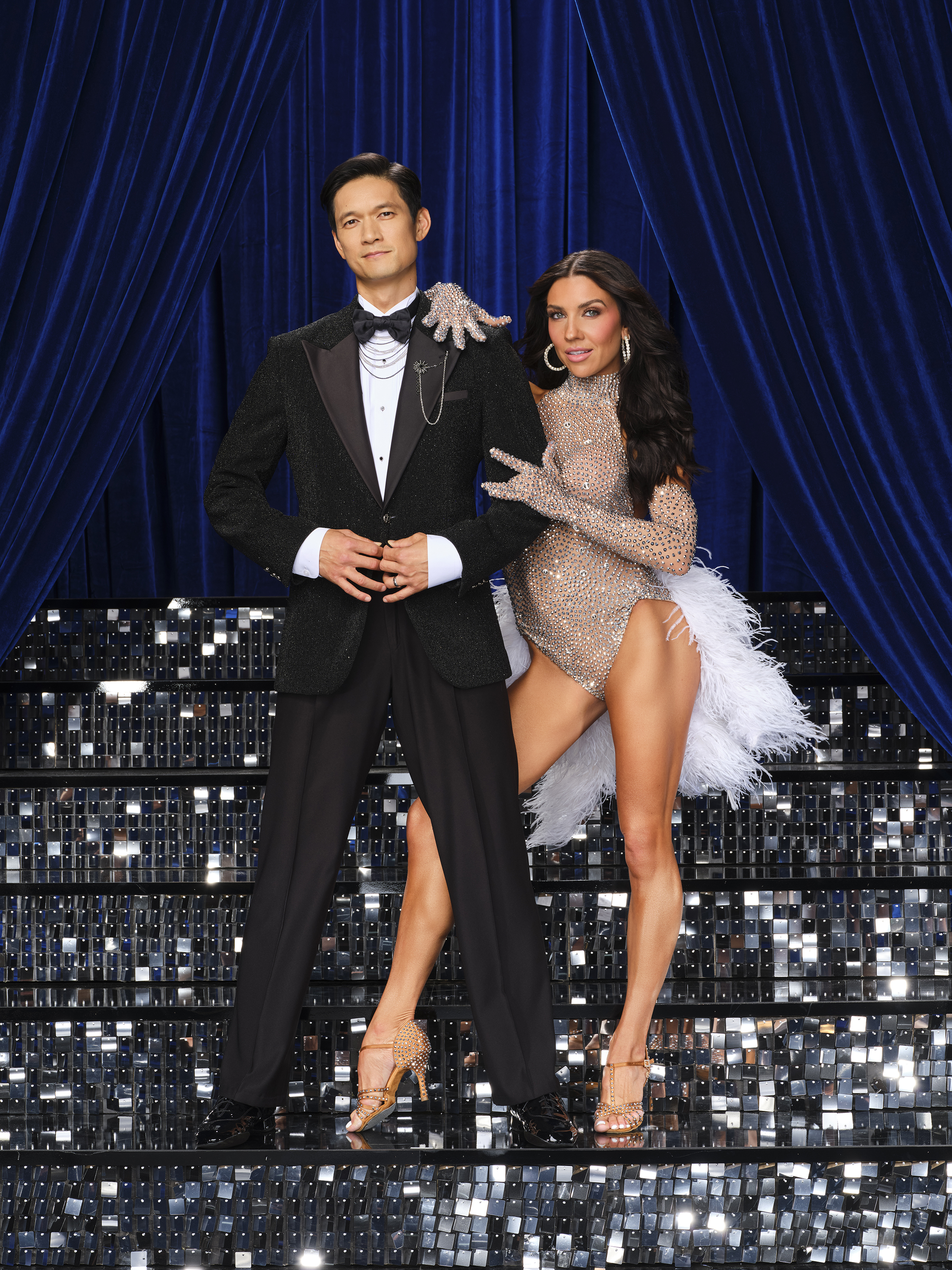
Harry Shum Jr. and professional partner Jenna Johnson enter the ballroom for Dancing with the Stars Season 35. Photo: Disney/Andrew Eccles.
Every season of Dancing with the Stars begins with an uneven playing field. Some contestants arrive with athletic training. Some understand performance. Others enter the ballroom having never seriously danced at all.
Season 35 has brought an old question back into focus, because several members of this cast already know their way around choreography — and one of them grew up on television alongside the man now holding the host's microphone.
Harry Shum Jr. built part of his career as a professional dancer and choreographer before becoming widely known as an actor. Jenna Dewan worked professionally as a dancer before her acting career took off. Julia Stiles remains strongly associated with dance through the 2001 film Save the Last Dance. Tatyana Ali arrives with four decades of stage, television and recording experience, including a Broadway-trained background and a gold-certified album.
That has prompted a familiar debate: does previous dance experience give a Dancing with the Stars contestant an unfair advantage?
The easy answer is yes. The more useful answer is: it depends on what we mean by advantage.
Knowing how to dance and knowing how to ballroom dance are not the same thing.
Previous training can provide musicality, coordination, performance experience and an ability to retain choreography. Ballroom and Latin dancing, however, introduce their own technical demands — and sometimes previous movement habits have to be unlearned.
The Host Already Answered This Question in 2014
Guiding Season 35 are co-hosts Alfonso Ribeiro and Julianne Hough. Hough knows the ballroom from every side of the franchise: two-time Mirrorball champion as a professional, later a judge, now co-host.
Ribeiro's path is the one that matters most to this particular debate — because he is the argument.

Alfonso Ribeiro and Julianne Hough return as co-hosts of Dancing with the Stars Season 35. Photo: Disney/Andrew Eccles.
Long before Carlton Banks, Ribeiro was a Broadway dancer. He played the lead in the Tony Award-winning musical The Tap Dance Kid as a child, earning an Outer Critics Circle nomination, and it was that tap training that led to his appearance as a dancer in the 1984 Pepsi commercial alongside Michael Jackson and the Jacksons.
By any reasonable standard, Ribeiro entered Season 19 in 2014 as a trained dancer. He also entered it having never competed in ballroom — and still needed a full season of partnering, frame and footwork with professional Witney Carson before the Mirrorball was his.
“Trained” is not a finish line on this show. It is a starting position — and the starting positions are further apart than the scoreboard admits.
DMM documented that championship in 2014, creating an archive that now follows him from contestant to champion to host.
Revisit DMM's original Alfonso Ribeiro and Witney Carson Season 19 coverage →
Four Backgrounds, One Standard
Treating all four simply as “trained dancers” obscures the more useful question, because their backgrounds are not equivalent. Shum and Dewan have substantial professional dance experience. Stiles' relationship to dance runs through acting and the preparation required for a single film. Ali's is rooted in stage, television and music — a performer's résumé rather than a dancer's.
Most importantly, previous training in another form does not automatically make someone a trained ballroom or Latin dancer.
Watch: The Official Season 35 Trailer
ABC's official Season 35 trailer introduces the new celebrity cast and professional partnerships ahead of the two-night premiere.
Watch the Official ABC Season 35 Trailer →Official video: ABC / Dancing with the Stars
What the Judges Say About Previous Dance Training
Longtime judge Carrie Ann Inaba has offered one of the more nuanced readings of the issue. Previous dancers can enter with real advantages: rhythm, musicality, comfort performing for an audience, and a trained ability to learn, remember and reproduce choreography.
Those are meaningful skills. But Inaba has also pointed toward a challenge familiar to dancers who cross disciplines: muscle memory.
Movement training creates habits. Weight placement, posture, grounding, alignment and the way a dancer uses the feet vary substantially between styles. A dancer entering ballroom may therefore not simply be learning something new — that dancer must simultaneously stop the body from doing what years of previous training taught it to do.
Bruno Tonioli has made the same case from the technical side. Ballroom and Latin require specific posture, frame, foot usage and weight placement, and training in ballet, hip-hop or commercial dance does not transfer intact into those requirements. Established habits can actively complicate the learning process.
That does not mean experience is meaningless. It means the advantage has limits.
The DMM Dance Question: What Actually Transfers?
Previous dance training does not have to make someone a ballroom dancer to provide an advantage.
Musicality
An experienced dancer is accustomed to hearing structure, rhythm, accents and phrasing inside music.
Choreography Retention
Learning combinations efficiently is itself a trained skill. Experienced performers generally understand how to absorb, repeat and refine choreography.
Body Awareness
Dance develops proprioception — an understanding of where the body is in space and how individual parts of it are moving.
Performance
Television competition demands more than executing steps. Experienced performers understand projection, interpretation and how movement communicates to an audience.
Rehearsal Discipline
Professional performers understand repetition, correction and the process of refining movement when the first attempt does not work.
None of those abilities automatically supplies ballroom technique. But they make learning it a very different experience from starting with no movement vocabulary at all.
Harry Shum Jr.: The Strongest Test Case
Harry Shum Jr. may provide Season 35's clearest test of the argument.
Long before audiences knew him through Glee, Grey's Anatomy and his film work, dance was a significant part of Shum's professional life.
His career includes Step Up 2: The Streets and The LXD: The Legion of Extraordinary Dancers, where his work extended beyond performance into choreography.
That background should give Shum familiarity with musicality, choreography, spatial awareness and performance pressure.
But Shum and professional partner Jenna Johnson still face a different technical assignment: translate those abilities into the posture, partnering, footwork, weight placement and movement vocabulary required by ballroom and Latin dance.
That makes his first judged performance particularly useful evidence. Rather than debating his résumé in the abstract, viewers can watch how successfully previous dance ability translates when ballroom technique becomes the standard.
Jenna Dewan: When Professional Training Meets a New Language

Jenna Dewan with professional partner Val Chmerkovskiy for Dancing with the Stars Season 35. Photo: Disney/Andrew Eccles.
Jenna Dewan presents an equally compelling case because her dance background is substantial.
Before becoming widely known as an actor, Dewan worked professionally as a dancer, including touring with Janet Jackson. Dance later became central to her screen career through projects including Step Up.
Yet professional dance experience does not mean professional ballroom experience.
Commercial dance can train a performer to learn quickly, command a stage and execute choreography. Ballroom introduces a different relationship to weight, frame, feet and partner.
That may give Dewan an advantage in the learning process while simultaneously requiring her to change movement habits established through previous training.
Julia Stiles: Does a Famous Dance Movie Make Someone a Dancer?
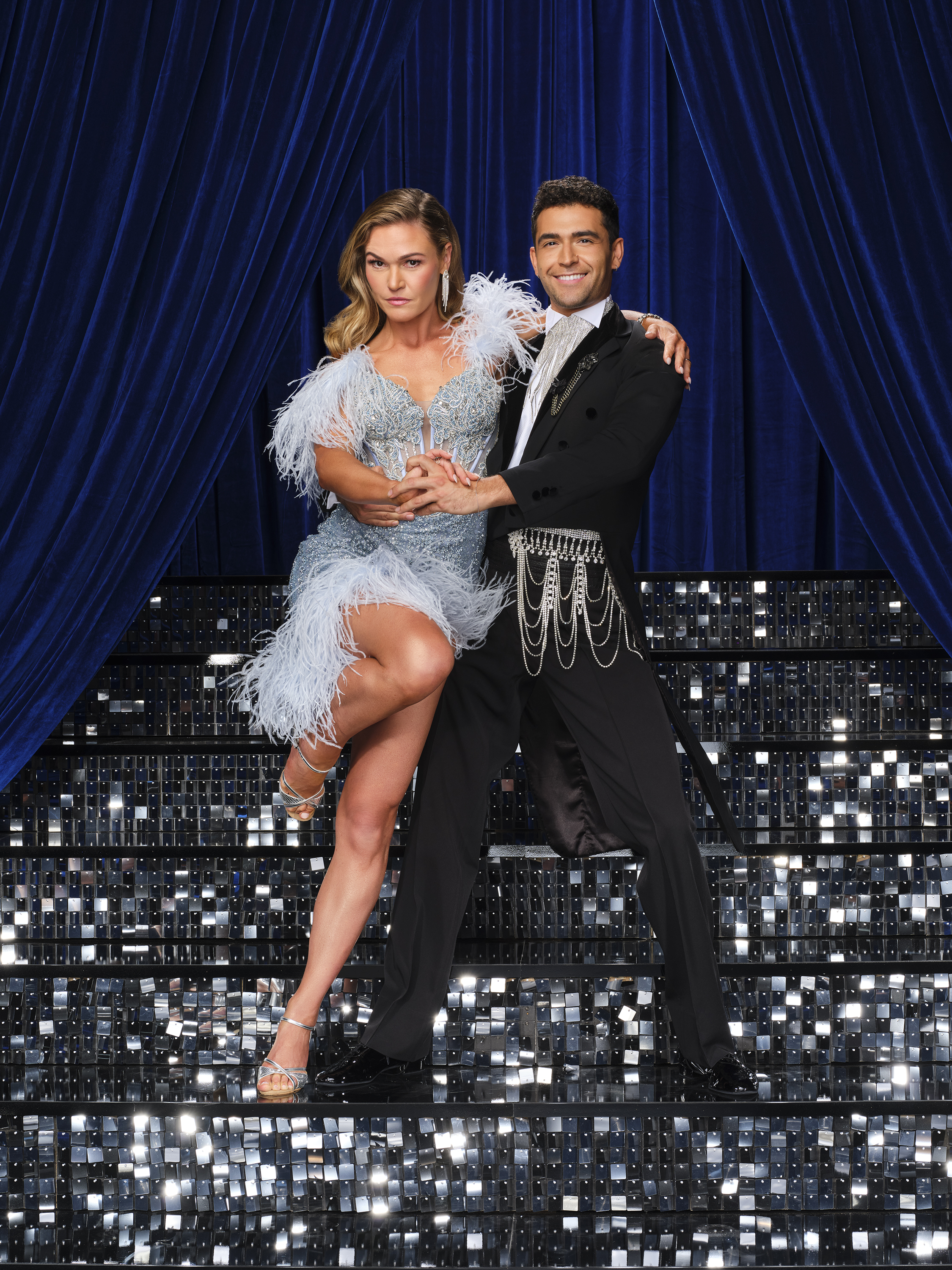
Julia Stiles with professional partner Ezra Sosa for Dancing with the Stars Season 35. Photo: Disney/Andrew Eccles.
Julia Stiles presents a different situation.
Her connection to dance remains embedded in popular culture because of the 2001 film Save the Last Dance, in which dance is central to both her character and the story.
But preparing choreography for a film — with rehearsals, multiple takes and production support — is not equivalent to maintaining a professional dance career.
Stiles has pushed back against assumptions that the movie automatically makes her a front-runner, describing the expectations it created as part of what made returning to dance intimidating.
Her partnership with professional Ezra Sosa — a Season 34 finalist with Olympic gymnast Jordan Chiles — therefore gives Season 35 another useful test of public perception: audiences sometimes remember a performer dancing without distinguishing between having danced and being professionally trained in the discipline now being judged.
Tatyana Ali: The Performer Who Is Not a Dancer

Tatyana Ali with professional partner Jan Ravnik for Dancing with the Stars Season 35. Photo: Disney/Andrew Eccles.
Tatyana Ali is the case that clarifies all the others.
Best known as Ashley Banks on The Fresh Prince of Bel-Air, Ali has worked in entertainment for four decades — from Sesame Street at age six and a Star Search run, through a gold-certified 1998 debut album, Kiss the Sky, whose lead single “Daydreamin'” reached the Billboard Hot 100 top ten. She toured with *NSYNC and the Backstreet Boys, won five NAACP Image Awards, performed on Broadway in August Wilson's Fences, and holds a Harvard degree.
That is an extraordinary performance résumé. It is not a dance résumé.
That distinction is exactly what the “unfair advantage” conversation flattens. Ali has spent a career being watched — stagecraft, camera, audience, nerves, rehearsal discipline. Real assets. But stagecraft is not a rumba, and a touring vocalist's body has not been trained to hold a ballroom frame.
Her professional partner, Jan Ravnik, arrived in the DWTS ballroom last season after dancing on Taylor Swift's Eras Tour. Ali has described him publicly as a patient teacher and a taskmaster in the same breath — which is roughly the job description when a performer with elite presence has to be rebuilt technically from the feet up.
The Fresh Prince reunion nobody could announce
Ali's casting also delivers the season's warmest storyline. She will compete in front of Alfonso Ribeiro — her television brother, Carlton Banks, across all six seasons of The Fresh Prince of Bel-Air from 1990 to 1996.
Ali has said producers asked her not to tell him. He learned about the reunion long after she was cast.
There is a quiet symmetry in it. The Broadway-trained tap dancer who won this competition as a celebrity is now the host; the castmate who grew up beside him on camera is the one being asked whether her experience counts.
Technique Is Only Part of Dancing with the Stars
There is another reason previous dance experience cannot guarantee a Mirrorball Trophy: DWTS is not simply an examination in ballroom technique. It is a partnership competition, a live television program and an audience vote.
Contestants must build chemistry with a professional partner, perform under pressure, connect with viewers, survive assignments in unfamiliar styles and show enough development to stay compelling across an entire season.
The franchise's history reflects that. Season 34's winner, wildlife conservationist Robert Irwin, took the Mirrorball alongside Witney Carson with no professional dance career behind him at all.
So the useful question isn't whether previous experience creates any advantage. Of course it can. The question is whether that advantage is enough to overcome everything else the competition demands.
The Professional Partner Changes the Equation Too
Focusing exclusively on celebrity experience can overlook the person responsible for converting whatever experience exists into a ballroom performance.
That person is the professional dancer.
Jenna Johnson, Val Chmerkovskiy, Ezra Sosa and Jan Ravnik must determine what their partners already understand, which habits are useful, which habits interfere with the assigned technique and how quickly each celebrity can adapt.
An experienced dancer therefore presents a different teaching problem — not the absence of a teaching problem.
That connects directly to another story DMM has been following through Dancing with the Stars: The Next Pro: professional dancers are not simply performers standing beside celebrities. They are teachers, choreographers, strategists and partners responsible for translating individual ability into competitive performance.
Read DMM's complete Dancing with the Stars: The Next Pro feature →
Five Days Later, a Different Answer to the Same Question
There is a reason the “unfair advantage” debate only makes sense on a show like this one.
On Dancing with the Stars, dance is the novelty. The competitor is a celebrity first, and the scoring rewards distance travelled — how far someone moved from where they started. In that frame, a trained dancer looks like a shortcut. Five days after the Season 35 premiere, a different model will be on national television.
On September 20 at The Shrine Expo Hall in Los Angeles, the International Dance League crowns the champion of its first full competitive season. Six professional teams — Brotherhood, Quick Style, Jam Republic, GRV, Royal Family and 1MILLION — spent the year competing across New York, Vancouver, Sydney, Seoul and Los Angeles under a sports structure: contracts, standings, season points and a championship. Brotherhood enters undefeated. The league signed a global rights deal with ESPN in July, and its events now reach ESPN2 in the U.S. and Disney+ internationally.
In that building, nobody asks whether dance experience is an unfair advantage. Experience is the entry requirement. It is the job.
The same week American television asks whether dancers should be allowed to compete, a professional dance league puts dancers on ESPN2 and calls them athletes.
Holding those two nights side by side is the most honest way to read the question. Both matter; they measure different things. One measures transformation, the other mastery — and dance culture is better served when the audience can tell which is which.
Read DMM's full report on the International Dance League's ESPN partnership →
The Dance Mogul Takeaway
Previous dance experience is an advantage — but calling it an automatic or unfair one oversimplifies what dancers actually do. A trained performer arrives with musicality, coordination, choreography retention, stage presence and rehearsal discipline a beginner has yet to develop.
Dance forms are not interchangeable, though. Previous training can help a dancer learn ballroom. It can also create habits that have to be dismantled first.
Season 35 gives viewers an unusually good opportunity to watch that distinction unfold — four contestants, four different relationships to movement, one shared technical standard.
Harry Shum Jr., Jenna Dewan, Julia Stiles and Tatyana Ali should not be judged by what their résumés suggest they can do.
They should be judged by what happens when the music starts.
What to Watch During the Season 35 Premiere
Season 35 begins with a two-night premiere on September 15 and September 16, 2026, at 8 p.m. ET, live on ABC and Disney+ with next-day streaming on Hulu. Sixteen couples compete. Season 34 champion Robert Irwin hosts the franchise's first live DWTS After Party immediately after night two.
Rather than watching the judges' numbers, watch how the experienced performers adapt technically.
Does Shum hold the posture, footwork and weight action ballroom requires, or revert to habits built in other styles? How quickly does Dewan convert performance experience into partnered technique? Can Stiles establish a relationship with dance that is hers rather than the film's? And does Ali's four decades of stage presence read on the scorecard — or does the frame give her away?
Those questions will tell us more than any résumé could.
Frequently Asked Questions
Which Dancing with the Stars Season 35 contestants have previous dance experience?
Harry Shum Jr. and Jenna Dewan have professional dance backgrounds. Julia Stiles is associated with dance through Save the Last Dance. Tatyana Ali brings four decades of stage, television and recording work — a performer's background rather than a dancer's.
Does previous dance experience give DWTS contestants an advantage?
It can — musicality, body awareness, choreography retention and performance experience all transfer. But ballroom and Latin require specialized technique that dancers from other forms must still learn, and existing habits sometimes have to be unlearned first.
Who is Tatyana Ali's DWTS partner, and is she related to Alfonso Ribeiro?
Ali is partnered with Jan Ravnik. She is not related to Alfonso Ribeiro, but the two played siblings Ashley and Carlton Banks on The Fresh Prince of Bel-Air from 1990 to 1996. Ribeiro now co-hosts the show she is competing on.
Did Alfonso Ribeiro have dance training before winning DWTS?
Yes. He played the lead in Broadway's The Tap Dance Kid as a child and danced in the 1984 Pepsi commercial with Michael Jackson and the Jacksons — and still needed a full season of ballroom work with Witney Carson to win Season 19 in 2014.
Who are Harry Shum Jr., Jenna Dewan and Julia Stiles partnered with?
Harry Shum Jr. is partnered with Jenna Johnson, Jenna Dewan with Val Chmerkovskiy, and Julia Stiles with Ezra Sosa.
When does Dancing with the Stars Season 35 premiere?
Season 35 premieres over two nights on Tuesday, September 15 and Wednesday, September 16, 2026, at 8 p.m. ET, live on ABC and Disney+, streaming the next day on Hulu.
Who hosts Dancing with the Stars Season 35?
Alfonso Ribeiro and Julianne Hough return as co-hosts. Carrie Ann Inaba, Derek Hough and Bruno Tonioli return as judges.
Continue Exploring Dance on DMM
Dancing with the Stars: DMM's Complete Guide, History and Season 35 Coverage →
Dancing with the Stars: The Next Pro — Inside the Search for a New Professional →
The International Dance League's ESPN Deal: Dance as a Professional Sport →
From the DMM Archive: Alfonso Ribeiro and Witney Carson's Season 19 Championship →
Sources and reporting: Dance Mogul Magazine developed this analysis using official ABC/Disney Season 35 cast and premiere announcements, public comments from Dancing with the Stars judges and contestants regarding previous dance experience, published biographical reporting on Alfonso Ribeiro's Broadway and commercial dance work, and International Dance League and ESPN announcements covering the 2026 season and championship.
© 2026 Dance Mogul Magazine LLC | dancemogul.com | Inspiring Self-Empowerment Through Dance Culture