
Dance Mogul Magazine · International Coverage
Croatian Dancers on the Global Stage
How a small country built a generation of world-class movement artists — and why Dance Mogul Magazine has documented it for over a decade.
June 24, 2026 · Updated November 22, 2026 · Dance Mogul Magazine
Save it to come back to the roster, the archive and the sources.
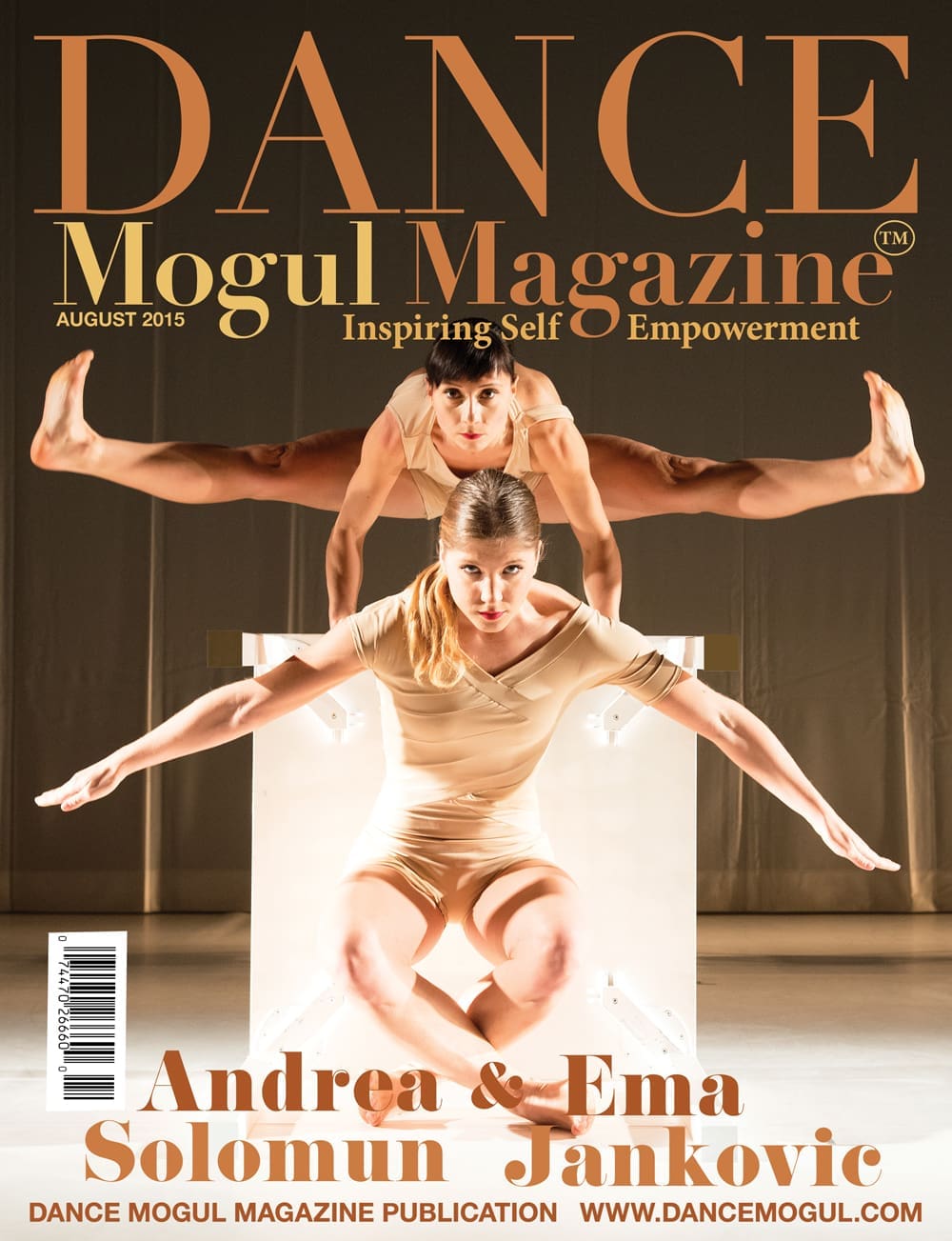
Dance Mogul Magazine, August 2015 — Andrea Solomun & Ema Janković. Cover photography by Ivan Brezovec.
The story of Croatian dancers is one of the most quietly powerful in the modern dance world. From the studios of Zagreb to the world’s biggest stages, a generation of artists has carried Croatia’s name into ballet, contemporary, commercial, and street dance — often without the spotlight other nations receive. Dance Mogul Magazine, the first Black owned dance publication in print and digital, has spent years documenting that rise, because real cultural excellence deserves to be recorded wherever it lives.
This is the hub for our coverage of Croatian dancers: the artists we have interviewed, the talent we put on our cover, and the scene that keeps producing dancers who compete and create at the highest level anywhere in the world.
Maja Keres: From Croatia to the Grammy Stage
When Dance Mogul Magazine sat down with Croatian dancer Maja Keres for her 2017 Grammy exclusive, her path read like a blueprint for what focus and faith can build. She left the comfort of home in Croatia — teaching, living with family, no rent to pay — and stepped into the high-pressure world of professional dance in New York, then Los Angeles, where booking the next job was the only thing keeping the lights on.
The leap paid off. She performed at Coachella, danced in a Fergie music video, appeared at the Empire Season 2 premiere inside Carnegie Hall, and shared the Grammy stage with A Tribe Called Quest, Anderson .Paak, and Busta Rhymes. What stayed with us most was not the celebrity proximity — it was what she said about the young Croatian dancers back home who now see her and believe their own dreams are reachable. That is empowerment in motion, and it is exactly why we tell these stories.
The 45-Page Croatian Cover Feature
One of the boldest commitments Dance Mogul Magazine has made to international dance was a full 45-page tribute to Croatia’s finest movement artists — a feature that put Croatian dancers front and center for a global readership. The cover spotlighted Andrea Solomun and Ema Janković of Dance Company & M, with cover photography by Ivan Brezovec.
Inside, the feature crossed every corner of the country’s dance ecosystem — ballet, the contemporary underground, and the commercial scene — celebrating Croatian dancers including:
- Edina Pličanić
- Tomislav Petranović
- Maša Kolar
- Elvis Hodžić
- Kornelija “Koni” Kosanović
- Alen Sesartić
- Aleksandra Mišić
- Vesna Grandeš
- Ema Janković
- Andrea Solomun
The feature was recognized by Croatian media as a meaningful promotion of the country’s dancers in a respected American publication — a rare moment of a small nation’s dance scene being honored on an international platform. Total Croatia News covered it on August 20, 2015, reporting that the issue devoted 45 pages to the country’s best dancers. The Istrian daily Glas Istre ran the cover in print, under a headline noting that Pula’s own Ema Janković had landed on the cover of a dance magazine. That recognition is the heart of what Dance Mogul Magazine exists to do: give serious, dignified documentation to communities and cultures the mainstream often overlooks.
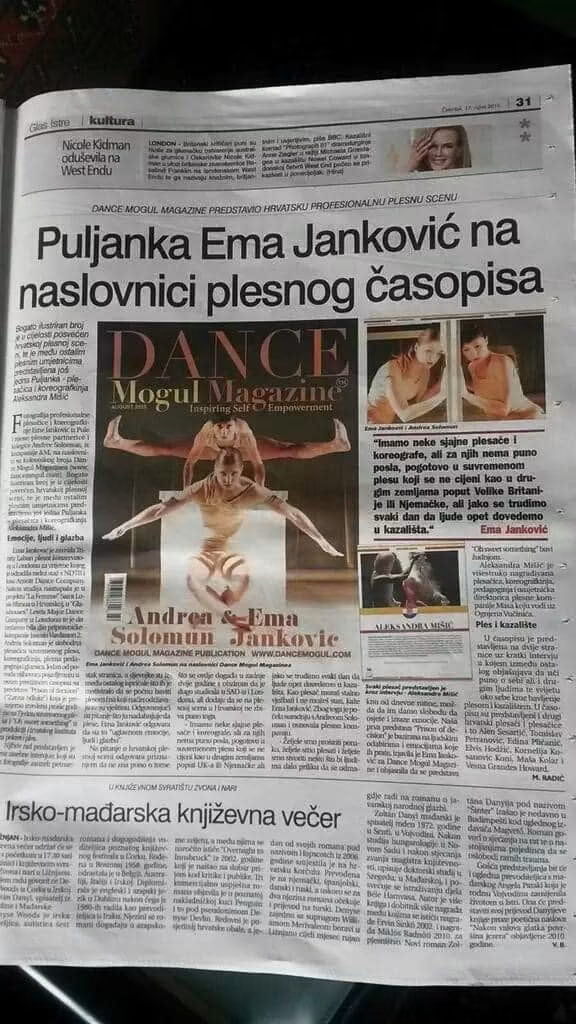
Glas Istre (Croatia), 2015 — Croatian press covering the Dance Mogul feature.
Why it matters: Almost no English-language dance publication has documented Croatia’s dance scene with this depth. That makes Dance Mogul Magazine a primary source — not a passing mention — for anyone researching Croatian dancers, their training culture, and their global impact.
A Scene That Punches Above Its Weight
Croatia is a country of under four million people, yet it consistently produces dancers who hold their own on the world’s most competitive stages. That tells you something about the discipline of its studios, the dedication of its teachers, and the hunger of its young artists. Dancers who come up in smaller scenes often develop a versatility and resilience that serves them everywhere — they learn to adapt, to travel, and to earn their place rather than inherit it.
For young Croatian dancers reading this: the artists profiled here started exactly where you are. The distance between a local studio and a global stage is real, but it is crossable — one disciplined day at a time. Dance Mogul Magazine will keep telling these stories, because representation is not a favor. It is a record of truth.
What Are They Doing Now?
The power of this story is that it did not stop with one magazine cover, one feature, or one moment of international recognition. Many of the Croatian dancers Dance Mogul Magazine documented have continued building full lives in movement — not only as performers, but as teachers, choreographers, directors, coaches, mentors, and cultural leaders.
Maja Keres — Maja Kereš in Croatian — continues to represent the global reach of Croatian dance. Her professional presence identifies her as a Croatian-born, Los Angeles-based dancer and creative whose work spans performance, choreography, teaching, and movement coaching. Her journey still speaks directly to young dancers in Croatia and beyond: a local studio can become a doorway to the world when discipline, courage, and opportunity meet.
Andrea Solomun has expanded her work from ballet and choreography into long-term body education, biomechanics, fitness, and movement health. Through Andrea’s Room, &Body, and &Ballet, she has helped turn dance knowledge into systems that serve more than the stage. Her path shows what a dancer can become after performance: a builder, educator, wellness leader, and entrepreneur.
Ema Janković, also known professionally as Ema Bates, remains part of the larger story of Croatian artists who move between performance, choreography, teaching, and international creative work. Her path, together with Andrea’s, helped give Dance Company & M a visible place in the original Dance Mogul feature — and that visibility still matters because it documented Croatian women as creators, not only performers.
The broader group from the feature also shows how deep the scene is. Some have moved into ballet leadership and pedagogy. Some continue shaping productions, workshops, theater work, choreography, and training spaces. Some are helping prepare the young Croatian dancers who may become the next names the world discovers. That is the real legacy of a dance scene: not only who gets seen, but who keeps building after the spotlight moves on.
Why This Matters to Dance Mogul Magazine
This matters to Dance Mogul Magazine because our mission has never been limited to celebrity coverage. Our purpose is documentation, preservation, and self-empowerment. When we covered Croatian dancers, we were not simply filling pages. We were creating a record for artists whose work deserved to be seen beyond their borders.
That record becomes more valuable with time. Years later, when those dancers are still teaching, choreographing, directing, coaching, performing, mentoring, and building programs, the original coverage becomes evidence. It shows that Dance Mogul Magazine recognized the movement before the wider world fully understood how much the scene had to offer.
For DMM, that is the point. Dance history is not only written after someone becomes famous. It must also be written while artists are still climbing, still sacrificing, still teaching, still creating, and still proving what their communities can produce. Croatia’s dancers matter because they remind us that greatness does not only come from the biggest markets. It can come from smaller countries, smaller studios, and smaller scenes — and still reach the world.
Dance Mogul Magazine exists for that kind of story. We document the dancer, but we also document the ecosystem around the dancer: the teachers, studios, families, collaborators, training spaces, cultural pride, and belief systems that make the journey possible.
That is why this coverage still matters today. It is not nostalgia. It is cultural proof. It shows that when dancers are documented with dignity, their stories become part of a larger archive — one that can inspire young artists, support future research, and remind the world that dance culture is global, connected, and worthy of serious record.
Explore More Dance Mogul Coverage
Dive deeper into the artists and styles shaping the global dance community: read our full DMM Article Library, or explore the movement traditions behind it all on our Dance Styles hub. From Croatian ballet to global street dance, the culture is one connected story — and we’re documenting all of it.
Croatian Dancers: Frequently Asked Questions
Which Croatian dancers did Dance Mogul Magazine feature?
The August 2015 issue put Andrea Solomun and Ema Janković of Dance Company & M on the cover and ran a 45-page feature including Edina Pličanić, Tomislav Petranović, Maša Kolar, Elvis Hodžić, Kornelija “Koni” Kosanović, Alen Sesartić, Aleksandra Mišić and Vesna Grandeš.
Who photographed the Croatian cover?
Ivan Brezovec shot the cover photograph of Andrea Solomun and Ema Janković.
Did Croatian media cover the feature?
Yes. Total Croatia News reported on it in August 2015, and the Istrian daily Glas Istre ran the cover in print that year.
Which Croatian dancer performed at the Grammys?
Maja Keres shared the Grammy stage with A Tribe Called Quest, Anderson .Paak and Busta Rhymes, as she told Dance Mogul Magazine in her 2017 exclusive.
Sources & Original Coverage
DMM cover issue — Andrea Solomun and Ema Jankovic
DMM exclusive — Maja Keres, 2017 Grammy stage
Total Croatia News, August 20, 2015 — Croatian Dancers Shine in the New Dance Mogul Magazine
© 2026 Dance Mogul Magazine LLC | dancemogul.com | Inspiring Self-Empowerment Through Dance Culture
; theme H1 suppressed via Remove Post Title. Stale /news/ links repointed to canonical URLs; Total Croatia News (Aug 20, 2015) added as a verified external source; internal link added to the Andrea Solomun / Ema Jankovic cover post; FAQ and Sources sections added. Glas Istre mention kept as the printed clipping shown in the article — no URL verified, so none linked. Images unchanged (R2).