
Industry Guide · Studio Business
Dance Studio Business Operations: How to Run a Studio That Thrives, Not Just Survives
Great teaching fills a room once. Great operations keep it full for years. A Dance Mogul Magazine playbook for studio owners who want to build something that lasts.
By Dance Mogul Magazine | Industry Guide
Why Operations Make or Break a Studio
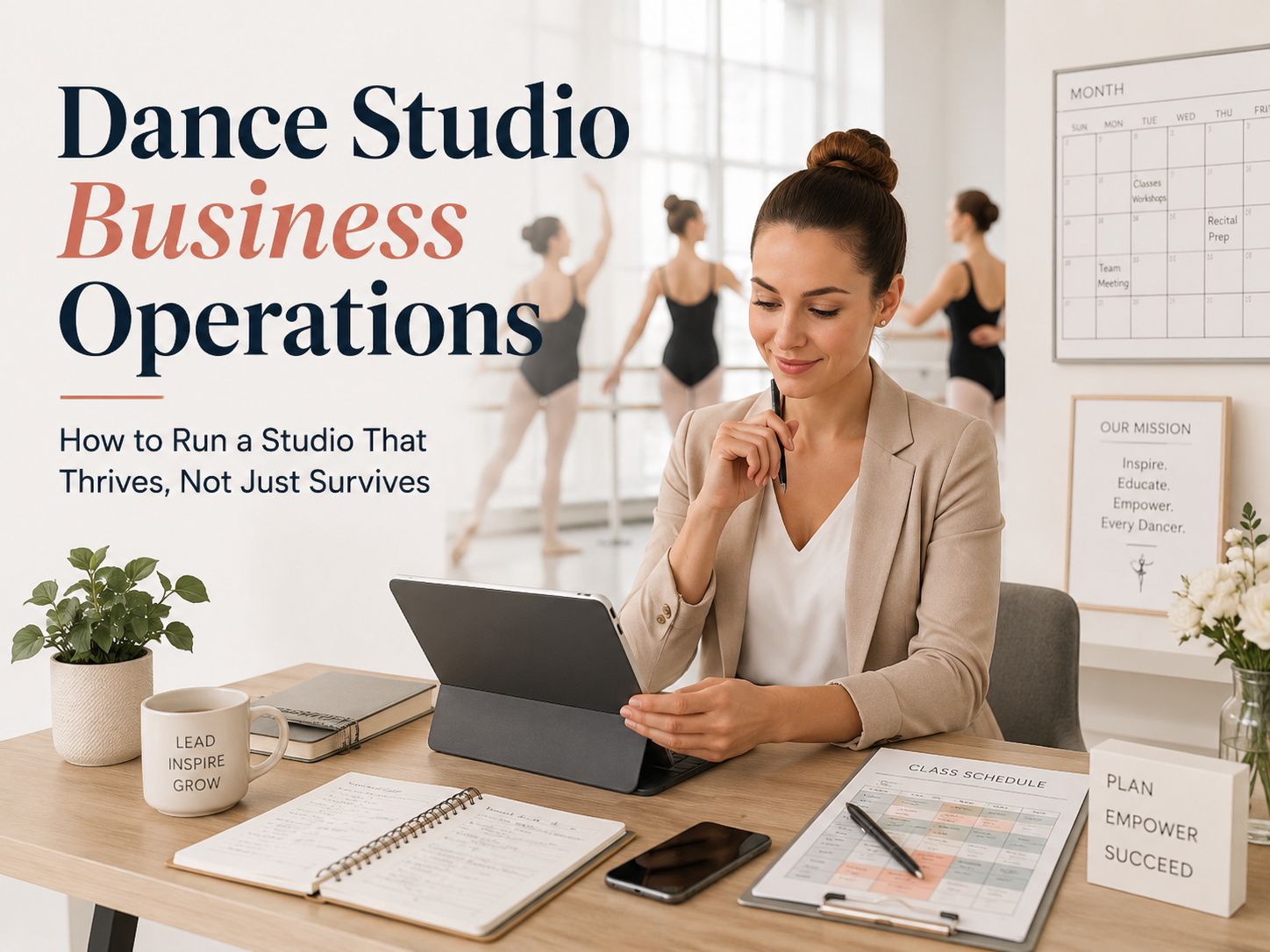
Most people open a dance studio because they love to teach. Then reality arrives: tuition that needs collecting, schedules that conflict, teachers who quit mid-season, parents who need answers at 9 p.m., and a recital that has to come together in eight weeks. The studios that thrive are not always the ones with the most gifted founders — they are the ones with the strongest dance studio operations. Systems, not heroics, are what turn a passion into a sustainable business.
Running a successful studio in 2026 means thinking like both an educator and an entrepreneur. This guide walks through the operational backbone every studio needs — enrollment and retention, scheduling, staffing, billing, technology, community, and protection — so you can spend less time fighting fires and more time doing what you opened your doors to do.
Retention Is the Real Engine
New studio owners obsess over enrollment — getting new students in the door. But the math of a healthy studio runs on retention. Keeping a family for five years is worth far more than the cost and effort of constantly replacing students who leave after one. Studios that prioritize retention create predictable enrollment, which reduces marketing pressure and lets owners plan staffing and growth with confidence.
Retention is built on three things: a student who feels seen and is visibly improving, a parent who feels informed and valued, and an experience that feels like a community rather than a transaction. Progress tracking, warm communication, recital moments, and small wins celebrated out loud do more for your bottom line than any ad campaign. Treat your current families like the foundation of your business — because they are.
Scheduling and Space: Your Most Valuable Inventory
In a studio, your studio rooms are your inventory, and every empty hour is lost revenue. Smart scheduling balances three goals: filling your prime-time hours (typically weekday late afternoons and Saturdays), avoiding instructor and room conflicts, and building a progression so students always have a clear next class to move into. Map your week around demand, group classes by age and level, and protect a few flexible slots for private lessons and make-ups. A clear, conflict-free schedule is one of the simplest ways to raise revenue without adding a single new student.
Staffing: Hire Slow, Train Well, Keep Your Best
Your teachers are your product. Families do not stay for your logo — they stay for the person in the room with their child. Hire for character and teaching ability, not just technique, and invest in training from day one. Studios that build real onboarding, lesson-plan support, and ongoing development keep their teachers longer, and lower turnover protects the relationships that drive retention.
Treat your staff like professionals: clear roles, fair and transparent pay, written expectations, and respect for their time. A teacher who feels supported and equipped is far more likely to stay for years — and stability in your staff becomes stability in your enrollment. The leadership skills behind this are the same ones we explore in Dance Business & Entrepreneurship: How to Build a Career That Outlasts the Spotlight.
Tuition, Billing, and Cash Flow
Inconsistent billing quietly kills studios. The fix is structure. Most thriving studios move to predictable, recurring tuition — monthly auto-billing tied to a card or bank account on file — rather than chasing per-class payments. This smooths cash flow, reduces awkward money conversations, and makes your revenue forecastable. Layer in clear policies: registration fees, costume deposits, late-payment terms, and a written withdrawal policy that everyone agrees to at sign-up.
Watch your numbers monthly: revenue per class, occupancy rate, retention rate, and the gap between what you bill and what you actually collect. You cannot improve what you do not measure, and a studio that knows its numbers makes confident decisions instead of anxious guesses.
Technology That Runs the Back Office for You
Modern studio management software has become the operational nerve center of the well-run studio. The right platform handles online registration, class scheduling, automated billing, attendance, payroll, parent communication, and reporting — all in one place. A self-service parent portal for enrollment and payments creates a professional first impression and frees your front desk from repetitive admin.
When evaluating tools, prioritize the features that match your actual workflow: drag-and-drop scheduling, recurring billing, family portals, attendance and progress tracking, and clear dashboards for revenue, occupancy, and retention. Automation is not about replacing the human warmth of your studio — it is about removing the busywork so your people can focus on students.
The Studio Operations Health Check
✓ Retention rate: Do you know how many families return season over season?
✓ Recurring billing: Is tuition automated and predictable?
✓ Written policies: Registration, withdrawal, late fees, and waivers in writing?
✓ Staff support: Onboarding, training, and fair pay in place?
✓ Insurance & protection: Liability coverage and signed waivers current?
Community, Recitals, and Extra Revenue
In 2026, families are drawn to studios that feel connected, inclusive, and locally invested. Community is not a marketing add-on — it is a retention strategy. Recitals, showcases, community performances, and parent events deepen belonging and give students milestones to work toward. They also open additional revenue streams: ticketed performances, merchandise, photography, workshops, intensives, and birthday parties can meaningfully diversify income beyond class tuition. The most resilient studios never rely on tuition alone.
Protect the Business You Built
Operations also means risk management. Carry appropriate liability insurance, require signed waivers, keep emergency and medical information on file, and maintain clear safety protocols in your space. Protect your money the way you protect your dancers: separate business banking, organized bookkeeping, and a disciplined approach to taxes — the same fundamentals we break down in Freelance Dancer Finances: Taxes, Invoicing & Getting Paid. Solid protection is what lets you take creative risks without betting the whole business.
From Stable to Scalable
Once your operations are steady, growth becomes a choice rather than a gamble. Scaling might mean adding classes to your existing schedule, growing your teaching team, expanding into a second room or location, or building digital offerings that reach beyond your zip code. The studios that scale well are the ones whose systems were strong before they grew — because growth multiplies whatever you already have, including the chaos. Build the foundation first.
At Dance Mogul Magazine, we champion studio owners as community builders and entrepreneurs — the people who create the spaces where the next generation discovers itself. Run your studio with that weight and that pride. The operations are the unglamorous part. They are also the part that makes the magic repeatable.
Resources & Further Reading
From Dance Mogul Magazine:
- Dance Business & Entrepreneurship: Build a Career That Lasts
- Freelance Dancer Finances: Taxes, Invoicing & Getting Paid
- Grants & Funding for Dance: How to Fund Your Work in 2026
- The Dance Mogul Magazine Store & Publications
Trusted external resources:
- U.S. Small Business Administration — Business Guide
- SCORE — Free Mentoring for Small Business Owners
- Independent Insurance Agents — Find Liability Coverage
The Dance Mogul Mission
Dance Mogul Magazine exists to inspire self-empowerment, celebrate cultural excellence, and equip the global dance community with the tools to build lasting legacies. Studio owners are community builders — and we are here to help you build one that endures. Explore our resources and keep building.