
Dance Mogul Magazine · Career, Life & Financial Wellness
The Dancer’s Lifetime Plan: Money, Health and Retirement From the First Gig to the Final Bow
Your art and your money are two different achievements. This is the plain-language guide to building both — taxes, Social Security, savings, health care and family — at every age.
October 26, 2026 · By Dance Mogul Magazine · Figures checked October 26, 2026
Editorial visual note: The scenes in this feature are original AI-assisted illustrations depicting fictional people, not photographs of identified dancers or actual events.

File // At a Glance
The topic — Dancer retirement planning, from the first gig to age 70
Who it’s for — Students, freelancers, company dancers, teachers, studio owners and the families who support them
The big idea — Artistic success does not automatically create financial security. Both need a plan.
Do this week — Open your my Social Security account · set aside part of every 1099 payment · start an emergency fund
Key ages — 50 (catch-up savings) · 62 (earliest Social Security) · 65 (Medicare) · 67 (full retirement age) · 70 (benefit growth stops)
Rules — United States, 2026 figures, with 2027 Social Security changes noted
15.3%
Self-employment tax rate on gig earnings
$1,890
Earns one Social Security credit in 2026
40
Credits most workers need for retirement benefits
$202.90
Standard monthly Medicare Part B premium, 2026
A Lifetime in Dance Should Not End in Financial Insecurity
At 20, you dream about auditions, tours, choreography credits and your name in the program. At 30, the questions change. Can I afford a home? Can I raise children and keep my career? By 40 or 50, new ones arrive. How long can I keep performing? Can teaching pay the bills? What happens if I get hurt?
And somewhere between 60 and 70, the question gets personal: After giving so much of my life to dance, how will I take care of myself?
Every dancer deserves to think about that question long before it arrives. A dancer can perform around the world, teach thousands of students and shape a culture without ever receiving a pension or a workplace retirement plan. The work is real. The financial safety net often is not.
The federal government’s own numbers show why. The U.S. Bureau of Labor Statistics reports a median wage of $24.80 an hour for dancers (May 2025 data), says part-time work is common in the field, and notes that dancers have one of the highest rates of injury and illness of any occupation. Irregular hours plus a body-based career is exactly the combination that makes planning matter.
The goal is not to tell dancers when to stop dancing. It is to build a life where continuing to dance stays a choice, not a financial necessity.
— Dance Mogul Magazine
This guide is built in the order life actually happens: the words you need first, the money habits of your 20s, the family decisions of your 30s, the career shifts of your 40s and 50s, and the government programs that arrive in your 60s. If you are young, read it as a map. If you are older and feel behind, skip to “Starting Late” — there is still a plan for you.
Start Here: Seven Words Every Young Dancer Should Know
Most money confusion comes from vocabulary. Learn these seven terms and the rest of this guide gets easy.
W-2 — The form you get as an employee. Employers generally withhold payroll taxes and required income-tax withholding, and pay an employer share of Social Security and Medicare taxes.
1099 — The form you may get as an independent contractor, common for gigs, choreography jobs and freelance teaching. Tax usually is not withheld from these payments; you generally handle estimated income taxes and self-employment tax yourself.
Self-employment tax — The Social Security and Medicare tax freelancers pay on their own: 12.4% for Social Security plus 2.9% for Medicare, 15.3% in total.
Social Security credit — A unit the government uses to decide whether you qualify for benefits. You earn credits by working and reporting your earnings.
IRA / Roth IRA — Retirement accounts you open yourself, with or without an employer. Qualified Roth IRA withdrawals can be tax-free, but contribution and withdrawal rules apply.
Vesting — The point at which money an employer put into your retirement plan becomes truly yours to keep.
Emergency fund — Cash set aside for the month there is no gig, the injury, or the car repair, so one bad week does not become debt.
The 1099 talk nobody gives you
If you earn $400 or more in net self-employment income in a year, you generally must file and pay self-employment tax, according to the IRS. The tax applies to 92.35% of your net earnings, and you can deduct half of it when you figure your income tax. Federal and state income taxes may come on top.
Here is what that looks like. Say you clear $20,000 in a year from gigs, choreography and private lessons after business expenses. Your self-employment tax alone comes to about $2,826 ($20,000 × 92.35% × 15.3%) before any income tax. If none of that money was set aside, April becomes a crisis.
Now the good news, and it is the part young dancers rarely hear: that tax is not just a bill. Properly reported, it is what builds your Social Security record — the record that later decides your retirement, disability and survivor benefits. Cash earnings also must be reported where required; omitting them can reduce future benefits and create tax problems.

By the Numbers.
Time is the one advantage a young dancer has that money cannot buy back. The chart below shows what the same $100 a month could grow to by age 67, depending only on the age you start. It is a math illustration, not a promise.
$275K+
What $100 a month could become from age 22 to 67
at a hypothetical 6% yearly return
Value at 67 of $100 a month · bars drawn to scale
DMM illustration: $100 deposited monthly until age 67, growing at a hypothetical 6% a year compounded monthly. Not a forecast or investment advice. Real investments can lose value, returns vary year to year, and fees, taxes and inflation are not included.
Look at the first two bars. The dancer who starts at 22 puts in only $9,600 more than the dancer who starts at 30, yet ends with roughly $112,000 more. That gap is time doing the work. You do not need a big income to begin. You need a small amount and a head start.
Ages 20–29: Build the Career and Its Foundation
Your 20s are the years of possibility. Classes, auditions, travel, competitions and networking can eat up enormous amounts of time and money, and getting hired feels more important than understanding benefits. But the habits you build now can shape the next 40 years.
Career goals: technical excellence, a portfolio, performance credits, professional relationships, and early experience teaching or choreographing.
Money goals: an emergency fund, responsible credit, a first retirement account, and a clear understanding of how you are paid and taxed.
You do not need an employer to start saving. An IRA or Roth IRA can be opened on your own. In 2026, the IRA contribution limit is $7,500. That is a ceiling, not a target — $25 or $50 a month still builds the habit.
Two programs young dancers rarely hear about can stretch small savings further:
- The Saver’s Credit. If you are 18 or older, not a full-time student and not claimed as someone else’s dependent, the IRS may give you a tax credit worth 50%, 20% or 10% of up to $2,000 you put into a retirement account (up to $4,000 for married couples filing jointly), depending on income. For 2026, single filers qualify with adjusted gross income up to $40,250.
- The Saver’s Match, starting with 2027 contributions. Under the IRS’s new program, eligible lower- and moderate-income savers can receive a federal match of up to 50% of their contributions, capped at $1,000 a person each year, paid into an eligible retirement plan or IRA. It is claimed on the 2027 tax return, filed in 2028.
The lesson at 20: Do not build a career that depends entirely on your ability to perform tomorrow. Start building financial independence while the career is still growing.
Ages 30–39: When Career Decisions Become Life Decisions
In your 30s, artistic ambition starts sharing space with bigger responsibilities. Some dancers marry. Some become parents. Some support relatives, open studios, or choose teaching because it pays more predictably than performing.
The dancer who once took any short-notice booking in another state may now need childcare, steady health coverage and a reliable monthly income. A married dancer may be able to get health insurance through a spouse’s job; two freelancers may need to buy coverage on their own. Marriage can also change how a household is taxed and what income-based health help it can receive.
When children arrive, a family protection plan may include:
- Health insurance for parents and children.
- An emergency reserve that covers several months of essential bills.
- Disability insurance, where affordable and appropriate — especially important when income depends on your body.
- Life insurance when others depend on your income.
- Updated beneficiaries and basic estate documents.
- Retirement contributions that continue, even small ones, when childcare costs rise.
Parents should also check whether their children qualify for Medicaid or the Children’s Health Insurance Program (CHIP), which depends on household income and state rules.

The lesson at 30: Building a family does not mean abandoning your ambitions. It means building a financial structure that supports both your ambitions and the people who depend on you.
Ages 40–49: Turn Experience Into an Asset
In your 40s, the work often changes shape. Some dancers keep performing. Others move toward teaching, choreography, artistic direction, production, studio ownership or cultural programming. The industry may reward youth in some performance categories, but experience is its own currency: you understand rehearsal rooms, musicality, production demands, teaching method and leadership in ways no 22-year-old can.
The challenge is turning that knowledge into income. A dancer with two decades of teaching might build a formal curriculum, a workshop series, school partnerships or a masterclass program. Others pursue jobs with public schools, colleges, nonprofits and arts organizations — positions that can offer something a string of private teaching jobs usually does not: a workplace retirement plan and health coverage.
Some public school and government jobs offer pensions. Eligible schools and nonprofits may offer 403(b) plans; private employers may offer 401(k)s. Eligibility depends on the employer and the position, not on being a dance teacher.
After 20 years of teaching, have I built 20 years of retirement benefits — or only 20 years of teaching experience? Those are not the same thing.
— The question every veteran teacher should ask
Review your employment contracts, your Social Security record, your retirement contributions and any benefits from past employers. The 40s are also the decade to take an honest look at housing costs, debt and savings.
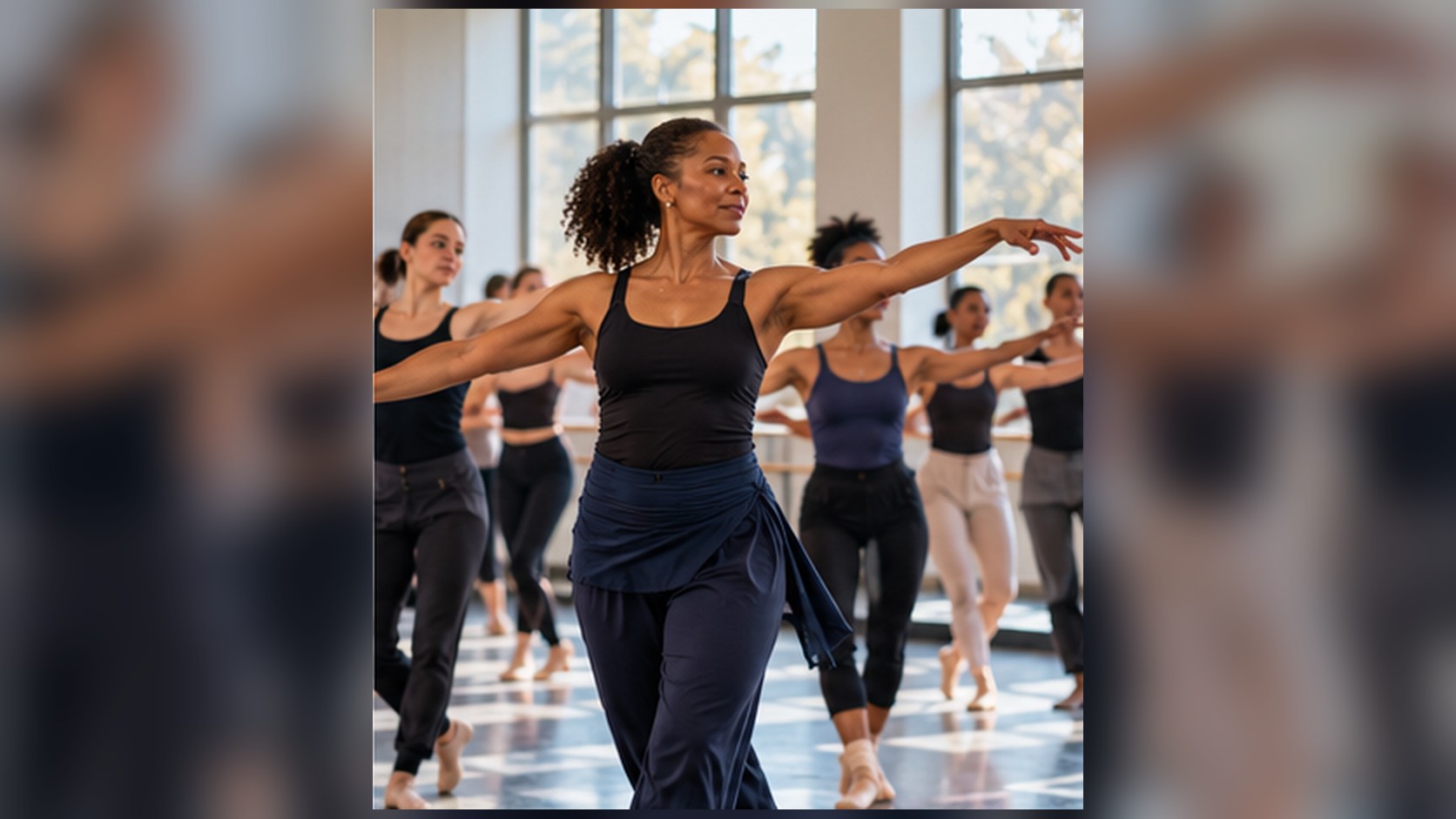
The lesson at 40: Your experience is an asset. Find ways for it to earn income without asking your body for what it gave in your 20s.
Ages 50–59: The Financial Reality Check
Here is the question many dancers carry quietly: What if I have been dancing and teaching for 30 years and have very little saved?
A dance educator can spend decades developing students, producing shows and supporting community programs while putting almost nothing into personal savings. That is hard to face. But 50 is not the end of planning. It is the moment to become deliberate.
Start by finding out what already exists. Review past employers, pension plans, retirement accounts, tax records and your Social Security earnings. Then compare what you can expect to receive with what you will need to live. Some dancers discover that a college job, an old union contract or a past employer left them benefits they forgot. Others find they have enough Social Security credits but a small projected check. Both situations need a plan; the plans are different.
Catch-up savings open at 50
- IRA: $7,500 for 2026, plus a $1,100 catch-up from age 50 — $8,600 in total.
- 401(k), 403(b) and most 457 plans: $24,500 for 2026, plus an $8,000 catch-up from age 50 — $32,500 in total.
- Ages 60–63: a higher workplace-plan catch-up of $11,250 applies instead.
These are maximums set by the IRS, not recommended amounts, and your eligibility depends on earnings and plan rules. Someone starting at 55 will not have the advantages of someone who started at 25, but security can still improve: pay down expensive debt, move toward benefit-eligible teaching work, open an IRA, save more when income rises, and design teaching that your body can sustain.

The lesson at 50: Do not measure your future only by what you did not save. Identify what you have, what you can still earn, and which decisions can improve the years ahead.
Social Security: Did My Years of Dance Work Count?
Social Security is one of the most misunderstood parts of a freelancer’s future. What you eventually receive depends on earnings reported under the Social Security system, not on how many years you spent in the profession.
- In 2026, you earn one credit for every $1,890 in covered earnings, up to four credits a year. Four credits takes $7,560.
- Most workers need 40 credits — about 10 years of work — to qualify for retirement benefits on their own record.
- Qualifying is not the same as a strong check. For most retirement calculations, Social Security uses the highest 35 years of indexed covered earnings; fewer than 35 years of covered earnings can result in zero years in the average.
Picture two dance teachers, each with 35 years in the field. One reports income every year and pays the tax. The other does a lot of informal cash work and leaves part of it off the books. Their careers look the same from the studio floor. Their Social Security records — and their checks — may look very different.
Older dancers can keep building covered earnings through properly reported work. Every dancer, at every age, should check their earnings history and benefit estimates at my Social Security. If a year is missing or wrong, it is far easier to fix while you still have the paperwork.
What changes in January 2027
The Social Security Administration has announced its 2027 figures: a 3.6% cost-of-living increase for benefits, $1,970 to earn one credit ($7,880 for four), and a higher earnings limit of $25,560 for people working while collecting benefits before full retirement age.
Pension, 401(k), 403(b), IRA: What’s the Difference?
These words get used as if they mean the same thing. They do not.
| Option | How it works | Why dancers should know it |
|---|---|---|
| Social Security | Government benefit based on covered work and the age you claim | A possible foundation for retirement income |
| Traditional pension | Employer plan that pays by formula (pay, years of service, plan rules) | Predictable payments — if you earned and vested |
| 401(k) | Workplace savings account, sometimes with employer money added | Grows with what goes in and how it is invested |
| 403(b) | Workplace savings plan at eligible schools and nonprofits | Key for dancers who teach at qualifying institutions |
| Traditional or Roth IRA | Retirement account you open yourself | Works for freelancers with no workplace plan |
| Solo 401(k) | Plan for a self-employed owner with no employees besides a spouse | An option for independent teachers and choreographers |
| SEP-IRA | Employer-funded plan common with small businesses and the self-employed | Another option for studio owners and dance entrepreneurs |
A pension pays by formula. A 401(k) depends on how much money goes in and how its investments perform. Neither is automatic. A pension is not awarded just because you worked somewhere for years — you must meet the plan’s participation and vesting rules. And having a 401(k) does not guarantee any particular monthly income.
Union contracts can create pension or health credits, but only through covered work under specific plan rules. Membership alone does not guarantee either. Ask every employer or union plan for its Summary Plan Description, your vested benefit statement and any estimate of future payments.
Ages 60–64: When Can I Afford to Stop Working?
Retiring from the stage and retiring financially are two different decisions. A dancer might stop taking demanding performance contracts at 48 and teach until 72. Another might perform, choreograph or direct well into later life. There is no universal age when an artistic career must end — but there are ages when government benefits change.
| Age | What it means (born 1960 or later) |
|---|---|
| 62 | Earliest Social Security retirement benefit — permanently reduced by 30% |
| 65 | Medicare eligibility for most people |
| 67 | Full retirement age; the earnings limit no longer applies |
| 70 | Delayed retirement credits (8% for each full year after 67) stop growing your own benefit |
In plain numbers: if your full benefit at 67 would be $1,000 a month, claiming at 62 would pay about $700, and waiting until 70 would pay about $1,240. Earlier money is not wrong — but it is a trade. Weigh your health, family needs, savings, work income and how long people in your family tend to live.
There is one more rule for dancers who keep teaching. If you collect benefits before full retirement age and earn above $24,480 in 2026, Social Security withholds $1 for every $2 you earn over the limit. In the year you reach full retirement age, the limit rises to $65,160 and $1 is withheld for every $3 above it. At full retirement age, Social Security recalculates the benefit to account for months in which checks were withheld; this is not a dollar-for-dollar refund. Pensions, annuities, investment income and interest do not count as earnings for this test, though they can still affect your taxes.
The lesson at 60: Before you claim Social Security, compare what you gain today with what you give up in every future monthly check.
Ages 65–70: Medicare and the Cost of Protecting the Body
A dancer’s body carries a professional history. Decades of rehearsal, performance and teaching make health care one of the biggest pieces of any retirement plan.
Most people become eligible for Medicare at 65. Check your enrollment window in advance; automatic enrollment, active employer coverage, and special enrollment periods can change what you need to do. But Medicare does not make every medical bill disappear:
- The standard Part B premium in 2026 is $202.90 a month, with a $283 yearly deductible. Higher-income beneficiaries pay more.
- Most people pay no premium for Part A because they or a spouse worked long enough in Medicare-covered jobs. Those who did not can pay up to $565 a month in 2026 ($311 with 30 to 39 quarters of coverage) — another reason reported work matters.
- Original Medicare does not cover most dental care, hearing aids and their fitting exams, eye exams for glasses, routine physicals, massage therapy, or non-medical long-term care. Some Medicare Advantage plans cover certain vision, hearing and dental services.
The gap before 65
A dancer who stops working at 60 or 62 may need several years of coverage before Medicare begins. Options include an employer plan, a spouse’s plan, the Affordable Care Act Marketplace at HealthCare.gov, or Medicaid where eligible. Plan for real costs here: the enhanced Marketplace premium tax credits that ran through 2025 expired on December 31, 2025. Federal premium tax-credit rules can change. Check current eligibility and actual plan prices during Open Enrollment rather than assuming last year’s premium.
Dancers with limited income should also ask about Medicare Savings Programs and Extra Help with prescription costs.

Teaching later in life can bring income and purpose, but be honest about what daily demonstrations cost your body. Private coaching, choreography, curriculum design, dance history lectures and artistic consulting can keep you in the work with less wear.
The lesson at 65: Retirement planning must include the cost of protecting the body that helped build your career.
Marriage, Divorce and Children: How Family Changes the Plan
Marriage. A spouse with few or no work credits can receive up to half of the worker’s full benefit, reaching that 50% maximum at full retirement age. This can matter when one partner spent years raising children or supporting the other’s career. You generally do not collect your own full benefit plus a full spousal benefit; Social Security coordinates them. Survivor benefits follow separate rules and can be vital after a spouse dies.
Divorce. A former spouse can receive benefits on an ex-spouse’s record if the marriage lasted at least 10 years and the former spouse is 62 or older and unmarried, among other rules. Divorce can also split pensions, 401(k)s and property, and old beneficiary forms can outlive a marriage. Make sure the agreement addresses retirement accounts directly.
Children. A dependent child may receive up to half of a parent’s full benefit when the parent collects retirement or disability benefits, if the child is unmarried and under 18, 18 or 19 and a full-time elementary or high school student, or disabled before 22. Dancers who become parents later in life should plan for retirement savings that may also need to support children and education.
Estate planning. If you own a home, a studio, choreography, recordings, archives or other valuable work, you need a will, powers of attorney, health care directives and current beneficiary designations. Your creative legacy deserves the same protection as your money.
The lesson: Build family decisions into the plan when they happen — not after an emergency.
Inflation: Why Today’s Income May Not Be Enough Tomorrow
Rent, insurance, food, transportation and medical costs keep rising after the paychecks stop. Here is an illustration, not a forecast: a retired teacher who needs $3,000 a month today would need about $5,418 a month in 20 years to buy the same things if prices rose an average of 3% a year.
Social Security adjusts each year: benefits rose 2.8% for 2026, and a 3.6% increase is set for 2027. Many traditional pensions have no automatic inflation adjustment, and savings must be managed with rising costs in mind. A cost-of-living increase also does not mean your own expenses rose by the same amount; a renter facing a big rent increase or a homeowner facing new insurance and repair bills can fall behind quickly.
Can teaching fees keep up? A teacher who charges the same rate for 15 years is taking a pay cut every year in purchasing power. Raising rates is not easy, especially in underserved communities, but there are fair ways to do it: sliding-scale tuition supported by grants, institutional partnerships, premium workshops, and pricing that protects access while keeping the teacher sustainable.
Starting Late: What a 59-Year-Old Dancer Can Do Now
Imagine a dance teacher, 59, with nearly four decades in the profession. They have performed, taught, mentored and helped preserve a culture. They have no pension, little savings and uncertain health coverage. Here is the plan, in order:
- Check Social Security. Confirm your earnings record, count your credits and look at estimates for different claiming ages.
- Hunt for lost money. The Department of Labor’s Retirement Savings Lost and Found lets you search, after verifying your identity through Login.gov, for private-sector employer and union plans tied to your Social Security number, including pensions and 401(k)s. It does not cover IRAs or government plans, and a match is a lead to call the plan administrator, not a guarantee. The Pension Benefit Guaranty Corporation holds unclaimed benefits from certain private plans that ended; you search with your last name and the last four digits of your Social Security number.
- Price your health care before and after Medicare eligibility.
- Build a real budget — essential bills, debts, expected benefits and the minimum monthly income you need.
- Find body-smart income: arts administration, coaching, consulting, choreography, history instruction, teacher training.
- Use catch-up contributions when income allows.
- Rethink big costs. For some, that means a more affordable region, shared housing with family, or a job with stronger benefits. For others, staying near an established student base and network pays better. No single answer fits everyone.
Starting late is still starting. The goal is to turn financial uncertainty into an informed, practical plan.
— Dance Mogul Magazine
Unions, Professional Organizations and Where to Get Help
If you have worked professionally in entertainment, find out whether that work created retirement or health benefits. Verify eligibility directly with each organization or plan.
- American Guild of Musical Artists (AGMA): the union for singers, dancers and staging staff in opera, concert dance and concert choral work. Many of its contracts include employer-provided health and retirement benefits through the AGMA Retirement and Health Funds; coverage depends on your specific agreement.
- SAG-AFTRA: covered screen and broadcast work can earn credit toward the union’s health and retirement plans, subject to earnings and plan rules.
- Actors’ Equity Association: covered stage contracts can carry pension and health contributions under that work.
- Entertainment Community Fund — Career Transition For Dancers: career counseling, workshops and educational scholarships for dancers changing careers because of injury, age or life events, with a companion program, The Dancers’ Resource, that helps with financial assistance and mental health. New participants begin with a Career Center orientation. Regional career centers: East 212-221-7300 ext. 259 · Central 312-880-1536 · West 323-933-9244 ext. 450.
Achievements, history and union membership are real parts of a career. On their own, they do not guarantee a pension or lifetime health coverage. Documentation does.
The Roadmap for Every Generation
| Stage | Career focus | Money and life focus |
|---|---|---|
| 20–29 | Training, credits, networking, identity | Report earnings, emergency fund, first retirement account |
| 30–39 | Growth, teaching, choreography, business | Housing, insurance, family planning, steady saving |
| 40–49 | Leadership, education, ownership | Audit benefits, build assets, cut debt, seek benefit-eligible work |
| 50–59 | Mentorship, direction, specialty work | Projections, catch-up savings, health and disability planning |
| 60–64 | Selective performing, teaching, consulting | Claiming strategy, coverage until Medicare, income plan |
| 65–70 | Dancing by choice | Medicare choices, withdrawals, inflation protection |
| 70+ | Mentorship, preservation, fulfillment | Sustainable income, long-term care, estate and legacy |
These ages are guides, not artistic deadlines. A dancer can launch a performance career at 40, open a studio at 60 or teach into their 80s. The point is to grow financial security alongside the art.
Your Lifetime Plan — Key Ages and Milestones
Any age — $400 or more in net self-employment earnings means filing and paying self-employment tax
18+ — Saver’s Credit possible (not a full-time student or someone’s dependent)
20s — Emergency fund, first IRA or Roth IRA, check your Social Security record yearly
30s — Health, disability and life insurance; beneficiaries; family plan
40s — Benefit-eligible teaching roles; audit every past plan
50 — Catch-up contributions open (IRA +$1,100; 401(k)/403(b) +$8,000 in 2026)
60–63 — Higher workplace-plan catch-up ($11,250 in 2026)
62 — Earliest Social Security retirement benefit, reduced 30%
65 — Medicare eligibility; contact Social Security at least three months before
67 — Full retirement age (born 1960 or later); earnings limit ends
70 — Delayed retirement credits stop; no benefit to waiting longer
The First 30 Days: A Financial Checkup for Dancers and Teachers
Whatever your age, start here:
- Review your Social Security record at ssa.gov/myaccount — earnings, credits and estimates.
- Find past retirement accounts and pensions. Contact former employers and unions; search the Retirement Savings Lost and Found.
- Write down your monthly costs — housing, health care, taxes, utilities, insurance, food and debt.
- Review health coverage — employer, HealthCare.gov or Medicare, depending on age.
- Choose a retirement account — IRA, employer plan or a self-employed plan — and automate even a small deposit.
- Protect your family — beneficiaries, spouse and survivor benefits, insurance and estate documents.
- Map your income transition — the work that can grow as performing demands shrink.
- Talk to qualified professionals — a tax preparer or a fee-only fiduciary financial planner for strategy, and a benefits counselor for Medicare and government programs.
The earlier you begin, the more choices you keep. Beginning later is still worth it.

Your Greatest Achievement May Be the Life You Build Beyond the Stage
Dance reaches far beyond the years an artist performs. A teacher can shape thousands of students. A choreographer can change how a generation moves. A cultural pioneer can start traditions that outlive the original performances. Those achievements are real.
But dancers also deserve medical care, safe housing, dependable income and the freedom to grow older with dignity. A lifetime of service to the arts should not require a lifetime of financial insecurity.
So the dance community needs a bigger definition of success. Celebrate the performances, the awards, the choreography and the cultural influence — and also celebrate the artist who opens a retirement account, keeps health coverage, builds a sustainable business and plans for later life. Young dancers deserve financial education before their first contract. Veteran teachers deserve to know what benefits they may have earned. Older dancers deserve respect, economic participation and real resources.
Retirement does not have to mean leaving dance. It can mean reaching a stage of life where you dance because of passion, purpose and choice, not financial pressure.
The most important question may not be “How long can I keep dancing?” It may be “What kind of life am I building because I chose to dance?”
— Dance Mogul Magazine

Why This Matters to DMM
Since 2010, Dance Mogul Magazine — the first father-and-son Black-owned dance magazine — has told the stories of dancers whose influence outlived their performing years. We measure every story by one question: does it help someone become a better version of themselves?
Financial wisdom is part of that answer. We celebrate the art in our legacy features; this guide exists so the next generation can protect the artist, too. Dance is our foundation, and self-empowerment is the mission — on stage, in the studio and at the kitchen table where the real decisions get made.
Share this with the dancer booking a first job, and with the teacher who has given everything to their students. Both deserve the full picture.
Tell Us Your Story
We are gathering dancers’ real experiences for future guides. Share what you learned:
- What do you wish someone had told you about money at your first professional job?
- Did a union job, college position or old employer leave you a benefit you almost forgot?
- How did you build income that your body can sustain later in your career?
Reach us through the Dance Mogul Community.
Dancer Retirement Planning: Frequently Asked Questions
When should a dancer start saving for retirement?
As early as possible, even with small amounts. Time does much of the work: in a DMM illustration at a hypothetical 6% yearly return, $100 a month from age 22 grows to about $275,600 by 67, while the same amount starting at 30 reaches about $163,100. Returns are not guaranteed.
Do 1099 dance gigs count toward Social Security?
Yes, when the income is reported and self-employment tax is paid. If your net self-employment earnings are $400 or more in a year, you generally must file and pay self-employment tax of 15.3% (12.4% Social Security plus 2.9% Medicare), and those reported earnings build your Social Security record.
How many Social Security credits does a dancer need?
Most workers need 40 credits, about 10 years of work, to qualify for retirement benefits. In 2026 one credit takes $1,890 in covered earnings, up to four credits a year. In 2027 one credit takes $1,970.
What retirement account can a freelance dancer open?
A traditional or Roth IRA works without an employer; the 2026 limit is $7,500, or $8,600 at age 50 and older. Self-employed dancers who own their business may also consider a Solo 401(k) or a SEP-IRA. Lower-income savers may qualify for the Saver’s Credit, and from 2027 contributions, the federal Saver’s Match.
Can I keep teaching dance after I start Social Security?
Yes. Before full retirement age, Social Security withholds $1 for every $2 you earn above $24,480 in 2026 ($25,560 in 2027). At full retirement age, Social Security recalculates benefits to account for months with withheld payments; this is not a dollar-for-dollar refund. The limit ends at full retirement age, which is 67 for people born in 1960 or later.
Does Medicare pay for everything at age 65?
No. In 2026 the standard Part B premium is $202.90 a month with a $283 deductible, and Original Medicare does not cover most dental care, hearing aids, eye exams for glasses or non-medical long-term care.
How do I find an old pension or 401(k)?
Contact former employers and unions, search the Department of Labor’s Retirement Savings Lost and Found for private employer and union plans, and search the Pension Benefit Guaranty Corporation’s unclaimed benefits database for certain private plans that ended.
Is there help for dancers changing careers?
Yes. The Entertainment Community Fund’s Career Transition For Dancers offers career counseling, workshops and educational scholarships, and its companion program, The Dancers’ Resource, helps with financial assistance and mental health.
Official Resources
- Social Security Administration — my Social Security
- Social Security Administration — How You Earn Credits
- Social Security Administration — 2027 COLA Fact Sheet
- IRS — 2026 Retirement Contribution Limits
- IRS — Self-Employment Tax
- IRS — Saver’s Credit · Saver’s Match
- CMS — 2026 Medicare Premiums and Deductibles
- Medicare.gov — What Original Medicare Doesn’t Cover
- HealthCare.gov — Marketplace Coverage
- U.S. Department of Labor — Retirement Savings Lost and Found
- Pension Benefit Guaranty Corporation — Unclaimed Benefits
- U.S. Bureau of Labor Statistics — Dancers and Choreographers
- Entertainment Community Fund — Career Transition For Dancers
- American Guild of Musical Artists — Member Information
Editor’s note: This guide offers general U.S. financial and benefits education, not personal financial, tax or legal advice. Dance Mogul Magazine is not a financial adviser, tax preparer or law firm. Contribution limits, eligibility rules, tax treatment and health care costs change every year; verify current rules and get qualified professional advice before major decisions. Figures checked October 26, 2026.
Continue Your Journey
• Dance Creating Stability — How dancers build financial and creative independence
• Health & Empowerment Series — Caring for the body and mind that carry the work
• I Wanted to See You Win — Support, envy and the value of creative work
• The Dance Knowledge Hub — Guides for every stage of a dance life
• Empowerment Workbooks & Guides — Tools for individuals, families and young people ready to grow
• Join the Dance Mogul Community — Connect with dancers around the world
© 2026 Dance Mogul Magazine LLC | dancemogul.com | Inspiring Self-Empowerment Through Dance Culture