
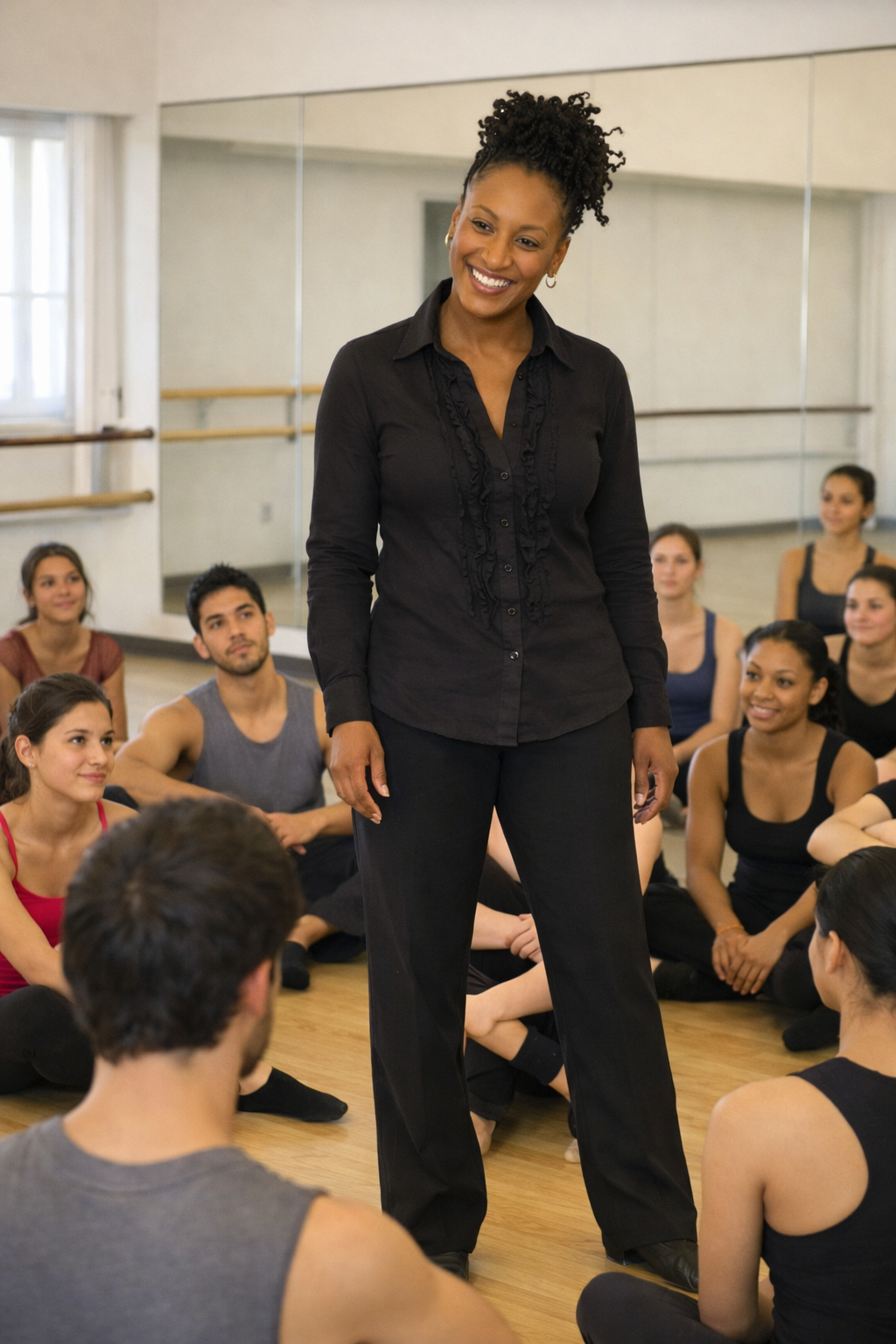
Jazz Theatre · Choreography · Cultural Legacy
Dollie Henry MBE
The Woman Who Built British Jazz Theatre Because Nobody Else Would
There was no jazz theatre company in the United Kingdom for her to join. So in 1996 she founded one, called it Body of People, and spent the next three decades proving the form belonged on a stage.
A Dance Mogul Magazine Profile
1962
Born in London
Age 4
Began Dancing
1996
Founded BOP
MBE
For Services to Dance
She trained for eight years to enter companies that had no intention of hiring her.
By Dance Mogul Magazine Editorial Team | Jazz Theatre & Dance Industry
The standard way to tell a founder’s story is to describe the gap in the market. Dollie Henry’s gap was not commercial. It was that the art form she had devoted her life to had been quietly reclassified in her own country — filed under musical theatre, stripped of its origins, and sold back to audiences as entertainment.
Her response was not to write about the problem. It was to build an institution that contradicted it: a jazz theatre company with a repertoire, a curriculum, a live band, a residency and a lineage argument — and to keep it running for thirty years.
This is the profile. Her own account of how it happened, at length and in her own words, is in our full interview with her in Harlem.
In This Profile
The Timeline · The Ballet Years · The Two Jazzes · Body of People · The Lineage Argument · The Repertoire · The Month She Gives Away · Dance as Medicine · FAQ
Six Decades, One Direction
Born in London — a self-described child of the ’60s, at a time when Black artists of any discipline were rare in British arts.
Aged two, she sees a television commercial featuring Gregory Hines and starts copying his tap steps.
Begins formal dance training at four. Her parents back her without reservation.
Eight years of classical ballet training, with the stated ambition of becoming the first Black female ballet dancer in the UK.
Books studio time at 6 a.m. to choreograph before lessons. Begins winning competitions, then All England, then Europe.
At 17 she tells the head of her college she will one day run her own jazz company. The idea is dismissed.
Founds Body of People (BOP) Jazz Theatre Company as a limited company — seventeen years after making the promise. She writes to her former principal to say so.
Jazz trumpeter, composer and music director Paul Jenkins joins as co-artistic director. BOP becomes a company built on dance and live jazz instrumentation rather than recorded tracks.
BOP becomes Morley College London’s first artistic Jazz Company-in-Residence, giving the form a permanent institutional home in central London.
Dollie Henry MBE tours, teaches and choreographs internationally. BOP remains the UK’s premier jazz theatre company.
The Ballet Years, and the Exam
Between the ages of four and twelve she was trained classically. The goal was explicit: to be the first Black female ballet dancer in Britain. It was a reasonable ambition for a gifted child and an unreasonable one for the institutions of the time, and she worked out the difference on her own by observing that there were no Black dancers in UK ballet companies at all.
The turning point was administrative rather than artistic. Her dance teacher proposed to her mother that Dollie be entered for a graded examination on the understanding that she would simply “pass through” — enter, not distinguish herself, move on. Her mother’s reply reframed the entire premise: if the child was not good enough for the exam, the teaching was the thing at fault.
She sat the exams and came out with honours — by her own account, to her teacher’s dismay.
She has described what the period left behind as a scar: not an injury that stops you, but a mark that stays after the situation is corrected. Her stated method for managing it is not therapy or confrontation. It is work. She dances the residue out.
The Two Jazzes
Her most consequential contribution is not a step or a piece. It is a diagnosis.
In Britain, she argues, the word jazz in a dance context points almost automatically at musical theatre — a tradition that is predominantly white, commercially driven and, in her assessment, deliberately made palatable. Meanwhile the African American tradition the form actually descends from sits in a separate category, historically respected but institutionally unhoused.
One Stream
Jazz as commodity
Routed through musical theatre and the West End. Technically demanding, commercially successful, and in her words watered down and made palatable — a moneymaker rather than an art form.
The Other
Jazz as language
Rooted in African American rhythmic tradition. Capable of carrying narrative, history, community and grief — the full weight of human experience, not just a production number.
Even today, we struggle to bring these two together.
The point of BOP is not to pick a side and dismiss the other. She is explicit that she does not diminish musical theatre. The point is that the second stream had no company, no repertoire and no institutional address in Britain — and that a form without those things eventually stops being taught accurately, then stops being taught at all.
Body of People: The Name Is the Thesis
She spent roughly three months of sleepless nights on the name. “Dollie Henry Dance Company” was available and conventional. She rejected it on principle: naming the company after herself would make the company about her, and jazz, as she understands it, is not about a single body. It is about a body of people.
The composition of the company follows from that. She wanted it led by a Black woman and explicitly did not want it to be an exclusively Black company — she lives in a country where diversity is supposed to be the default, so the roster has included dancers from China, Japan, Italy and France alongside Black British dancers. Representation at the top, plurality on the floor.
Company Record
Body of People (BOP) Jazz Theatre Company
Founded 1996, London, by Dollie Henry MBE.
Co-artistic director Paul Jenkins, jazz trumpeter, composer and music director, from 1999 — making BOP a union of dance and live jazz instrumentation rather than a dance company using jazz recordings.
Residency Morley College London, as its first artistic Jazz Company-in-Residence.
Stated philosophy to “encourage, enlighten and enable” participation in creative work rooted in the jazz tradition.
The live-music decision matters more than it sounds. Jazz dance built on recorded tracks becomes choreography set to a fixed object. Jazz dance built on live instrumentation has to stay conversational — the dancers and the band answer each other, which is how the form worked before it was filed under musical theatre. It is an expensive way to run a company and a difficult one to tour. It is also the argument, made structurally.
The Lineage Argument
The correction she makes most often to students is geographic. Asked where jazz comes from, they say America. She agrees that is where it was named and codified, and then insists on the rest of the route — because a form severed from its origin can be claimed by anyone.
Origin
Africa
The rhythmic foundation. Not an influence on the form — the source of it.
Passage
The West Indies & South America
The stretch of the route most often skipped, and the one closest to her own West Indian heritage.
Codification
America
Where it was named, developed and commercialised — and where students wrongly believe it started.
Diffusion
The World
Including Britain, where she has spent a career insisting the earlier stops be named.
She is not arguing that jazz should be frozen. She is emphatic that it is a contemporary form and that change is natural to it. The objection is to change that erases the record — evolution without acknowledgement, which over a generation becomes appropriation with a clean conscience. Readers can trace related lineages in our dance styles hub and the Dance Knowledge Hub.
Watch: Dollie Henry MBE in Her Own Words
Dollie Henry MBE in conversation with Dance Mogul Magazine. The full transcript is available in our complete interview. Video: Dance Mogul Magazine / YouTube.
The Repertoire
A company is an argument only if it produces work. BOP’s catalogue spans jazz theatre productions, concert dance, musical theatre, cabaret and film, with pieces built in collaboration between Henry’s choreography and Jenkins’s original compositions and arrangements. Recurring works include:
Footprints in Jazz
A repertory staple presented as part of the company’s double-bill programming.
Touches of Miles
Built around the enigmatic character of a jazz legend, with the score laying the canvas for the choreography.
Liquid Spirit
A signature high-energy piece set to Gregory Porter, marrying authentic jazz dance with gospel roots.
The Month She Gives Away
The part of her practice that gets the least coverage is the part she seems proudest of. BOP runs mentoring for dancers who have, in her phrasing, lost their way — people who still love the form but have been knocked off course. She invites them to spend a month with her and the company.
She takes nothing for it.
The reason she gives is specific and uncomfortable. British dance students routinely spend thousands of pounds on training that ends with no realistic career pathway, and Black students in particular are told early and often that they will not make it in England. She is unusually direct that it is harder again for Black women. Her position as a Black woman running the only company of its kind in the country is, she says, precisely what lets her say to a dancer: I will take you, and I will help you get there.
What the Month Is For
Not to fix their technique. To help them shed the baggage and rediscover who they are — on the theory that once a dancer knows that, everything else follows.
The Claim She Makes Most Seriously
Dance as Medicine
Plenty of artists say their art form saved them. Fewer mean it as a mechanism.
Henry teaches jazz as a healing practice, and she does not present that as metaphor. Her account is that when she has been at her lowest, dancing is the intervention she knows works — that it has kept her from despair and, in her words, from losing her mind. She believes the profession has largely forgotten this function, having reduced dance to performance and income.
Even when someone walks in the door at their lowest, they leave feeling better — because they have experienced something real.
This is also why she rejects the technique-first model of training. She is blunt that dancers with extraordinary technique frequently lack soul, and that technique alone will never make a great dancer. What matters is what a dancer puts into the technique: their experience, their history, themselves.
We are not machines.
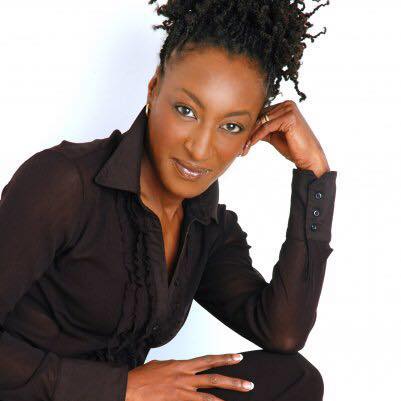
The woman who kept the jazz
art form alive and thriving.
Her own stated wish for her legacy in England. Photograph: Dance Mogul Magazine.
What She Is Actually Leaving Behind
Asked about legacy, she names the outcome rather than the honour: to have been the person who kept jazz alive and thriving in England, and to have brought people together through it. Then she adds the qualifier that makes the whole career legible — if it happens, it happens; if it doesn’t, she is doing it anyway.
That is not modesty. It is the same operating principle that got a Black girl through eight years of ballet training in 1960s and ’70s Britain, that turned a dismissal at seventeen into a company at thirty-four, and that produced a letter to a former principal seventeen years after the fact. The work is not contingent on the recognition.
The recognition arrived regardless. But the more durable legacy is structural: a company, a repertoire, a live band, a residency, a curriculum, a mentoring pathway, and a generation of dancers who can name where the form came from. Institutions outlive their founders. That was always the point of not naming it after herself.
Frequently Asked Questions
Who is Dollie Henry?
Dollie Henry MBE is a British jazz theatre choreographer, director, performer and educator, born in London in 1962. She is the founder and co-artistic director of Body of People (BOP) Jazz Theatre Company, the United Kingdom’s premier jazz theatre company.
What is BOP Jazz Theatre Company?
BOP stands for Body of People. Founded in London in 1996 by Dollie Henry, it is a jazz theatre company built on the combination of jazz dance and live jazz instrumentation. Jazz trumpeter and composer Paul Jenkins joined as co-artistic director in 1999. The company is artistic Jazz Company-in-Residence at Morley College London.
Why is the company called Body of People?
Henry deliberately rejected naming it after herself. She spent about three months choosing the name, on the reasoning that jazz is about a community of people rather than one individual, and that putting her own name on the door would have made the company about her ego rather than the art form.
Where did jazz dance originate, according to Dollie Henry?
She traces the route from Africa, through the West Indies, to South America, then to America, and from there around the world. Her recurring correction to students is that jazz did not begin in America — America is where it was named and codified, not where it started.
What did Dollie Henry train in originally?
Classical ballet, from age four to twelve. Her stated ambition at the time was to become the first Black female ballet dancer in the UK. She changed direction after recognising that British ballet companies were not employing Black dancers.
Does Dollie Henry mentor dancers?
Yes. BOP runs a mentoring programme for dancers who have lost direction, in which they spend a month with Henry and the company. She takes no payment for it, describing the aim as helping a dancer shed accumulated baggage and rediscover who they are.
How do I contact Dollie Henry or BOP?
Dollie Henry can be reached at dollie.henry@bop.org.uk, and the company’s website is www.bop.org.uk.
Connect
Dollie Henry MBE — Founder & Co-Artistic Director,
Body of People (BOP) Jazz Theatre Company, London.
Read Next
• The full conversation: Dollie Henry MBE — the Dance Mogul interview, recorded in Harlem and published in full as a primary source.
• The forms and their lineages: DMM dance styles hub.
• More from the archive: The Dance Mogul Archive.
• Print and digital issues: Dance Mogul Magazine store.
Sources & Attribution
Biographical detail, company history and all direct statements attributed to Dollie Henry in this profile are drawn from Dance Mogul Magazine’s own interview with her, conducted in Harlem, New York and published in full at dancemogul.com/dollie-henry. Company records, repertoire and residency details are as published by Body of People (BOP) Jazz Theatre Company.
Photographs are Dance Mogul Magazine originals. Dance Mogul Magazine is an independently operated, self-funded publication. Please contact us regarding corrections, updated information, or attribution requests.
© 2026 Dance Mogul Magazine LLC | dancemogul.com | Inspiring Self-Empowerment Through Dance Culture