← Beyond Wealth / Family Foundations
Family Foundations · Planning
Family Planning for the Future: Preparing Together for Life’s Changes
Planning is not pessimism. It is an act of care that reduces confusion when a family is tired, frightened, or under pressure.
By Dance Mogul Magazine | Beyond Wealth · Family Foundations, Article 5 of 5

This is what family planning for the future is actually for. The hospital called one person, but the information was scattered among five. A daughter knew the medication list. A brother knew where the insurance card was. A cousin had the spare key. Someone remembered a conversation from years earlier about what their loved one would have wanted, but nobody knew whether it had ever been written down.
The family cared deeply. The problem was not love. The problem was that the love had never been organised into a plan anyone could actually use in the moment it was needed.
Planning cannot remove grief, illness, job loss, or change. It can keep those moments from being made heavier by confusion that was completely preventable.
Why This Matters Right Now
Families often postpone family planning for the future because the subjects feel uncomfortable. Emergencies seem unlikely. Aging feels distant. Money can carry shame. Legal documents feel complicated. People worry that raising a hard topic will sound negative or controlling.
But meaningful planning starts with a conversation, not paperwork. Discussing wishes with the people you love is a central part of preparing for the future, especially for the times when someone may not be able to communicate for themselves.
The purpose is not to predict every possible event. It is to make the first decisions clearer, to identify who should act, and to record the things that should never depend on one person’s memory alone.
“Planning is love translated into information someone else can use.”

Planning Is Not the Same as Control
A healthy family plan does not try to manage every person’s life. It clarifies responsibilities, preferences, and access to essential information, while still respecting each person’s autonomy.
Planning should be collaborative wherever possible. People affected by a decision belong in the conversation about it. Older adults should not be treated as problems to be solved. Young adults should not be shut out of information they may soon need. Children deserve age-appropriate reassurance and clear instructions for an emergency.
Done well, planning does not take power away from anyone. It makes sure that when a hard moment comes, the people who have to act are not forced to guess.
Seven Areas Every Family Should Discuss
1. Emergency communication
Who should be called first? Who is the backup? Where will updates be shared so ten people are not all calling the hospital separately?
2. Health and care preferences
Who can speak for a person who cannot speak for themselves? Which preferences need to be discussed with a qualified health professional and documented properly rather than just remembered?
3. Important documents
Where are the identification, insurance, property, account, legal, and care documents kept? Who is actually authorised to access them?
4. Household continuity
Who can manage children, pets, transportation, utilities, medications, school contacts, or caregiving routines during a disruption?
5. Financial responsibilities
Which bills are essential? Which accounts cover household needs? Are there loans or informal family arrangements that should be written down clearly before they cause confusion?
6. Digital life
Who knows how to locate critical digital records, subscriptions, and devices, and how to do it without exposing sensitive information unnecessarily?
7. Long-term transitions
What conversations are needed about aging, housing, career changes, education, caregiving, retirement, or passing on family knowledge and property?
Prepare Information Without Creating a Security Risk
“Everything should be in one shared note so we can all see it”
The wish for easy access is reasonable. But passwords, account numbers, and identity documents do not belong in an unsecured shared note. Use secure storage, tell trusted people where it is, and review who has access when relationships or responsibilities change.
“We can handle the legal and medical parts ourselves”
Families can and should have the conversations themselves. The documents and decisions that carry legal, tax, financial, or medical consequences are exactly the ones to handle with a qualified professional, because requirements differ by location and mistakes are costly.
“We’ll do it all in one big family meeting”
One overwhelming summit is how planning gets postponed forever. Ask one question at a time. “Who should we call?” is far easier than “what is the entire plan?” Record decisions as they are made, assign an owner and a review date, and let it be a series of small conversations.
Two Families, Two Conversations
These are composites created for illustration, not real individuals. Nothing here is legal, medical, or financial advice.
Adult children starting the conversation gently. Rather than raising everything at once, they open with a single benefit. “We want less confusion if something happens.” They use an upcoming move as the natural reason. In one sitting they identify emergency contacts, where the key documents live, and three questions that need a professional. They assign an owner and a date to each. Nothing is finished, and everything is clearer than it was.
A parent who did not want to be managed. An older adult bristled at the whole idea, hearing it as their children taking over. The tone changed when the family framed planning as the parent staying in control of their own wishes, on the record, in their own words. The parent led the conversation instead of being the subject of it, and the plan reflected what they actually wanted.

What the Dance Community Already Knows About This
A performance depends on far more than what happens under the lights. Someone knows the entrance, the music cue, the spacing, the backup, the emergency contact, and exactly what to do when something changes mid-show. Across the work we cover at Dance Mogul Magazine, that preparation does not reduce the creativity. It is what gives the work room to continue when the unexpected arrives.
Dancers call it knowing the show. It is the shared, written, rehearsed understanding of who does what if a plan breaks. Nobody experiences it as pessimism. They experience it as freedom, because the structure is what lets them take a risk and trust that someone has the next moment covered.
Families need the same backstage plan. Care is strongest when the people who may have to act are not forced to improvise every essential decision at the worst possible moment. This is where the Family Foundations collection has been heading all along, and our wider Beyond Wealth library continues the work of turning care into something a family can actually use.
“The kindest thing many people leave behind is not money. It is a plan that spared everyone a frantic search at the worst possible time.”
Reflection
- Which important decision currently depends on one person’s memory?
- Who would need information first during a family emergency?
- Which planning subject have we avoided because it feels uncomfortable?
- Who should be included in decisions about aging, caregiving, or household continuity?
- What one document or conversation would reduce the most confusion right now?
Talk About It With Your Family
- Who are our primary and backup emergency contacts?
- Where is important information stored, and who is authorised to access it?
- What responsibilities would need immediate coverage during a disruption?
- Which health, care, financial, or legal questions require professional guidance?
- When will we review and update the plan?
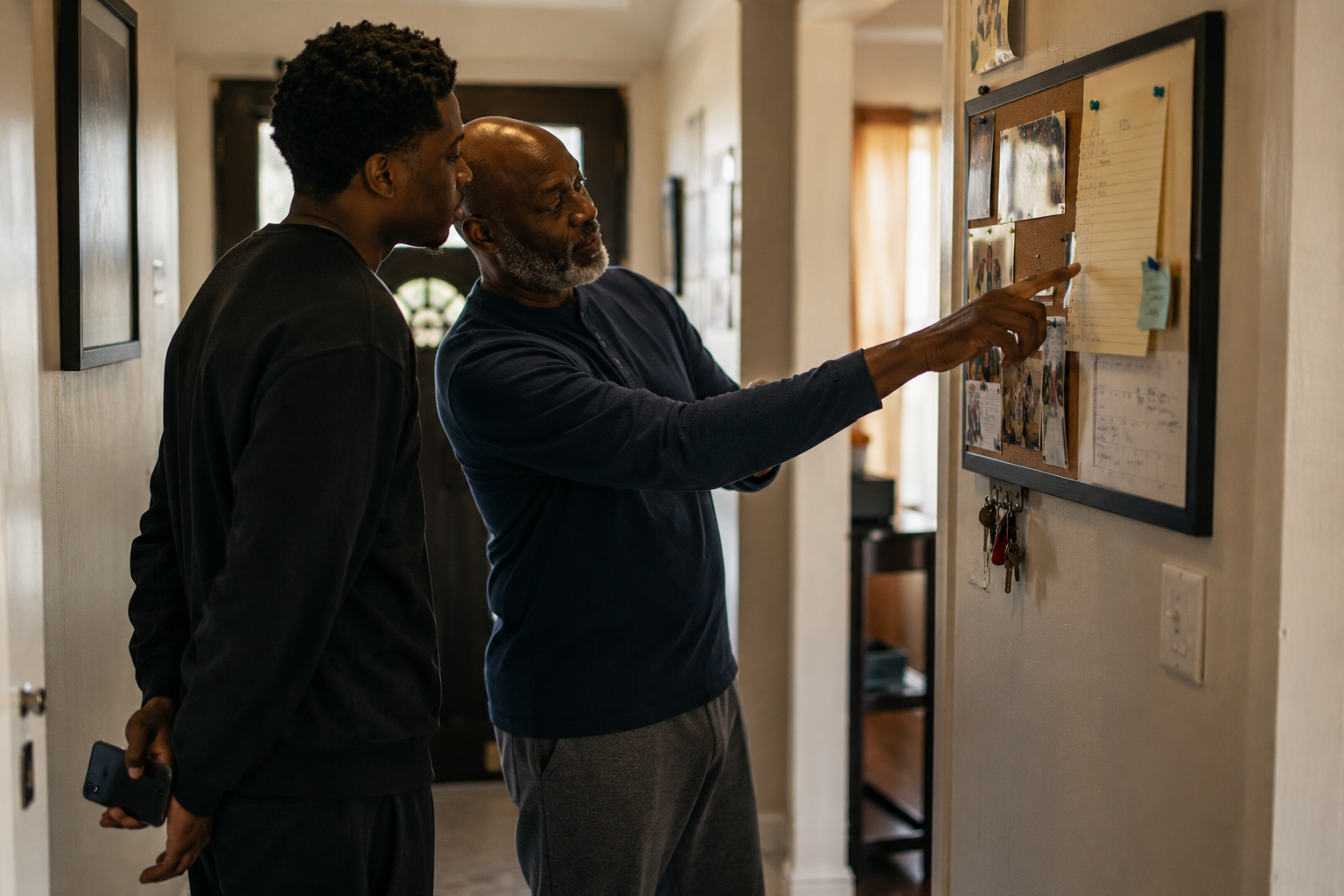
Your Small Action Step: Schedule a Family Information Session
Set aside forty-five minutes. Do not try to finish every legal or financial task in one sitting. Just identify your emergency contacts, the location of important documents, the household responsibilities that would need immediate coverage, and three planning questions that need professional follow-up. Assign one owner and one review date to each next step. Planning becomes possible the moment it stops being one huge task and becomes a short, honest conversation.
Download the free Family Information Session Planner →
For anything involving legal documents, taxes, or medical directives, work with a qualified professional who knows your situation. Our Beyond Wealth worksheets can help you organise the conversation, not replace that advice.
Key Takeaways
- Planning reduces confusion; it does not eliminate uncertainty.
- The most useful plans begin with conversation and include the people affected.
- Emergency contacts, care preferences, documents, household duties, finances, digital records, and long-term transitions all deserve attention.
- Sensitive information should be accessible to authorised people and protected from unnecessary exposure.
- Qualified legal, tax, financial, and medical professionals are essential when a decision carries real consequences.
- A plan is one of the kindest things a family can leave for the people who come after.
Frequently Asked Questions
When should a family begin planning for the future?
Now, in small steps. Planning is relevant after a move, marriage, birth, diagnosis, caregiving change, new job, or property purchase, and it should be reviewed regularly.
What is advance care planning?
It is the process of discussing and preparing for future medical decisions in case a person becomes seriously ill or unable to communicate. Requirements and documents vary, so use qualified medical and legal guidance.
Who should have access to important documents?
Only trusted and appropriately authorised people who may need the information. Access should match responsibility and be reviewed when circumstances change.
How often should a family plan be updated?
Review it at least once a year and after any major life change, including marriage, divorce, birth, death, relocation, diagnosis, a job change, or a change in caregiving.
What if relatives refuse to discuss planning?
Begin with one practical benefit and one small question. Respect their autonomy, avoid forcing a full conversation, and document your own preferences and responsibilities where appropriate.

The Journey Continues: Career & Craft
Family Foundations has explored how people talk, choose, steady themselves, remember, and prepare together. The next collection turns toward the work of a life. How skill is built, how craft is passed forward, how careers change, and how contribution becomes part of a legacy. Return to the Family Foundations collection any time, or explore the whole Beyond Wealth library.
The Family Foundations Path
- 1. Healthy Family Communication
- 2. Shared Family Values
- 3. Family Stability: Creating a Floor Before the Storm
- 4. Family Traditions: Identity, Belonging, and Memory
- 5. Planning Together: Preparing a Family for Life’s Changes ← you are here

Dance Mogul Magazine publishes the Beyond Wealth collection for educational and inspirational purposes. It is not financial, legal, tax, medical, or mental-health advice, and it is not a substitute for guidance from a licensed professional who knows your situation. The people described in the examples are composites created for illustration and do not represent real individuals.
© 2026 Dance Mogul Magazine LLC | dancemogul.com | Inspiring Self-Empowerment Through Dance Culture