

At a Glance
- Country
- France
- Program
- pass Culture — Ministry of Culture, nationwide since May 2021
- Who gets money
- Young people at 17 (€50) and 18 (€150), usable for four years from the 17th birthday
- Extra help
- +€50 at 18 for young people with a disability allowance or from lower-income households
- Reach
- 90% of 18-year-olds covered by September 2025
- Verified
- October 5, 2026
The Big Picture
Money in an App That Can Only Be Spent on Culture
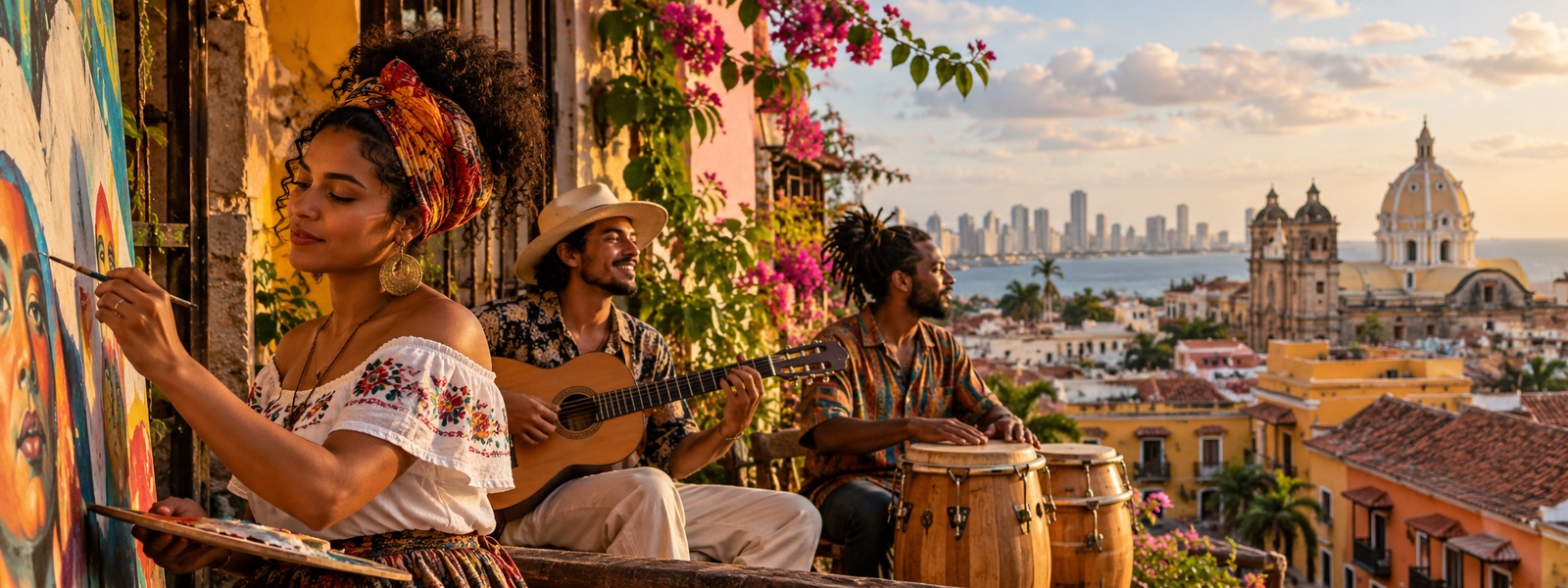
Imagine turning 18 and finding money in a phone app that can only be spent on culture. A novel at an independent bookshop. A ticket to a live concert. An entry to a museum you have walked past for years. A course in drawing, theater or music.
That is the idea behind France’s pass Culture. The Ministry of Culture rolled it out nationwide in May 2021 to widen young people’s access to culture.[1] It has two parts: an individual share, credited to each young person in a free app, and a collective share, paid to schools since 2022 for class outings and cultural projects.[1]
For DMM Global Arts, the pass Culture matters for a simple reason. Most countries debate whether young people can afford culture. France decided to test an answer at national scale — and is now openly arguing about whether it worked.
Direct access
A culture budget in every young adult’s pocket.
Schools included
A separate share funds class trips and projects.
Open debate
Auditors and the ministry disagree on the results.

What We Found
How the pass Culture Works Now
The rules changed on March 1, 2025, under a decree of February 27, 2025.[1] Here is the current system in plain English:
- At 17: a €50 credit. Before the reform, 17-year-olds received €30.[1]
- At 18: a €150 credit, down from €300 before the reform.[1]
- At 15 and 16: no money anymore. Teenagers can still open an account early for free offers and to get used to the app.[1]
- Time to use it: four years from the 17th birthday.[1]
- The bonus: an extra €50 at 18 for young people receiving France’s child or adult disability allowances (AEEH or AAH), or whose family’s income falls below a threshold.[1] A ministerial order of July 3, 2026, reported by the legal publisher WebLex, set that threshold at a monthly family quotient below €700.[5]
The list of what counts as culture also keeps moving. A December 2025 order added new eligible areas, including scientific, technical and industrial culture, and gave the pass Culture operator power to suspend accounts used against the rules.[6]
Reach
Who It Reaches
On reach, the numbers are strong. France’s audit court, the Cour des comptes, found in December 2024 that 84% of 18-year-olds used the pass and that 4.2 million young people had registered since 2019.[3] By September 2025, the ministry reported, coverage at 18 had reached 90%.[2]
The ministry also told parliament that about 10% of users live in France’s priority urban neighborhoods and more than 30% live in rural areas — proportions it says match or exceed those groups’ share of young people nationally.[2]
Programs & Impact
What the Evidence Actually Shows
Reach is not the same as impact, and France’s own institutions disagree about the second.
Cour des comptes · December 17, 2024
The critical view
The audit court’s first full review was severe. It found the pass had become an open-ended spending line that was hard to control, and that it struggled to reduce inequality or reach young people far from culture.[3][4] Spending on the individual share climbed from €92 million in 2021 to a forecast €244 million in 2024.[3] Auditors also flagged that €16 million had gone to escape-room games.[4] Even the culture minister at the time had warned that the pass risked reinforcing young people’s existing consumer habits instead of widening them.[7]
pass Culture operator survey · cited in parliament
The encouraging view
A survey by the pass Culture company of its fourth group of users points the other way.[2] It reported that 83% of young people discovered a cultural venue through the app, 76% tried a new cultural activity, and 65% went back to an activity they discovered without using the pass.[2] Bookshops remained the most common discovery, but the mix was widening: the share discovering museums rose from 3% to 32% in two years.[2]
Where the sources differ
The audit court judged the program on its original, ambitious goal of reducing cultural inequality. The ministry and the operator measure discovery and repeat visits. Both can be true at once: a program can reach nearly everyone and still struggle to change who feels culture is for them. DMM did not find an independent study that settles the question.

Challenges
The 2025 Cuts and Who Felt Them
The reform was driven by money as much as by evidence. For 2025, funding for the individual share fell from €210.5 million to €170.5 million, and the schools’ collective share fell from €97 million to €72 million, according to a written question in the National Assembly.[2] The same question reported that school project bookings were suspended from February until September 2025, and that some festival organizers said 15 to 20% of their audiences had bought tickets through the pass.[2]
The government’s answer was to focus the cash on young adults, add the low-income and disability bonus, and work harder on discovery.[2] That includes partnerships with youth and social organizations, local offers for rural users, “duo” offers that let a young person bring a companion, and peer “ambassadors” and clubs.[2] The ministry says this push raised the share of credits spent on live music shows by more than five points nationally.[2]
DMM analysis
France has, in effect, run a national experiment on a question every arts community asks. Money opens doors, but money alone does not guarantee a young person walks through a new one. The pass Culture’s most promising results come from guidance — curated offers, companions, peers — not from the credit itself.

Why This Matters
Lessons Beyond France
Many countries are asking how to get young people into museums, theaters and bookshops when screens compete for every hour. France’s experiment offers three practical lessons, whatever one thinks of the price tag:
- Access works best with a guide. Discovery rose when the app, peers and partners pointed young people toward unfamiliar offers.[2]
- Measure more than sign-ups. Reaching 90% of a generation is not the same as changing its habits; the audit court’s critique began there.[3]
- Protect the school side. The collective share reaches students through teachers, before they have spending habits of their own. When it was squeezed in 2025, school bookings paused for months.[2]
It is the same thread that runs through DMM Global Arts’ reporting on community arts programs in Nigeria: opportunity grows when someone builds the bridge between young people and the arts.
What's Next
What Future Generations Can Learn
A culture budget is a statement that art belongs to everyone, not only to families who can already afford it. France’s story shows that the statement is the easy part. The harder part is the bridge — the teacher, the friend, the youth worker or the well-chosen suggestion that turns a free ticket into a lifelong habit.
For young creatives anywhere, the takeaway is personal too. Opportunity often arrives quietly, as a credit in an app or a free class nobody advertises. Learn where your country’s cultural opportunities are listed, use them, and bring someone with you.
What you can do
If you live in France and are 15 or older, the official app and eligibility rules are at pass.culture.fr. If you are a venue, teacher or youth organization in France, the ministry is actively seeking partners for local and guided offers.[2] If you work in arts policy elsewhere, the Cour des comptes report is the most detailed public review of a national youth culture pass available.[3]
Sources
- Service-Public.fr, “Pass Culture : quels changements concernant la part individuelle ?” (Mar 6, 2025)
- Assemblée nationale, written question no. 10050 and Ministry of Culture answer (JO Feb 10, 2026)
- Cour des comptes, Premier bilan du pass Culture (Dec 2024), full report
- The Art Newspaper (France), “Le pass Culture dans l’impasse selon la Cour des comptes” (Dec 17, 2024)
- WebLex, “Pass Culture : un passe-droit pour une autonomie culturelle” (Sep 16, 2026), on the arrêté of July 3, 2026
- Weka, “« Pass Culture » : le gouvernement fixe de nouvelles règles pour 2026” (Jan 12, 2026)
- Ministère de la Culture, response to the Cour des comptes report (Dec 2024)
Method: DMM separates confirmed fact (with numbered sources), source-supported interpretation and labeled DMM analysis. French-language sources were read in the original and paraphrased in English by DMM. The pull quote above is DMM’s own analysis, not a source quotation. No program was paid for coverage.
Continue Around the World
More From DMM Global Arts
Stories marked PUBLISHED are live — click the title or “Read the story” to keep reading. See all Global Arts stories →