
Dance Mogul Magazine · Archive Retrospective · Street Dance
Granny and Robotroid Inc.: San Francisco Strutting Legacy
Granny and Robotroid Inc. helped shape San Francisco strutting. Revisit Deborah Johnson’s legacy, Bay Area dance history and DMM’s 2013 interview.
By Dance Mogul Magazine · Originally published June 2013 · Updated November 2026
Granny and Robotroid Inc. occupy a vital place in the history of San Francisco street dance. In June 2013, Dance Mogul Magazine interviewed Deborah “Granny” Johnson, bringing together two histories that are too often told separately: the development of an influential dance tradition and the life of a woman who helped shape it. Her story belongs in a record of American dance that takes regional communities as seriously as the commercial stages that eventually benefited from their creativity.
In this feature
- Granny and Robotroid Inc.: the Fillmore connection
- When movement travels between cities
- Understanding the form through performance
- From neighborhood performance to television
- The 2013 DMM interview: a life beyond the stage
- Women and the recording of street dance history
- A timeline for understanding the surviving record
- Where the legacy is visible today
- What Granny and Robotroid Inc. can teach the next generation
- Frequently asked questions
A reader encountering Granny for the first time might recognize the movement language associated with her generation without knowing the names of the artists who developed it. That is precisely why this interview matters. It provides an opportunity to return to a period before much of this culture was routinely filmed, archived or credited, and to ask how dancers carried their knowledge from one community to another. It also invites us to hear Johnson on her own terms rather than reduce her to a historical footnote.
From the Dance Mogul Magazine Archive: The Original June 2013 Post
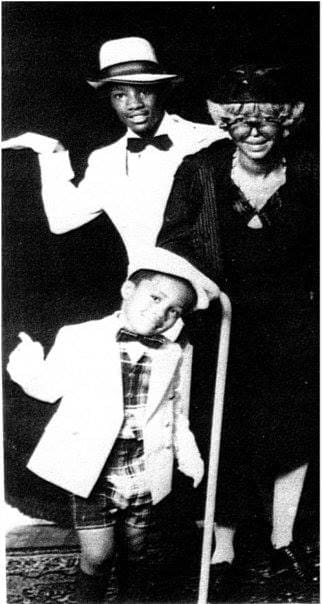
Dance Mogul Magazine caught up with Granny a Dancer from San Francisco California. Granny has a rich history in Dance Culture and her family linage leads back to Black Wall street. Granny opened up to us and shared her untold story of how she was molested as a child and while that had a profound impact on her life she did not let what happened to her stop her from beating the odds. Granny’s story is unfortunately common place to many in the world that are molested and have to live with this dark secret all their lives. Granny helped us to appreciated while coming from a dysfunctional family she was determined to make a success out of herself and those she came in contact with. Granny hopes to inspire future generations of dancers through her strengths and weaknesses.
Contact Granny: https://www.facebook.com/granny.robotroid
Watch
Video from the original Dance Mogul Magazine post.
Granny and Robotroid Inc.: the Fillmore connection
KQED’s Bay Area hip-hop timeline credits Johnson with bringing boogaloo-related movement to San Francisco venues including the Fillmore Auditorium around 1975. In that setting, the form came to be associated with strutting. The timeline identifies Alfred and Donald Jones, dancers from Oakland, among the members of Granny and Robotroid Inc. Their inclusion in the record is important because it reveals a regional exchange rather than a story confined to a single city’s borders.
The word strutting has an ordinary meaning in everyday English, but in this context it describes a particular dance tradition. Audiences should not mistake any confident walk or robotic gesture for the entire form. Names acquire meaning within the communities that practice the movement. A person may have learned from a particular crew, at a particular venue, in a period when terminology was still developing. That lineage is part of what a dance historian needs to preserve.
Fayzo, a founding member of Medea Sirkas, provides a practitioner account in the Rennie Harris American Street Dance Archive. His account connects Johnson to Oakland’s Robotroids and situates the group within the development of San Francisco strutting. It also distinguishes the group-oriented tradition from solo strutting associated with Ben James. That difference should be retained in dance education: a shared movement family does not mean everyone performed the same form or developed it independently.
When movement travels between cities
Oakland and San Francisco are close enough for artists to encounter one another, yet each community has its own cultural identity. The movement of dancers across that geography helps explain why the development of a style is rarely a straight line. An artist may see a concept performed somewhere else and develop a new relationship with it through practice, music, collaboration and public presentation. Over time, the resulting traditions can acquire distinct names, techniques and aesthetics.
This does not diminish the contributions of the original artists. On the contrary, it gives us more people to recognize. When a journalist credits only the person whose performance became widely known, the supporting network disappears. When a journalist assigns a whole dance to a city without naming particular groups, individual labor becomes invisible. The richer historical account preserves both the collective environment and the named participants.
The connection between Johnson and the Jones dancers is an instructive example. Rather than assume that one person invented every element of the style, we can examine the specific acts of collaboration and presentation that helped establish the group. There is a distinction between introducing a movement to a particular audience, refining an existing movement language and creating a new performance tradition. All three are culturally consequential, and each deserves the appropriate credit.
Understanding the form through performance
For a new dancer, an accessible way to approach strutting is to study how movement is organized rather than simply try to reproduce its surface appearance. In group performance, notice where the performers agree on timing and direction. Observe how a formation creates an expectation and how a performer can break that expectation without disrupting the ensemble. Compare a deliberate pause with a continuous phrase. These are useful questions whether the viewer is studying a television routine or a workshop led by an experienced practitioner.
Robotic movement can create an illusion of mechanical precision. That illusion depends on human choices: how much movement to reveal, how abruptly to stop, which parts of the body to isolate and how to transition between shapes. A performer can make an audience anticipate a repeated action before changing the timing. Character emerges through those decisions. The technical challenge is not merely to move stiffly, but to create a persuasive relationship between movement, intention and rhythm.
A group routine adds another challenge. Each performer needs a sense of the shared spatial design. A dancer may be technically accomplished as an individual but still need to learn how to enter and exit a formation, redirect attention, match the group’s accents and give another performer space. The result can be read as a conversation between bodies. A viewer following this approach will notice much more than a collection of impressive tricks.
None of these observations is a substitute for learning the vocabulary directly from practitioners. They are a framework for watching with attention. A teacher who knows the tradition can explain where an isolation, transition or term came from and identify which details distinguish a specific style from neighboring ones. Without that guidance, it is easy to turn a historically situated dance into an imprecise combination of movements learned from several unrelated videos.
From neighborhood performance to television
The Strutter’s Room history dates the formation of Granny and Robotroid Inc. to 1975 and records a successful appearance on The Gong Show in 1977. Hip Hop Congress also identifies the group among Bay Area performers associated with the television program. Together, these accounts establish a significant point of public exposure for a tradition that had developed in community spaces.
Television creates a different environment from a dance gathering. There may be limited performance time, an audience unfamiliar with the style and production decisions made by people outside the dance community. A group has to communicate quickly without losing the qualities that make its art distinctive. A strong visual identity, clear musical decisions and well-rehearsed transitions can help a performance remain recognizable in a new setting.
The value of the surviving television references is not that broadcast exposure somehow validated a dance that was previously unimportant. The culture already had significance for the people who created and practiced it. Television made a version of that culture available to a wider audience. The distinction matters because artists often remember the local environment long after national audiences remember only the televised moment.
A viewer interested in documenting this history can search for the program title, the group name and the reported year, then compare the recording with the accounts maintained by practitioners. Where an upload has an uncertain date or incomplete credits, it should be treated as a lead rather than a definitive archival record. A video caption can be wrong even when the underlying footage is authentic. Good preservation means identifying what the evidence actually demonstrates.
The 2013 DMM interview: a life beyond the stage
Dance Mogul Magazine’s interview with Granny, originally published on June 14, 2013, addressed more than performance history. Johnson spoke about adversity in her childhood and the importance of encouraging others. She also described a family connection to Black Wall Street. Those details are part of her personal testimony; the family genealogy is not independently established in this feature.
The responsibility of an editor revisiting such an interview is to preserve the subject’s agency. An experience of harm should not become the only description of a person’s life. Johnson was a dancer, a cultural contributor and a person who chose to speak about difficult experiences in the hope of helping others. Those dimensions can coexist without making the painful details a source of spectacle.
It is equally important not to turn her account into a universal prescription. Dance can offer expression, community and meaning, but it cannot guarantee recovery from abuse or replace appropriate support. People respond to difficult circumstances in different ways. The lesson of her interview is not that a survivor must achieve artistic success to deserve respect. It is that a person’s dignity and creative contribution remain theirs regardless of what happened to them.
For readers returning to the archive, the original interview has a continuing value that a polished biography cannot replace. The questions, the voice and the manner in which the subject chose to tell her story preserve an encounter between artist and publication. The Dance Mogul Magazine Video Vault indexes the Granny and Robotroid Inc. interview, creating another path to that firsthand material. Listen to the testimony in context rather than treating isolated statements as a complete biography.
Women and the recording of street dance history
One of the challenges facing the history of street dance is the uneven survival of records. Commercial visibility does not necessarily reflect who taught, organized, mentored or developed a tradition. The work of women, in particular, can disappear when historical accounts concentrate exclusively on the names attached to televised acts, battle victories or later commercial categories.
Johnson’s place in the historical sources makes this issue concrete. She is not simply an example of a woman participating in an established form. The Bay Area timeline and practitioner account describe her involvement in the formation and public presentation of the strutting tradition itself. That is a contribution to the history of the form. Recognizing it means discussing the movement and the people connected to it, not merely adding a symbolic mention of a female pioneer to an otherwise unchanged narrative.
A useful exercise for students is to create a research notebook that distinguishes performers, teachers, organizers, musicians and venues. A person may occupy several of those roles. Record the source for each connection. When two accounts differ, retain both with their attribution rather than silently merging them. This method makes it possible to see the relationships behind a dance style and to understand why certain people appear frequently in public documentation while others remain difficult to trace.
That same method also protects against overcorrection. Honoring an overlooked figure does not require assigning her every achievement associated with the wider culture. The strongest recognition is specific recognition. A claim supported by multiple independent accounts will remain useful to the next researcher long after a dramatic but unsourced origin story has been challenged.
A timeline for understanding the surviving record
Three periods help orient a new reader. Around 1975, the sources associate Johnson and the group with the emergence of strutting in San Francisco. In 1977, The Strutter’s Room documents the television milestone. In June 2013, DMM recorded a very different kind of public appearance: an interview in which Johnson could describe her own life and the message she wanted to convey. The decades between those points should not be filled with undocumented career claims. They are an invitation to locate additional records and oral histories from the people who knew the work.
Where the legacy is visible today
The sources available for this update do not establish Johnson’s current schedule, whereabouts or present teaching activity. What they do establish is that the history associated with her name is still being discussed in practitioner and educational contexts. The Strutter’s Room and the Rennie Harris archive offer avenues for understanding the regional traditions. KQED places them in a larger chronological account of Bay Area hip-hop culture.
These are different kinds of preservation. A timeline gives readers a sequence. An oral history explains relationships and distinctions that may be difficult to infer from a photograph. An archived performance gives dancers something to study visually. An interview allows a person to describe an experience in her own words. None of these forms of evidence is complete on its own, but together they can bring a historical subject into focus.
The next stage of documenting this particular lineage would benefit from dated photographs, program listings, recordings, crew rosters and additional testimony from people who performed with or learned from the group. It would also benefit from a careful account of the terms used by different generations. Those are research possibilities, not claims that such records have already been located.
What Granny and Robotroid Inc. can teach the next generation
The creative lesson is that a dancer can learn a historical vocabulary while developing an individual voice. The two are not opposed. Knowing where a movement comes from allows the artist to recognize when a choice belongs to a particular tradition and when it is an original variation. This is a more productive goal than trying to look old-school without understanding the ideas behind the dance.
The community lesson is that a group can become more than its performances. The relationships developed through rehearsals, mentorship and shared responsibility are part of the culture’s infrastructure. When younger dancers are invited to participate in that infrastructure, they gain an opportunity to learn not only techniques but ways of carrying knowledge forward.
The archival lesson is that the time to record an artist’s contribution is while the people who know it can still describe it. Preserve names and dates alongside videos. Ask dancers how they identify themselves and how they identify the movement they practice. Credit the music and the people who organized the performance. Store original recordings and document permissions so future researchers can distinguish an authorized copy from an uncredited repost.
Finally, the human lesson is that personal history and artistic history cannot always be separated neatly. Johnson’s choice to speak to DMM in 2013 gave the publication a responsibility to honor both. Her artistic contribution deserves to be studied with precision, and her personal testimony deserves to be heard with care. For Dance Mogul Magazine, that combination is central to cultural preservation: documenting the movement without losing sight of the people who make it possible.
Frequently asked questions
Who is Granny in San Francisco dance history?
Deborah “Granny” Johnson is associated with the development of San Francisco strutting and the group Granny and Robotroid Inc. KQED and the Rennie Harris American Street Dance Archive provide historical context for her contributions.
When did Granny and Robotroid Inc. emerge?
The Strutter’s Room dates the group to 1975. KQED also places Johnson’s contribution to the development of the San Francisco form in that period. The exact chronology of every group member is not fully established.
Is strutting the same as popping?
The regional traditions have related movement ideas, but they are not interchangeable labels. The practitioner account in the Rennie Harris archive distinguishes group and solo strutting. Learn terminology from knowledgeable practitioners.
Did Granny and Robotroid Inc. appear on television?
The Strutter’s Room and Hip Hop Congress document an association with The Gong Show in the late 1970s. The Strutter’s Room dates the group’s success on the program to 1977.
Where can I find the original Dance Mogul Magazine interview?
DMM published its interview on June 14, 2013. The interview is embedded above in the archive section, and the DMM Video Vault also indexes it under Granny and Robotroid Inc.
Sources and further reading
- Bay Area hip-hop timeline
- Rennie Harris American Street Dance Archive
- Strutter’s Room history
- Hip Hop Congress
- Dance Mogul Magazine Video Vault
For more original Dance Mogul Magazine reporting, visit the Video Vault and the Article Library.
© Dance Mogul Magazine.