
Exclusive Interview · African Diasporic Dance · Where Are They Now
Kara Mack: Cultivating the African Diasporic in America
In 2014 Kara Mack was days away from launching Africa in America. Today she choreographs for film and television, teaches at a university and has kept that brand alive for more than a decade.
By Dance Mogul Magazine · Originally published September 24, 2014 · Updated and expanded November 2026

Artist spotlight
Kara Mack is a choreographer and creative director with an expertise in African Diasporic music and dance, and the founder of Africa in America. Her published credits now include Coming 2 America, The Color Purple, Babylon and Freeform’s Good Trouble, and she is listed on the dance faculty at UC San Diego.
When Dance Mogul Magazine spoke with Kara Mack in September 2014, she was preparing two things at once: a theater showcase called For Our Boys and the launch of an online publication, Africa in America: Music, Dance and Culture Magazine. Both came from the same conviction. African and Afro-diasporic dance had a deep community in the United States and almost no platform of its own.
More than a decade later, the brand she was about to launch is still standing and Kara Mack has carried that work onto film sets, television stages and university classrooms. The interview below is reproduced in full as it first ran, followed by where her path has led.
How We Introduced Kara Mack in 2014
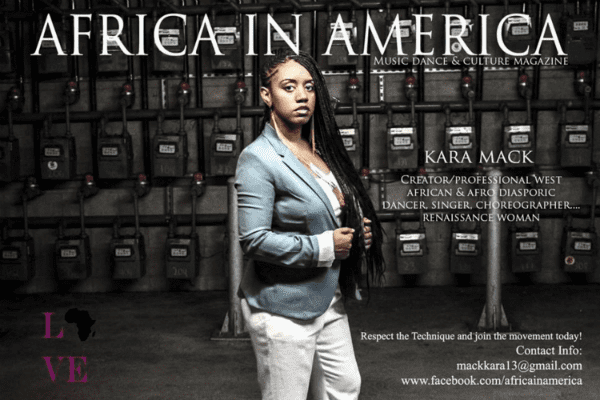
Kara Mack is an African & Afro-diasporic dancer, singer, choreographer, and renaissance woman who has created a new online publication, Africa in America: Music, Dance & Culture Magazine, launching on September 20th. The magazine aims to serve as a primary resource for both professionals and participants in the African Diasporic music, dance, and culture in America. The magazine is dedicated to becoming the voice of a growing community of artists who have had little or no representation in the music and dance fields. it will also focus on arts that address social justice issues, as well as informing readers about community organizing, grant and work opportunities, and other inspirational stories on local and national levels. Dance Mogul Magazine had the honor of catching up with Ms. Mack as she preps to take the world by storm. Be Inspired and Be Empowered

The Kara Mack Interview
Dance Mogul: What was the inspiration behind For our Boys and also your new publication?
Kara Mack: The inspiration behind “For Our Boys…” first came from understanding that there aren’t that many theater performances of African Diasporic Music and Dance in Los Angeles; so I wanted to provide a space to allow up and coming African Diasporic choreographers to be able to present original works. Since African music and dance have always been political, I just didn’t want them to create random pieces, like in other dance showcases; however, I wanted every piece to be dedicated to one theme. This both challenges the choreographer, and exemplifies to the audience that traditional African music and dance can apply to a contemporary theme. So what has honestly, brought up so much emotion over the past 2 years are the murders of our African-American boys due to racism. I have two sons, so it hits very close to home for me. So as an artist, I wanted to dedicate this to these boys while bringing awareness to a much deeper issue that many people look over in America today. This is what art does.
Africa In America: Music, Dance, and Culture Magazine started from me seeing that there was no resource dedicated to the art participants and professional artists of the African Diasporic music and dance community that’s been cultivated here in America. This community has been built up since the 1960s, so there is so much information nationally that needs to be shared with people here and for those who are visiting; who love the culture just as much as we do. I wanted to change the worldview of how people think African dancers should look, and even how they view the dance technique. Many dancers do not look at any style of African dance as a legitimate technique…and that needs to change. Also, there are many people in Africa who always questioned why I was interested in the music and dance culture, and how did I get to be so good. Africa In America Magazine is the answer to all of that. This resource will unite both America and Africa again through music and dance.
“Many dancers do not look at any style of African dance as a legitimate technique…and that needs to change.”
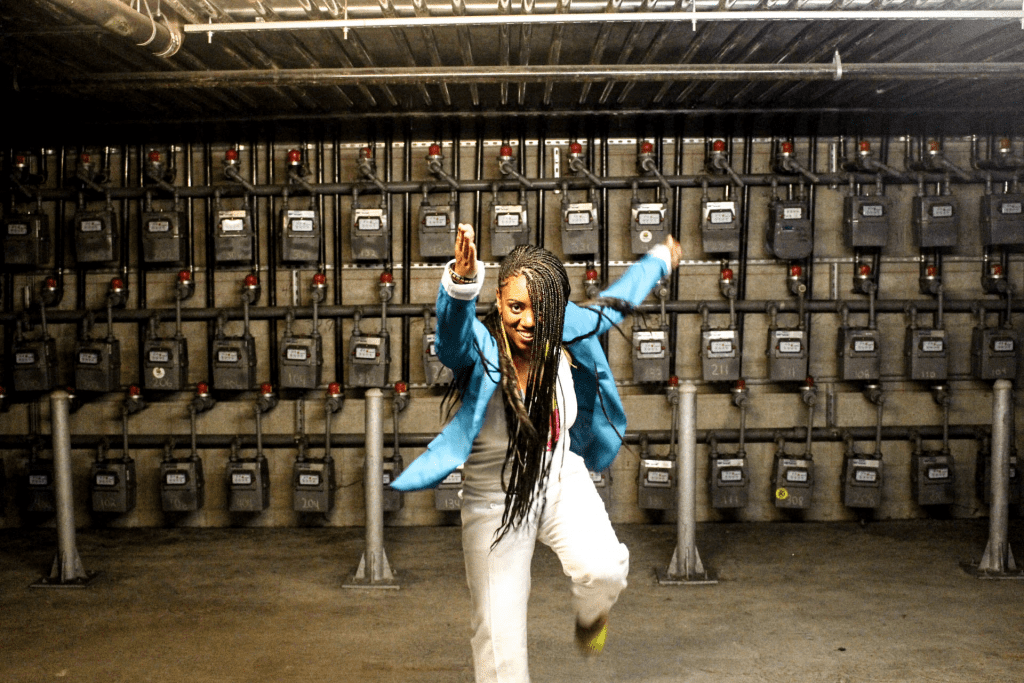
Dance Mogul: Where do you see the future of the arts going as it pertains to minorities owning more businesses that uplift the arts?
Kara Mack: I am very hopeful and optimistic about the future of the arts because there are a remnant of people that not just want, but need to see change. And they are not trying to go by the rules that are set; they are creating their own paths and making their mark. That’s what matters. It doesn’t take a lot of people to change the world. History has shown that.
Dance Mogul: What do you want the public to be able to take away from your new publication?
Kara Mack: Respect. Respect for the many styles of African music and dance. Respect for the actual techniques, and understanding that they require as much training as any other European/American style of music and dance. Respect for the cultures that are represented as we perform and teach these rhythms. Respect for self and who God created you to be.
“Respect for the actual techniques, and understanding that they require as much training as any other European/American style of music and dance.”
Dance Mogul: Is there anyone you want to thank for helping you on your journey this far?
Kara Mack: I would like to first thank God for taking me out of my comfort zone and putting me on a path less traveled. My sons give me the drive and inspiration to keep going every day. My parents for being there for me when no one else is…and finally the African music and dance community here in America. Your strength and passion for the culture are what confirms that this resource is needed and will be received.
A Southern Start and a Deliberate Turn
Kara Mack describes herself as a southern gal. Her published biographies place her start in Columbia, South Carolina, where she found the performing arts young and trained in both music and dance. After years of classical training she made what her own company calls a strategic and radical decision: to give her full attention to the music and dance of the African Diaspora.
That decision sent her to study with teachers from Brazil, Cuba, West Africa and Central Africa. Her agency biography says the result is an artist who can thread the similarity within every movement, which is another way of describing what she told us in 2014. She was never arguing that these forms are exotic. She was arguing that they are techniques, with the same demands as any conservatory style.
Where Is Kara Mack Now?
The publication Kara Mack was about to launch became a registered brand, Africa in America, and it outlasted most arts start-ups of its year. In September 2024 LA Weekly reported that she was marking ten years of the organization in Los Angeles, describing it as a resource for professionals and enthusiasts of African Diasporic arts and culture.
Her own career moved into film and television. Her faculty biography at UC San Diego lists her as a lecturer in dance covering jazz, hip hop and West African forms, and names Coming 2 America, where she was assistant choreographer, and Freeform’s Good Trouble among her credits. The Los Angeles Philharmonic’s artist page adds that she was Margot Robbie’s movement coach for the film Babylon and has danced on the Grammys, the NAACP Image Awards, the BET Awards and the Billboard Music Awards.
2014
Stages For Our Boys in Los Angeles on September 20 and launches Africa in America: Music, Dance and Culture Magazine.
2015
Directs the second annual Africa in America original works showcase, covered by Dance Mogul Magazine.
2021
Assistant choreographer on Coming 2 America, according to her published biographies.
2022
Movement coach to Margot Robbie on Babylon.
2023
Assistant choreographer on The Color Purple, as listed in her 2026 broadcast biography.
2024
Marks ten years of Africa in America with a September celebration in Los Angeles.
2026
Appears on radio in February to discuss the Black History Month Music and Dance Bootcamp.
The same 2026 biography credits Kara Mack as choreographer for Good Trouble and as co-choreographer for Chance the Rapper on Saturday Night Live. Taken together, the record shows an artist who did exactly what she said she would do in this interview. She built the resource first and then took the technique into the mainstream on her own terms.
Dance Mogul Magazine followed the next chapter a year after this conversation. Read our 2015 report on the Africa in America second annual original works showcase, where she explained the phrase she built the brand on.
Why It Matters to DMM
Kara Mack answered our question about what readers should take away with one word, and then she said it four times. Respect for the styles. Respect for the techniques. Respect for the cultures. Respect for self. That is the heart of what Dance Mogul Magazine exists to publish.
Her story also shows what ownership looks like in the arts. She did not wait for a larger institution to give African Diasporic dance a home. She created the publication, the showcase and the name, and the industry came to her afterward. For a young artist reading this, that order of events is the lesson.
There is one more line worth keeping. Asked about the future of minority ownership in the arts, she said it does not take a lot of people to change the world. Twelve years of her own work have made the case better than any argument could.
Continue the coverage
Keep reading: more first-person stories in Exclusive Interviews, the follow-up at Africa in America 2015, and the Dance Styles Hub.
© Dance Mogul Magazine. Interview first published September 24, 2014. Updated November 2026.