
Dance Mogul Magazine · Exclusive Interview · Where Are They Now
Leah Silva: The $7 Tap Class That Became a Movement
In 2014 she was paying out of her own pocket to bring master teachers to a weekly class in Costa Mesa. Twelve years later she directs a touring company, founded an international festival, and teaches tap at Loyola Marymount University.
Originally published January 16, 2014 · Updated and expanded November 2026 · Dance Mogul Magazine

Where She Is Now
Leah Silva is the Founder and Artistic Director of Reverb Tap Company, co-founder and co-director of the Orange County Tap Festival, and a Lecturer of Dance at Loyola Marymount University. She has taught and performed in Brazil, Guatemala, Australia and Canada, served as an Artist-in-Residence at Zion National Park, and her choreography has appeared in an Emmy-winning holiday broadcast seen across Southern California.
The Class Nobody Was Watching
When Dance Mogul Magazine sat down with Leah Silva in January 2014, there was no festival, no touring company and no university appointment. There was a weekly tap class in Costa Mesa, California, that cost seven dollars, and a woman who kept paying master teachers out of her own bank account to come teach it.
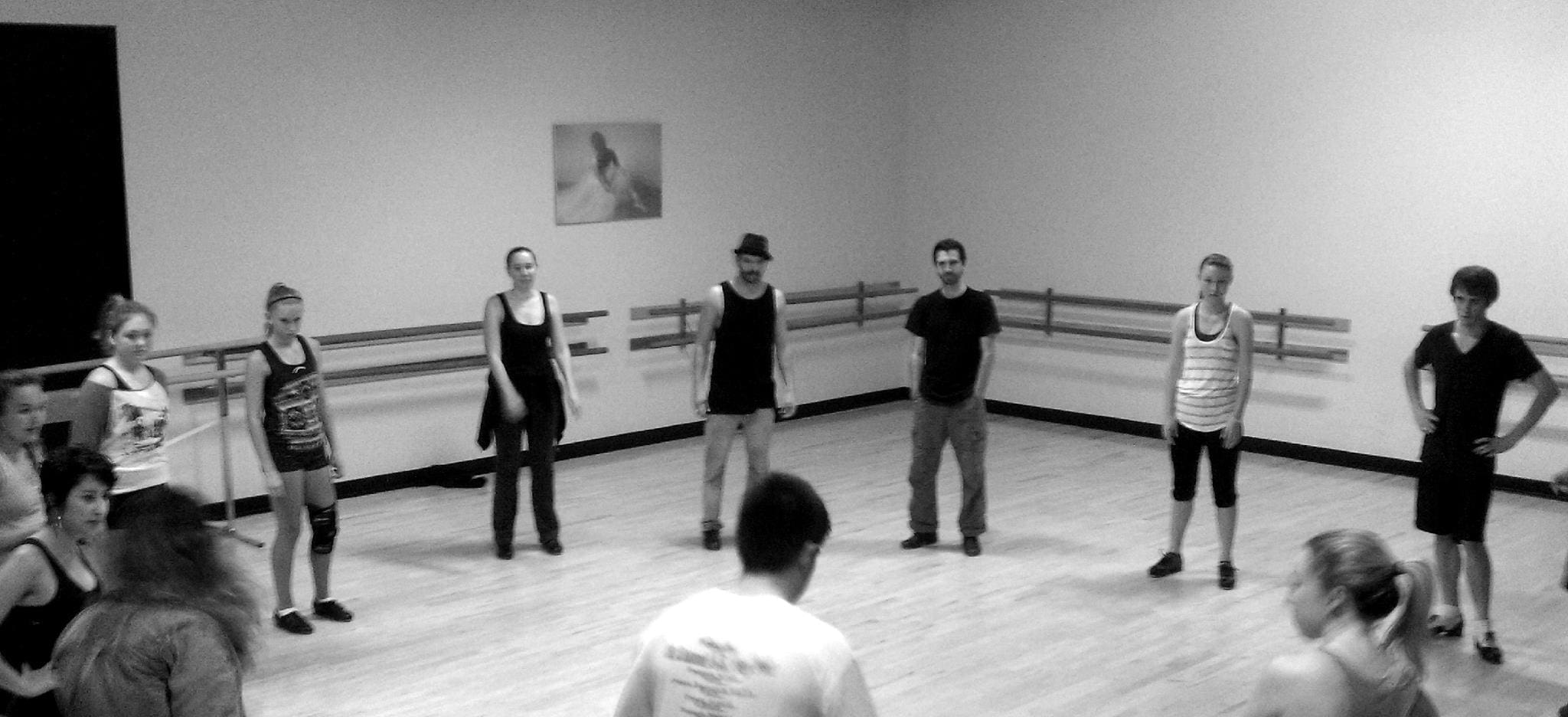
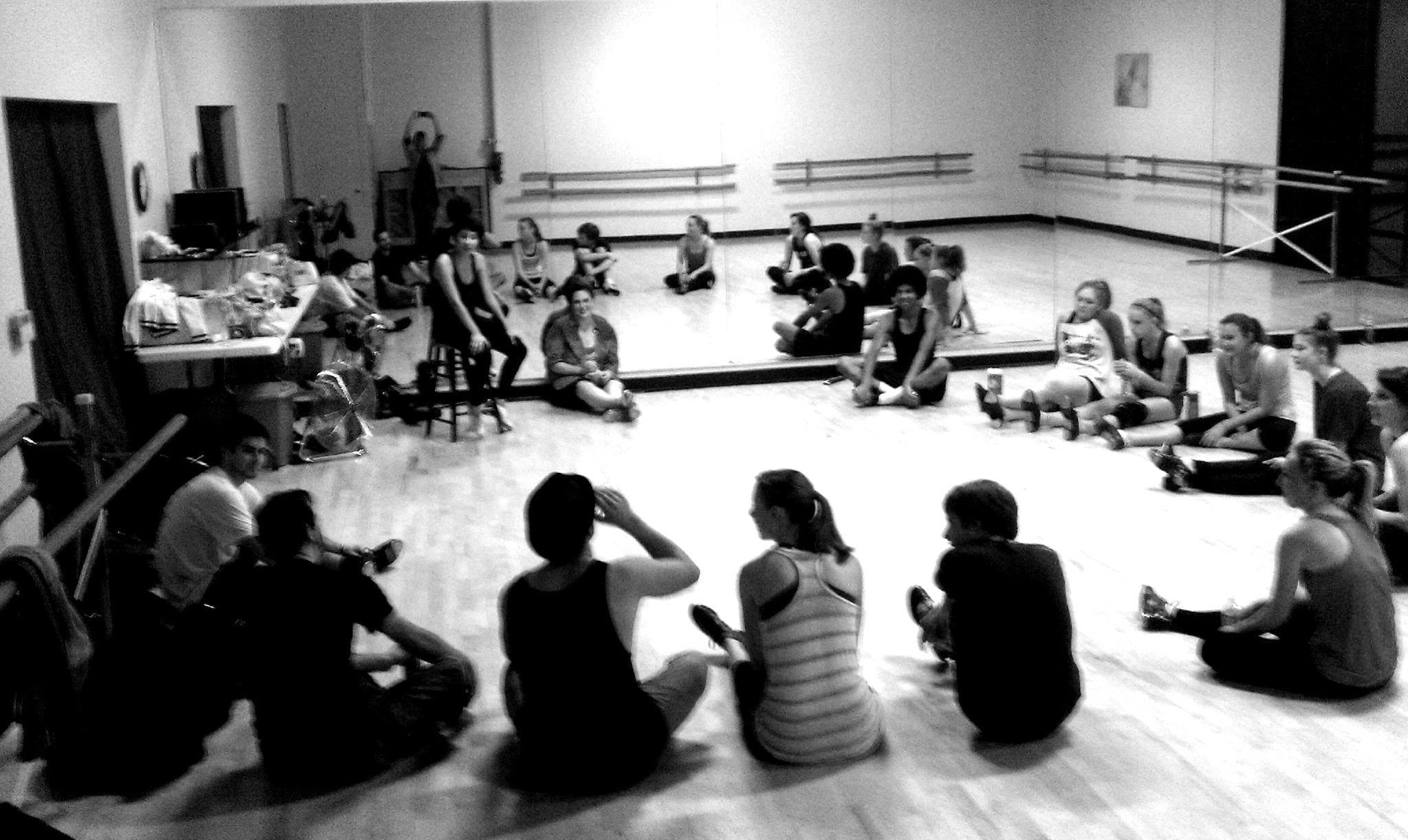
She called it the Thursday Night Tap Experience. An hour and fifteen minutes of class, then a peer critique circle where beginning and intermediate teachers gave each other constructive feedback, then a jam — improvisation among tap dancers, the way hoofers have always closed a night. Seven dollars for all three.
We asked her why she was funding it herself. Her answer, reprinted below, is the reason this interview is worth revisiting twelve years later. Almost everything she said she wanted to build, she went out and built.
Leah Silva in 2014: The Training Behind the Class
Leah Silva is a native of Orange County, California, who began studying dance at two years old and competed through her youth, winning titles and scholarships. She trained in jazz, ballet, hip-hop, lyrical and modern — and in tap, her favorite. She was a member of Sound Effects tap company under the direction of Christy Hernandez, and completed a professional dance scholarship at Jimmie DeFore Dance Center, then Orange County’s only professional adult studio.
Her teachers read like a roll call of the art form: Emmy Award winner Jason Samuels Smith, Chloe Arnold, Steve Zee, Gregg Russell, Emmy Award winner Ted Louis Levy, Dianne Walker of Tap, the late legendary Harold “Stumpy” Cromer, Michelle Dorrance of STOMP!, Christy Hernandez, and Derick Grant of Bring in ’da Noise, Bring in ’da Funk.
By 2014 she had been teaching and setting choreography across Southern California for a decade — Kindorf Dancers, Jimmie DeFore, Saddleback Dance Center, Impulse Dance Center, West Coast School of the Arts, Focus Dance Center — plus master classes at conventions, colleges and high schools, including original choreography for the Huntington Beach Academy for the Performing Arts. Her credits already included work for Mattel Toys, a dance campaign for Nestlé/Nescafé, performing for Island Def Jam artist and American Idol finalist Lisa Tucker, the production team for Chloe Arnold’s “Where Have You Been” tap music video, featured dancer in Jennifer Chung’s “Your Year & Happiness,” choreography for the L.A. Tap Festival concert, and assisting Melinda Sullivan on her show Gone.
She was also, at that moment, founding ReVerb; co-directing a new paid professional company called Encore with Christy Hernandez; and dancing as a member of Sarah Reich’s Tap Music Project. Hold on to those last two names.
The 2014 Interview
The following exchange is reprinted in full from Dance Mogul Magazine’s January 2014 interview.
Dance Mogul: In this day and age how do we go about making tap cool again for the youth?
Leah Silva: Tap dance has really evolved and can be modern while still keeping its historical roots. The beauty of tap is that you can really incorporate all styles of dance into it, anything from hip hop to contemporary. It is necessary for today’s youth to know where tap originated and the history of our tap dance legends, but the key to keeping it cool is keeping it current. Music binds us as people across races, backgrounds, ethnicity and our own personal histories. So in my classes, I use a mix of new current music while still introducing the jazz standards which tap dance was built on. Whether its hip hop, pop, country, reggae, or house music, it keeps the kids excited!
Dance Mogul: Why do you spend your own hard-earned money to help spread the culture knowing that there is no instant gratification and in some cases none?
Leah Silva: The answer is simple here. Tap dance has brought me many opportunities and genuine joy over the 25 years I’ve been a dancer. I have been fortunate to have been able to have traveled and studied from some of the greatest tap dancers in the world. There are many students, some of them whom I mentor that don’t have the funds or opportunities to travel and take master classes as I have. I want to bring these opportunities to them. I want to keep the love of tap alive and really expand dancers’ horizons in this original American art form.
“I want to keep the love of tap alive and really expand dancers’ horizons in this original American art form.”
Dance Mogul: What is the best advice you can give your peers when it comes to keeping the culture of tap alive?
Leah Silva: Know your audience, whether it’s in your classroom or at a show. I use different steps and music for each age range that keeps their interest and excitement. Also, take time in classes to talk about history and music theory. The students appreciate it a lot more than we sometimes realize. Don’t give up! Our classes may not be as jam-packed as Hip Hop classes sometimes, but that’s not what matters. It at times may get discouraging, but keep going because to see that love for tap ignite in a student and seeing it spread to their peers is what will keep this art form going.
What Seven Dollars Actually Bought
The structure was the point. Thursday Night Tap Experience was built as an affordable open class that brought in a rotating roster of teachers from different backgrounds, including artists whose résumés ran through Broadway shows like Bring in ’da Noise, Bring in ’da Funk. Students got a different voice each week instead of one house style.
Then came the critique circle — the photograph above — where newer teachers were given real feedback in front of their peers, in a room where that was understood as a gift rather than an attack. Then the jam, where the hierarchy dissolved and everyone improvised.
And Leah Silva designed the night so her own students could step up and teach their own choreography in a professional environment. By 2014 some of them had already moved into her paid professional company. She was not only running a class. She was running a pipeline, and she was underwriting it personally.
Where Is Leah Silva Now?
Twelve years on, the thing she was funding by hand has become an institution with several branches.
Reverb Tap Company
Reverb is now a pre-professional youth and young-adult tap company based in Southern California, approaching its twelfth season, with Leah Silva as Founder and Artistic Director. She has said publicly that she started it as an adult company because she wanted to be in an ensemble and had been made to feel unwelcome in others over her size and appearance, and that she named it for reverberation — the hope that it would carry outward into the communities around it. In 2017 it became a junior company.
The company is known for fusing tap with film. Its work was an official selection of the 2018 Newport Beach Film Festival with a four-minute piece she choreographed called “Hamilton: Tap’d Out,” built on the same instinct she described to us in 2014 — modernize without diluting. She told Orange Coast the goal was “Making it relevant but not diluting it.”
Reverb has been featured entertainment at the Television Academy’s Emmy Awards Governors Balls, the Young Artists Academy Awards and on KTLA, has performed repeatedly at the L.A. County Holiday Celebration at the Music Center’s Dorothy Chandler Pavilion — broadcast on PBS SoCal — and has presented award-winning choreography at Symphony Space in New York City. The Holiday Celebration production received a 2026 Emmy Award for Live Special Events — Programming, with her choreography part of the award-winning program. Reverb returns to the Temecula Theater stage on January 30, 2027.
The Orange County Tap Festival
She co-founded and co-directs the Orange County Tap Festival, a four-day international festival held at a beachfront hotel in Huntington Beach that has now run for eight editions. It is built around master classes, tap history lessons, panels, improv contests, an adjudication with written feedback, and a faculty performance — the same ingredients as that Costa Mesa Thursday night, scaled up and moved to the sand.
It runs on private donors and her own family rather than grants. She has described tap at its best as “focused on togetherness” — which is the same answer she gave us in 2014, in different words.
The Classroom Got Bigger
Leah Silva is a Lecturer of Dance at Loyola Marymount University in Los Angeles, where she has taught the Introduction to Tap Dance course — a class covering tap vocabulary, keeping time, music theory and rhythm. The woman who told us in 2014 to “take time in classes to talk about history and music theory” now teaches exactly that for university credit.
She travels nationally as a guest teacher and adjudicator and has taught, choreographed and performed in Brazil, Guatemala, Australia and Canada. She was an Artist-in-Residence at Zion National Park in April 2022; her professional biography states she was the first tap dancer selected for that program. She has been featured in Dance Teacher magazine, where she described opening beginner classes by asking students what they are, so they can answer back: “We are musicians!”
2014
Runs the $7 Thursday Night Tap Experience in Costa Mesa; founds ReVerb; dances in Sarah Reich’s Tap Music Project. Dance Mogul Magazine publishes this interview.
2015
Featured in Dance Teacher magazine.
2017
Reverb shifts to a pre-professional junior company.
2018
“Hamilton: Tap’d Out” is an official selection of the Newport Beach Film Festival.
2022
Serves as an Artist-in-Residence at Zion National Park.
2026
Lecturer of Dance at Loyola Marymount University; OC Tap Festival reaches its eighth edition; the Holiday Celebration production she choreographed for wins an Emmy.
2027
Reverb Tap Company returns to the Temecula Theater, January 30.
The Faculty List Is the Whole Story
If you want the clearest measure of what twelve years did, look at who teaches at her festival now.
The 2026 Orange County Tap Festival faculty includes Christy Hernandez — the woman who directed the youth company Leah Silva danced in, who cast her in a Long Beach Symphony performance when she was in sixth grade, who told her to go be a professional when she called to say she felt the pull, and who later told her to go start the festival.
It includes Sarah Reich, whose Tap Music Project Leah Silva was dancing in when we interviewed her, and whose weekly Los Angeles drop-in class was the direct model for the Thursday night in Costa Mesa.
It includes Steve Zee, listed in her 2014 biography as one of the master teachers she had studied under, and who has taught alongside her in the same tap course at Loyola Marymount.
And it includes Bella Silva — her daughter. The 2014 article mentioned, almost in passing, that Leah never stopped tapping, not even at nine months pregnant. That child is now on the faculty of her mother’s festival.
The mentor, the bandleader, the master teacher and the daughter, all on one faculty list, at a festival that started as a seven-dollar class.
Why It Matters to Dance Mogul Magazine
Dance Mogul Magazine has always argued that the people worth documenting are not only the ones already holding a trophy. In January 2014 Leah Silva had no festival and no title. She had a room, a night of the week, and a conviction that access should not depend on who could afford a plane ticket to a master class.
That is the whole thesis of this publication. Empowerment is rarely dramatic in the moment it happens. It looks like a person paying for someone else’s teacher. It looks like a critique circle on a studio floor where a nervous new instructor is told the truth kindly. It looks like a jam where a twelve-year-old and a professional trade phrases as equals.
Her 2014 answer about mentoring students who could not afford to travel was not a mission statement she was performing for an interview. It was a description of what she was already doing, and the twelve years since are the receipt. We publish these conversations so that when the receipt arrives, somebody has the original on file.
Tap also deserves this kind of attention. It is the original American art form, built by Black and immigrant communities trading rhythm in shared spaces, and it has spent decades fighting for room on programs dominated by other styles. Covering it properly, alongside every other dance style we document, is part of the job. You can read the rest of our exclusive interviews and our growing archive of tap dance coverage to see the pattern repeat.
Continue the coverage
Follow Leah Silva’s current work at Reverb Tap Company and the Orange County Tap Festival. Explore more of DMM’s archive in the Tap and Exclusive Interviews sections.
The Story Continues
The festival still depends on donors and on the Silva family’s own pockets. The economics have not changed as much as the scale has; she is still, in the way that matters, paying for other people’s access to the art form. What changed is how many people are now in the room when she does it.
Dance Mogul Magazine will keep following Leah Silva, Reverb Tap Company and the Orange County Tap Festival. If you were in that Costa Mesa studio on a Thursday night between 2013 and 2015, we would like to hear from you — the people in those two photographs are part of this story, and most of them have never been named in print.
© 2026 Dance Mogul Magazine. Originally published January 16, 2014. Updated and expanded November 2026.