
Featured Artist | Popping | Women in Street Dance
Marina Molina: The Popper Taking a Male-Coded Street Style Into Heels — and Toward the Main Stage
She started with acrobatics in a Barcelona park and fell in love with popping in a dance-school classroom. Now she is a battle winner, a festival judge and an educator building a feminine variation of one of street dance’s hardest styles — and refusing to let its roots get left behind.
By Dance Mogul Magazine | Featured Artist | August 2026
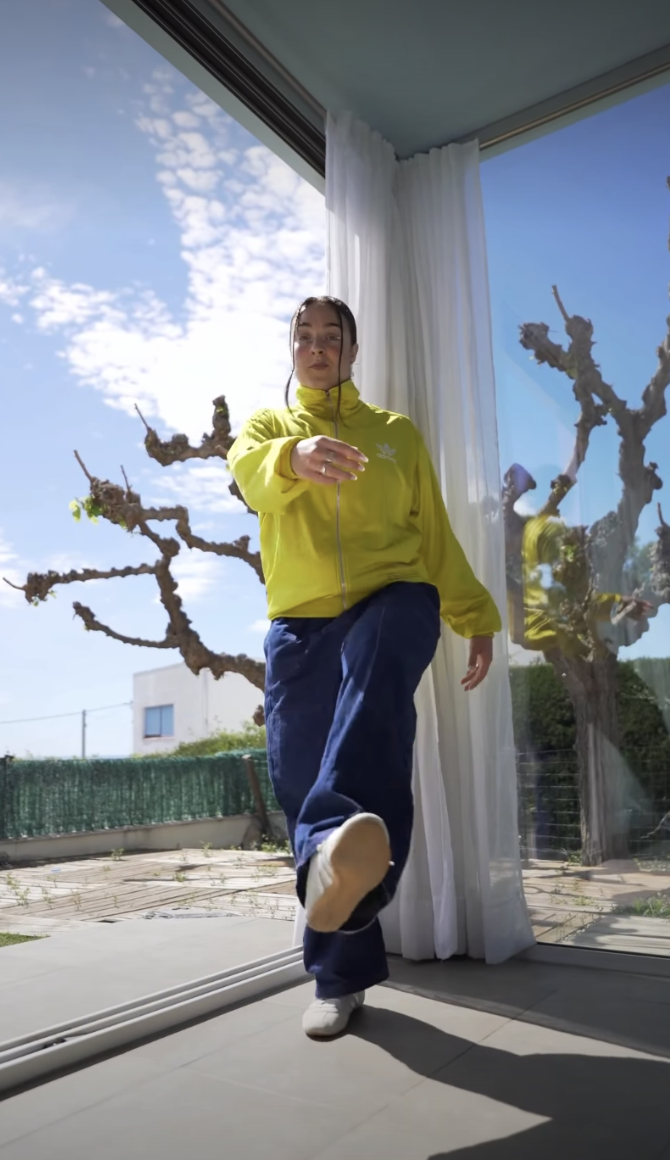
Marina Molina — Popper · Choreographer · Judge & Educator | Dance Mogul Magazine
ARTIST SPOTLIGHT
Marina Molina is a popper, choreographer, freestyle battler, judge and educator from Barcelona, Spain, who specializes in popping and locking and is developing a distinct practice she calls popping in heels. Popping entered her life seven years ago in a dance-school class; the battle scene turned it into a calling. Since then she has performed in Nike’s “Unity” project, worked with the Barcelona street-dance company Brodas Bros and the collective HOP, won the Summer Dance Theatre Competition in 2021 and freestyle battles such as Maf Battle in Zaragoza, judged festivals including DelartFestival and La Urbana, presented choreography at Madrid’s Boff Showcase, and teaches across several Barcelona schools. Her stated mission is to carry popping onto every platform and stage it has never reached.
File // At a Glance
NAME — Marina Molina (@marinamolinakind)
ROLES — Popper | Choreographer | Judge & Educator
ORIGIN — Barcelona, Spain
STYLE — Popping & locking; developing popping in heels
INFLUENCES — Núria Beltrán, Iron Mike
SELECT CREDITS — Nike “Unity” | Brodas Bros | HOP
COMPETITION — Summer Dance Theatre Competition winner (2021)
JUDGED — DelartFestival | La Urbana
BOOKINGS — mmolinakind@gmail.com
|
2021 Summer Dance Theatre Competition Won |
50+ Years of Popping History She Carries Forward |
7+ Named Credits, Battles & Judging Roles |
3 Dream Artists to Work With: Beyoncé, Rihanna, Rosalía |
Ask a young woman why she does not battle popping and she will rarely say she cannot dance. She will say she has never seen enough people who move like her standing at the front of the room, holding a microphone, sitting on a judging panel. That gap — between what a style can hold and who is allowed to represent it — is one of the quietest problems in street dance, and it is exactly the problem Marina Molina’s career answers.
Popping is a foundational street style, born in California in the mid-1970s, built on the hit: the sharp contraction and release of the muscles to the beat. Its history is deep, its traditions are guarded, and its competitive scene is still weighted heavily toward men. Molina came up inside that scene in Barcelona, fell in love with it in the battle circle, and then did something the circle does not always reward: she asked where else the style could go. Into heels. Into theatre. Into commercials and music videos. Onto stages popping has never been invited to.
This piece is about that question — where else can it go — and about the discipline underneath it, because Molina’s answer is not to abandon the foundation but to study it harder and then build outward. That progression, from student to battler to judge to educator to author of her own variation, is repeatable. Most young dancers are never shown that the ladder exists. So we are going to lay it out, in her words and ours.
Who Marina Molina Is: From Park Acrobatics to the Popping Scene
Before the brands, the festivals and the battles, Marina Molina was a kid in Barcelona who loved to move. Her first stage was a park, where she did acrobatics; her first classes were in her own neighborhood; and the turn came when her mother took her to a dance school. That is where the journey formally began — not in a conservatory, not on a company track, but in the ordinary places a child is allowed to be physical and curious at the same time.
Popping arrived later, and in stages. It entered her life seven years ago, in a class at her dance school. She enjoyed it, but enjoyment is not yet love. The love came about five years ago, when she stepped into the battle scene — the cyphers and one-on-one exchanges where popping is tested in real time against another dancer, with nowhere to hide. From that moment, she decided to study the style seriously, and two people made that possible. She credits Núria Beltrán and the dancer known as Iron Mike as the reason she fell for popping and kept growing inside it. Note that detail: her origin story is not a solo myth. It is a lineage. Somebody taught her, and she names them.
“As artists, we can’t create our own proposal without studying what came before us. I always try to go deeper into the culture and the style, while reminding myself of who I am as a person and, as a consequence, as an artist.” — Marina Molina (Dance Mogul Magazine)
When Popping Stopped Being a Class and Became a Calling
The break in Molina’s story is not a single job. It is a shift in how she saw the style itself. She realized, as she puts it, that popping is everywhere — that it can inspire you at any moment, and that it is not confined to the freestyle battle. It can live in a theatre piece, a music video, a commercial. Each of those stages can feed popping, and popping can feed them back. Once a dancer sees a style that way — as a language rather than a category — the ceiling moves.
That reframing is what separates a competitor from an artist with a body of work. Molina kept battling, and kept winning — she took the Summer Dance Theatre Competition in 2021 and freestyle battles including Maf Battle in Zaragoza — but she also started treating every context as a place to carry popping somewhere new. Here is the part young dancers should read twice: she did not wait for permission to expand the style. She decided the style was already expandable, and then went looking for the rooms.
Popping in Heels: Inside the Lab
The idea that has become her signature is deceptively simple and genuinely radical: popping in heels. Heels are usually read as a symbol of feminine power, and Molina wanted to feel that power while dancing the style she loves most. She is explicit that she did not invent the pairing out of nowhere — she names Cahogold and Femme Fatale as women who moved in that direction before her, another lineage credited rather than erased.
What she is doing now is research, and she calls it that. She describes herself as being “in the lab,” combining popping foundations with the positions and techniques that heels demand — a different center of gravity, a different line, a different relationship to the floor. She is careful not to overclaim. She is still experimenting, she says, but believes it has the potential to become a new style, or at least a new variation of popping. That restraint is the tell of a serious artist: she would rather build the thing properly than announce it early.
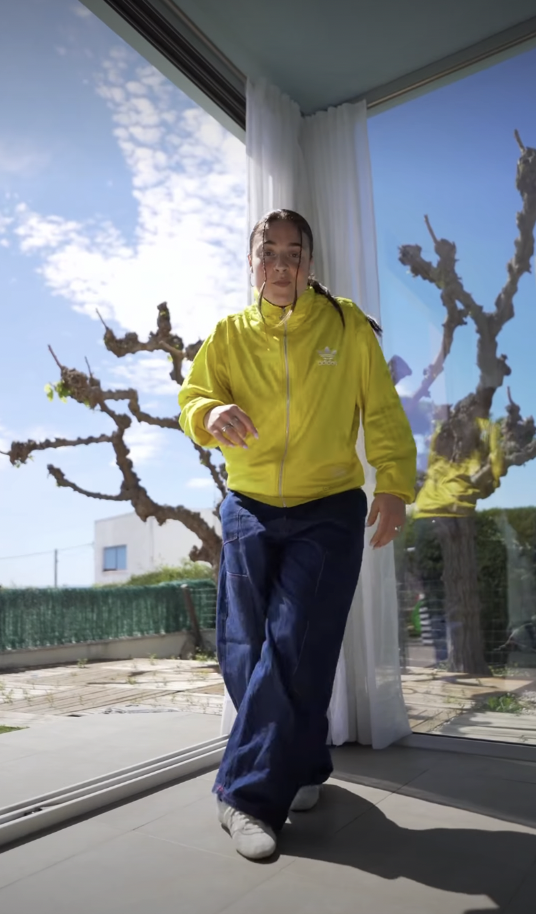
Marina Molina — developing a feminine variation of popping | Dance Mogul Magazine
KNOW THE STYLE: POPPING
Popping is a street dance rooted in funk culture that emerged in California in the mid-1970s, closely associated with the Electric Boogaloos. Its core technique is the “pop” or “hit” — a quick, sharp contraction and release of the muscles timed to the beat — layered with sub-styles such as boogaloo, waving, tutting and animation.
Why it matters to a young dancer: popping rewards precision and musicality over spectacle, which means it can be studied and improved for a lifetime. Learn the foundation first — the culture, the pioneers, the names — and only then start bending it, because the innovation reads as respect rather than theft.
The Credits — and What the Work Actually Does
Molina’s professional record spans the commercial, the competitive and the institutional. She performed in Nike’s “Unity” project. She has worked with Brodas Bros, the Barcelona company that has spent years proving urban dance belongs on theatrical and mainstream stages, and with the collective HOP. She has judged festivals including DelartFestival and La Urbana, presented choreography at Madrid’s Boff Showcase, and continues to appear in film and audiovisual shoots while teaching across several Barcelona schools.
A credit list is not an impact statement, so let us be precise about what a popper of her profile actually contributes to those contexts.
She brings battle-tested precision to commercial and stage work. A dancer who has been tested in cyphers carries a rhythmic exactness that reads on camera and from the back row of a theatre. That is not decoration; it is why brands and productions hire poppers in the first place.
She carries the culture into rooms that would otherwise flatten it. When a festival puts her on a judging panel, or a company puts her on a stage, the foundation travels with her — the names, the history, the standards. That is how a street style keeps its integrity as it scales.
Inside Her World: The Dance Mogul Magazine Interview
What follows is Marina Molina in her own words, lightly edited for length. We have grouped her answers by theme.
The Foundation — Who Is Marina Molina?
Before the brands, festivals, battles and professional opportunities, who was Marina Molina, and what first made you fall in love with dance?
“I have been in love with dance since I was a kid. I started doing acrobatics in the park. At first, I took some dance classes in my neighborhood, and then my mum took me to a dance school. That’s where I began my journey.”
When did popping enter your life, and what was it about the style that made you want to study it more deeply?
“Popping appeared in my life seven years ago at my dance school. I enjoyed it, but it wasn’t until five years ago, when I started getting into the battle scene, that I truly fell in love with the style. From that moment on, I decided to study it more deeply.”
Was there a specific dancer, teacher or experience that changed the way you understood popping?
“Núria Beltrán and Iron Mike really made a difference. Without them, it would have been impossible for me to fall in love with the style and keep growing as a dancer.”
Finding Your Own Voice
At what point did you realize you didn’t simply want to perform popping — you wanted to explore where else it could go?
“I realized that popping is everywhere and that it can inspire you at any moment. It’s not only about freestyle battles; you can also bring it into a theatre piece, a music video, a commercial. All of these different stages can nourish popping, and popping can nourish them in return.”
Popping × Heels
Your vision of combining popping with heels challenges people’s expectations. Where did that idea come from?
“I think heels are usually associated with feminine power, so I wanted to experience that feeling while dancing popping, the style I love the most. I was also inspired by women who had done it before me, such as Cahogold and Femme Fatale.”
Do you see this fusion as a new style, an expansion of your vocabulary, or proof of how versatile popping already is?
“Right now, I’m in the lab, creating new moves by combining popping foundations with heels positions and techniques. I would love to create something new, but for now I’m still investigating and experimenting. I really believe it has the potential to become a new style, or at least a new variation of popping.”
Women in Street Dance
What has your experience been like as a woman building a professional identity within popping and freestyle culture?
“It’s no secret that in the popping scene, and in the freestyle scene in general, there are more men in positions of power. That directly means more difficulties for women, wherever you go. Judges may not always understand how a woman’s body can influence and reshape the style, and there still aren’t enough female role models for the new generation, which can make it harder to believe that you can do it yourself. However, things are changing a lot nowadays, and little by little, women are taking up more prominent roles in events and public spaces.”
What would you say to a young female dancer who loves a male-dominated street style but doesn’t see enough people who move like her at the highest levels?
“Be your own role model.”
“Be your own role model.” — Marina Molina, to young female dancers (Dance Mogul Magazine)
From Underground Culture to Mainstream Stages
What do you believe mainstream audiences still haven’t understood about popping?
“That it can become one of the most inspirational dance styles ever. It has thousands of possibilities and can be used in so many different ways. If you combine it with what’s happening in our society today — the clothes, the music, the people, the culture of the moment — it could become one of the freshest things ever. The key is to find the perfect balance between the original stuff and the things that work nowadays in the mainstream scene.”
Street dance often becomes commercially successful without audiences knowing its history. How can artists expand these styles without disconnecting them from their roots?
“Make knowing the culture the real trend. Make people think that the cool thing is to learn, to read, and to understand the roots of things. It’s important to make it mainstream and cool to understand that knowing the foundations is what really matters.”
Judging, Teaching & the Long Game
Between teaching, judging, battling, choreographing and performing, which challenges you the most?
“Right now I think it’s battling, because it pushes you to your mental and physical limits. But it’s also about building your own personal identity as an artist. Everything you do should have a reason and a purpose, contributing to the image and identity you want to build.”
What separates a technically impressive dancer from an unforgettable artist?
“Being the kind of dancer who has perfect technique while still putting their soul and emotions into their dance.”
What responsibility do teachers and judges have in protecting the culture while encouraging the next generation to innovate?
“We have to make them love the culture and its origins, because that’s the most important part and it gives them a strong foundation to start from. Then we have to give them wings to explore and create whatever they want with everything they’ve learned. I studied Social Education, so I hope that background will help me in this field.”
Purpose, Pressure & the Bigger Vision
What sacrifices have people not seen behind the opportunities you’ve earned?
“Time, energy and money. You have to invest a lot of your own money to grow in your career, so you may not have the same savings as someone who works eight hours a day. You don’t have the same stability and peace of mind — you can choose your own schedule, but you can’t decide how much money you’re going to make each month. And the time you spend travelling, working and training is time you won’t spend with family or friends.”
Who would be your dream artist to create a popping-based production for?
“My biggest inspirations are Beyoncé, Rihanna and Rosalía, so I hope that one day I’ll have the opportunity to work with them.”
What do you want someone who has never watched a popping battle to feel after seeing one of your productions?
“I want them to become interested in popping and see it as something they want to explore. I want to change the perception that popping is boring or difficult.”
The Dance Mogul Questions
What is the difference between being a talented dancer and building a sustainable career?
“It’s the difference between being a good dancer and being a professional dancer. It’s not enough to dance well — you have to arrive early to rehearsals, be proactive, communicate clearly and assertively, and have a good attitude. There are a lot of talented people, but not as many professional dancers.”
Closing — The Legacy Question
Finish this sentence: “Dance gave me the power to…”
“To believe in myself and in my projects. To believe that my ideas deserve to be brought to life, and that my own way of seeing the world is meaningful and important.”
If this next chapter of your career had a title, what would you call it?
“‘Now Is the Moment.’ At the beginning of your career you work and work, and sometimes you don’t see what you’re building or get the rewards you’re hoping for. But now I feel that all this hard work is slowly starting to make more sense and bear the fruit I was hoping for. So yes — I hope now is the moment to grow.”
“Dance gave me the power to believe in myself and in my projects — that my ideas deserve to be brought to life.” — Marina Molina (Dance Mogul Magazine)
From the Cypher to the Main Stage
Read her answers together and a strategy emerges that is smarter than most artists ever articulate. Molina wants popping in the mainstream — on the biggest stages, in front of audiences who have never seen a battle — but she refuses the usual trade that comes with that ambition, where a style gets commercially successful and culturally hollowed out at the same time. Her solution is to make the culture itself the trend. Make learning cool. Make reading the history cool. Make understanding the foundation the flex.
That is a genuinely useful idea for any dancer working in a borrowed form, and it maps directly onto the wider world of street dance and hip-hop, where movement is constantly absorbed upward into pop culture and stripped of its lineage on the way. Molina’s bet is that you can scale a style and protect it at once — if you insist, loudly and repeatedly, that knowing where it came from is part of doing it well.
An International Feature: Barcelona to the World
Dance Mogul Magazine is a father and son Black owned dance publication, and its lens has always been international — because the culture is. Popping was born in California, refined in cyphers across the United States, and carried around the world by dancers who learned it, honored it and pushed it forward in their own cities. Marina Molina is what that global chain looks like in 2026: a Barcelona artist fluent in a Californian street style, judging Spanish festivals, presenting choreography in Madrid, and dreaming in the language of global pop.
Her reference points make the international frame explicit. The women who inspired her heels work — Cahogold, Femme Fatale — are part of a transnational conversation about femininity and funk styles. Her dream collaborators — Beyoncé, Rihanna and the Catalan superstar Rosalía — sit at the very top of worldwide entertainment. And her stated ambition, to carry popping onto every platform and stage possible, is a border-crossing ambition by definition. This is why DMM features artists like Molina from outside the United States: the story of dance is not the story of one country. It is a network, and Barcelona is a node on it.
Spain has quietly become one of Europe’s serious street-dance hubs, and companies like Brodas Bros — long-time proof that urban dance can fill theatres and mainstream broadcasts — helped build the runway Molina is now sprinting down. Featuring her here places her in the same continuum DMM documents in The American Social Dance Movement and in our ongoing work celebrating the Black creative directors and choreographers whose forms travel the globe.
The Educator, the Judge, and a Degree in Social Education
One detail reframes everything else about Molina’s trajectory: she studied Social Education. That is not a footnote. Social education is a professional discipline built around helping people grow, participate and belong — and she has said plainly that she hopes it will serve her as a teacher and a judge. It means she did not arrive at education by accident, the way many dancers do when the body starts asking for a second act. She arrived with a framework for it.
Watch how that shows up in her philosophy. As a teacher she does not want students to become poppers by obligation; she wants them to be able to play with the style, to be inspired by it, to fold it into whatever their own movement vision turns out to be. As a judge she wants technique and soul in the same body. And as a keeper of the culture she describes the job in two clean moves: first make them love the origins, then give them wings. Understand what that sequencing means. The foundation is not a cage; it is a launchpad. That is the entire argument of this publication, arriving from a dancer who worked it out on her own.
The Awards — and the Ones That Don’t Exist Yet
2021 — Summer Dance Theatre Competition. A verified competitive win, and an early signal that her work reads on a stage as well as in a circle.
Freestyle battle wins, including Maf Battle (Zaragoza). Battle records are the hardest-won and worst-documented honors in street dance — they live in the memories of the room and a scattering of clips.
Here is the honest part, and Dance Mogul Magazine would rather print it than pad a page: there is no comprehensive, publicly maintained record of Marina Molina’s full competitive and professional history. Not because the work was not real, but because the freestyle world has never built the infrastructure to track battle results, judging invitations and choreography credits the way film and television do.
That absence is not a footnote to her story. It is the argument. When a discipline is undercredited, its practitioners’ achievements have to be documented deliberately, by publications willing to do it — especially for the women whose names are most likely to fall out of the record entirely.
Where Marina Molina Is Now
As of 2026, Molina is teaching across several Barcelona schools, continuing to battle, appearing in film and audiovisual shoots, and — by her own account — deep in the lab building out her popping-in-heels research. She frames this stretch as the payoff phase of a long build, and gave her next chapter a title: “Now Is the Moment.” It is the sound of an artist who has done the unglamorous years and can feel the work starting to compound.
Beyond that, we are not going to invent a schedule for her. Public reporting on the rest of her 2026 slate is thin, which is normal for an artist at this stage, whose next projects are still taking shape. When there is verified news — a production, a title, a stage — this publication will report it.
Career Timeline
CHILDHOODGrows up in Barcelona; starts with acrobatics in the park, then neighborhood dance classes, then a dance school.
~7 YEARS AGODiscovers popping in a class at her dance school.
~5 YEARS AGOEnters the battle scene and commits to studying popping seriously, guided by Núria Beltrán and Iron Mike.
2021Wins the Summer Dance Theatre Competition. Performs in Nike’s “Unity” project; works with Brodas Bros and HOP.
RECENTWins freestyle battles including Maf Battle (Zaragoza); judges DelartFestival and La Urbana; presents choreography at Boff Showcase, Madrid.
2026Teaches across Barcelona, continues battling and audiovisual work, and develops her popping-in-heels practice. Titles the chapter “Now Is the Moment.”
What She Represents to Young Female Dancers
Molina’s answer to the girl who cannot find a role model was two words: be your own. But her career is more useful than a slogan, because it shows the actual stages that turn a beginner into someone others can follow.
Read as a career path rather than a résumé, her trajectory shows five distinct stages, and any serious dancer can locate herself on this ladder — which is the whole reason we are laying it out.
1. Fall in love in the room where it is hardest
Molina did not fall for popping watching it — she fell for it battling it, in the scene that tests you against a live opponent. Choose the context that forces you to be honest about your level. That is where love and skill grow at the same rate.
2. Study the foundation before you bend it
She insists you cannot make your own proposal without studying what came before, and she names her teachers. Do the history first. The innovation you attempt later will only be respected if it is clearly built on knowledge, not ignorance.
3. Find the variation only you can make
Popping in heels is hers because it sits exactly where her identity and her craft overlap. Your edge is usually in that same overlap — the thing you are that most people in the style are not. Build there.
4. Turn the craft into a profession, not just a talent
She is blunt that talent is common and professionalism is not: arrive early, be proactive, communicate, invest your own time and money, accept the instability. The career is built on the boring habits, not the highlight reel.
5. Turn access into a door for other people
The final stage is the one most careers never reach: using your position to teach, judge and represent. Molina judges festivals, teaches across a city, and studied Social Education so she could do it well. When you become the role model you once could not find, the ladder gets one rung longer for everyone behind you.
Why Marina Molina Matters to Dance Mogul Magazine
Dance Mogul Magazine has published for over fifteen years on a single conviction: dance is the foundation, not the ceiling. Every story here has to answer one question — how does this help someone become a better version of themselves? Molina answers it directly. She hands young dancers a method (fall in love in the hard room, study the foundation, find your variation, professionalize, then open the door for others) and a mantra for the moments the method gets lonely: be your own role model.
She also embodies the credit fight at the center of this publication’s mission. The movement vocabulary that drives mainstream entertainment is overwhelmingly born in Black communities, in funk and club culture, in street dance and hip-hop, and is then absorbed upward into pop, film and television — frequently without credit traveling with it. Molina’s whole philosophy is a refusal of that erasure: make the culture the trend, name your teachers, keep the roots attached as the style scales. As a father and son Black owned dance publication, documenting that chain of authorship is not a side project for us. It is the work.
If her story lands with you, keep going: explore the full range of forms in our Dance Styles Hub, read more conversations with working professionals in our Exclusive Interviews, and study the pioneers whose work made these careers possible in The Legacy. If you are building the discipline behind a plan like the one mapped above, our workbooks were built for exactly that.
Frequently Asked Questions About Marina Molina
Who is Marina Molina?
Marina Molina (@marinamolinakind) is a popper, choreographer, freestyle battler, judge and educator from Barcelona, Spain, who specializes in popping and locking and is developing a practice she calls popping in heels.
What is popping in heels?
It is Marina Molina’s in-progress fusion of popping foundations with the positions and techniques that dancing in heels requires. She describes it as still in the research stage but believes it has the potential to become a new style or a new variation of popping.
What has Marina Molina worked on professionally?
She has performed in Nike’s “Unity” project, worked with Brodas Bros and HOP, won the Summer Dance Theatre Competition in 2021 and freestyle battles such as Maf Battle in Zaragoza, judged festivals including DelartFestival and La Urbana, and presented choreography at Madrid’s Boff Showcase.
Who are Marina Molina’s influences?
She credits Núria Beltrán and the dancer Iron Mike with shaping her love of popping, and cites Cahogold and Femme Fatale as inspirations for her heels work. Her dream collaborators are Beyoncé, Rihanna and Rosalía.
Where is Marina Molina based, and does she teach?
She is based in Barcelona, Spain, where she teaches popping and locking across several dance schools. She studied Social Education, which she says informs her work as a teacher and judge.
How can you book or follow Marina Molina?
She can be reached for bookings at mmolinakind@gmail.com and followed on Instagram at @marinamolinakind, where she shares battles, choreography and her popping-in-heels work.
KEEP EXPLORING
Dance Mogul Magazine documents the artists who build the culture and the careers that grow out of it. Start with the Featured Artist series, dig into the Archive, build your foundation in the Dance Knowledge Hub, and browse everything we have published in the Article Library.
Reporting sources: Marina Molina, exclusive interview responses provided to Dance Mogul Magazine (2026); her professional biography via Dance Emotion (dancemotion.es); and her Instagram, @marinamolinakind. Style history reflects the documented origins of popping in 1970s California. Career details reflect verified public information as of August 2026.
Marina Molina Popping Popping in Heels Street Dance Freestyle Battle Women in Dance Barcelona Brodas Bros Choreographer Featured Artist Dance Educator Empowerment
© 2026 Dance Mogul Magazine LLC | dancemogul.com | Inspiring Self-Empowerment Through Dance Culture