
Dance Mogul Magazine · Tap Dance Legends
The Nicholas Brothers: Fayard and Harold
Six decades, no formal training, and a staircase in Stormy Weather that still has not been equalled.
February 17, 2024 · Updated November 20, 2026 · Dance Mogul Magazine
At a Glance
Fayard Antonio Nicholas: born October 20, 1914, Mobile, Alabama; died January 24, 2006
Harold Lloyd Nicholas: born March 17, 1921, Winston-Salem, North Carolina; died July 3, 2000
Raised: Philadelphia, by musician parents Ulysses and Viola Nicholas
Honors: Kennedy Center Honors, 1991
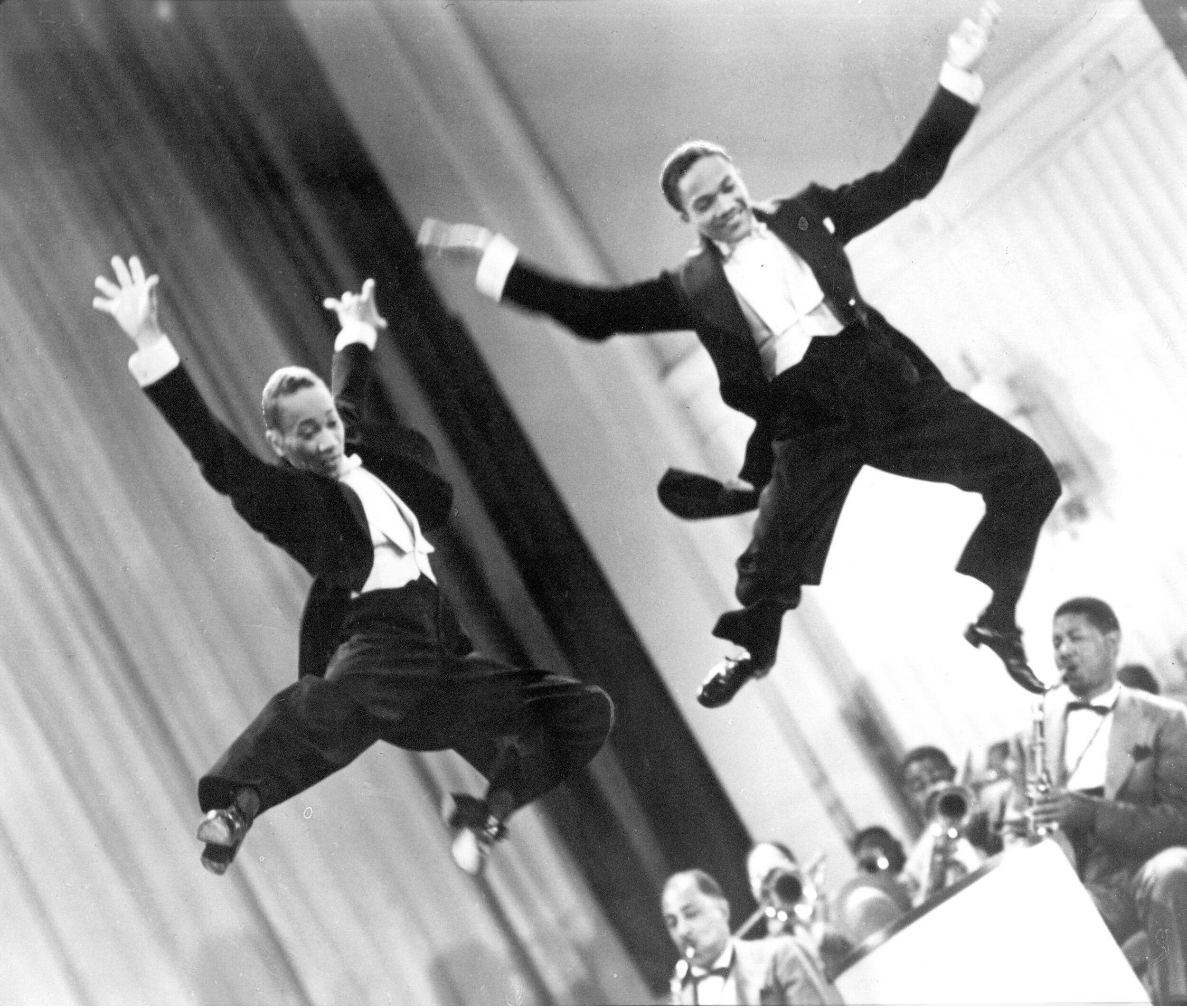
Fayard and Harold Nicholas were not simply dancers. They combined acrobatic brilliance, jazz musicality, comic timing and a physical audacity that still has no equal in recorded film. Fred Astaire — a man not given to hyperbole about anyone else’s dancing — is said to have told the brothers that their “Jumpin’ Jive” number in Stormy Weather was the greatest musical sequence he had ever seen on film.
Fayard was born in Mobile, Alabama, and Harold in Winston-Salem, North Carolina, but the act grew up in Philadelphia. Their parents, Ulysses and Viola Nicholas, were working musicians — he a drummer, she a pianist — who played in pit orchestras at Black vaudeville theatres, and the boys spent their formative years watching from the wings. By the early 1930s they had gone from watching to performing, and before long they were on stage at the Cotton Club in Harlem alongside Cab Calloway and Duke Ellington.
Hollywood, and the limits placed on it
The Hollywood of the 1930s and 1940s was rigidly segregated. Black performers were cast in minor parts, and their numbers were often staged so they could be cut entirely for Southern audiences without disturbing the plot. The brothers navigated that system with virtuosity and patience, taking the openings that existed and delivering work so exceptional that their sequences became the part of the film audiences remembered.
Their appearances in Down Argentine Way (1940), Tin Pan Alley (1940), Sun Valley Serenade (1941), Orchestra Wives (1942) and above all Stormy Weather (1943) outlasted the industry’s limits on them. Only once, in The Pirate (1948), were they given roles that were not purely dance.
The Stormy Weather finale is the one everybody returns to: the brothers in white tie and tails, leaping across the bandstand, landing in full splits on the beat, then descending a white staircase by leapfrogging over each other into a split on every step. It remains the most technically astonishing dance sequence committed to film.
The technique: no formal training, total mastery
What makes it more remarkable is that there was no academy behind it. Fayard was largely self-taught, picking the craft apart from the vaudeville bills he watched as a child, and Harold learned in large part by watching his older brother. They built their hybrid of tap, jazz and acrobatics on stages and in clubs rather than studios. The splits, the knee slides, the jumps over each other’s heads read less as choreography than as the two of them thinking out loud, with the music as their only collaborator.
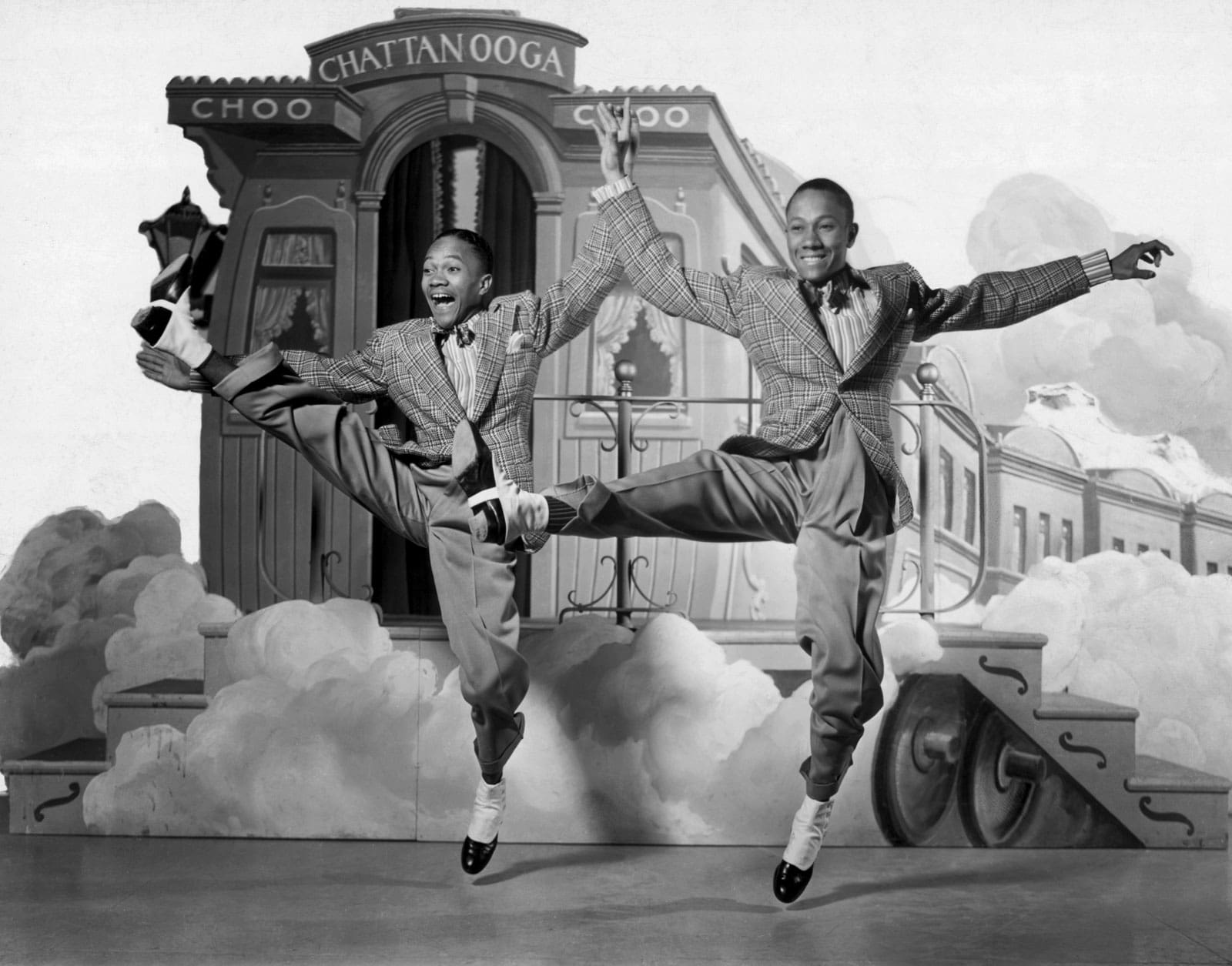
Dance Mogul Magazine first wrote about the brothers in 2012. The word used for their style then was “flash dancing”: tap pushed to its acrobatic limit, with splits, leaps and slides delivered inside the rhythm. They grew up around vaudeville, became stars of the jazz circuit during the Harlem Renaissance, and kept working on stage, in film and on television into the 1990s.
Watch
The Stormy Weather finale, 1943.
The Nicholas Brothers in Stormy Weather. Video: TapZatNYC on YouTube.
Two more numbers show the range. In Down Argentine Way (1940) the pair stop the film with a specialty routine, and in Orchestra Wives (1942) they close “I’ve Got a Gal in Kalamazoo” with the Glenn Miller Orchestra.
The Nicholas Brothers in Down Argentine Way (1940). Video: Mago Marko on YouTube.
“I’ve Got a Gal in Kalamazoo,” from Orchestra Wives (1942). Video: Australian Tap Dance Festival on YouTube.
Legacy
Recognition came late and then steadily. The brothers danced for nine U.S. presidents across their careers, and in 1991 received the Kennedy Center Honors for six decades of work. Fayard won a Tony Award in 1989 for his choreography on Broadway’s Black and Blue, and in 2001 was inducted into the National Museum of Dance’s C.V. Whitney Hall of Fame. Harold died in 2000; Fayard in 2006.
Their influence runs through every generation of tap that followed — through Gregory Hines, through Savion Glover, and through every dancer who has watched the Stormy Weather finale and understood in their body what is actually possible.
Why It Matters to Dance Mogul
Two brothers with no formal training made the greatest dance sequence on film inside an industry that had decided in advance how far they would be allowed to go. The work outlived the ceiling. That is the whole argument for documenting these careers properly: the limits were real, and the dancing was better than the limits.
Frequently Asked Questions
What is the Nicholas Brothers’ most famous routine?
The “Jumpin’ Jive” finale of Stormy Weather (1943), danced with Cab Calloway and his orchestra, ending with leapfrog splits down a white staircase.
Did the Nicholas Brothers have formal dance training?
No. Fayard was largely self-taught from watching vaudeville performers, and Harold learned substantially from his brother.
For tap carried forward by a working artist, read our interview with Jimmy R. O. Smith.
More from the archive: The Legacy Series