Prelude | The Urban Dance Competition Series That Built a Community

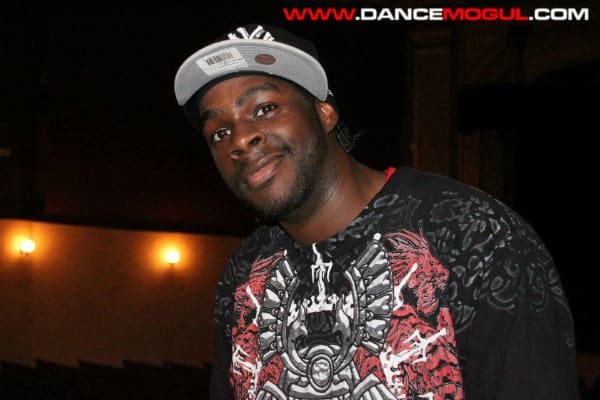
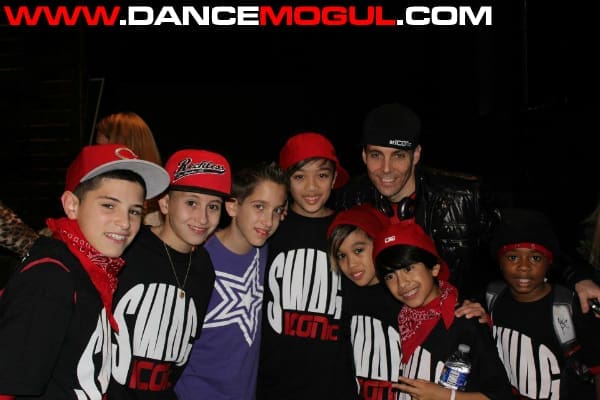
Before urban dance had mainstream press, Dance Mogul Magazine was in the room documenting Prelude — capturing a grassroots movement at the moment it was finding its footing. The photos below are part of that early coverage.
Long before "urban dance" became a global YouTube phenomenon and a feeder system for the world's biggest stages, it lived in college auditoriums and community theaters — built by crews, for crews. Prelude was one of the engines that made that world possible, and more than a decade after Dance Mogul Magazine first covered it, the series is bigger than ever.
Prelude's mission has stayed remarkably consistent since day one: to support the dance community with a competition that focuses on and showcases local and regional hip-hop dance groups, dance companies, and the broader culture around them. The idea is that by training and preparing for the event, an individual dancer or an entire crew is pushed to enrich, strengthen, and improve their craft. It is competition as community-building — a place where preparation matters as much as placement.
When Dance Mogul Magazine attended a Prelude event back in 2013, what struck us most was the mobilizing power of dance itself: the way a single show could pull together people from every walk of life around one shared purpose. Prelude didn't disappoint then, and the movement it helped nurture has only grown louder since.
// Section 01Where Prelude Comes From
To understand Prelude, you have to understand the world that birthed it. The competitive urban dance scene grew, in large part, out of the collegiate hip-hop teams of California in the late 1990s and early 2000s. Crews were forming on campuses faster than there were places for them to perform, and the earliest organized showcases gave them a reason to train, choreograph, and test themselves against their peers.
Out of that energy came a wave of now-legendary competitions, and Prelude established itself as one of the circuit's most respected grassroots platforms. Where some events chased spectacle, Prelude leaned into purpose — positioning itself as a stepping stone, a prelude, for crews developing their identity and their craft. It became known for treating the dancers and the culture with respect, and for building genuine community rather than just crowning winners.
It never ceases to amaze us — the mobilizing power that dance has, bringing together people from all walks of life for one shared purpose.
// Section 02From One Show to a Continent-Wide Circuit
The most striking part of the Prelude story is its expansion. What Dance Mogul Magazine covered as a regional showcase has grown into a full series of competitions spanning North America. Today the Prelude calendar reaches across the United States, into Canada, and down into Mexico, with editions that have included Prelude NorCal in the Bay Area, Prelude SoCal, Prelude New York, Prelude Las Vegas, Prelude Midwest in Chicago, Prelude South in Orlando, Prelude Toronto, Prelude DMV, Prelude New England in Boston, Prelude Texas in Austin, and Prelude Mexico in Tijuana.
Most editions are split into Junior and Adult divisions, giving younger dancers a developmental stage of their own while keeping the headline adult competition fierce. Each regional show is typically hosted by an established crew or dance organization — names like 1Up Crew, Main Stacks, Day One, and Project D Dance Company have all carried the torch — which keeps the series rooted in the local communities it serves rather than run from the top down. That structure is exactly what has allowed Prelude to scale without losing its grassroots soul.
Prelude has also formalized the values that always defined it. The organization is explicit about welcoming dancers of all backgrounds without discrimination of race, ethnicity, gender, age, religion, disability, socioeconomic status, or political belief, and about emphasizing the education of dance history and culture — including hip-hop culture and the broader movements of the African diaspora from which these styles emerged. It commits to a safe environment built on anti-racism, anti-othering, and anti-abuse, protecting the physical, mental, and emotional health of every participant. In an era when "urban dance" is sometimes stripped of its origins, that commitment matters.
That ethos shows up in the small rituals that make the series feel like a family reunion as much as a contest. Beyond trophies, Prelude editions have handed out honors like the Community Hero award — a recognition of the people working behind the scenes to keep the scene alive. It is a reminder that the bigger picture isn't who took first place, but what a team of dedicated individuals can build together. That balance between fierce competition and genuine care is rare, and it is a large part of why crews keep coming back season after season.
// Section 03The Crews Defining Prelude Now
One of the best ways to read the health of a scene is to look at who's winning, and Prelude keeps meticulous records of its champions. Recent results show a circuit that is deep, competitive, and regional in flavor — with powerhouse crews trading titles across editions and divisions.
A snapshot of first-place finishes across recent Prelude editions.
| Edition | Division | 1st Place |
|---|---|---|
| NorCal 2025 | Adult | Syndicate |
| NorCal 2025 | Junior | Syndikidz |
| SoCal 2024 | Adult | VSA Modern |
| Las Vegas 2025 | Junior | Jukebox Fam |
| Las Vegas 2024 | Adult | Empire LV |
| NorCal 2024 | Adult | Commonality |
Names like Syndicate, Team Millennia, Empire LV, and the Jukebox family recur across years and regions — a sign of just how serious the competitive layer of urban dance has become. Many crews that cut their teeth at Prelude go on to compete at larger international stages, making the series a genuine launchpad. For dancers tracking where the culture is heading, Prelude's results pages double as a live map of the scene's rising talent.
The geographic spread of those champions tells its own story. A junior crew winning in Las Vegas, an adult company taking gold in the Bay Area, a Southern California team defending its turf — each result is a data point in a much larger map of how urban dance has decentralized. The scene is no longer concentrated in one or two coastal hubs; it is thriving in Chicago, Orlando, Toronto, the DMV region, New England, Texas, and beyond. Prelude's expansion didn't just follow that growth — in many regions, it helped create it, giving local crews a destination worth training all year for.
// Section 04Why Prelude Matters to Dance Mogul Magazine
Dance Mogul Magazine has always believed that the story of dance is told from the ground up — in the rehearsal rooms, the community theaters, and the grassroots competitions where most dancers actually live. Prelude is exactly that kind of story. Covering it in 2013 was part of our larger mission: to document the people and platforms building dance culture before the rest of the media noticed them.
That early coverage is now part of the historical record. When a crew, a journalist, or a young dancer searches for where the urban dance circuit came from, the goal is for them to find it documented here — with the context, the imagery, and the respect the culture deserves. This is why we continue to refresh and preserve these features: so the work of community-driven organizations like Prelude isn't lost to time, and so the dancers who poured themselves into these stages are remembered.
There is a practical dimension to this preservation, too. Grassroots events like Prelude rarely generate the kind of lasting, searchable documentation that larger productions do — a flyer disappears, a social post scrolls away, a livestream goes offline. By keeping this coverage current, properly structured, and richly described, Dance Mogul Magazine helps ensure these moments remain discoverable for years to come, surfacing for anyone researching the roots of competitive urban dance. A scene that was built in person deserves a record that lives on after the lights come down.
What Prelude Is
- Format: a grassroots urban / hip-hop dance competition series for crews and companies.
- Reach: 12+ regional editions across the U.S., Canada, and Mexico.
- Divisions: most editions feature both Junior and Adult competition.
- Hosts: editions are produced by established local crews and dance organizations.
- Mission: enrich, strengthen, and improve dancers while honoring hip-hop culture and its roots.
// Section 05The Bigger Picture
Prelude sits inside a larger ecosystem of grassroots competitions that, together, built modern urban dance from the community up. It shares that lineage with the broader world of hip-hop and bboying — a culture that, in 2024, saw breaking debut as an official Olympic sport in Paris. The throughline from a college auditorium showcase to the Olympic podium is shorter than most people realize, and platforms like Prelude are part of why.
More than a decade after our first visit, Prelude remains what it always was at heart: a place where a local crew can test everything they've trained for, where a younger generation can find its footing, and where a community gathers around the simple, unstoppable power of dance. Dance Mogul Magazine was proud to document its early chapters — and prouder still to see how far the movement has traveled.
For more on the dancers and platforms shaping this world, explore our Featured Artists, read our Exclusive Interviews, and dig into the history on The Dance Knowledge Hub.
From the Floor — Prelude
First-hand coverage of a Prelude urban dance competition.