
Rhapsody James: The Queen of Street Jazz Who Built Her Own Universe
She started dancing at seven and choreographing at sixteen. Twenty-five years later, Rhapsody James has staged movement for Beyonce, Madonna and Janet Jackson, trained a generation of working dancers, and built an entire fictional universe of her own. This is the full arc.
By Dance Mogul Magazine | Featured Choreographer
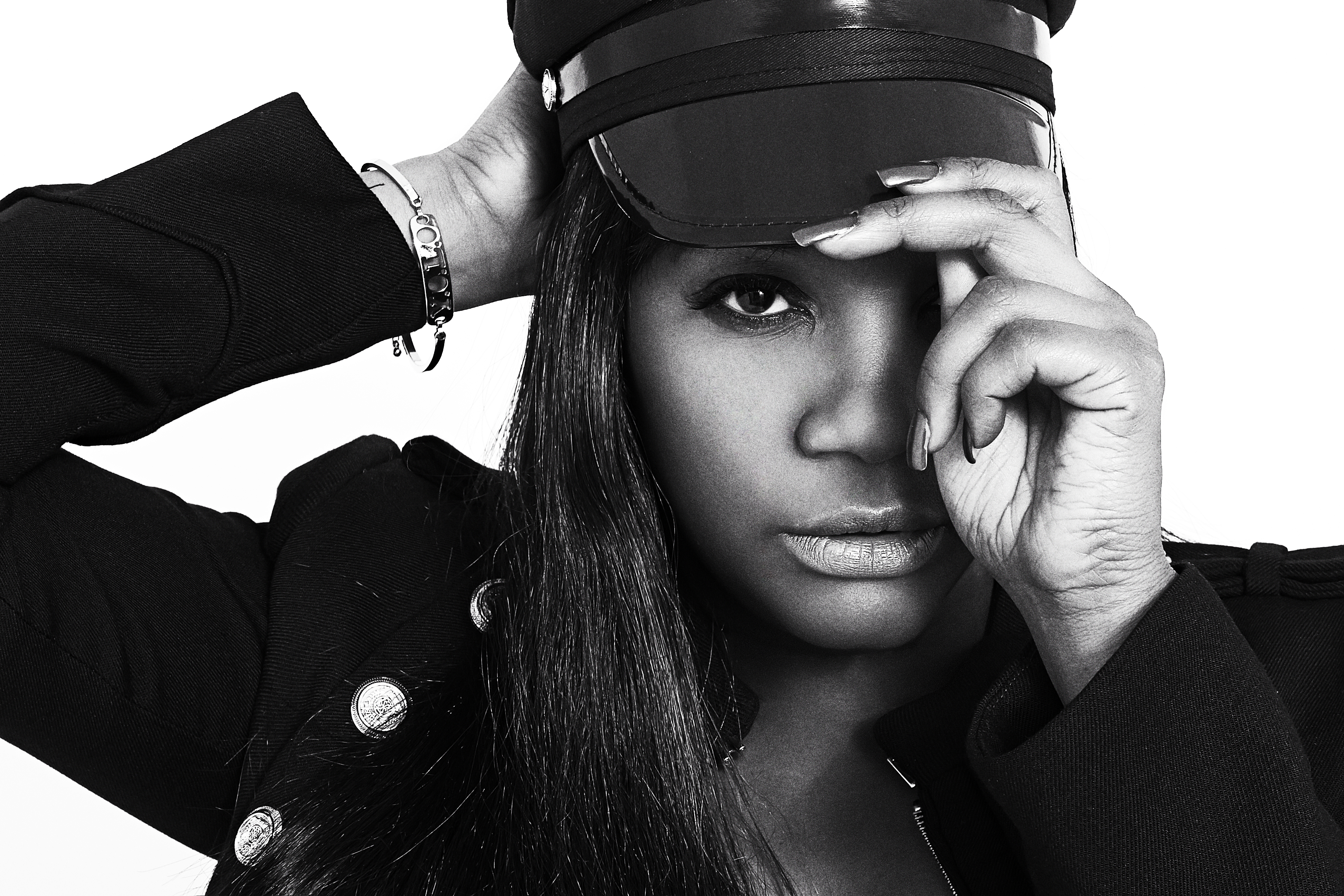
Rhapsody James | Creative Director · Choreographer · Master Educator
File // At a Glance
NAME — Rhapsody James
ROLES — Creative Director | Choreographer | Master Educator | Photographer
ORIGIN — Born Brooklyn, raised the Bronx, New York City
BASE — Los Angeles, California
TRAINED — Purchase College, State University of New York
COMPANIES — Rhapsody Creative Worldwide | R.E.D. | Motivating Excellence
KNOWN AS — The Queen of Street Jazz
|
25+ Years in the Industry |
105 Studios Worldwide |
895 Rooms Shifted |
2010 Motivating Excellence Founded |
There is a particular kind of career that only becomes legible in hindsight. You can see the credits, the tours, the television episodes and the master classes, and still miss the through-line. In the case of Rhapsody James, the choreographer and creative director who has spent more than twenty-five years shaping how commercial dance looks on stage and screen, the through-line is refusal. She has consistently refused to be only one thing — only a dancer, only a hip-hop teacher, only the person hired to fill eight counts behind somebody else's star.
That refusal is why her name shows up in so many different rooms. It is on music-video call sheets alongside Beyonce and Janet Jackson. It is on network television production credits. It is on the door of a training program that has quietly supplied the industry with working dancers since 2010. And it is on an entire self-authored fictional world, the Onyx City Universe, that exists because she decided she was tired of asking permission to tell stories.
01 //Brooklyn Born, Bronx Raised: A Dancer at Seven, a Choreographer at Sixteen
Rhapsody James was born in Brooklyn and raised in the Bronx, which is to say she grew up inside the geography where hip-hop culture was invented. She began dancing at seven years old. By sixteen she was already making the work rather than just executing it — she was choreographing.
That detail matters more than it might appear. Most dancers arrive at choreography late, after a performing career winds down or after a mentor hands them a section to set. James was arranging bodies in space while she was still a teenager, which means her authorial instinct developed at the same time as her technique. She was never trained to wait for the phone to ring. She was building.
She went on to Purchase College in the State University of New York system, one of the country's more rigorous arts campuses, where the study of dance sits inside a broader conversation about art, culture and society. That academic grounding shows up decades later in how she talks about her work: not as steps, but as narrative, image and intent.
“When I was growing up, hip hop was hip hop and jazz was jazz. Today, people always ask me, what's your style? I finally understand that I shouldn't try to be a certain type of choreographer. I mean, I'm Rhapsody. There's really no label for it.”
— Rhapsody James, speaking to Dance Teacher magazine
02 //The Label Years: Learning the Business Before the Business Could Use Her
Here is the part of the Rhapsody James story that young dancers should read twice.
Before she was a choreographer anyone had heard of, she interned at record labels — Loud, Uptown, Motown and Universal — and then took a paying job at Sony Music as an executive assistant. She was inside the machine. She saw how budgets moved, how artists were positioned, how creative decisions were actually made and by whom.
Then she left. She walked away from a stable music-industry job to chase choreography, carrying with her something most dancers never acquire: fluency in the language of the people who write the checks. That business literacy is arguably the single greatest structural advantage of her career. It is the difference between being hired and being consulted, between taking a rate and negotiating one, between executing a concept and pitching one.
Dancers reading this on our dance styles hub should note the sequencing carefully. She did not build a career and then learn the business. She learned the business and then built the career on top of it.
03 //From NBA Hardwood to Music Video History
The first breaks came fast once she committed. She became one of the two lead choreographers for the New Jersey Nets dance team, an NBA gig that demanded volume, speed and the ability to make a full arena read movement from two hundred feet away. Anyone who has staged work in a stadium understands the education in that.
At the same time she landed as a principal dancer in Busta Rhymes' Put Your Hands Where My Eyes Can See — a video that remains one of the defining visual documents of late-1990s hip-hop. She appeared on MTV's The Grind, VH-1's 80's Dance Party, the VH-1 Fashion Awards and Lip Service.
Performing was real to her, but it was not the destination. She converted visibility into authorship, and the conversion opened the door to teaching at Broadway Dance Center in Manhattan — where she became one of the studio's most in-demand hip-hop instructors and, notably, one of the few faculty members actively building bridges between the commercial and concert dance worlds inside the same building.
04 //The Artists She Has Worked For — and What Her Work Did for Them
The client list is long enough to read like a chart history of the last quarter century. Her choreography and creative work has served Beyonce, Madonna, Janet Jackson, Britney Spears, Mariah Carey, Jennifer Lopez, Ciara, Chris Brown, Gwen Stefani, Nicki Minaj, Ariana Grande, Cassie, Sean “Puff Daddy” Combs, Trey Songz, Jay Sean, the Jonas Brothers, the Pussycat Dolls, the Spice Girls, Emotional Oranges, Kalenna, SEVYN and more. She was a contributing choreographer on Ariana Grande's Honeymoon Tour in 2015. She has worked commercial campaigns for the New York Lottery and ESPN.
But a credit list is not an impact statement, so let us be precise about what a choreographer of her caliber actually contributes to a pop project.
[ The Contribution ]
She makes the artist look like the strongest version of themselves. Street jazz — the hybrid vocabulary she is most identified with — is built to flatter. It gives a singer attitude, weight and silhouette without demanding the technical ceiling of a trained company dancer. That is precision engineering, not compromise.
She solves the stadium problem. Choreography that reads on a phone screen often disappears in an arena, and vice versa. Her stadium and tour background means she designs for both at once.
She raises the floor of the ensemble. Because she also trains dancers, the people executing her work frequently come out of her own pipeline. The result is a cast that already speaks her dialect on day one of rehearsal.
She brings narrative. Her instinct is to ask what the movement is about. On projects where the concept is thin, that instinct is worth more than any eight-count.
Her recognition among peers reflects this. She has appeared on HuffPost's list of the twenty top Black female choreographers, and she graced the cover of Dance Teacher magazine, which is where the phrase that follows her everywhere — “the Queen of Street Jazz” — entered the record.
05 //Film, Television and the Move Into Scripted Work
The second act of her career runs through film and scripted television, a transition many commercial choreographers attempt and comparatively few sustain.
Her early screen work included Step Up 2: The Streets and Making the Band. More recently she has served as choreographer across multiple seasons of The CW's All American and its spin-off All American: Homecoming, contributing to well over a dozen episodes between them. She choreographed for Apple TV+'s Truth Be Told, the short film Starkeisha, and the biographical feature Remember Me: The Mahalia Jackson Story. She also has on-screen appearances to her name, including In the Heights and Step Up 3D, and her professional profile lists work connected to Suits: L.A.
Scripted television is a different discipline entirely. Music-video choreography is built to be looked at; scripted choreography has to serve character, continuity and a director's coverage plan while surviving a schedule that grants almost no rehearsal. That she has become a repeat hire in that world is a professional credential, not a fun fact.
06 //Motivating Excellence: Service Through Training
If you want to understand what Rhapsody James gives back, look at Motivating Excellence.
Founded in 2010, M.E. is a commercial dance training program — and one of the first of its kind to treat commercial dance as a profession requiring structured preparation rather than luck and hustle. It runs a flagship season program, week-long intensives, and one-to-three-day workshops covering live stage, film and television. Its stated purpose is to equip dancers with the specific skills the entertainment industry actually pays for.
Fifteen years in, M.E. alumni are working across the industry. That is the quiet legacy. A choreographer's own credits end when they stop taking jobs; a training pipeline outlives its founder.
She has extended that teaching commitment across an extraordinary geographic range — master classes and convention faculty work in Los Angeles, New York, Miami, Japan, Italy, Finland, Switzerland, Germany, London, Canada and Australia, including years on the faculty of the Monsters of Hip Hop convention. Her own accounting puts it at roughly 105 studios worldwide and close to 900 rooms taught.
For a global publication like ours, that number is the story. Every one of those rooms held young dancers who got direct access to a working professional's standards. That is community service in the form that lasts: not a single afternoon of goodwill, but a decade and a half of showing up in other people's cities to raise the level of the room. Readers building their own path should also spend time with the Dance Mogul Magazine store and publication library, which exists for exactly this reason.
07 //Building the Onyx City Universe: R.E.D., Siren Assassins and The Sin Sisters Society
Somewhere in the middle of a successful commercial career, Rhapsody James did something unusual. She admitted publicly that the dream jobs were not fully satisfying — that working under production directors on major campaigns often meant too many decision-makers and too little creative authority.
Most people swallow that and keep cashing checks. She built her own house instead.
[ The Self-Authored Work ]
R.E.D. — Rhapsody En Dance. Her hybrid dance company, the vehicle for concert-scale work that fuses commercial vocabulary with theatrical intent.
Siren Assassins. A multimedia cabaret production, and the parent brand of the New York showcase series Sirens After Dark — an event Dance Mogul Magazine has covered as one of the city's most significant dancer-led showcases.
The Sin Sisters Society. An immersive, episodic project developed from her comic-book concept Sin Sisters of Darkness — a dark narrative about a sisterhood built on the triggers of the female psyche.
The Onyx City Universe. The connected, female-empowered fictional world that houses both properties. Not a one-off show. A universe with room to expand.
All of it now sits under Rhapsody Creative Worldwide, the multidisciplinary studio that serves as the hub for her choreography, creative direction, brand work and visual storytelling. Recent RCW output includes a creative treatment and directed piece set to P!nk's Bad Influence, a commissioned work for the WE ARE HERE campaign at Relational Space Art Gallery, and filmed Sin Sisters Society installments.
She has also added photographer to the masthead, and launched a lifestyle line under the name Brave Dreamer. The pattern holds: dancer, choreographer, educator, director, producer, photographer, brand owner. Each addition increases her leverage.
08 //Awards, Honors and Recognition
— 2012
Ladies Get Down Award — honoree and recipient, recognizing women in hip-hop.
— 2018
Wondrous Woman honoree, American Dance Festival — for her contribution to the commercial dance industry.
— ONGOING
HuffPost, 20 Top Black Female Choreographers — a standing list placement.
— COVER FEATURE
Dance Teacher magazine cover — the feature that named her the Queen of Street Jazz.
09 //Where Rhapsody James Is Now
She is based in Los Angeles and still very much in the room.
Her 2026 teaching calendar opened with a master class at TMILLY Studio in Los Angeles on January 28, followed by a New York date at Zero Space Studios on February 9 — a coast-to-coast pattern she has kept up for two decades. Motivating Excellence has additional 2026 workshops, intensives and season programming in development. Her 2025 run of Los Angeles pop-up master classes drew enough demand to warrant a second round, which tells you something about a twenty-five-year veteran's pull in a market saturated with new names.
On the creative side, Rhapsody Creative Worldwide continues to operate as her production hub, with the Onyx City Universe in active development and her photography practice now a formal part of the offering. She reaches an audience of roughly 42,000 on Instagram and maintains a growing archive of work on YouTube.
“Twenty-five years in, she is not managing a legacy. She is still building one — and she is doing it on her own paperwork.”
10 //Career Timeline
AGE 7Begins dancing in New York City.
AGE 16Begins choreographing.
COLLEGE YEARSStudies at Purchase College, SUNY. Interns at Loud, Uptown, Motown and Universal Records.
LATE 1990sExecutive assistant at Sony Music, then leaves to pursue choreography. Becomes a lead choreographer for the NBA's New Jersey Nets dance team. Principal dancer in Busta Rhymes' Put Your Hands Where My Eyes Can See. Appears on MTV's The Grind and VH-1 programming.
2000sJoins the faculty of Broadway Dance Center. Commercial choreography for Beyonce, Madonna, Britney Spears, Mariah Carey, the Pussycat Dolls, the Jonas Brothers and others. Screen work including Step Up 2: The Streets and Making the Band.
2010Founds Motivating Excellence, her commercial dance training program.
2012Honored with the Ladies Get Down Award. Relaunches R.E.D. and develops Siren Assassins. Dance Teacher cover feature names her the Queen of Street Jazz.
2015Contributing choreographer, Ariana Grande's Honeymoon Tour.
2018Named a Wondrous Woman at the American Dance Festival.
2020–2023Choreographer on All American and All American: Homecoming. Work on Truth Be Told, Starkeisha and Remember Me: The Mahalia Jackson Story.
2023–2025Consolidates her ventures under Rhapsody Creative Worldwide. Expands the Onyx City Universe. Adds photography and the Brave Dreamer line. Sold-out Los Angeles pop-up master classes.
2026Opens the year with master classes in Los Angeles and New York. New Motivating Excellence programming and continued Onyx City development in progress.
11 //What She Represents to Young, Up-and-Coming Female Dancers
Commercial dance has never lacked talented women. What it has historically lacked is women with ownership.
For decades the pattern was familiar: brilliant female dancers, brilliant female choreographers, and someone else's name on the concept, the contract and the company. Rhapsody James broke that pattern in a specific and teachable way, and this is what we want every young woman reading this to take from her career.
[ Five Things to Take From Her Path ]
1. Learn the business side, on purpose. Her label years were not a detour. They were the foundation of every negotiation that came after.
2. Refuse the single label. Choreographer, creative director, educator, producer, photographer. Every added skill is added leverage and another door you can open yourself.
3. Build something you own. Credits expire. Companies, training programs and intellectual property compound.
4. Teach while you climb. She was building a pipeline of dancers at the same time as she was booking major clients. The pipeline became her legacy.
5. Center your own story. The Onyx City Universe is a female-empowered world she authored because she was not going to wait for someone to greenlight one for her.
Young dancers looking for more of this thinking will find it across our coverage of the culture, from the Dance Mogul Magazine hip-hop archive to The American Social Dance Movement, where Rhapsody James is documented among the choreographers and educators who built careers and career paths at the same time. Educators, parents and youth leaders will also find structured tools in the Dance Mogul workbook collection.
12 //What Rhapsody James Means to Dance Mogul Magazine
Dance Mogul Magazine was founded in 2010 on a single premise: that dance culture deserved to be documented by people who were actually in the room, and that the artists building it deserved to be treated as leaders rather than as background.
Rhapsody James is the argument for that premise. She is a working professional who converted access into ownership, and then turned around and built the infrastructure for other dancers to do the same. That is not celebrity. That is leadership, and leadership in dance culture is precisely what this publication exists to record.
Her career also lands directly on our founding thesis about self-empowerment. She did not wait to be discovered, promoted, greenlit or validated. She learned the business, built the company, founded the school, wrote the universe and kept teaching the room. Twenty-five years later she is still in front of a class in Los Angeles in January and New York in February, still raising the floor.
That is the standard. We document it so the next generation knows it is possible.
Frequently Asked Questions
Who is Rhapsody James?
Rhapsody James is a New York–born, Los Angeles–based choreographer, creative director and master educator with more than twenty-five years in the commercial dance industry. She is known as the Queen of Street Jazz and founded the Motivating Excellence training program.
Which artists has Rhapsody James choreographed for?
Her work spans Beyonce, Madonna, Janet Jackson, Britney Spears, Mariah Carey, Jennifer Lopez, Ciara, Chris Brown, Gwen Stefani, Nicki Minaj, Ariana Grande, Cassie, Sean Combs, Trey Songz, the Jonas Brothers, the Pussycat Dolls and the Spice Girls, among others.
What is Motivating Excellence?
Motivating Excellence, founded in 2010, is Rhapsody James' commercial dance training program. It prepares dancers for live stage, film and television work through a season program, week-long intensives and shorter workshops, and its alumni work throughout the industry.
What is the Onyx City Universe?
The Onyx City Universe is Rhapsody James' self-authored, female-empowered fictional world. It houses The Sin Sisters Society, an immersive episodic project developed from her Sin Sisters of Darkness concept, and the multimedia cabaret production Siren Assassins.
Verified Sources & Further Reading
— Rhapsody James official website
— Motivating Excellence & master class schedule
— Rhapsody James film and television credits on IMDb
— Broadway Dance Center faculty profile
— MSA Agency choreographer profile and awards record
— Dance Teacher magazine feature interview
— Rhapsody James on Instagram
Keep Reading on Dance Mogul
— The American Social Dance Movement
— Hip-Hop coverage archive
— Dance styles hub
— Dance Mogul Magazine store
— Partner with Dance Mogul Magazine
© 2026 Dance Mogul Magazine LLC | dancemogul.com | Inspiring Self-Empowerment Through Dance Culture