
Dance Mogul Magazine · The Legacy · Screen Choreography · After the Stage
Rosie Perez: From Soul Train to the Fly Girls, the Choreographer Who Put Hip-Hop on Prime Time
She danced on Soul Train, opened Spike Lee’s Do the Right Thing, built the Fly Girls into a weekly television event and then turned that platform into a career, a cause and a classroom.
October 12, 2026 · Dance Mogul Magazine · Legacy Feature
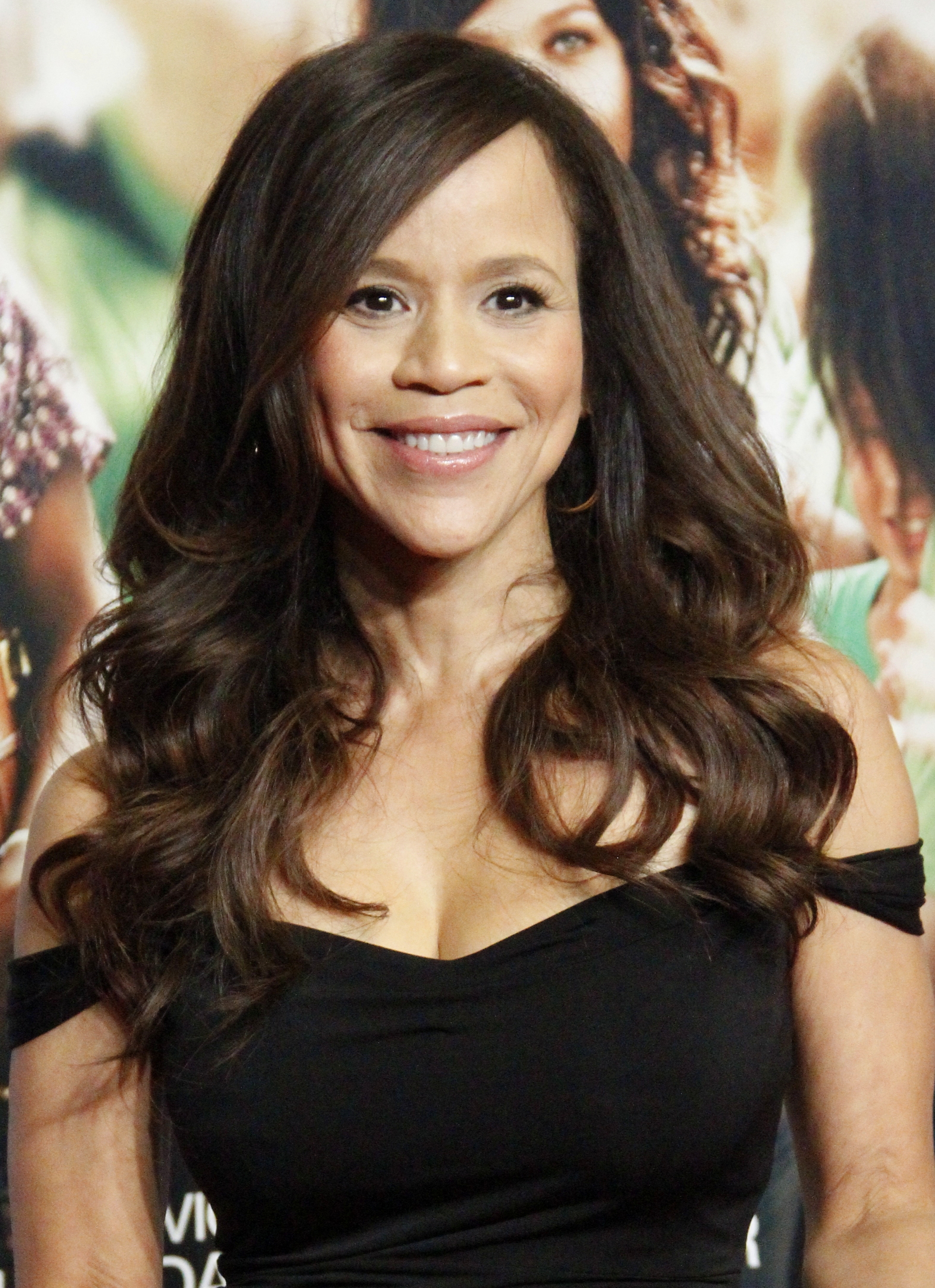
Photo: Joella Marano, via Wikimedia Commons, licensed under CC BY-SA 2.0. Not modified.
The camera does not cut away. For the length of the opening credits of Spike Lee’s Do the Right Thing, one young woman fights the power with her body: boxing gloves, a Brooklyn backdrop, Public Enemy roaring, every move a jab. Audiences in 1989 did not yet know her name. Rosie Perez had choreographed the solo herself, and she has said Lee had her dance it for hours, until what came out was, in her words, “angry, frustrated, sloppy and passionate.”
That opening is the best-known image of her career. It is also the most misleading, because it suggests a newcomer. By then Rosie Perez had already danced on Soul Train and was working as a choreographer. That same year, by the account of a Brooklyn teenager named Henry “Link” McMillan, she spotted him on the floor of The Tunnel and put him in a Diana Ross music video, where he went from extra to principal dancer. She was already hiring.
A year later she was in charge of the Fly Girls on Fox’s In Living Color, choreographing the troupe that opened the show and danced between its sketches. The work earned her three Primetime Emmy nominations for choreography. It also put the language of New York and Los Angeles clubs on network television every week.
That is the thesis of this feature, the second chapter of DMM’s After the Stage series after Paula Abdul and before Jennifer Lopez. Rosie Perez answers a question every young dancer eventually asks: what comes after the stage and the competition? Her answer was not one job. It was authorship of a weekly dance aesthetic, a screen career built on the confidence the dance floor gave her, and more than three decades running an arts-education nonprofit for kids who, like her, needed somebody to care.
I am who I am because somebody cared.
— Rosie Perez, Urban Arts Partnership benefit, as reported by Backstage
Rosie Perez at a Glance
File // At a Glance
Name — Rosa María “Rosie” Perez
Roles — Dancer, choreographer, actor, director, producer, author, arts-education advocate
Origin — Born September 6, 1964, Brooklyn; raised in Bushwick by Puerto Rican family
Trained — New York clubs and the dance floor; discovered at 19 by a Soul Train talent scout
First break — Dancer on Soul Train (1980s)
Choreography — Fly Girls on In Living Color (1990–94); videos and shows for Janet Jackson, Bobby Brown, Diana Ross, LL Cool J, The Boys
Signature moment — The “Fight the Power” opening dance of Do the Right Thing (1989)
Honors — Oscar nominee (Fearless); four Primetime Emmy nominations (three for choreography); 2025 Hispanic Heritage Award for Leadership
After the stage — Co-founder and longtime board chair, Urban Arts Partnership
Current work — Highest 2 Lowest (2025); Before (Apple TV+, 2024)
DMM connection — Discovered Elite Force founder Henry Link in 1989, by his account
3
Emmy nominations for choreography
1
Academy Award nomination
30+
Years leading Urban Arts Partnership
15K
Students reached each year by UAP
Bushwick, and a Childhood She Has Called Unpredictable
Rosa María Perez was born on September 6, 1964, in Brooklyn, to Puerto Rican parents, and grew up around Bushwick. Her early life was not stable. She was raised for a time by an aunt and spent years in a Catholic children’s home, a childhood she wrote about in her 2014 memoir, Handbook for an Unpredictable Life, and discussed with NPR’s Fresh Air. In third grade she learned she had a speech impediment, the voice that Hollywood would later try to change and that audiences would come to love.
Asked by Fresh Air what she had wanted most, she did not name a credit. “Everyone thinks it’s the fame and the fortune,” she said. “It’s not. It was love and stability.” That sentence explains a great deal about the second half of her career, when she would spend as much energy on schools as on scripts.
Music and movement were her outlet. She finished high school in Queens and went west to study at Los Angeles City College. She did not go to Los Angeles to become a dancer. Los Angeles found the dancer anyway.
A Club Floor, a Talent Scout and Soul Train
NPR’s account is simple: at 19, Perez was dancing at a club with friends when a talent scout from Soul Train noticed her and invited her onto the show. She brought a style of hip-hop dancing to the Soul Train line at a time before hip-hop had entered the mainstream. She was not a trained professional, and she has said she loved it so much she left school.
For DMM’s readers the point is the pipeline. Soul Train was where club dancers became visible to the people who hired for music videos and television. Perez moved through that door quickly, from dancer to choreographer, staging work for artists including Bobby Brown, Diana Ross, LL Cool J, Janet Jackson and the R&B group The Boys. She was, in other words, already doing what this series is about: turning what she knew on the floor into authorship.
The show was really really fun, and for people of color, it was an amazing opportunity.
— Rosie Perez on In Living Color, WBUR Here & Now, 2019
1989: The Tunnel, Spike Lee and the Opening Credits
Nineteen eighty-nine was the hinge year. In Los Angeles, at a club called Funky Reggae, Spike Lee noticed her; he has told the story of a heated exchange on the dance floor, and of realizing he had found the voice he wanted for Tina, the girlfriend of his character Mookie. Do the Right Thing opened that summer and grossed $37.3 million worldwide, but its cultural reach was far larger than its box office. The opening dance is still studied as one of the great title sequences in American film.
Back in New York the same year, she was booking dancers. In DMM’s Legacy feature on Henry Link, the Elite Force co-founder recalls being spotted by Perez at The Tunnel and invited to a Diana Ross shoot for “Workin’ Overtime,” where he was promoted from extra to principal. That is his recollection, and DMM presents it that way. It is also a portrait of how a choreographer’s eye becomes other dancers’ careers.
1990: The Fly Girls, and Hip-Hop on Prime Time
In Living Color premiered on Fox on April 15, 1990. Created by Keenen Ivory Wayans, it was written for audiences of color, and Perez has said its producers were unapologetic about that. The Fly Girls opened every episode and danced between sketches and musical guests, and Perez was their choreographer from the first season through the fourth. She also worked as a segment producer.
The troupe’s alumni list reads like a casting sheet for the next thirty years of entertainment: Carrie Ann Inaba, later a Dancing with the Stars judge, and Jennifer Lopez, who auditioned under Perez and joined in the show’s third season. The look Perez built for them, street and club movement drilled to television precision, became the template a generation of video and award-show dancers followed.
Recognition followed. The Television Academy nominated her for Outstanding Choreography in 1990, 1992 and 1993. She did not win, and DMM says so plainly, because accuracy is part of the honor: three nominations in four seasons, for a hip-hop dance troupe on a sketch show, was itself a statement about whose dance counted as craft. Looking back in 2019, she placed the show in “at least the top 50 or maybe even top 25” of game-changing television shows in American history.
From the Dance Floor to Fearless
Perez did not leave dance so much as carry it into acting. White Men Can’t Jump (1992), as the Jeopardy!-obsessed Gloria opposite Woody Harrelson and Wesley Snipes, grossed $90.8 million worldwide. A year later Peter Weir cast her as Carla, a grieving plane-crash survivor in Fearless, and she was nominated for the Academy Award for Best Supporting Actress. It Could Happen to You (1994), Perdita Durango (1997, shot in Spain), The 24 Hour Woman (1999) and the animated The Road to El Dorado (2000) followed.
She has been candid about the resistance. She has said agents struggled to take her seriously as an actor because of her New York Puerto Rican accent, and that one advised her to change her nose and her hair color. She kept the voice. Broadway followed, beginning with Terrence McNally’s Frankie and Johnny in the Clair de Lune, then The Ritz, Reckless, The Play What I Wrote and Larry David’s Fish in the Dark in 2015.
The Credit Record, Kept Honest
Screen careers blur credits. DMM separates what is documented for Rosie Perez individually from what belongs to a production, and from what rests on another artist’s recollection.
| Work | Credit | Source |
|---|---|---|
| Soul Train (1980s) | Dancer | NPR Fresh Air; Wikipedia |
| Do the Right Thing (1989) | Actor (Tina); choreographed and danced the opening credits | Brooklyn Paper; Art of the Title |
| Diana Ross, “Workin’ Overtime” (1989) | Spotted and booked dancer Henry Link (his recollection) | Henry Link, Dance Chat (2026) |
| Janet Jackson, Bobby Brown, Diana Ross, LL Cool J, The Boys | Choreographer of music videos and shows; titles not individually confirmed | Wikipedia (citing Vibe); NPR |
| In Living Color (1990–94) | Fly Girls choreographer, seasons 1–4; segment producer | Britannica; Wikipedia |
| Primetime Emmys 1990, 1992, 1993 | Three choreography nominations; no win | Television Academy via Britannica |
| Fearless (1993) | Academy Award nomination, Best Supporting Actress | IMDb; NPR |
| The Flight Attendant (2020–22) | Emmy nomination, Supporting Actress in a Comedy | Deadline; Wikipedia |
Where a credit rests on someone’s memory, it is labeled as recollection. DMM did not find primary credits naming the individual music videos she choreographed, so none are listed by title.
The Advocate: Urban Arts Partnership
If the Fly Girls were Perez’s authorship, Urban Arts Partnership is her stewardship. She co-founded the New York nonprofit in the early 1990s and has chaired its artistic board since 1994. The organization brings arts-integrated education into public schools that lost it; by its own and press accounts it has worked in more than 100 underserved schools in New York City and Los Angeles, reaching about 15,000 students a year with music, dance, theater and media programs.
Her reason is personal. “What the arts do is it allows you to dream and engage, develop critical thinking,” she told amNewYork. When she decided to write her memoir, it was UAP students who changed her mind about sharing it: she had already told them her story in a program called Life Stories, and they had been the first people outside her inner circle to hear it.
The advocacy runs wider. She directed Yo Soy Boricua, Pa’que Tú Lo Sepas! (2006), a documentary about Puerto Rican identity; she has campaigned on HIV/AIDS awareness and was appointed to the Presidential Advisory Council on HIV/AIDS. In September 2025 the Hispanic Heritage Foundation gave her its Hispanic Heritage Award for Leadership, citing the way she has blended artistic accomplishment with advocacy. Spike Lee and the Rock Steady Crew’s Richard “Crazy Legs” Colón were among those who celebrated her.
You will not be marching up that hill alone.
— Rosie Perez, 38th Hispanic Heritage Awards, 2025
Watch & Listen: Rosie Perez in Her Own Words
Start with the dance that introduced her to moviegoers, then hear her tell the rest of the story.
1989 · The opening. Rosie Perez’s self-choreographed “Fight the Power” solo from Spike Lee’s Do the Right Thing. Video via YouTube.
Listen · WBUR Here & Now (2019)
Perez looks back on In Living Color at 25 and how she became the Fly Girls’ choreographer. Hear the interview
Listen · NPR Fresh Air
From Soul Train to the Fly Girls to The Flight Attendant, and why stability mattered more than fame. Read and listen
Watch · PBS, 2025 Hispanic Heritage Awards
Spike Lee, Crazy Legs and Ivette Rodriguez honor Perez as the 2025 Leadership Award recipient. Watch the tribute
The Stage, Screen & Advocacy Tracker
DMM built this tracker so readers can follow a living career the way it actually unfolded, credit by credit. Every row has a published source. It is a floor, not a full filmography.
| Date | Project / honor | Where | Role |
|---|---|---|---|
| Sep 4, 2025 | Hispanic Heritage Award for Leadership | Warner Theatre, Washington, D.C. | Honoree |
| 2025 | Highest 2 Lowest (Spike Lee) | Film | Appearance |
| Oct 25, 2024 | Before (Apple TV+) | Limited series | Actor, Denise |
| 2023 | Your Honor, season 2 (Showtime) | Series | Actor, Olivia Delmont |
| May 2022 | Now and Then (Apple TV+) | Bilingual series | Actor, Flora |
| 2021 | Primetime Emmy nomination | The Flight Attendant | Supporting Actress, Comedy |
| 2020 | Birds of Prey; The Flight Attendant | Film; Max series | Actor, Renee Montoya; Megan Briscoe |
| 2015 | Fish in the Dark | Broadway | Actor |
| 2014–15 | The View, season 18; memoir published | ABC; Crown | Co-host; author |
| 2007 | The Ritz | Broadway | Actor |
| 2006 | Yo Soy Boricua, Pa’que Tú Lo Sepas! | Documentary | Director |
| 2002 | Frankie and Johnny in the Clair de Lune | Broadway | Actor (Broadway debut) |
| 1994 | Urban Arts Partnership | New York | Board chair (co-founder) |
| 1993 | Fearless; Emmy nomination | Film; In Living Color | Oscar nominee; choreographer |
| 1992 | White Men Can’t Jump; Emmy nomination | Film; In Living Color | Actor; choreographer |
| Apr 15, 1990 | In Living Color premieres; Emmy nomination | Fox | Fly Girls choreographer |
| 1989 | Do the Right Thing; Diana Ross shoot | Film; New York | Actor and opening dancer; booked Henry Link |
| 1980s | Soul Train | Los Angeles | Dancer |
Sources: NPR; Britannica; Box Office Mojo; BroadwayWorld; Deadline; Scripps News; Hispanic Heritage Foundation; Fox News Latino; Brooklyn Paper; Henry Link, Dance Chat.
Documented rows per decade · bars drawn to scale
Counts are the dated rows above, grouped by decade. The 2020s lead because recent credits are the best documented online, not because the earlier decades were quieter.
The Career Ladder: How a Dancer Became the Decision-Maker
The U.S. Bureau of Labor Statistics notes that nearly all choreographers begin their careers as dancers. Perez’s career shows the next rungs: the dancer who chooses the dancers, then shapes the look of a network show, then uses that credibility to build something that outlasts any one credit.
How a dancer became the decision-maker
1. The floor. Club dancing in Los Angeles turns a Bushwick teenager into a Soul Train regular.
2. The booking. Music videos and stage shows make her a working choreographer who hires other dancers.
3. The signature. One self-choreographed solo opens Do the Right Thing and becomes a film-history touchstone.
4. The system. The Fly Girls give her a weekly stage, a troupe to train and three Emmy nominations.
5. The institution. Urban Arts Partnership turns her story into classrooms for about 15,000 students a year.
What Comes After the Stage and the Competition
Authorship
She choreographed the Fly Girls and her own Do the Right Thing solo, owning the look, not just performing it.
Ownership
She directed and produced, from Yo Soy Boricua to the HBO anthology Subway Stories.
Mentorship
She cast and coached dancers, from the Fly Girls to a teenage Henry Link, by his account.
Stewardship
She has chaired Urban Arts Partnership since 1994, carrying the arts into schools that lost them.
The Lineage: Who Shaped Rosie Perez, and Who She Shaped
Shaped by
Bushwick
Brooklyn childhood
L.A. clubs
where she was discovered
Soul Train
first screen stage
Spike Lee
first film role, 1989
↓
Rosie Perez
Brooklyn · screen choreography
↓
Collaborators & platforms
Keenen Ivory Wayans
In Living Color creator
The Fly Girls
troupe she choreographed, 1990–94
Public Enemy
“Fight the Power” opening
↓
Dancers & students she lifted
Henry Link
booked at The Tunnel, 1989 (his account)
Jennifer Lopez
auditioned under her; Fly Girl, season 3
Carrie Ann Inaba
Fly Girl
UAP students
about 15,000 a year
Relationships drawn only from published sources: NPR, Britannica, Remezcla, Wikipedia, Fox News Latino, amNewYork and Henry Link’s own account. Individual students are not named.
Worldwide Reach: Where the Work Traveled
Perez is not a touring teacher, so her reach is measured differently: by where her screen work was released and where her work took her. DMM counts only what is documented.
Worldwide Impact // Documented Reach
| Country / region | What happened | Year | Evidence |
|---|---|---|---|
| USA | Soul Train, In Living Color, Broadway, film and television; UAP in New York and Los Angeles | 1980s–2025 | NPR; Britannica; UAP press |
| Spain | Title role in Perdita Durango, filmed on location | 1997 | Rovi biography |
| United Kingdom | Birds of Prey premiere in London; $11.5M UK gross | 2020 | Getty caption; Box Office Mojo |
| 44 markets | Birds of Prey theatrical release, $121.2M outside the U.S. | 2020 | Box Office Mojo |
| Global streaming | Now and Then, Apple TV+’s bilingual thriller, launched worldwide | 2022 | Remezcla |
44
release markets, one film
$121.2M
international gross, Birds of Prey
36
years, Soul Train era to 2025
Her influence on dancers who copied the Fly Girls from television, at home and abroad, is real but cannot be counted, so it is not included.
By the Numbers: The Economy Around Rosie Perez’s Work
Awards measure the craft; audiences measure the reach. The figures below describe the projects Perez worked on and the industries her art feeds. They are kept in tiers, because a film’s gross is not an actor’s paycheck. Her personal earnings are not published, and DMM does not estimate them.
Tier 1 · Projects she worked on
| Measure | Figure | Scope | Source |
|---|---|---|---|
| Do the Right Thing | $37.3M | Worldwide gross, 1989 (U.S. $27.5M) | Box Office Mojo |
| White Men Can’t Jump | $90.8M | Worldwide gross, 1992 (U.S. $76.3M) | Box Office Mojo |
| Birds of Prey | $205.5M | Worldwide gross, 2020, 44 markets | Box Office Mojo |
| In Living Color | 18 | Emmy nominations over five seasons; 3 for her choreography | Britannica |
These describe the projects, not her share of them. Figures are not adjusted for inflation.
$333.6M
Combined worldwide gross · three films featuring Rosie Perez
Worldwide gross · bars drawn to scale
37.3 + 90.8 + 205.5 = 333.6. Bar widths: 205.5 = 100%; 90.8 ÷ 205.5 = 44.2%; 37.3 ÷ 205.5 = 18.2%. Box office belongs to the films and their studios.
Inside one nonprofit · the after-the-stage number
Urban Arts Partnership, which Perez co-founded and has chaired since 1994, reports reaching about 15,000 public-school students a year in more than 100 schools across New York City and Los Angeles.
The program began in a single New York City school, amNewYork reported. Thirty-two years of board leadership (1994 to 2026) carried it from one classroom to more than one hundred.
Student and school figures are the organization’s own, as reported by amNewYork and NBC News; DMM did not audit them and does not multiply them into a lifetime total, because yearly reach was not constant.
Tier 2 · The industries this art feeds
$5.0B
U.S. dance studio revenue, 14,622 businesses (2025) · IBISWorld
Markets where screen dance works · bars drawn to scale
Context only. These are whole industries, not the value of screen choreography or of any one artist. Bar widths: 31.7 = 100%; 5.0 ÷ 31.7 = 15.8%.
$26.73/hr
Median U.S. choreographer wage, May 2024 · BLS
$23.97/hr
Median U.S. dancer wage, May 2024 · BLS
+5%
Projected dancer & choreographer jobs, 2024–34 · BLS
How the Fly Girl Style Traveled, and What Belongs to Everyone
Perez did not invent hip-hop dance, and she has never claimed to. The movement she brought to Soul Train and the Fly Girls came from club floors, block parties and crews on both coasts, and from the dancers in her troupe who brought their own styles to rehearsal. What she did was translate it: she gave that vocabulary a weekly time slot, a television frame and a standard of precision, and she did it as a Puerto Rican woman from Brooklyn in rooms where few people looked like her.
The Fly Girls’ influence shows up wherever award-show and music-video dancers move in tight, street-rooted formations. That lineage belongs to many people. DMM credits Perez with its most visible early television form, and with lifting dancers, from Henry Link to Jennifer Lopez, into the industry that followed.
Where Is Rosie Perez Now?
As of October 2026, Perez remains active on screen and in her causes. Her most recent dated credits are Apple TV+’s Before (October 2024), opposite Billy Crystal, in which she plays a foster mother, a role she said drew on her own experience in the foster system, and an appearance in Spike Lee’s Highest 2 Lowest (2025). In September 2025 she received the Hispanic Heritage Award for Leadership in Washington, D.C. She continues to chair Urban Arts Partnership’s artistic board. DMM found no confirmed new project announced for late 2026 and does not speculate.
A Living Legacy, and Why DMM Is Tracking It
Legacy writing usually arrives too late, after the people who could correct the record are gone. DMM’s Legacy series documents artists while they are still working. For Rosie Perez that matters for three reasons. Accuracy: her choreography credits are often reduced to one line, and her Emmy record is often misstated as a win. Access: a young dancer can still hear her explain, in her own voice, how a club floor led to a career. Value: when a choreographer’s work is documented, the craft behind a famous television era becomes visible professional history, not anonymous background.
The DMM Archive Connection
Perez already sits in DMM’s map of the culture. Our Legacy feature on Henry Link opens with the night she spotted him at The Tunnel, the first step toward Elite Force. This feature completes that story from her side. It sits inside DMM’s After the Stage series with Paula Abdul and Jennifer Lopez, and alongside The American Social Dance Movement, DMM’s archive of the club dancers whose vocabulary she brought to television.
Career & Cultural Timeline
CULTURE = the scene around her · CAREER = her work · TEACHING = passing it on
SEP 6, 1964 · CULTURE
Born in Brooklyn to Puerto Rican parents; grows up around Bushwick.
EARLY 1980s · CAREER
Discovered by a Soul Train talent scout at 19; dances on the show.
1989 · CAREER
Choreographs and dances the opening of Do the Right Thing; spots Henry Link at The Tunnel, by his account.
APR 15, 1990 · CULTURE
In Living Color premieres on Fox with the Fly Girls; first choreography Emmy nomination.
1991 · TEACHING
Oversees Fly Girl auditions; Jennifer Lopez joins the troupe in season three.
1992–93 · CAREER
White Men Can’t Jump; Emmy nominations in 1992 and 1993; Oscar nomination for Fearless.
1994 · TEACHING
Begins chairing Urban Arts Partnership’s board.
2002–2015 · CAREER
Broadway debut in Frankie and Johnny; The Ritz; directs Yo Soy Boricua; co-hosts The View; Fish in the Dark.
2014 · CULTURE
Publishes her memoir, Handbook for an Unpredictable Life.
2020–21 · CAREER
Birds of Prey; The Flight Attendant earns her a fourth Emmy nomination.
2022–2024 · CAREER
Now and Then; Your Honor; Before.
2025 · TEACHING
Hispanic Heritage Award for Leadership; Highest 2 Lowest.
OCT 2026 · CULTURE
Profiled in DMM’s After the Stage Legacy series.
Why Rosie Perez’s Legacy Matters to Dance Mogul Magazine
Dance Mogul Magazine was founded on the conviction that dance is a bridge to a better life, and that the people who build that bridge should be documented by their own community. Rosie Perez’s life is that conviction made visible. A girl who wanted love and stability found her first stable footing on a dance floor, and then spent her success building that footing for other kids.
Her story also carries the values DMM puts first. Character before celebrity: she kept her voice and her accent when the industry asked her to change them. Contribution before attention: three decades of nonprofit leadership get a fraction of the coverage her films do. People before popularity: from Henry Link to Jennifer Lopez, dancers remember her as someone who chose them.
What Dance Would Be Missing Without Rosie Perez
• The Fly Girls as a weekly television standard, choreographed through four seasons and three Emmy nominations.
• One of film’s most famous dance openings, her self-choreographed “Fight the Power” solo.
• A door held open for other dancers, including Henry Link at The Tunnel and Jennifer Lopez at the Fly Girl auditions.
• A model of the dancer-to-choreographer-to-actor path, with an Oscar nomination along the way.
• An arts-education institution, Urban Arts Partnership, reaching about 15,000 students a year.
What Future Generations Can Learn From Rosie Perez
1. Your floor is your audition. A talent scout found her dancing for fun with friends.
2. Make the work yours. She choreographed the solo that introduced her to the world.
3. Choose people. A choreographer’s eye becomes other dancers’ careers.
4. Keep your voice. The accent agents doubted became part of why audiences remember her.
5. Turn platforms into institutions. Fame faded into the background; Urban Arts Partnership kept growing.
6. Tell your story when it helps someone. Her memoir began with students in a classroom.
7. Protect the record. Three nominations and no win is a true and powerful history. Tell it accurately.
The Opening Never Ended
It started on a club floor, with a girl from Bushwick dancing because it felt like freedom. It became a Soul Train line, a soundstage with Public Enemy blasting, and a weekly hour of television that told a generation of dancers their movement belonged on prime time.
More than three decades later, Rosie Perez is still answering the question this series asks: what comes after the stage? Her answer is the same fight she danced in 1989, carried into classrooms. She is still fighting the power, and now she is making sure the next kid does not have to march up that hill alone.
Rosie Perez: Frequently Asked Questions
Who is Rosie Perez?
Rosie Perez is a Brooklyn-born dancer, choreographer, actor, director and arts-education advocate. She danced on Soul Train, choreographed the Fly Girls on In Living Color and was nominated for an Academy Award for Fearless (1993).
Did Rosie Perez win an Emmy for In Living Color?
No. She received three Primetime Emmy nominations for choreography on In Living Color, in 1990, 1992 and 1993, but did not win. She earned a fourth Emmy nomination, as an actor, for The Flight Attendant.
How did Rosie Perez get her start?
At 19, while dancing at a club with friends, she was spotted by a Soul Train talent scout and invited onto the show. Spike Lee later noticed her at a Los Angeles club and cast her in Do the Right Thing.
Who choreographed the opening dance in Do the Right Thing?
Rosie Perez choreographed and performed the “Fight the Power” opening-credits dance herself.
Did Rosie Perez discover Jennifer Lopez?
Perez was the Fly Girls’ choreographer and oversaw the auditions; Lopez joined the troupe in the show’s third season, in 1991. Accounts differ on who championed her hiring, so DMM credits the audition process rather than a single discoverer.
What is Rosie Perez’s connection to Henry Link?
By Henry Link’s own account, Perez spotted him dancing at The Tunnel in New York in 1989 and booked him for a Diana Ross music video, an early step toward his founding of Elite Force.
What is Urban Arts Partnership?
A New York arts-education nonprofit Perez co-founded in the early 1990s and has chaired since 1994. It brings arts-integrated programs to public schools in New York City and Los Angeles.
What is Rosie Perez doing now?
As of October 2026 her latest dated credits are Before (Apple TV+, 2024) and an appearance in Highest 2 Lowest (2025). She received the Hispanic Heritage Award for Leadership in September 2025.
The Legacy // After the Stage & Screen Choreography Collection
Paula Abdul · From Laker Girl to Emmy-winning choreographer · in this series
Rosie Perez · Soul Train to the Fly Girls, Emmy-nominated choreographer · You are here
Jennifer Lopez · From Fly Girl to the judges’ table and the Super Bowl stage · in this series
Henry Link · Elite Force founder, discovered by Rosie Perez in 1989
Sources & Further Viewing
NPR Fresh Air: Rosie Perez on finding stability
WBUR Here & Now: 25 years of In Living Color (2019)
Brooklyn Paper: “Rosie gives BAM the scoop”
Art of the Title: Do the Right Thing
Hispanic Heritage Foundation: 2025 Leadership Award
PBS: Rosie Perez, 2025 Leadership Award honoree
amNewYork: Rosie Perez on Urban Arts Partnership
NBC News: Rosie Perez and Urban Arts
Backstage: 24 Hour Plays benefit for Urban Arts Partnership
Remezcla: J.Lo’s 1990 In Living Color audition
Scripps News: Rosie Perez on Before
BroadwayWorld: Rosie Perez stage credits
Box Office Mojo: Do the Right Thing
Box Office Mojo: White Men Can’t Jump
Box Office Mojo: Birds of Prey
Economic context: IBISWorld, Dance Studios in the US (2025); U.S. Bureau of Labor Statistics, Occupational Outlook Handbook, Dancers and Choreographers (May 2024 wages); IFPI Global Music Report 2026.
© 2026 Dance Mogul Magazine LLC · The Legacy Series · A Black-owned dance and empowerment publication since 2010